
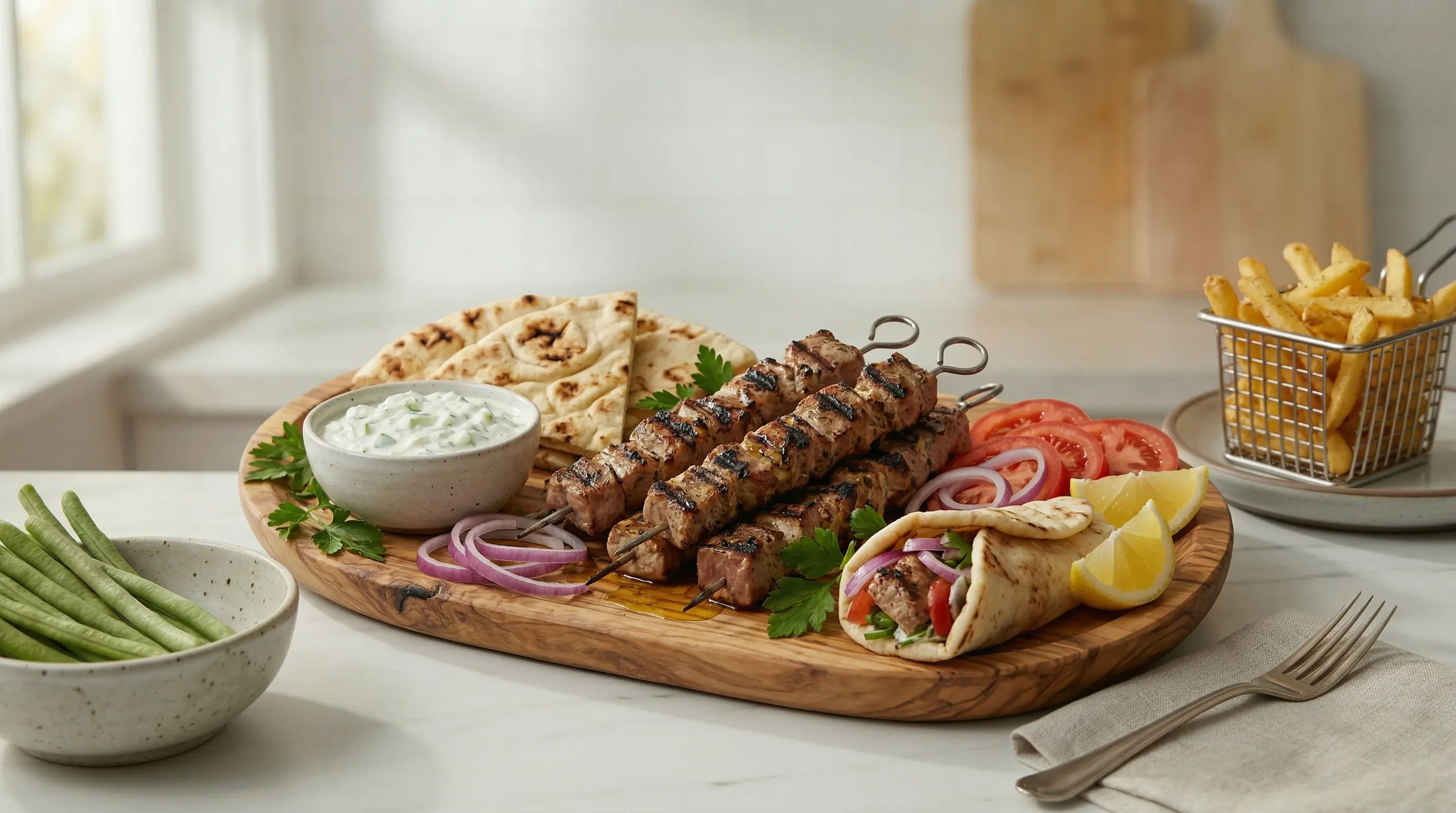
Souvlaki
Learn how to make authentic Greek souvlaki with tender marinated pork, grilled to charred perfection and served with tzatziki, pita, and fresh vegetables. This beloved street food is simple, flavorful, and irresistible!
Ingredients
The Story
Souvlaki is Greece's most iconic street food, small pieces of meat grilled on skewers and served with pita bread, tzatziki, tomatoes, onions, and sometimes french fries - a simple yet perfect combination that has fueled Greeks for generations. The name comes from the Greek word "souvla," meaning skewer, and variations of skewered grilled meat have existed in the Eastern Mediterranean since ancient times. Archaeological evidence suggests that the ancient Greeks grilled meat on skewers as early as the 17th century BC, making souvlaki one of the world's oldest prepared foods. The modern version, sold from small shops called souvlatzidika, became widespread in Athens in the early 20th century and has since become synonymous with Greek cuisine worldwide. The distinction between souvlaki and gyros is a common source of confusion, and the terminology varies by region within Greece. In Athens, souvlaki specifically refers to small pieces of meat on skewers (kalamaki), while the wrapped sandwich with meat, vegetables, and sauce is called a pita souvlaki or gyro pita. In Thessaloniki and northern Greece, souvlaki can refer to the entire wrapped sandwich, and the skewered meat is called kalamaki. Both preparations share the same accompaniments: soft, slightly charred pita bread; creamy tzatziki sauce; sliced tomatoes and onions; and often a handful of crispy french fries tucked inside. This northern tradition of including fries in the wrap has spread throughout Greece and beyond. What makes souvlaki so extraordinary is the way simple ingredients and techniques combine to create something greater than the sum of its parts. The meat - traditionally pork in Greece, though chicken and lamb are also common - is cut into small cubes and marinated in olive oil, lemon juice, garlic, and oregano. Grilled over charcoal until charred on the outside and juicy within, the meat develops a smoky, caramelized crust while remaining tender. The cool, garlicky tzatziki provides creamy counterpoint to the hot meat. The fresh vegetables add crunch and brightness. And the warm, slightly charred pita wraps everything into a portable package that is somehow both satisfying and light. Eaten standing at a souvlaki shop counter or walking through the streets of Athens, souvlaki is the taste of Greece itself - unpretentious, generous, and deeply satisfying.
Instructions
Step 1
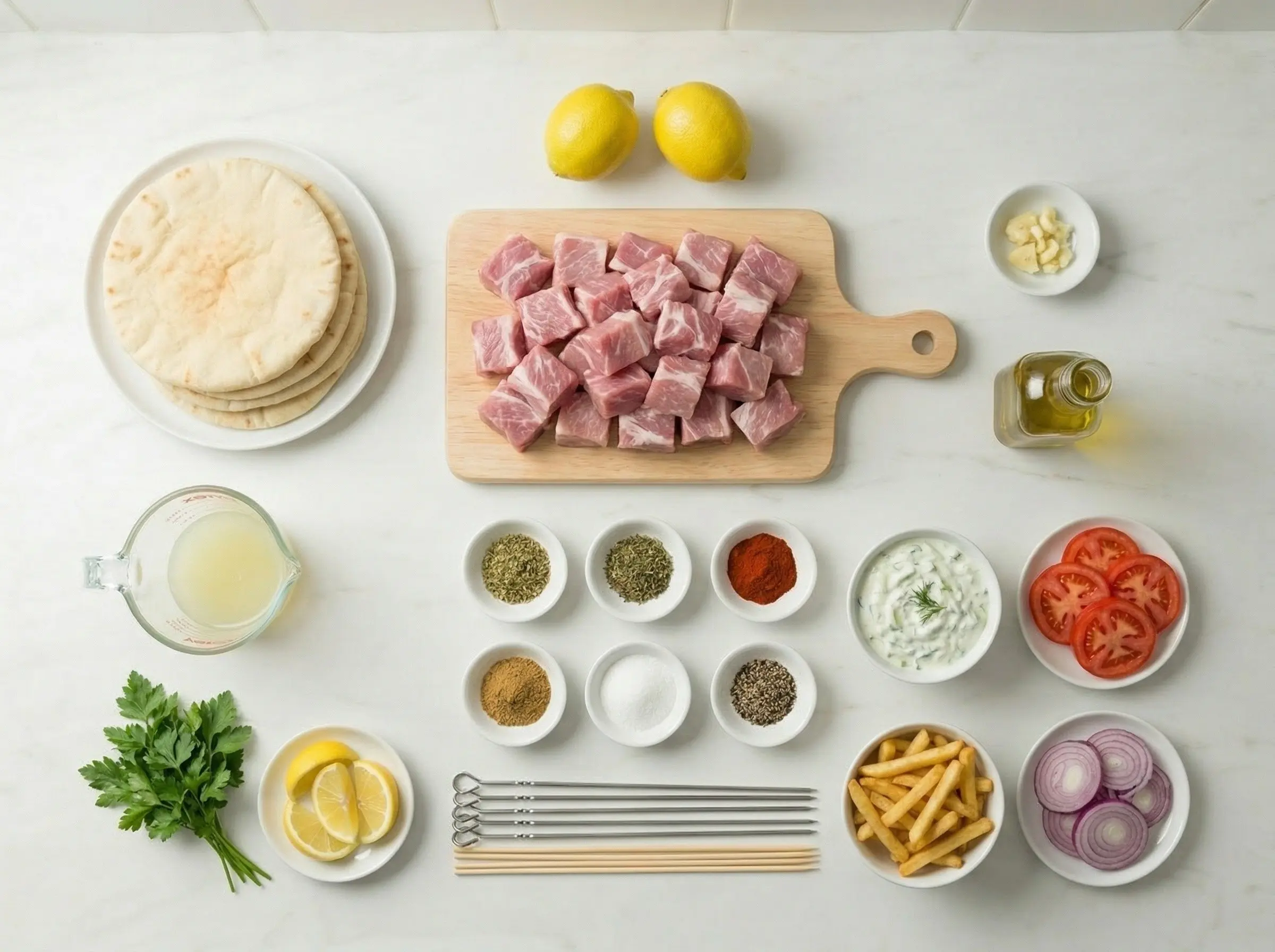
Make the marinade and marinate the pork. In a large bowl, whisk together the olive oil, lemon juice, minced garlic, oregano, thyme, smoked paprika, cumin, salt, and pepper. Add the pork cubes and toss to coat thoroughly. Cover and refrigerate for at least 2 hours, or preferably overnight - the longer marination allows the lemon and herbs to penetrate the meat and tenderize it. Remove from refrigerator 30 minutes before grilling to take the chill off. If using wooden skewers, soak them in water for at least 30 minutes to prevent burning.

Step 2
Make the tzatziki if not using store-bought. Grate 1 medium cucumber on the large holes of a box grater. Squeeze out as much liquid as possible using a clean kitchen towel - this is crucial for thick tzatziki. In a bowl, combine 1 cup Greek yogurt, the squeezed cucumber, 2 minced garlic cloves, 1 tablespoon olive oil, 1 tablespoon lemon juice, 1 tablespoon fresh dill (or 1 tsp dried), and salt to taste. Stir well and refrigerate for at least 30 minutes for flavors to meld. The tzatziki will taste even better made a day ahead.
Step 3
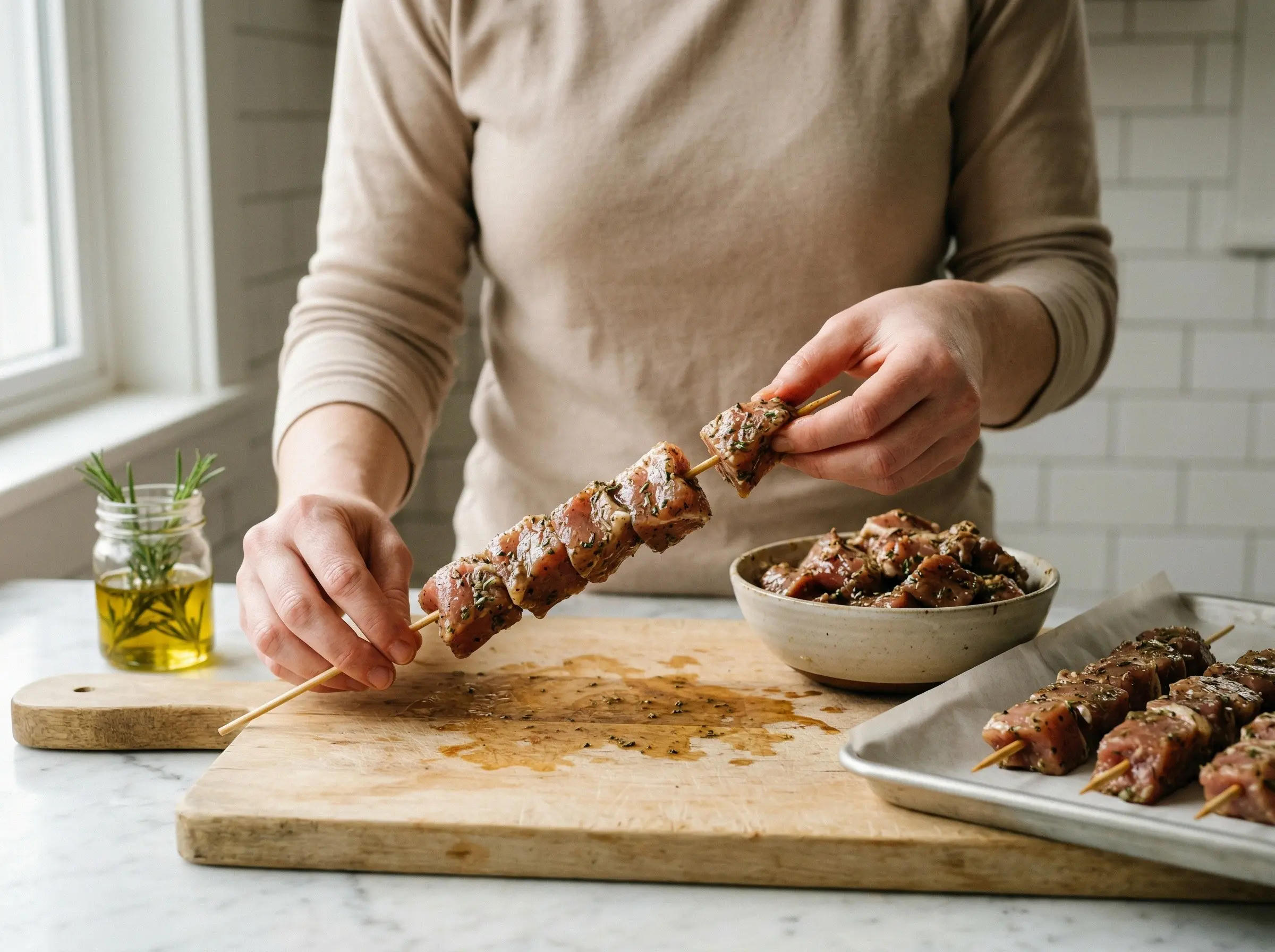
Thread the meat onto skewers. Remove the pork from the marinade, shaking off excess but not wiping dry. Thread 5-6 pieces onto each skewer, leaving a small space between pieces to ensure even cooking. Do not pack the meat too tightly or the centers will not cook through. If some pieces have more fat, distribute them evenly among the skewers for consistent flavor.
Step 4
Grill the souvlaki. Preheat your grill to high heat - charcoal provides the most authentic smoky flavor, but gas works well too. Oil the grates to prevent sticking. Grill the skewers for 8-12 minutes total, turning every 2-3 minutes to develop char on all sides. The pork should have beautiful grill marks and be cooked through but still juicy - internal temperature of 145-150 degrees F. Let rest for 2-3 minutes after removing from the grill. For stovetop cooking, use a grill pan or cast iron skillet over high heat.
Step 5
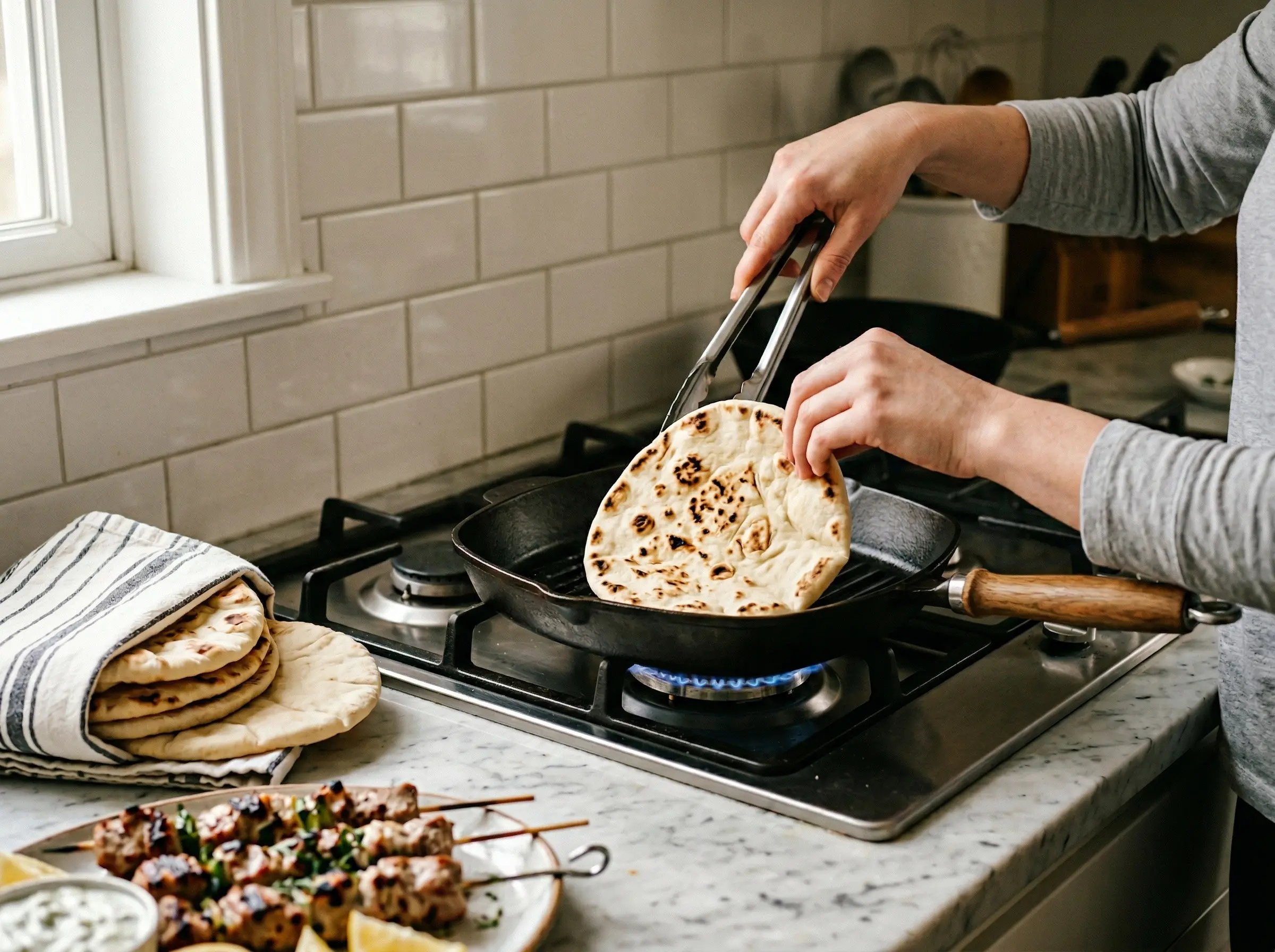
Warm the pita bread. While the meat rests, briefly warm the pita breads on the grill for 30 seconds to 1 minute per side until soft and pliable with light char marks. Alternatively, wrap in foil and warm in a 350 degree F oven for 5 minutes, or heat in a dry skillet. The pita should be soft enough to wrap without cracking. Keep warm wrapped in a clean kitchen towel.
Step 6
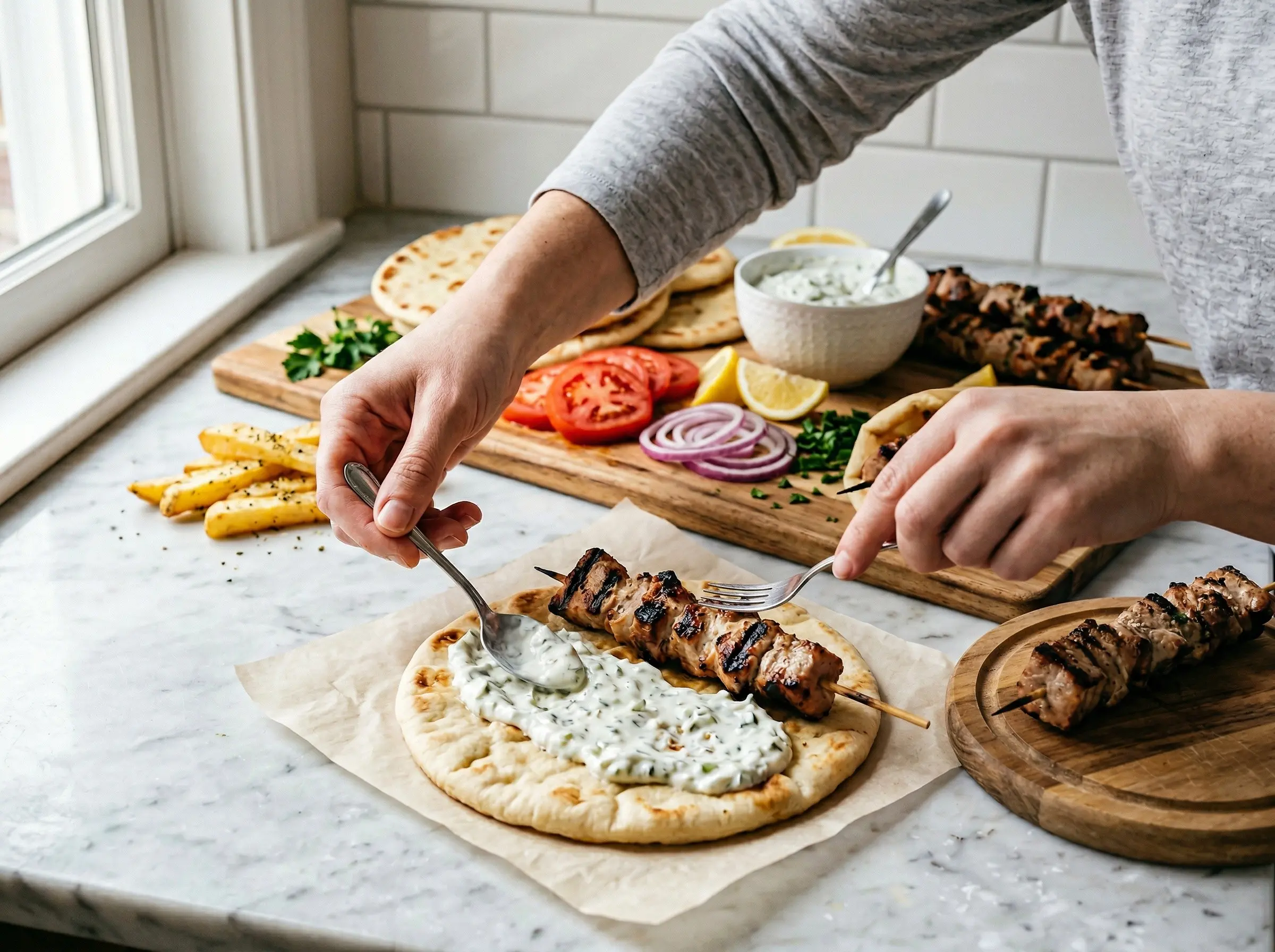
Assemble and serve. Slide the grilled pork off the skewers onto a serving platter. Serve family-style with warm pita bread, tzatziki, sliced tomatoes, sliced red onion, and lemon wedges, allowing everyone to build their own wraps. To assemble a souvlaki wrap: lay a warm pita flat, spread tzatziki down the center, add several pieces of pork, top with tomatoes and onion, and optionally add a handful of hot french fries (the Thessaloniki way). Roll up the bottom third and fold in the sides to create a cone shape, wrapping in parchment paper for easier eating. Squeeze fresh lemon juice over the meat before wrapping for brightness. Serve immediately while the meat is hot and the pita is warm. Souvlaki is perfect street food - eaten standing, walking, or gathered around a table with friends, cold drinks, and good conversation. Leftover grilled pork can be refrigerated and reheated for salads, rice bowls, or quick wraps.
You Might Also Like
Master Your Kitchen with PantryAI
Love this recipe? Save it, shop for it, and cook it with ease. Download the PantryAI app to organize your pantry, track expirations, and discover recipes based on what you already have.

On a computer?Scan with your iPhone camera to download PantryAI.







Swipe to see more screenshots