Greek Salad
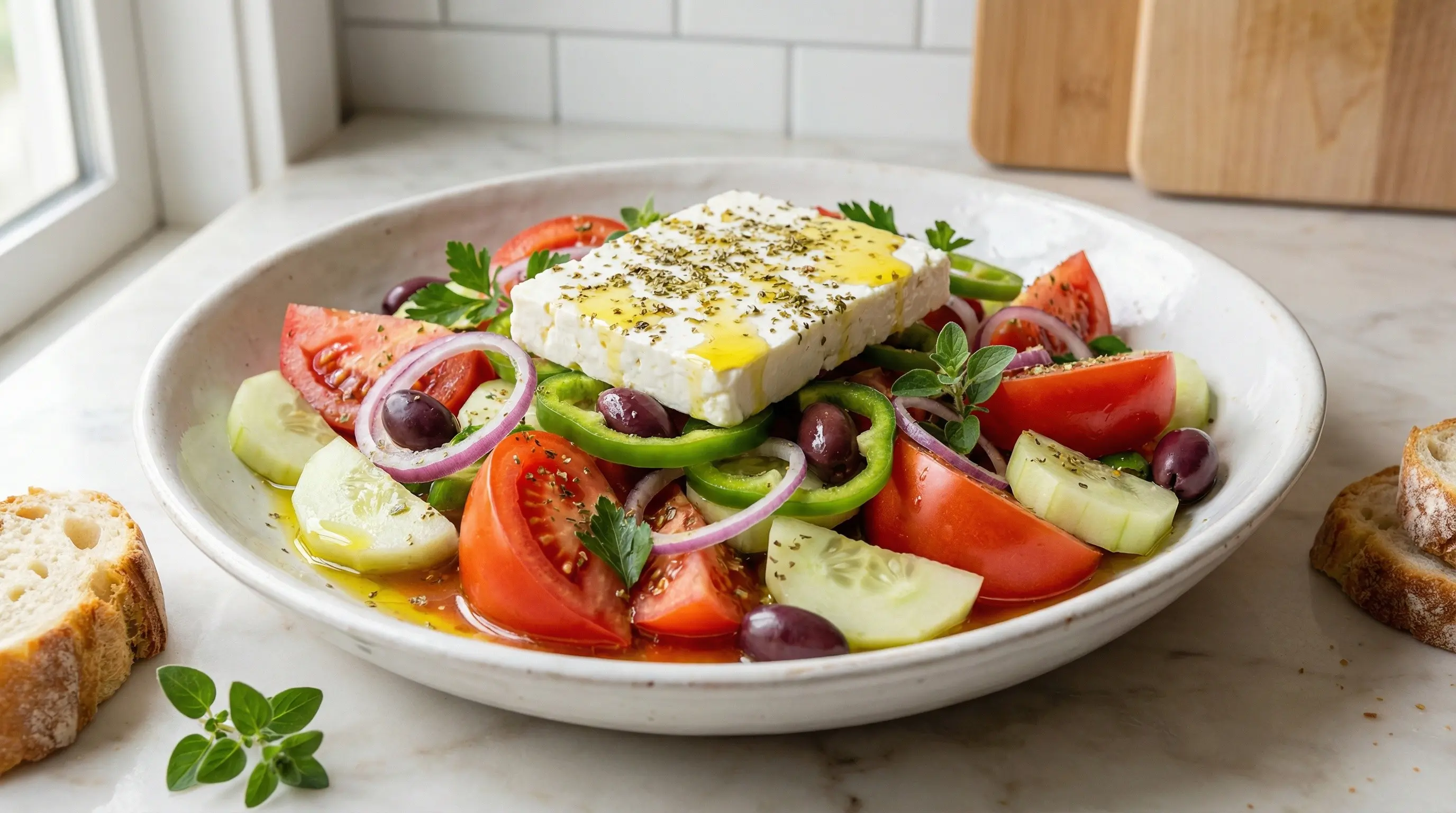
Learn how to make authentic Greek salad (horiatiki) with ripe tomatoes, crisp cucumbers, creamy feta, and briny olives. This refreshing Mediterranean classic is simple, healthy, and delicious!
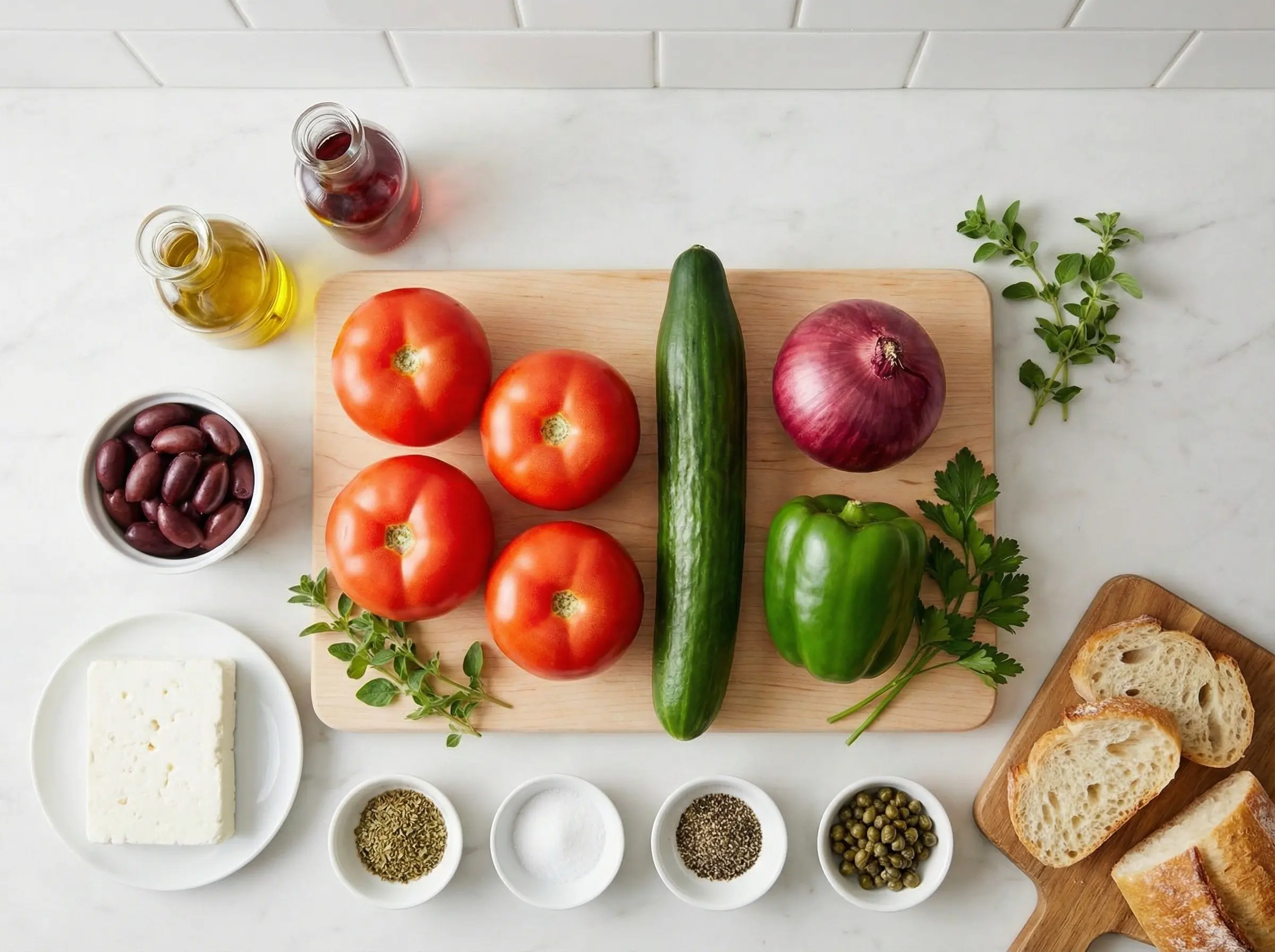
Ingredients
The Story
Greek salad, known in Greece as horiatiki (meaning "village salad"), is one of the most iconic dishes of Greek cuisine and a symbol of Mediterranean eating at its finest. Unlike many salads that have murky origins, horiatiki has a clear identity rooted in the rural villages of Greece where farmers would assemble whatever fresh vegetables were at hand - tomatoes, cucumbers, onions, and peppers - drizzle them with local olive oil, and top them with cheese made from their own sheep or goats. This was peasant food in the best sense: simple, seasonal, and deeply connected to the land. The salad as we know it today became standardized and popularized during the mid-20th century as Greek tourism grew and visitors fell in love with this refreshing dish. What distinguishes authentic horiatiki from the "Greek salads" served in many restaurants outside Greece is both what it contains and what it does not. A true Greek salad never includes lettuce - this is perhaps the most common misconception. The traditional components are tomatoes, cucumbers, onion (usually red), green bell pepper, Kalamata olives, and a generous slab of feta cheese on top. The dressing is nothing more than excellent extra virgin olive oil, a splash of red wine vinegar, dried oregano, and salt. Capers are sometimes added, as is a sprinkle of fresh or dried herbs. The vegetables are cut into large, rustic chunks rather than finely diced - this is a salad meant to be eaten with a fork, stabbing each component and perhaps dragging it through the olive oil pooled at the bottom of the bowl. What makes Greek salad so perfect is the way these simple ingredients harmonize. Ripe summer tomatoes provide sweetness and acidity. Cool, crunchy cucumbers offer refreshing contrast. Sharp red onion adds bite. Green peppers contribute subtle bitterness and crunch. Kalamata olives bring briny depth. And the feta - always in a thick slab on top, never crumbled - delivers creamy, tangy richness that ties everything together. The olive oil, which should be the best quality you can find, coats each vegetable and creates the "sauce" at the bottom that is almost as enjoyable as the salad itself, perfect for sopping up with crusty bread. Greek salad embodies the Mediterranean philosophy that the best cooking requires not complexity but rather excellent ingredients treated with respect.
Instructions
Step 1
Start with the best ingredients you can find - Greek salad is only as good as its components. Choose ripe, in-season tomatoes that smell fragrant and give slightly when pressed. Cut them into large wedges, about 8 pieces per tomato. Do not seed or peel them - every part of a good tomato belongs in this salad. Place the tomato wedges in a large shallow bowl or platter. Season lightly with a pinch of salt to begin drawing out their juices, which will mingle with the olive oil to create the dressing.

Step 2
Prepare the cucumber. If using English cucumber, there is no need to peel or seed it. Cut it in half lengthwise, then slice into thick half-moons about 1/2 inch thick. If using regular cucumbers, peel them (the skin can be bitter and waxy) and remove the seeds by scraping with a spoon. The cucumber pieces should be chunky and substantial - this is a rustic salad, not a finely composed dish. Add the cucumber to the bowl with the tomatoes.
Step 3
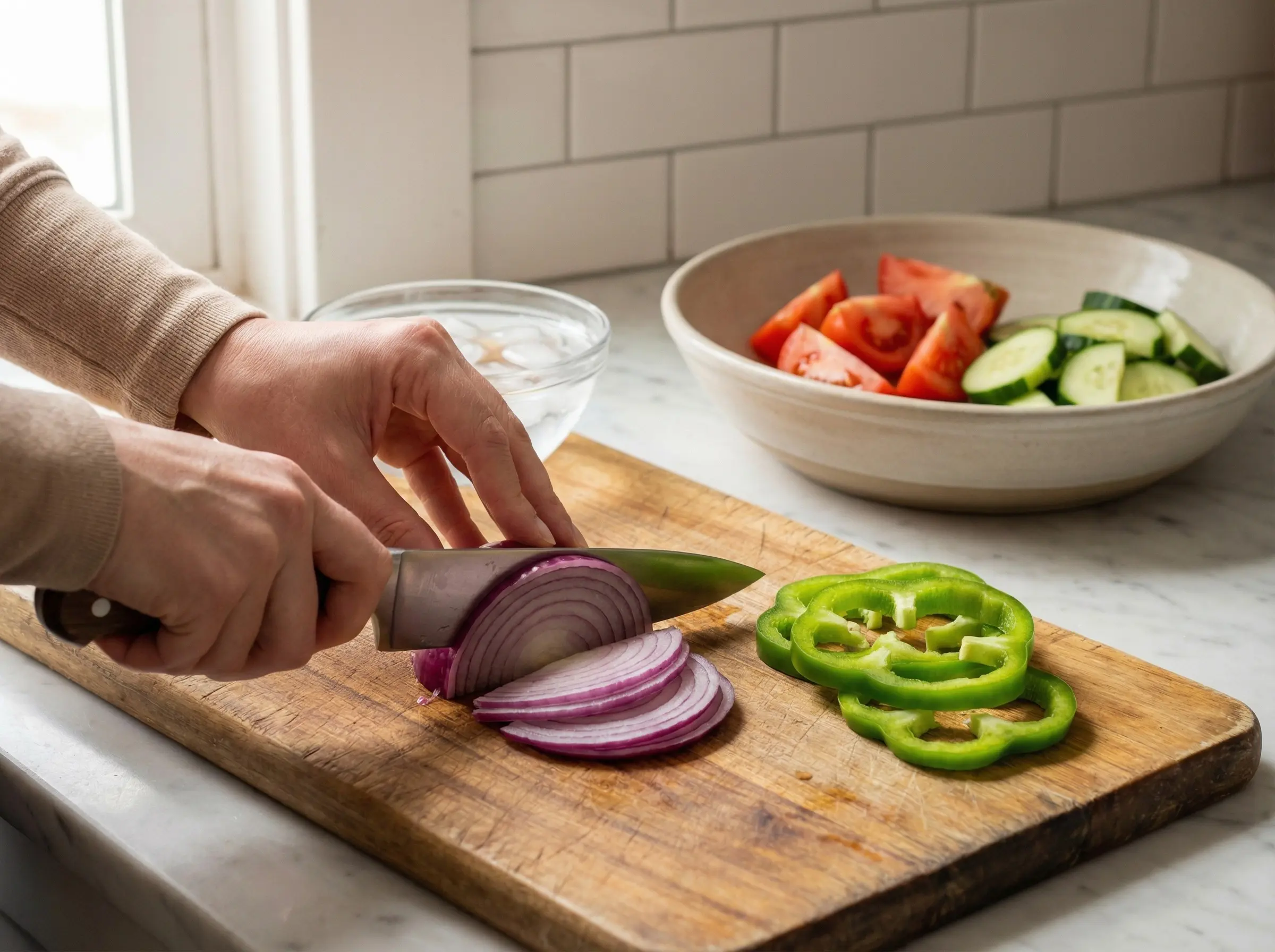
Slice the red onion into thin half-moons or rings. Red onion provides essential sharpness, but it can be overwhelming if the pieces are too thick. If you find raw onion too pungent, soak the slices in ice water for 10 minutes, then drain and pat dry - this mellows the bite while preserving the crunch. Add the onion to the bowl. Cut the green bell pepper into rings or large chunks - traditionally rings are used for visual appeal. Remove the seeds and white membranes. Add to the bowl.
Step 4
Add the Kalamata olives to the bowl. Use whole olives with pits for the most authentic presentation and best flavor - pitted olives lose some of their brininess. Scatter them over the vegetables. If using capers, add them now as well. Gently toss all the vegetables together, being careful not to crush the tomatoes. The goal is to distribute the ingredients evenly while keeping the large chunks intact.
Step 5
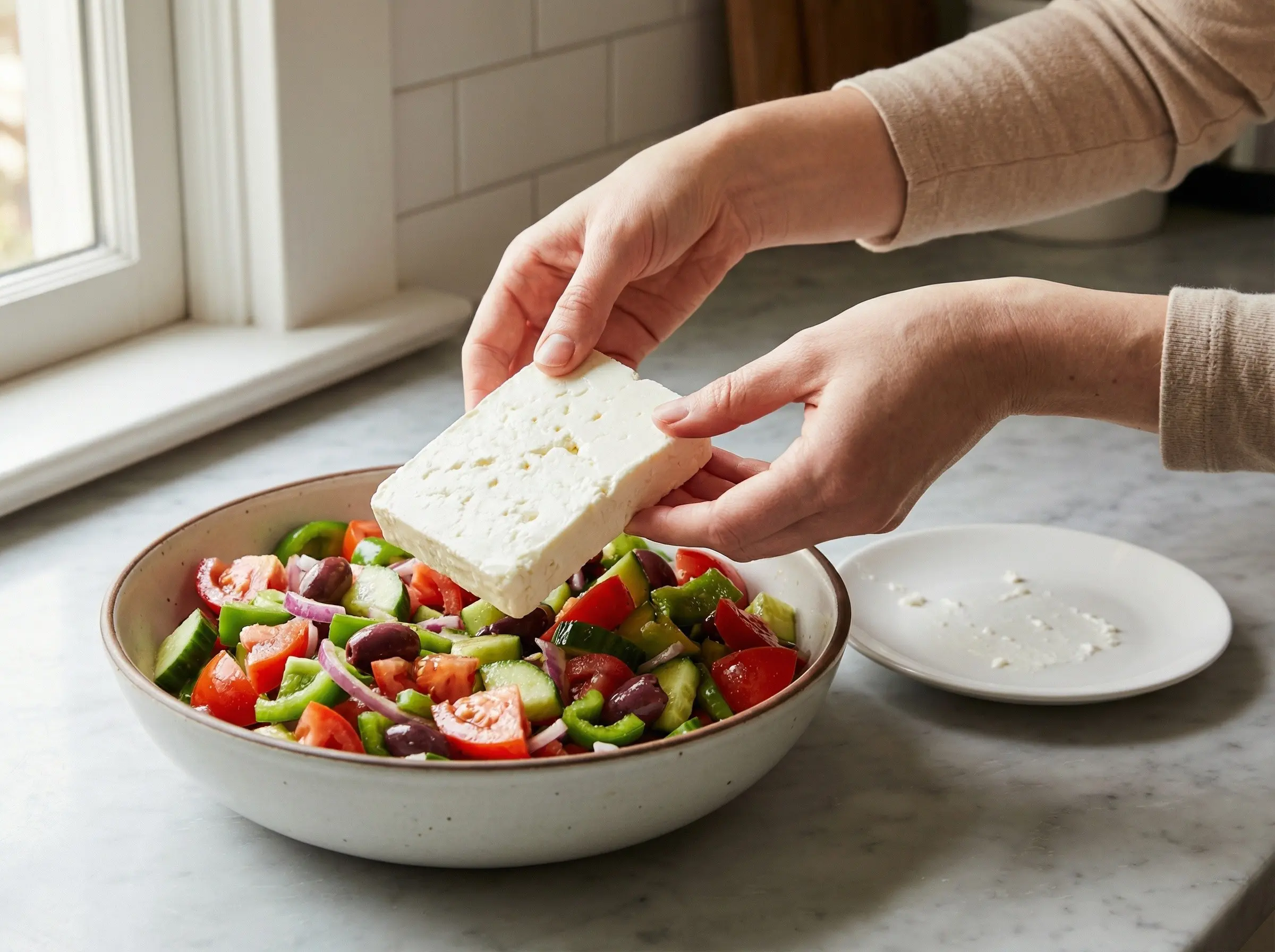
Place the block of feta cheese directly on top of the salad - this is the traditional presentation. Do not crumble the feta; a thick slab allows each person to cut pieces as they eat and provides visual drama. The feta should be good quality Greek feta made from sheep''s milk or a sheep and goat milk blend - it will be creamier and tangier than cow''s milk versions. If you can only find pre-crumbled feta, scatter it generously over the top, but know that the texture and experience will be different.
Step 6
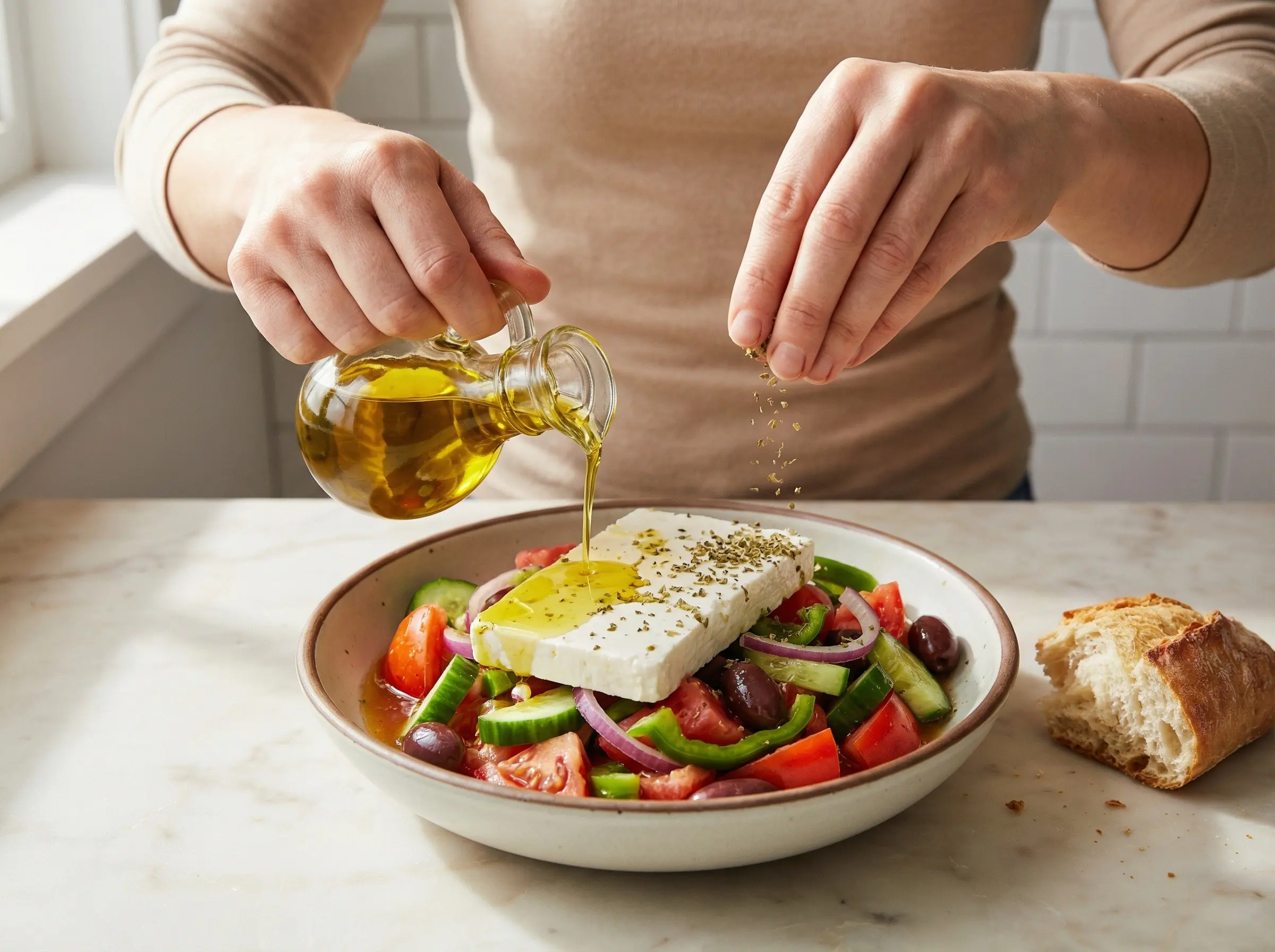
Dress the salad simply. Drizzle the extra virgin olive oil generously over everything, including the feta. Add the red wine vinegar. Sprinkle with the dried oregano, crushing it between your fingers to release its aromatic oils. Season with salt (go easy since the feta and olives are already salty) and freshly ground black pepper. Do not toss again - let the dressing pool at the bottom of the bowl. Garnish with fresh oregano or parsley if desired. Serve immediately with crusty bread for soaking up the delicious juices at the bottom - this mixture of olive oil, tomato juice, and vinegar is one of the great pleasures of Greek salad. In Greece, horiatiki is often served as a shared dish in the center of the table, with everyone reaching in to spear vegetables and break off pieces of feta. It is perfect alongside grilled meats, fish, or as a light meal on its own on a hot summer day.
You Might Also Like