
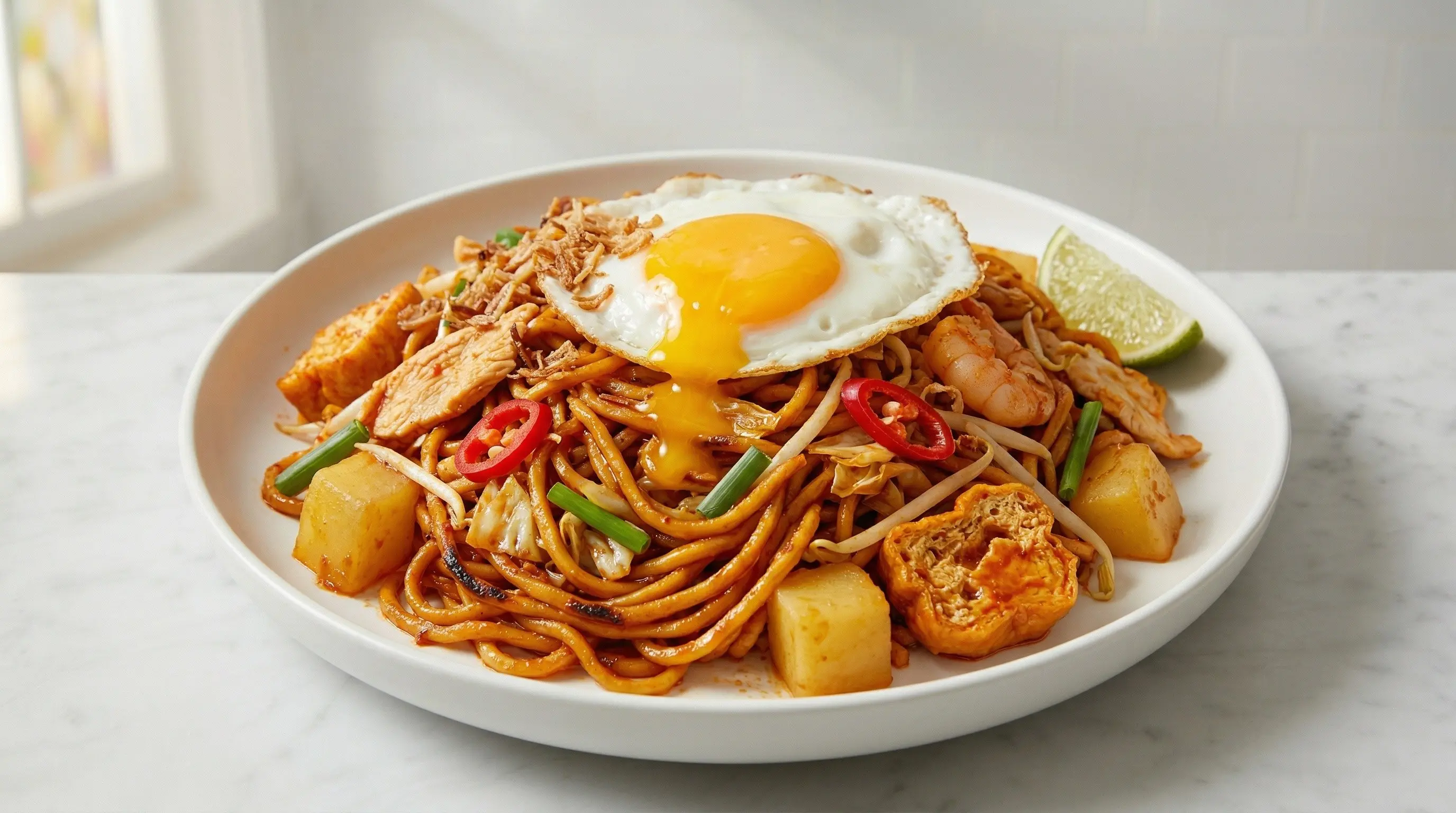
Mee Goreng
Learn how to make authentic mee goreng, the beloved Malaysian and Singaporean spicy fried noodles with a sweet-savory tomato sauce. This hawker center classic is bold, tangy, and utterly addictive!
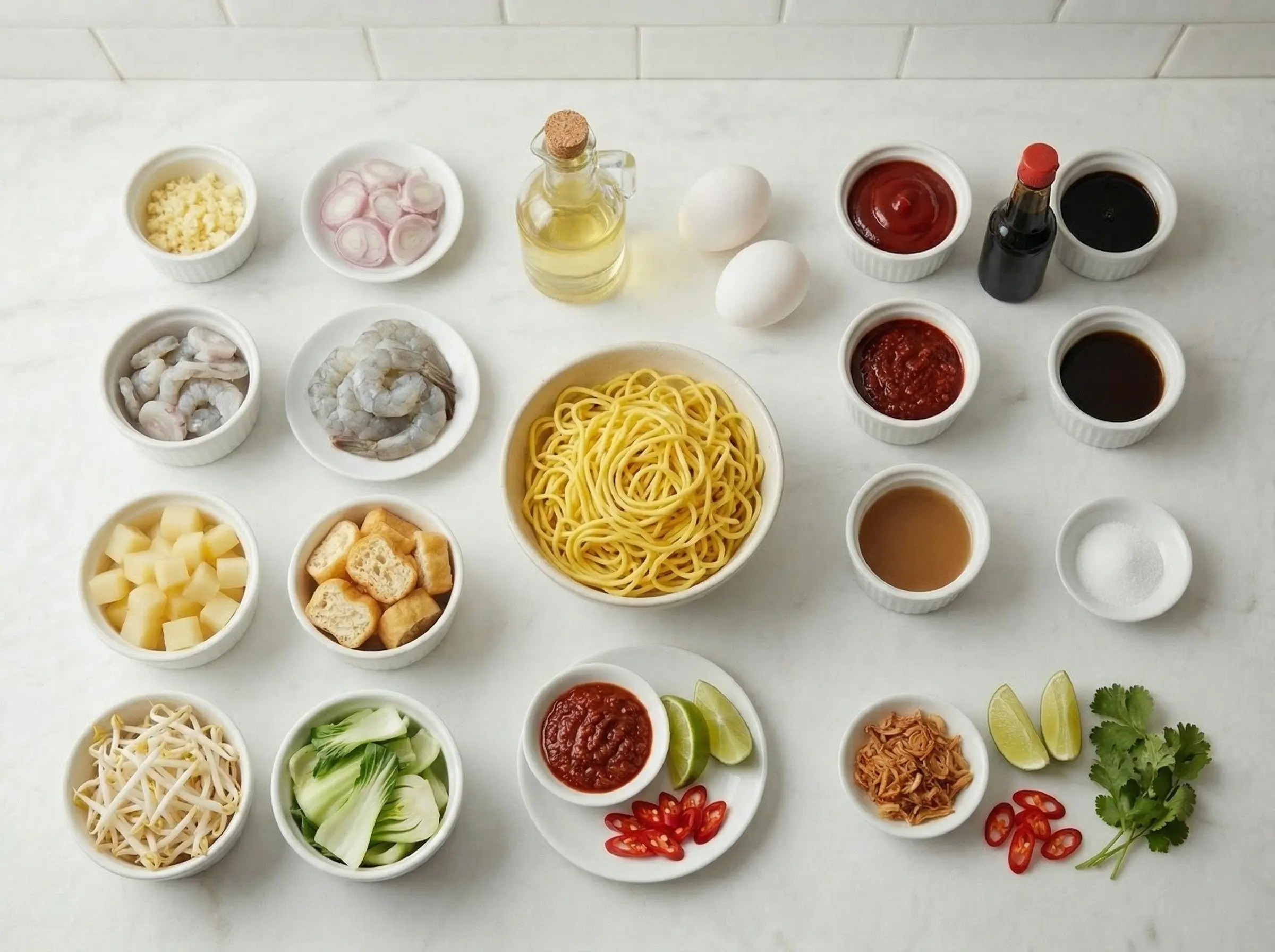
Ingredients
The Story
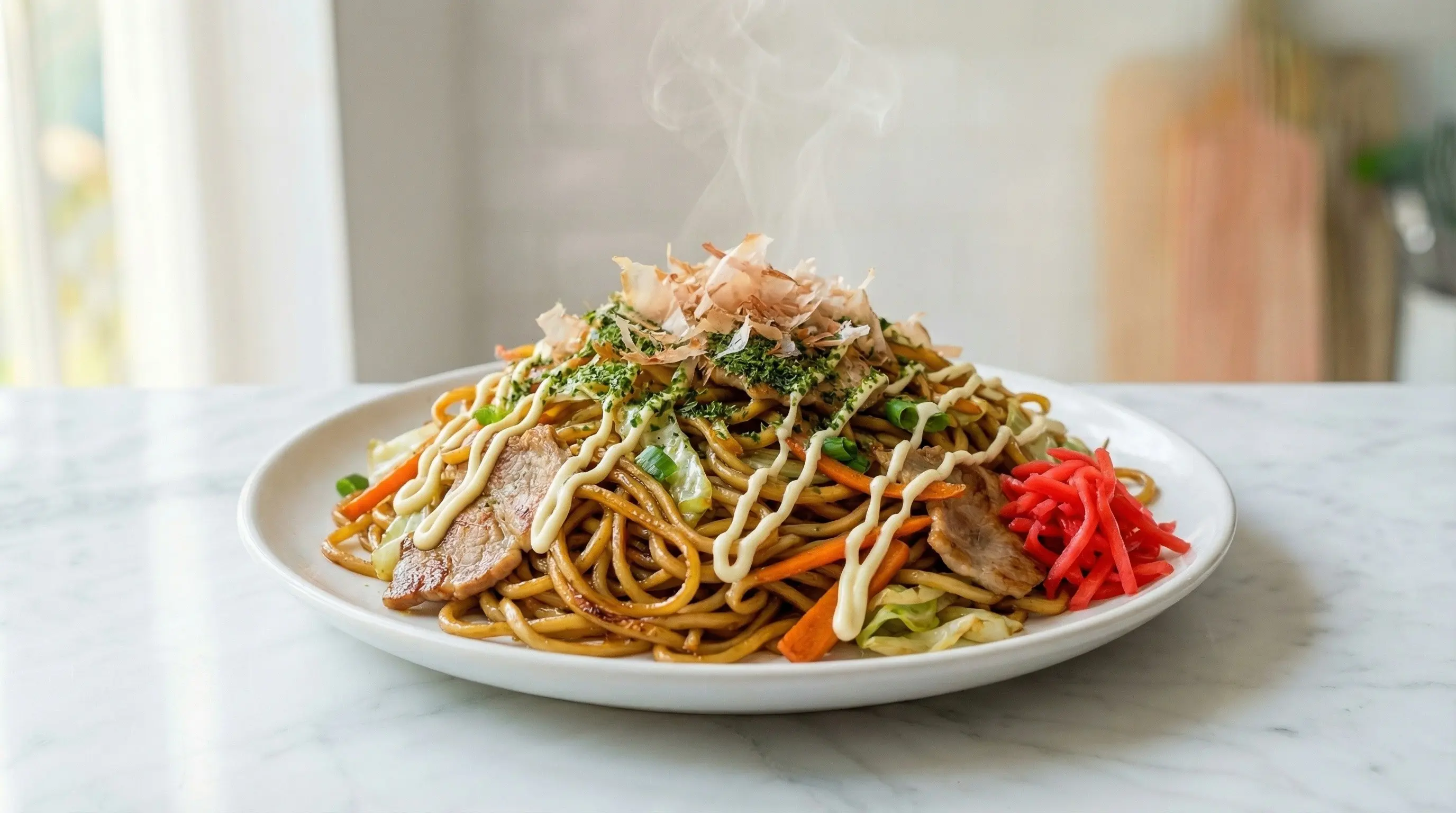
Mee goreng is one of Southeast Asia's most vibrant noodle dishes, a tangle of yellow wheat noodles stir-fried in a distinctive sweet, spicy, and tangy sauce that stains everything a deep reddish-orange. The name simply means "fried noodles" in Malay and Indonesian (mee/mi = noodles, goreng = fried), but this particular preparation - with its unique sauce built on tomato ketchup, chili paste, and sweet soy sauce - is a signature of Malaysian and Singaporean hawker culture. The dish reflects the multicultural culinary heritage of the region, blending Chinese noodle-frying techniques with Indian spices and Malay flavor preferences. Mee goreng has strong ties to the Indian Muslim (Mamak) community of Malaysia and Singapore. Mamak stalls - 24-hour open-air restaurants run by Tamil Muslim vendors - are beloved institutions where locals gather at all hours for affordable, flavorful food. Mee goreng mamak, the version served at these stalls, is perhaps the most iconic style, featuring a slightly sweeter sauce, potato, tofu puffs, and often a fried egg on top. The dish is typically cooked over extremely high heat in well-seasoned woks, producing the characteristic "wok hei" (breath of the wok) that no home kitchen can quite replicate. Each Mamak stall has its own closely guarded recipe, and customers develop fierce loyalty to their favorites. What makes mee goreng so extraordinary is the complex interplay of flavors in its distinctive sauce. Unlike Chinese-style fried noodles that rely primarily on soy sauce, mee goreng builds its flavor from an unexpected combination: tomato ketchup provides sweetness and tang, chili paste adds heat, sweet soy sauce (kecap manis) contributes caramel depth, and tamarind or lime adds brightness. The noodles are stir-fried until slightly charred at the edges, coated in this bold sauce, and tossed with vegetables, protein, and often a squeeze of lime. Topped with a fried egg whose runny yolk enriches every bite, scattered with fried shallots for crunch, mee goreng is street food at its finest - unpretentious, deeply satisfying, and impossible to eat just one plate.
Instructions
Step 1
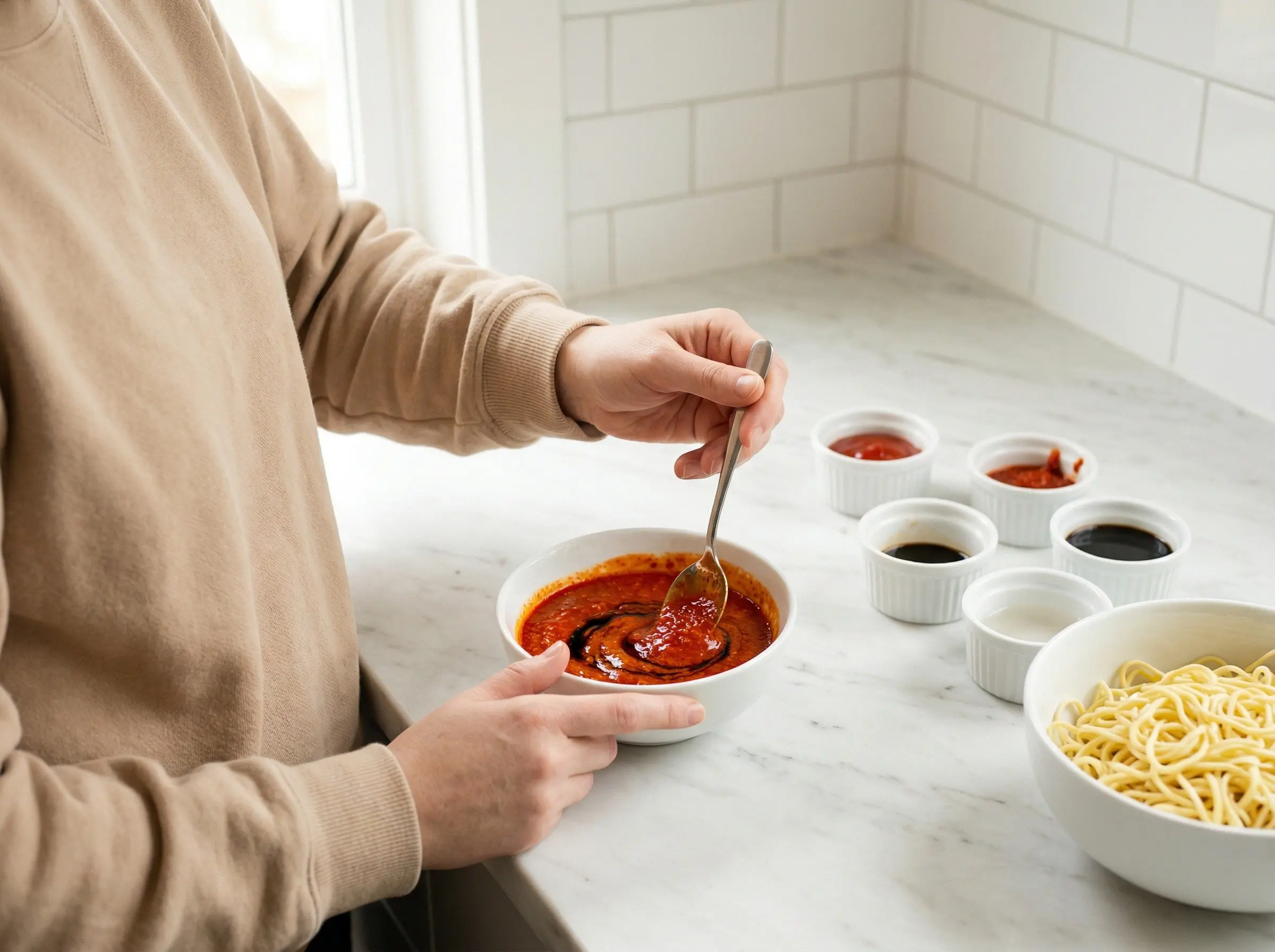
Prepare the noodles and sauce. If using fresh noodles, loosen them gently and set aside. If using dried noodles, cook according to package directions until just al dente, drain, rinse with cold water, and toss with a little oil to prevent sticking. In a small bowl, combine all the sauce ingredients: tomato ketchup, kecap manis, chili paste, soy sauce, tamarind water, and sugar. Stir well to combine. This sauce is the soul of mee goreng - taste it and adjust the balance of sweet, sour, and spicy to your preference.
Step 2
Prepare all other ingredients. Have everything ready before you start cooking - mee goreng comes together very quickly over high heat. Slice the chicken or prepare the shrimp. Cube the boiled potato. Halve the tofu puffs. Slice the cabbage, mince the garlic, slice the shallots, and cut the green onions. Mise en place is essential for successful stir-frying.
Step 3
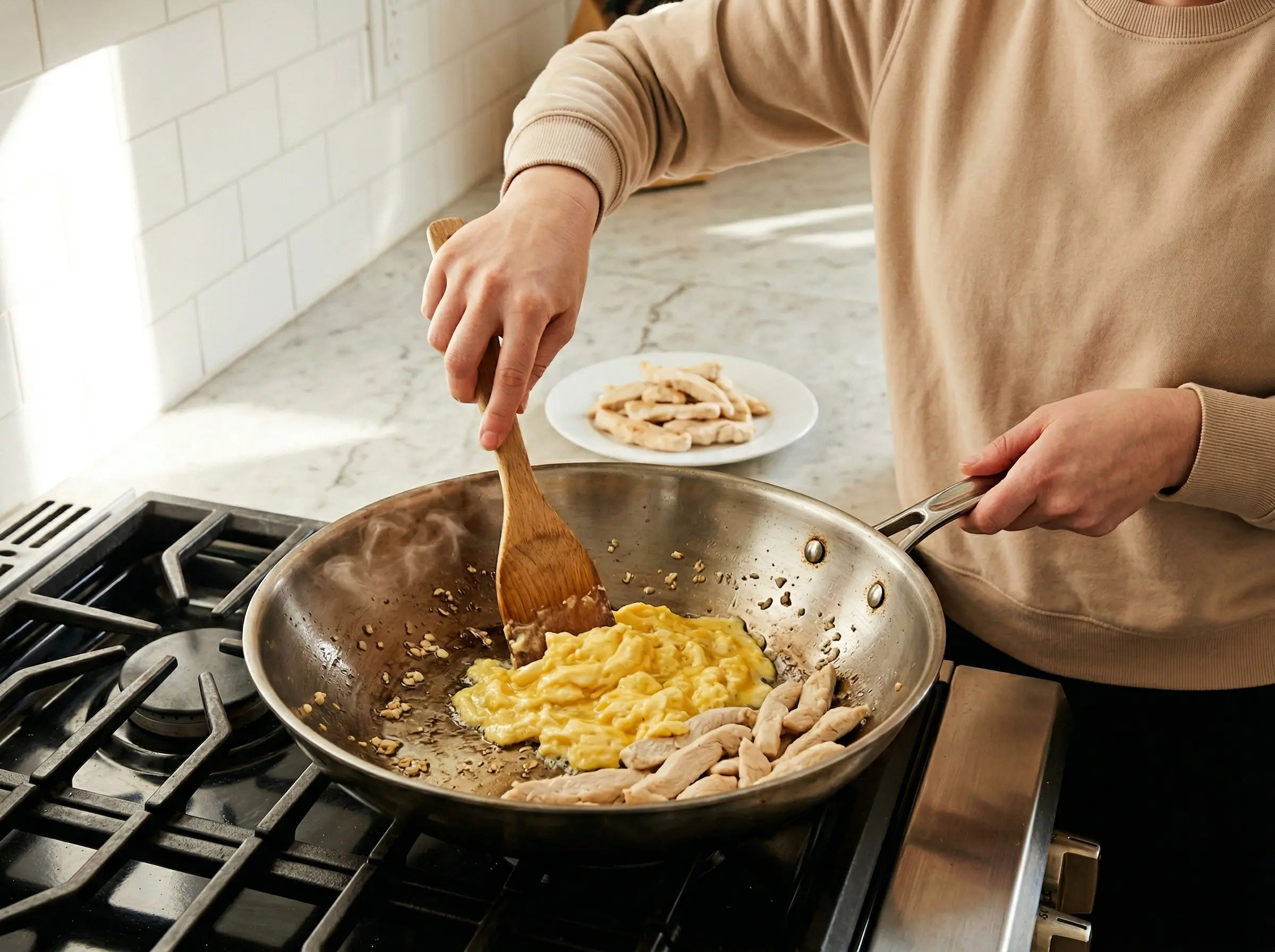
Start the stir-fry. Heat a wok or large skillet over high heat until smoking. Add 2 tablespoons of oil and swirl to coat. Add the chicken or shrimp and stir-fry for 2-3 minutes until nearly cooked through. Remove and set aside. Add the remaining oil to the wok. Add the garlic and shallots and stir-fry for 30 seconds until fragrant. Push to the side, crack the eggs into the wok, and scramble quickly, breaking them into small pieces.
Step 4
Add the noodles and sauce. Add the noodles to the wok along with the prepared sauce. Toss vigorously using tongs or two spatulas, coating the noodles evenly with the sauce. The high heat will cause some noodles to char slightly at the edges - this is desirable and adds flavor. Stir-fry for 2-3 minutes, keeping everything moving constantly.
Step 5
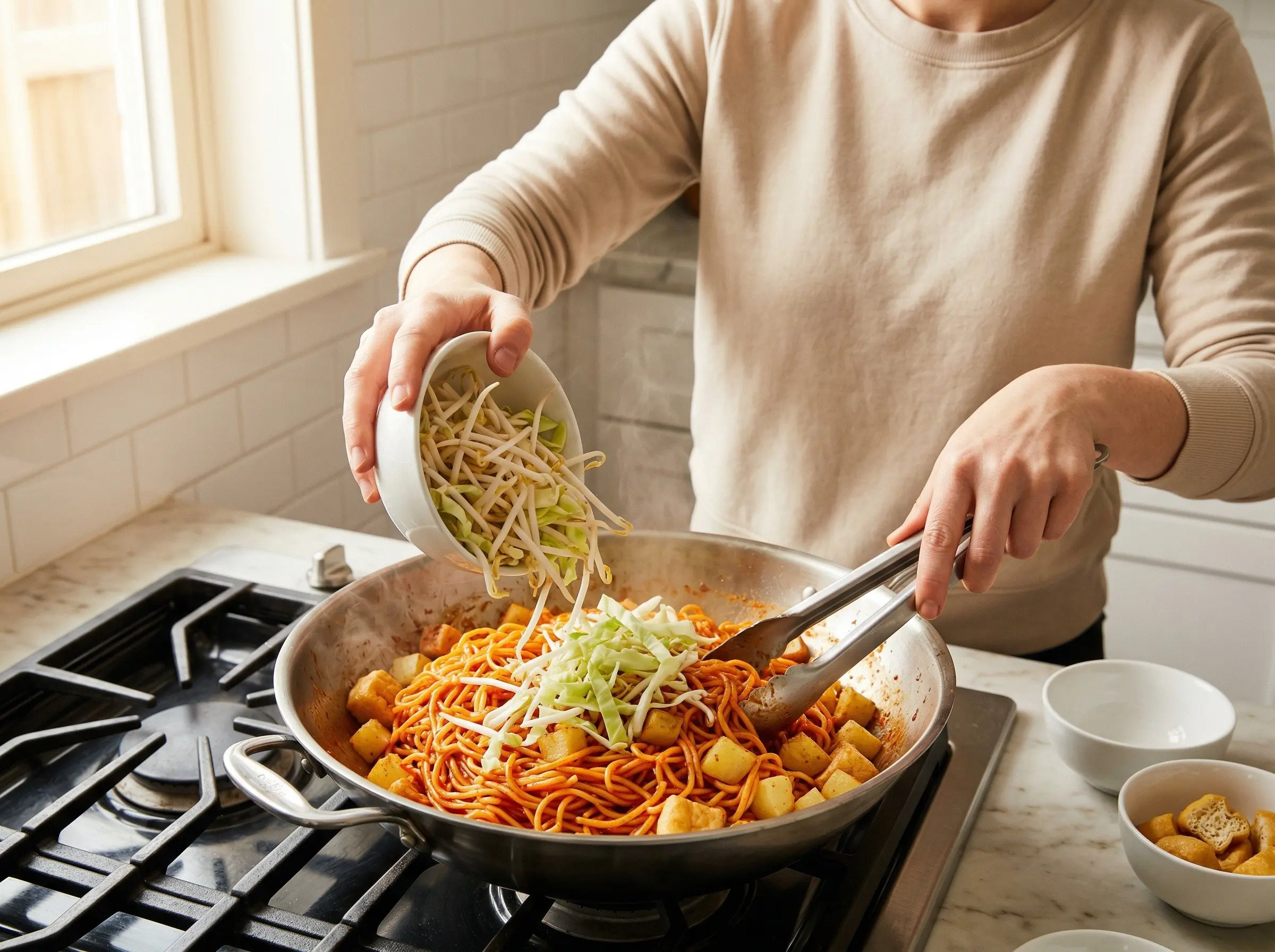
Add vegetables and protein. Return the cooked chicken or shrimp to the wok. Add the cubed potato, tofu puffs, cabbage, and bean sprouts. Toss everything together over high heat for another 2-3 minutes until the cabbage is slightly wilted and everything is heated through and well combined. Add the green onions in the last 30 seconds. If the noodles seem dry, add a splash of water to loosen.
Step 6
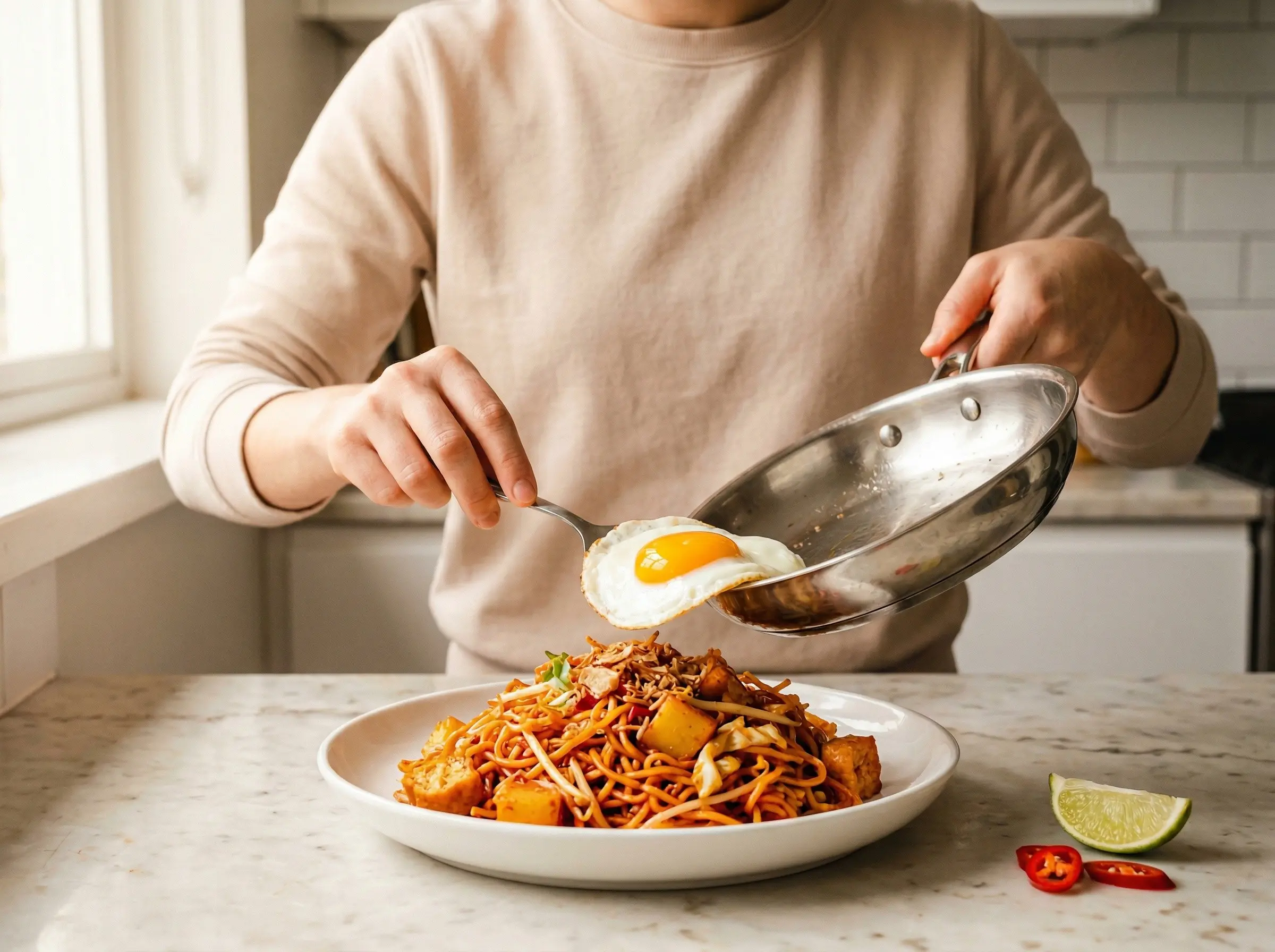
Serve immediately. Transfer the mee goreng to serving plates, piling it high. Garnish generously with fried shallots for crunch, fresh lime wedges for squeezing over, and sliced red chilies for additional heat. For an authentic Mamak touch, top each plate with a fried egg - the runny yolk enriches every bite when broken and mixed in. Serve immediately while hot, with extra sambal on the side for those who want more heat. Mee goreng does not wait - it is best eaten straight from the wok when the noodles are still slightly charred and the vegetables retain their crunch.
You Might Also Like
Master Your Kitchen with PantryAI
Love this recipe? Save it, shop for it, and cook it with ease. Download the PantryAI app to organize your pantry, track expirations, and discover recipes based on what you already have.

On a computer?Scan with your iPhone camera to download PantryAI.






Swipe to see more screenshots