
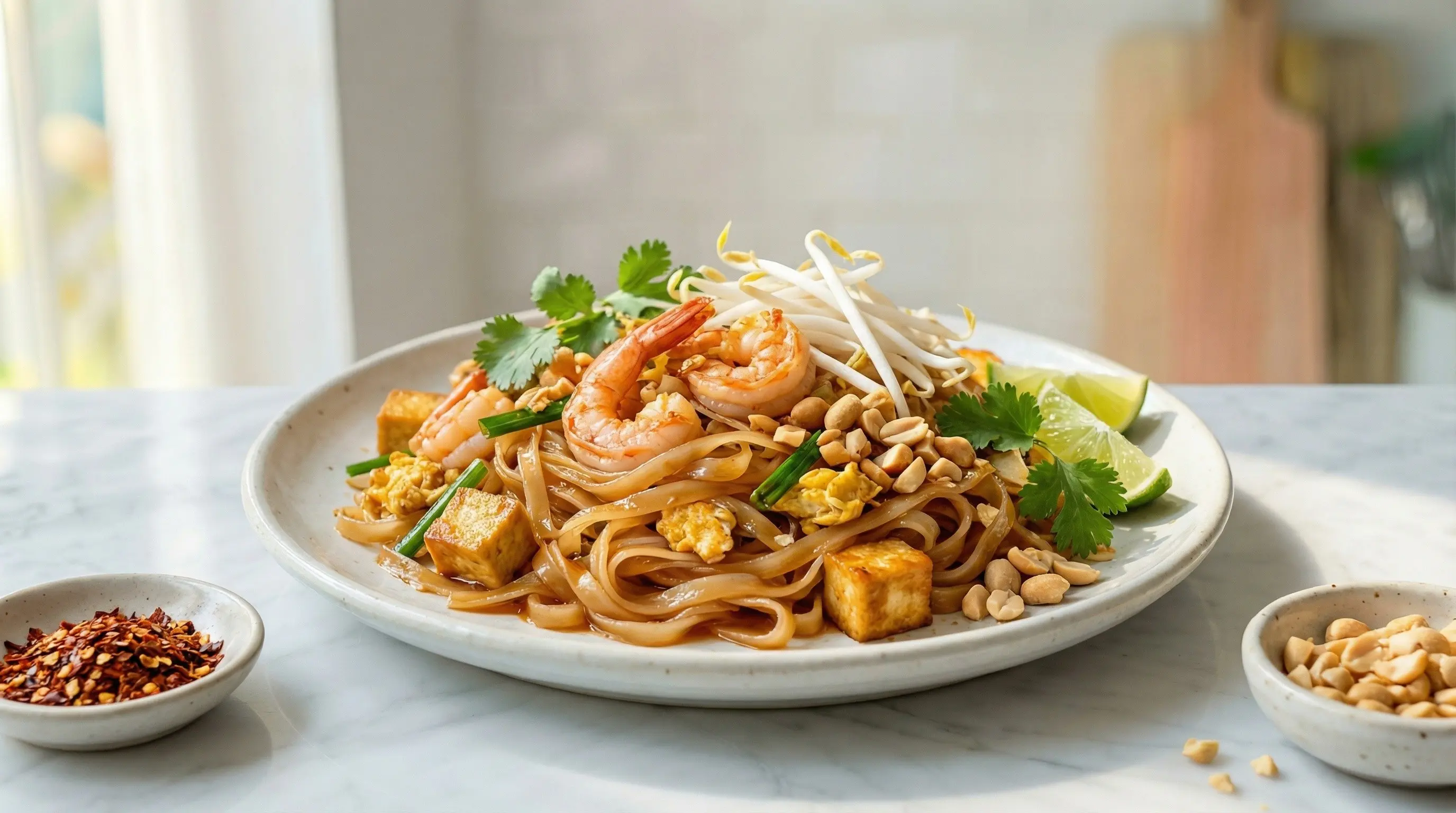
Pad Thai
Learn how to make authentic pad thai with rice noodles, shrimp, tofu, and the perfect sweet-sour-salty sauce. This iconic Thai street food is easier to make at home than you think!
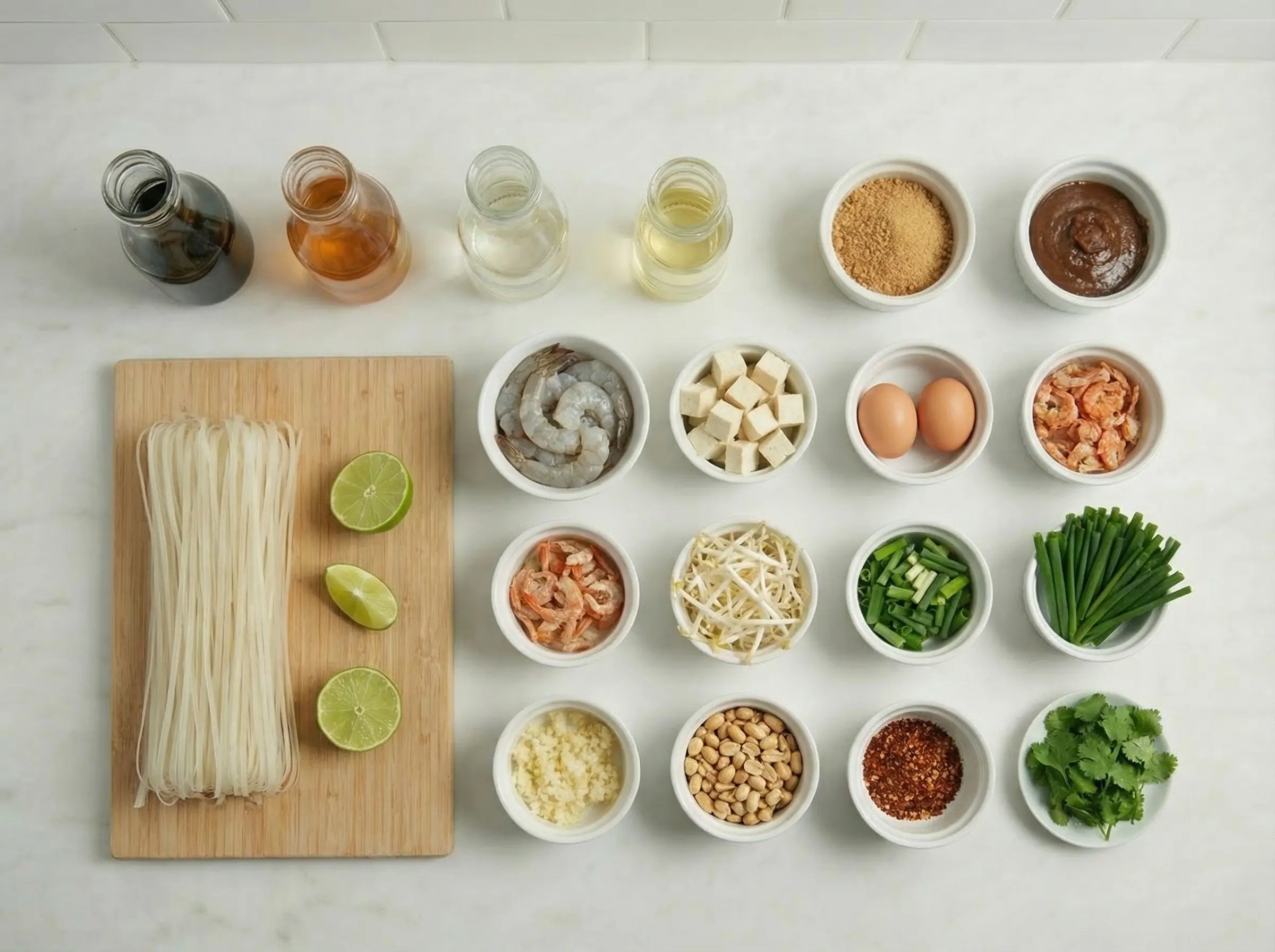
Ingredients
The Story
Pad thai is arguably Thailand's most famous dish internationally, yet it is surprisingly modern in origin - a deliberate creation of Thai nationalism rather than an ancient culinary tradition. The dish was invented in the late 1930s and early 1940s during the government of Prime Minister Plaek Phibunsongkhram, who sought to modernize Thailand and promote a unified national identity. Facing rice shortages during World War II, the government promoted noodles as an alternative staple and launched a campaign to create a standardized "Thai" noodle dish that would represent the nation. The result was pad thai - a dish designed to be distinctly Thai while incorporating Chinese stir-fry techniques that had long influenced Thai cooking. The government distributed pad thai recipes to street vendors across the country and even sent food carts to villages to popularize the dish. The name itself was part of the nationalist agenda: "pad" means stir-fried and "Thai" reinforced the dish's identity as a symbol of the nation. The recipe was carefully calibrated to showcase Thai flavors - the characteristic balance of sweet, sour, salty, and spicy that defines Thai cuisine - while using affordable, widely available ingredients. Tamarind provided tanginess, palm sugar added sweetness, fish sauce contributed saltiness, and dried chilies brought heat. Rice noodles, shrimp, tofu, eggs, and peanuts created a satisfying, protein-rich dish that could feed a family inexpensively. What makes pad thai so universally beloved is its masterful balance of flavors and textures. The rice noodles should be tender yet slightly chewy, never mushy or clumped together. The sauce - a combination of tamarind paste, fish sauce, and palm sugar - creates a complex flavor that is simultaneously sweet, sour, salty, and savory. Eggs scrambled into the noodles add richness, while shrimp and tofu provide protein. Bean sprouts and garlic chives contribute fresh crunch, and crushed roasted peanuts add nuttiness and texture. A squeeze of lime brightens everything, and dried chili flakes allow each diner to customize the heat. When all these elements come together in proper balance, pad thai achieves a harmony of flavors that is quintessentially Thai - a dish that is at once simple and complex, humble and extraordinary.
Instructions
Step 1
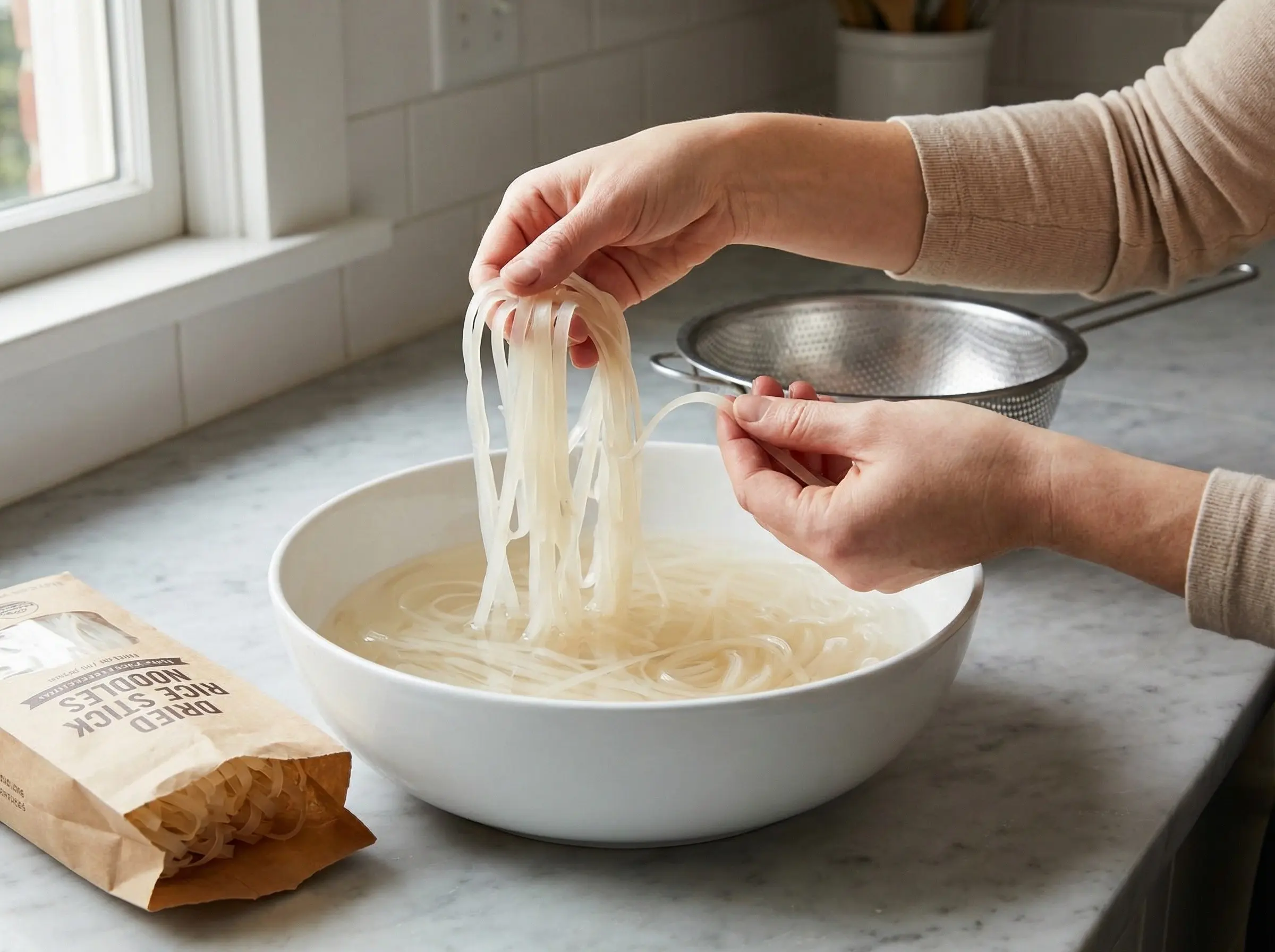
Prepare the noodles according to package directions - this is crucial for success. Most pad thai noodles need to be soaked in room temperature water for 30-60 minutes until pliable but still slightly firm and opaque in the center. Do not use hot water or the noodles will become mushy. Do not over-soak or they will fall apart during stir-frying. The noodles should be flexible enough to bend without breaking but still have a firm core - they will finish cooking in the wok. Drain well and set aside. If the noodles stick together, toss with a small amount of oil.
Step 2
Make the pad thai sauce. In a small bowl, combine the tamarind paste, fish sauce, palm sugar (or brown sugar), and rice vinegar. Stir until the sugar dissolves completely. Taste the sauce - it should be a balance of sour (tamarind), salty (fish sauce), and sweet (sugar), with sour being slightly dominant. Adjust to your preference: more tamarind for tanginess, more sugar for sweetness, more fish sauce for depth. Set aside. Prepare all other ingredients: mince the garlic, cut the green onions and garlic chives into 1-inch pieces, beat the eggs lightly, and have the bean sprouts, tofu, shrimp, dried shrimp, and peanuts ready to go.
Step 3
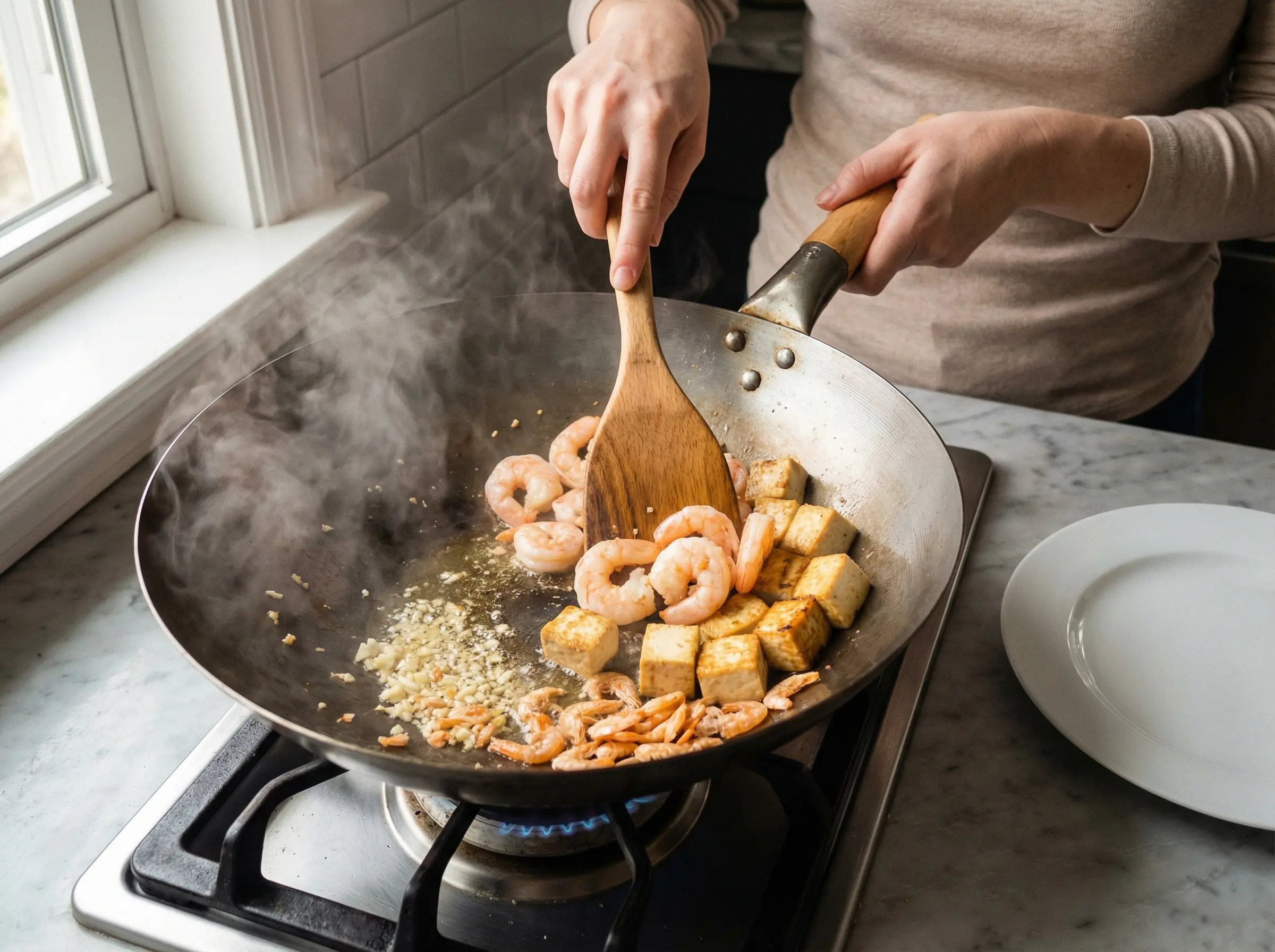
Heat a wok or large skillet over high heat until smoking. Add 2 tablespoons of the vegetable oil and swirl to coat. Add the tofu cubes and cook without stirring for 1-2 minutes until golden on the bottom, then flip and cook the other side. Push the tofu to the side of the wok. Add the shrimp in a single layer and cook for about 1 minute per side until pink and just cooked through. Add the minced garlic and dried shrimp if using, stirring for 20-30 seconds until fragrant. Transfer everything to a plate and set aside.
Step 4
Return the wok to high heat and add the remaining tablespoon of oil. Add the drained noodles and spread them out in the wok. Let them sear for 30 seconds without stirring, then toss. Pour the pad thai sauce over the noodles and toss continuously for 1-2 minutes, using a lifting and folding motion to coat the noodles evenly. The noodles should absorb the sauce and become glossy and slightly caramelized in spots. If the noodles seem dry or are sticking, add a splash of water (1-2 tablespoons at a time). The noodles should be tender but still have a slight chew.
Step 5
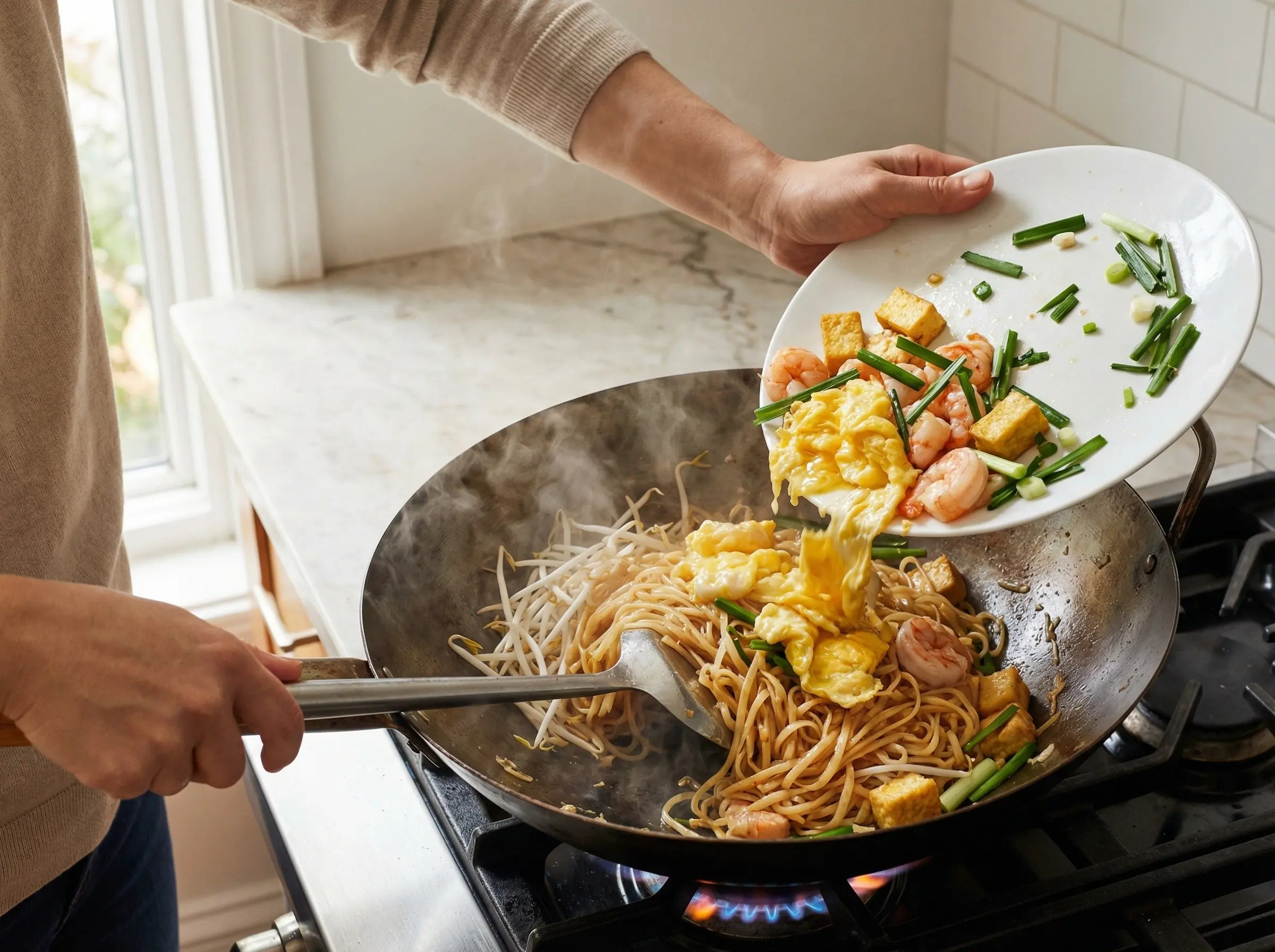
Push the noodles to one side of the wok. Crack the eggs into the empty space and scramble them quickly, breaking them into small pieces as they set. Before the eggs are fully cooked, fold them into the noodles. Return the cooked shrimp, tofu, and aromatics to the wok. Add the green onions, garlic chives if using, and about half of the bean sprouts. Toss everything together vigorously for another minute until heated through and well combined. The dish should be slightly smoky and aromatic.
Step 6
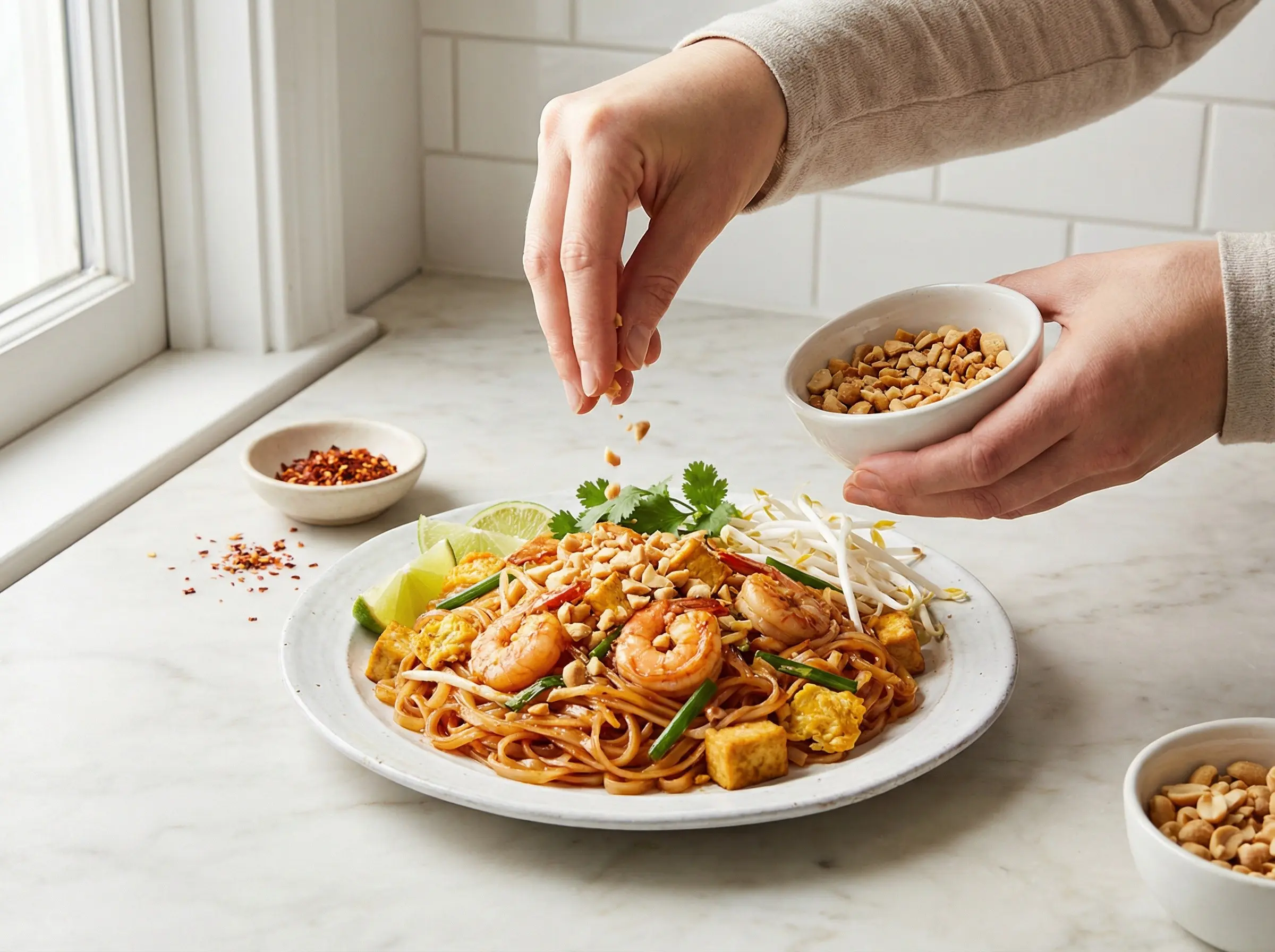
Remove from heat and taste. Adjust seasoning if needed: add more fish sauce for saltiness, a squeeze of lime for brightness, or a pinch of sugar for sweetness. Transfer to a serving plate, mounding the noodles attractively. Top with the remaining fresh bean sprouts, chopped roasted peanuts, and fresh cilantro. Serve immediately with lime wedges, dried chili flakes, and additional chopped peanuts on the side. Each diner can customize their plate with extra lime juice for sourness, chili flakes for heat, and peanuts for crunch - these condiments are essential to the pad thai experience. In Thailand, pad thai is also often served with raw banana flower, fresh garlic chives, and pickled radish on the side. Pad thai is best eaten immediately while the noodles are still tender and the bean sprouts are crisp.
You Might Also Like
Master Your Kitchen with PantryAI
Love this recipe? Save it, shop for it, and cook it with ease. Download the PantryAI app to organize your pantry, track expirations, and discover recipes based on what you already have.

On a computer?Scan with your iPhone camera to download PantryAI.








Swipe to see more screenshots