
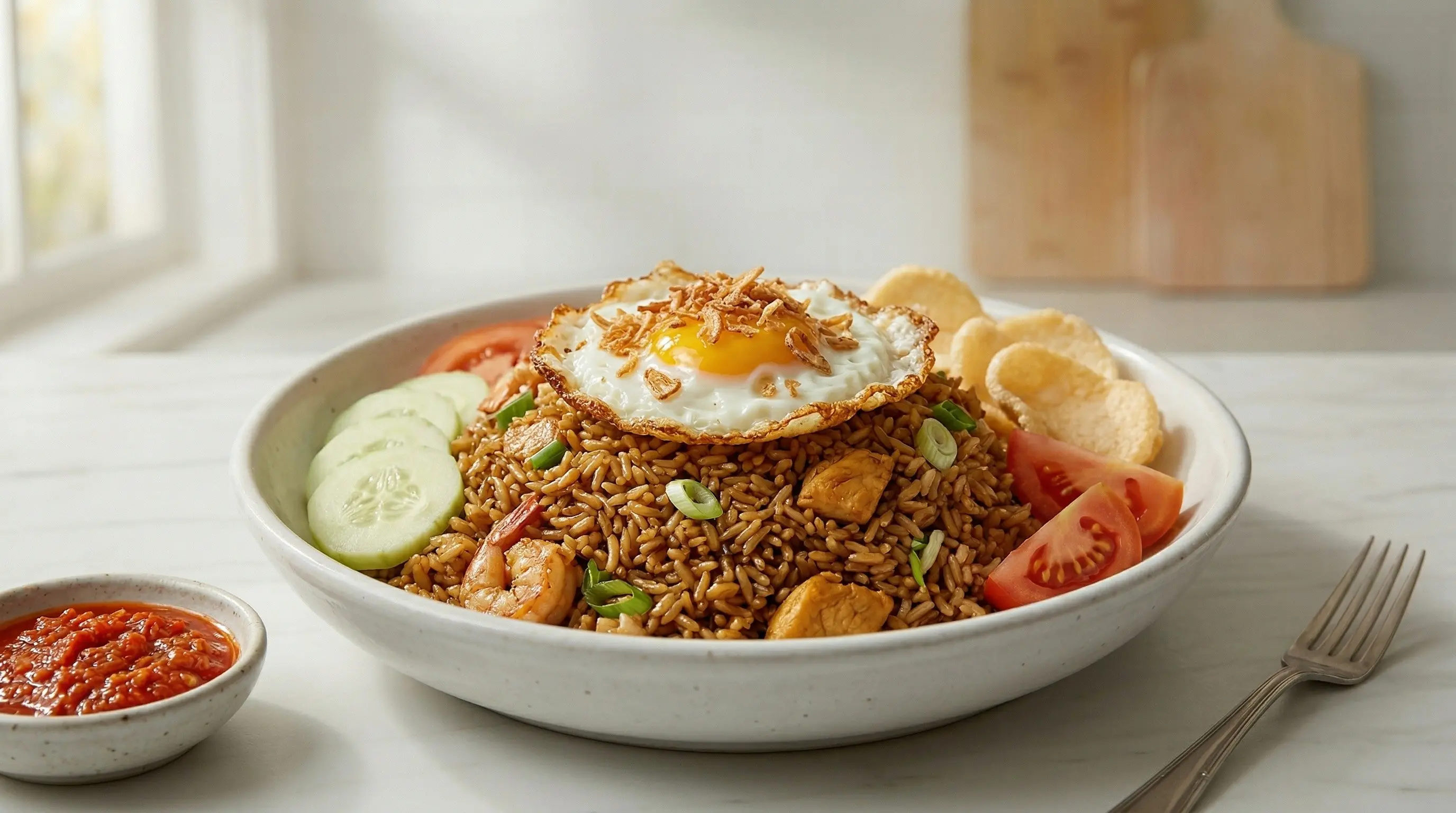
Nasi Goreng
Learn how to make authentic nasi goreng, Indonesia's beloved fried rice with kecap manis, shrimp paste, and a fried egg on top. This aromatic street food classic is sweet, savory, and utterly addictive!
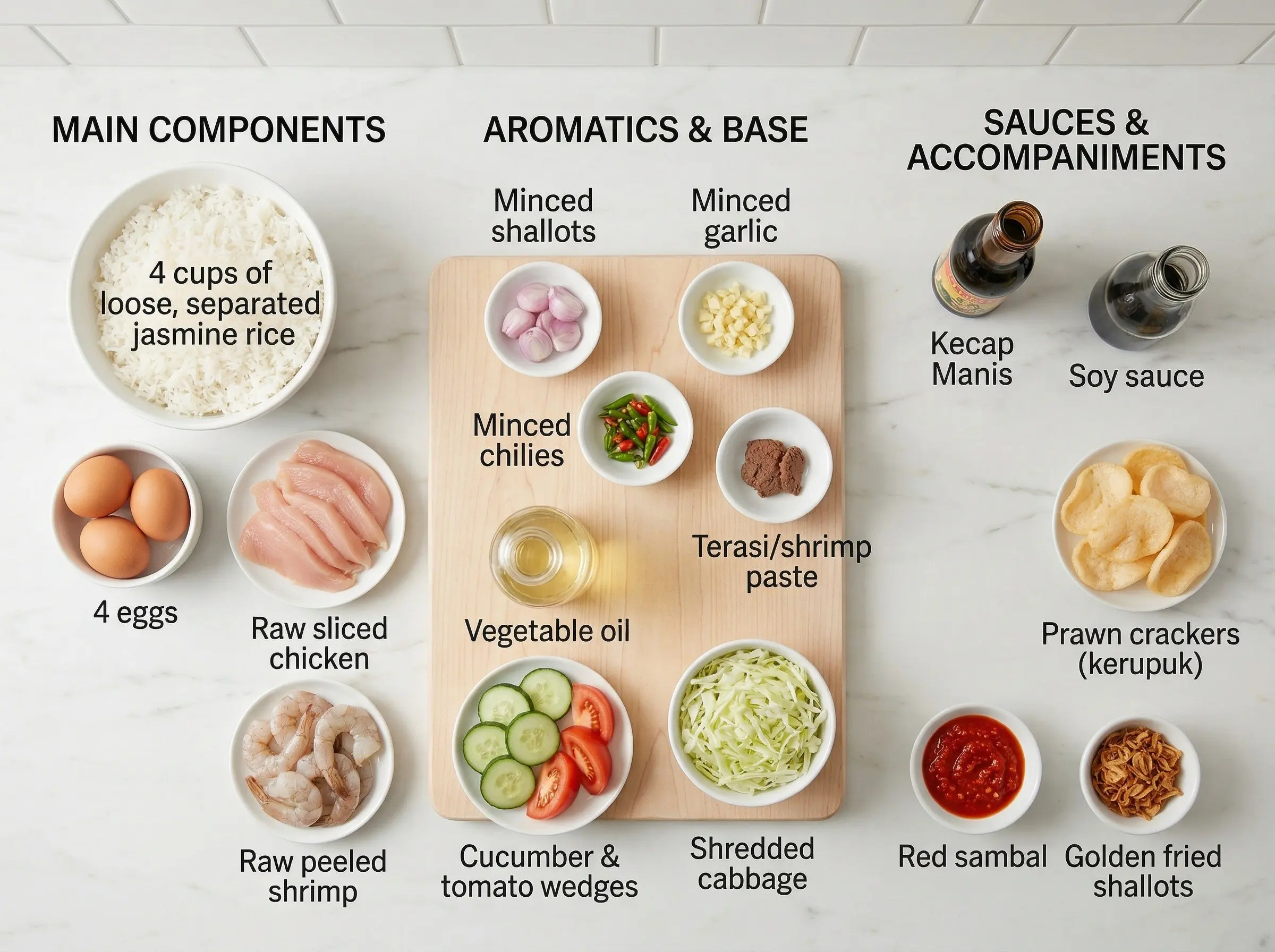
Ingredients
The Story
Nasi goreng is Indonesia's national dish, a boldly flavored fried rice that exemplifies the complex, layered tastes of Southeast Asian cuisine. The name simply means "fried rice" in Indonesian and Malay - "nasi" meaning rice and "goreng" meaning fried - but this humble name belies the dish's extraordinary depth of flavor. Unlike Chinese fried rice which relies on soy sauce and sesame, nasi goreng gets its distinctive character from kecap manis (sweet soy sauce), terasi (fermented shrimp paste), and a paste of shallots, garlic, and chilies. The result is simultaneously sweet, savory, spicy, and umami-rich in a way that is uniquely Indonesian. The origins of nasi goreng trace back to Chinese immigrants who brought wok cooking and fried rice techniques to Indonesia centuries ago. Over generations, the dish absorbed Indonesian ingredients and flavors, transforming into something distinctly local. Nasi goreng became the quintessential Indonesian street food, served from warung (food stalls) throughout the archipelago and eaten for breakfast, lunch, dinner, and as a late-night snack after an evening out. In 2011, nasi goreng was crowned Indonesia's national dish in a public poll, and in 2018, it was declared one of the world's 50 best foods by CNN Travel. For Indonesians living abroad, nasi goreng is the taste of home, a culinary touchstone that connects diaspora communities to their heritage. What makes nasi goreng so extraordinary is the way it transforms humble leftover rice into something magnificent through high heat, bold seasonings, and perfect technique. The rice must be day-old and cold, each grain separate and dry, ready to absorb the intense flavors of the wok. The kecap manis caramelizes in the high heat, coating each grain with glossy sweetness balanced by the funky depth of shrimp paste. Fresh chilies bring heat, shallots add sweetness, and garlic provides aromatic punch. Topped with a perfectly fried egg with crispy edges and a runny yolk, served alongside prawn crackers (kerupuk), sliced cucumber, and sambal, nasi goreng is a complete meal that satisfies on every level. The first forkful, mixing the runny egg yolk into the rice, is pure Indonesian comfort.
Instructions
Step 1
Prepare all ingredients before you start cooking - nasi goreng comes together very quickly over high heat and there is no time to chop while cooking. Break up the cold day-old rice with your fingers, separating any clumps so each grain is loose. If you do not have day-old rice, spread freshly cooked rice on a baking sheet and refrigerate uncovered for at least 2 hours, or place in the freezer for 30 minutes. Mince the shallots, garlic, and chilies together to form a rough paste - this is the aromatic base. Have all sauces measured and ready.

Step 2
Make the aromatic paste and cook the protein. Heat 1 tablespoon of oil in a wok or large skillet over high heat until smoking. Add the chicken and stir-fry for 2-3 minutes until just cooked through. Add the shrimp and cook for 1-2 minutes until pink and curled. Transfer the protein to a plate and set aside. In the same wok, add the remaining tablespoon of oil. Add the shallot, garlic, and chili paste. Stir-fry for 30 seconds to 1 minute until very fragrant. Add the terasi (shrimp paste) and stir-fry for another 30 seconds until it darkens and becomes aromatic. The terasi should smell funky and pungent - this is the secret to authentic nasi goreng flavor.
Step 3
Add the rice and seasonings. Add the cold rice to the wok, breaking up any remaining clumps. Stir-fry vigorously over high heat for 2-3 minutes, pressing the rice against the hot wok to slightly char some grains. This char (called wok hei or breath of the wok) is essential for authentic flavor. Add the kecap manis and regular soy sauce. Toss continuously to coat every grain with the sweet, dark sauce. The rice should turn a deep caramel-brown color. If using cabbage, add it now and toss for 1 minute until slightly wilted.
Step 4
Return the protein and finish. Return the cooked chicken and shrimp to the wok. Add the sliced green onions, reserving some for garnish. Toss everything together for 1-2 minutes until heated through and well combined. Taste and adjust seasoning - you may want more kecap manis for sweetness, more soy for salt, or more sambal for heat. The flavor should be a perfect balance of sweet, salty, spicy, and umami. Remove from heat.
Step 5
Fry the eggs. While the rice rests, fry the eggs. Heat a little oil in a non-stick skillet over high heat. Crack the eggs into the pan and fry until the whites are set and the edges are crispy and lacy, but the yolk remains runny - about 2-3 minutes. In Indonesia, this style is called telur mata sapi (cow's eye egg). The runny yolk is essential as it becomes a rich sauce when mixed into the rice. Season with a tiny pinch of salt.

Step 6
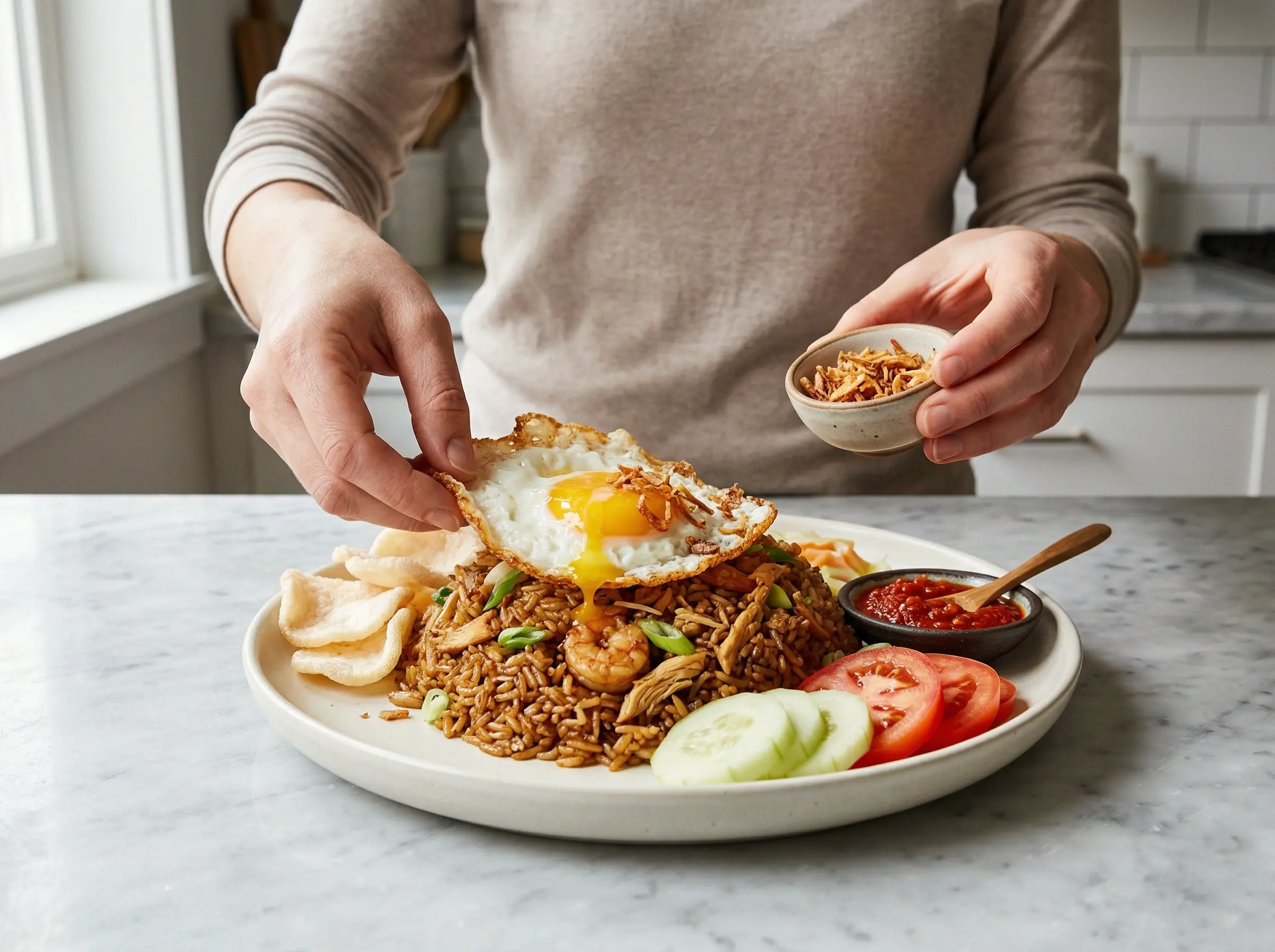
Plate and serve immediately. Divide the nasi goreng among 4 plates or shallow bowls, mounding it in the center. Top each portion with a fried egg, placing it directly on top of the rice. Garnish with reserved green onions and crispy fried shallots. Arrange traditional accompaniments around the rice: prawn crackers (kerupuk), sliced cucumber, tomato wedges, and a small dish of sambal for extra heat. Serve immediately while the rice is hot and the egg yolk is still runny. The proper way to eat nasi goreng is to break the egg yolk with your fork and mix it into the hot rice, creating a rich, glossy coating. Scoop up bites with prawn crackers for extra crunch, alternating with cooling cucumber to balance the heat. Nasi goreng is equally delicious for breakfast, lunch, dinner, or as a late-night snack - it is truly an anytime food in Indonesia.
You Might Also Like
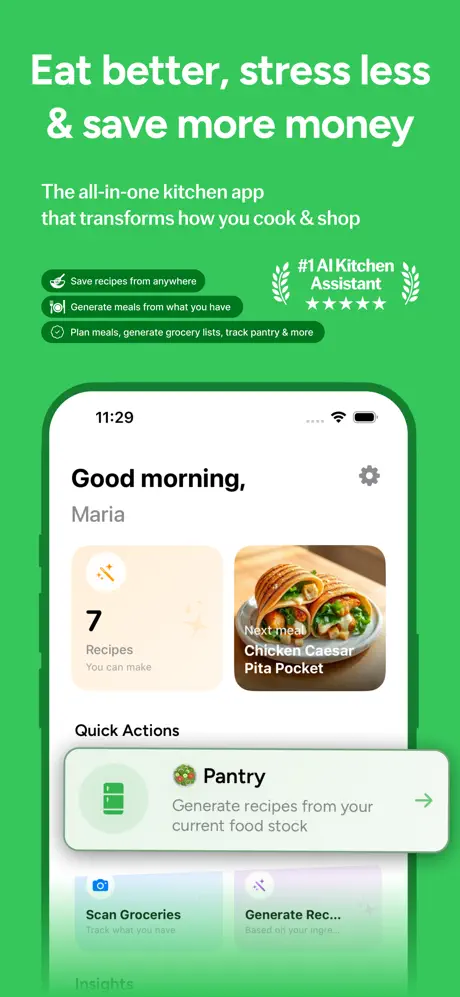
Master Your Kitchen with PantryAI
Love this recipe? Save it, shop for it, and cook it with ease. Download the PantryAI app to organize your pantry, track expirations, and discover recipes based on what you already have.

On a computer?Scan with your iPhone camera to download PantryAI.

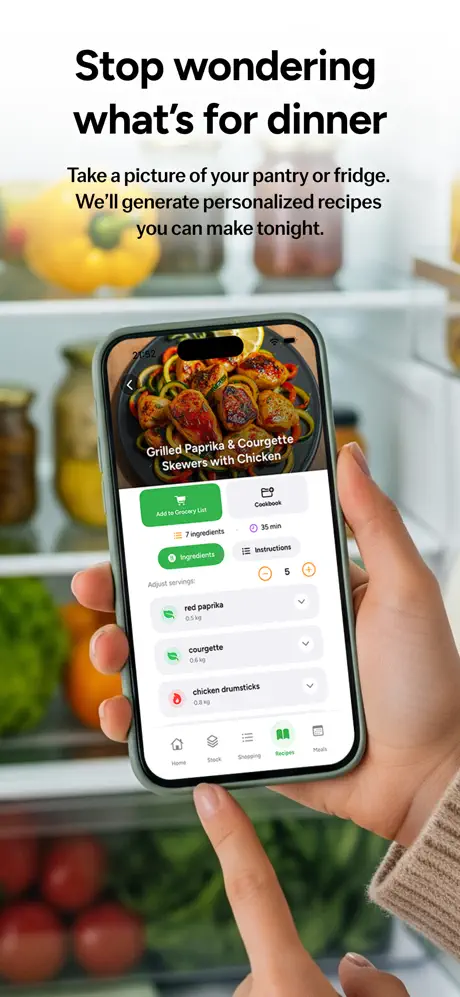


Swipe to see more screenshots