
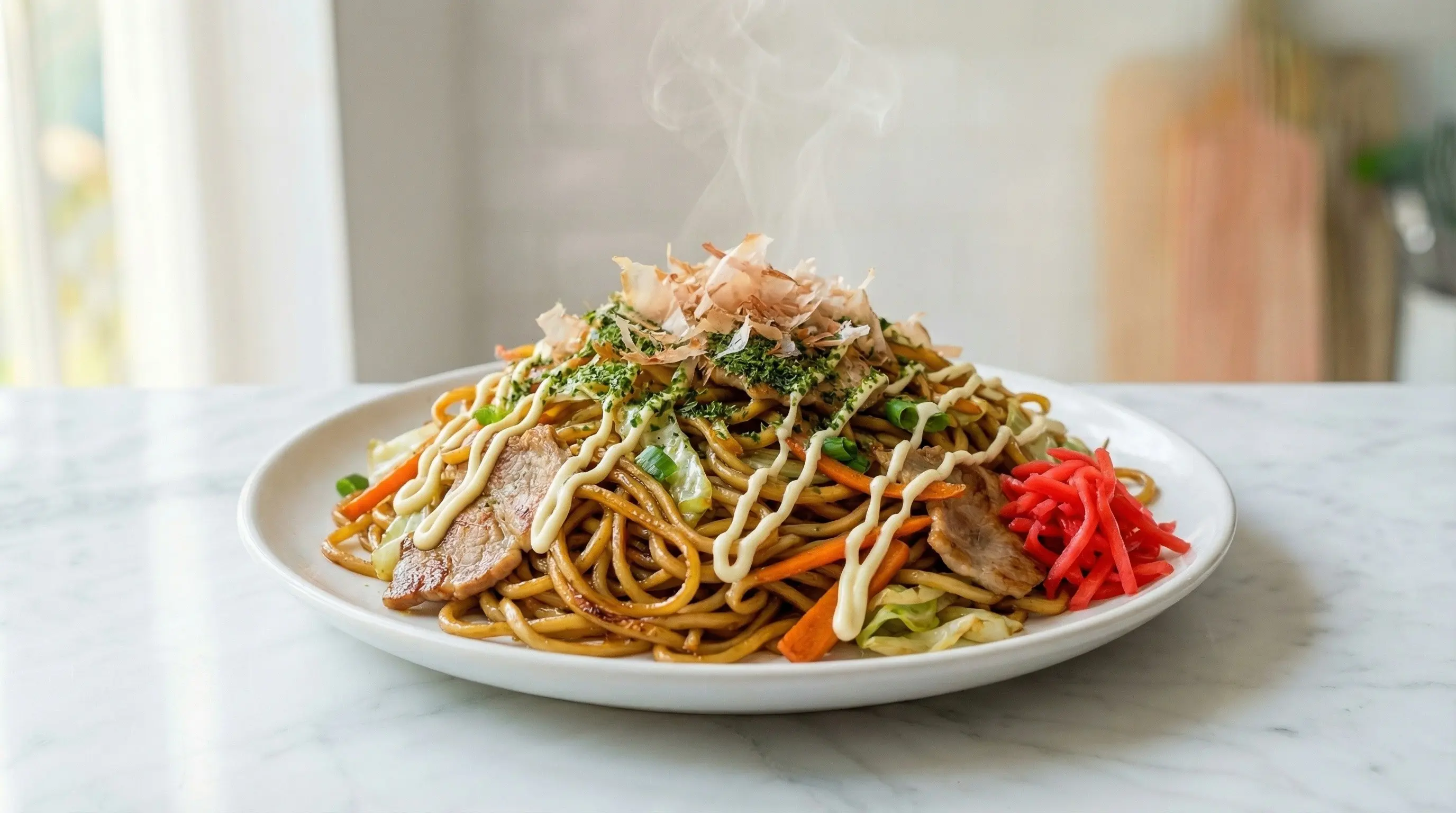
Yakisoba
Learn how to make authentic yakisoba, Japanese stir-fried noodles with pork, cabbage, and a sweet-savory sauce. This popular street food is quick, delicious, and perfect for weeknight dinners!
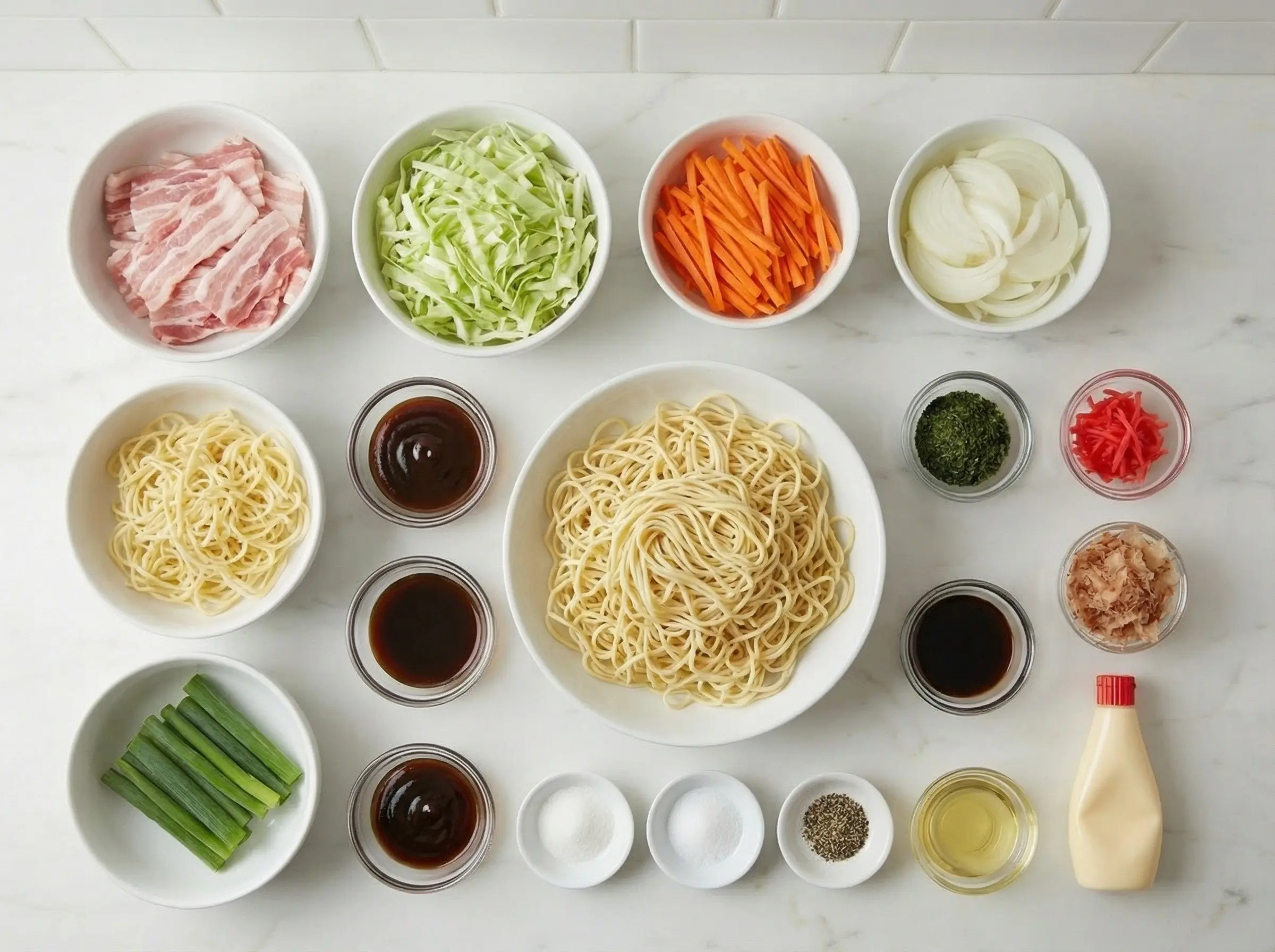
Ingredients
The Story
Yakisoba is one of Japan's most beloved comfort foods, though its name is somewhat misleading - "yaki" means grilled or fried and "soba" refers to buckwheat noodles, yet yakisoba is actually made with wheat-based ramen-style noodles, not buckwheat soba. The dish originated in the early 20th century as a Japanese adaptation of Chinese chow mein, which arrived in Japan through the port cities of Yokohama and Kobe where Chinese immigrants had established communities. Japanese cooks transformed the Chinese original by developing a distinctive sweet-savory sauce based on Worcestershire sauce, which had become popular in Japan after its introduction from Britain in the late 1800s. Yakisoba rose to prominence in post-World War II Japan, when it became a staple of yatai (street food stalls) and festivals throughout the country. Its popularity was driven by practical factors - the ingredients were affordable, the dish was quick to prepare, and it could be made in large quantities on flat griddles. The sound of yakisoba sizzling on a hot teppan became synonymous with Japanese matsuri (festivals), where vendors would pile the noodles high with cabbage, pork, and the iconic red pickled ginger. School festivals, summer fireworks displays, and neighborhood gatherings all featured yakisoba stalls, cementing the dish's place in Japanese culinary culture. Today, yakisoba remains a festival favorite while also being a common home-cooked meal and convenience store staple. What makes yakisoba so appealing is its perfect balance of textures and its distinctive sauce. The noodles should be slightly chewy with some caramelized, crispy bits from the high-heat cooking. The vegetables - typically cabbage, carrots, and onions - retain some crunch while absorbing the flavorful sauce. The yakisoba sauce itself is unique: sweet, tangy, and savory with the unmistakable taste of Japanese Worcestershire sauce combined with oyster sauce and soy sauce. Topped with traditional garnishes of ao-nori (green seaweed flakes), beni shoga (red pickled ginger), katsuobushi (bonito flakes), and a squeeze of Japanese mayonnaise, yakisoba delivers an explosion of umami flavors. Whether enjoyed at a summer festival in Tokyo or cooked at home on a weeknight, yakisoba represents Japanese street food at its most satisfying.
Instructions
Step 1
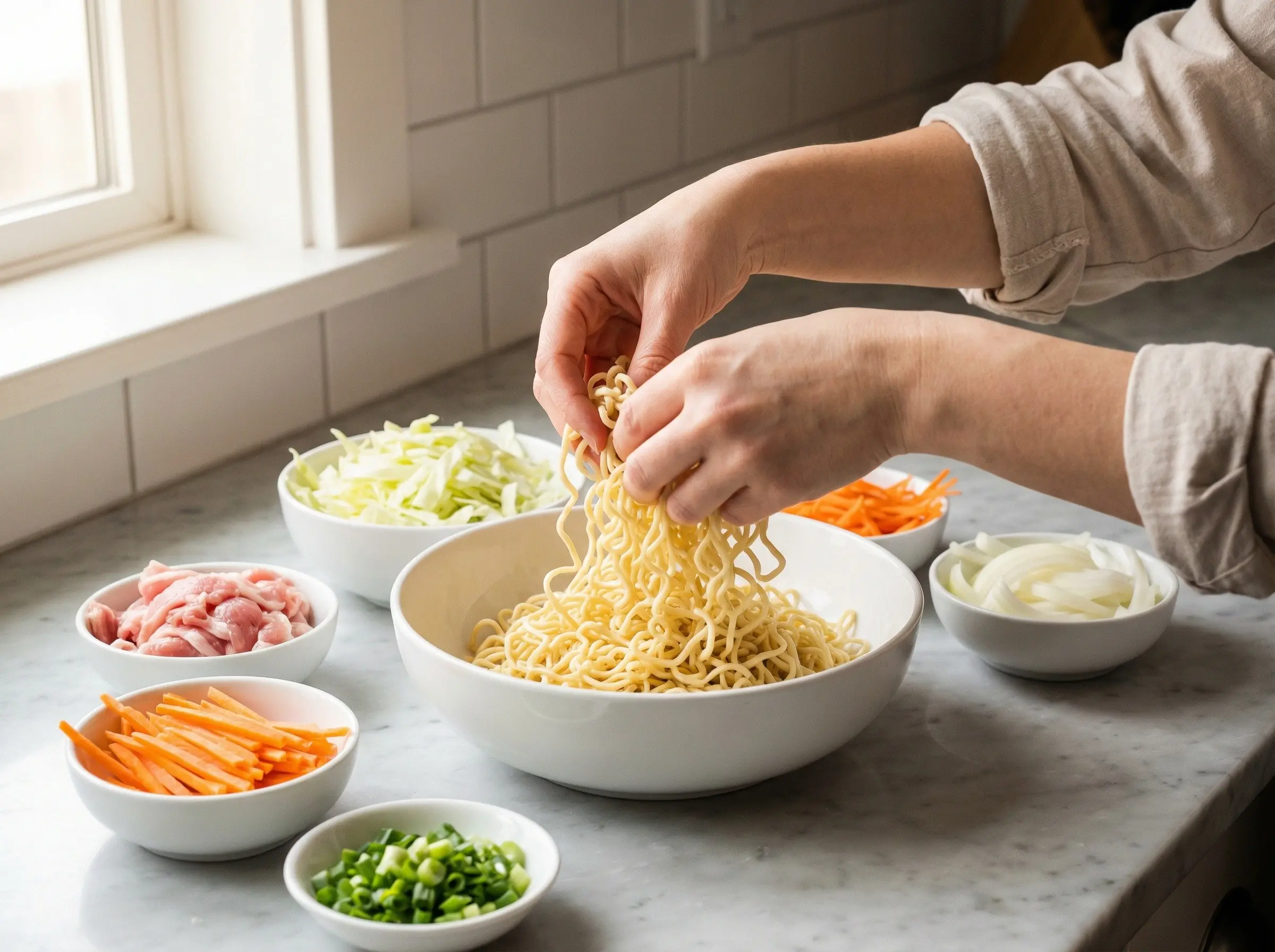
Prepare all ingredients before you start cooking as yakisoba comes together very quickly. If using fresh yakisoba noodles from a package, loosen them gently with your hands and set aside - they are usually pre-cooked and just need to be heated through. If using dried ramen noodles, cook according to package directions until just al dente, drain, rinse with cold water to stop cooking, and toss with a little oil to prevent sticking. Slice the pork into thin bite-sized strips - pork belly adds more flavor and richness, while pork loin is leaner. Shred the cabbage into bite-sized pieces, julienne the carrot into thin matchsticks, slice the onion thinly, and cut the green onions into 2-inch pieces, separating the white and green parts.
Step 2
Make the yakisoba sauce by combining the yakisoba sauce (if you have it), Worcestershire sauce, oyster sauce, soy sauce, and sugar in a small bowl. Stir until the sugar dissolves. If you do not have bottled yakisoba sauce, you can make a substitute by combining 3 tablespoons Worcestershire sauce, 2 tablespoons ketchup, 1 tablespoon soy sauce, and 1 tablespoon oyster sauce. The sauce should be sweet, tangy, and savory - the distinctive flavor that defines yakisoba. Set the sauce aside within easy reach of your cooking station.
Step 3
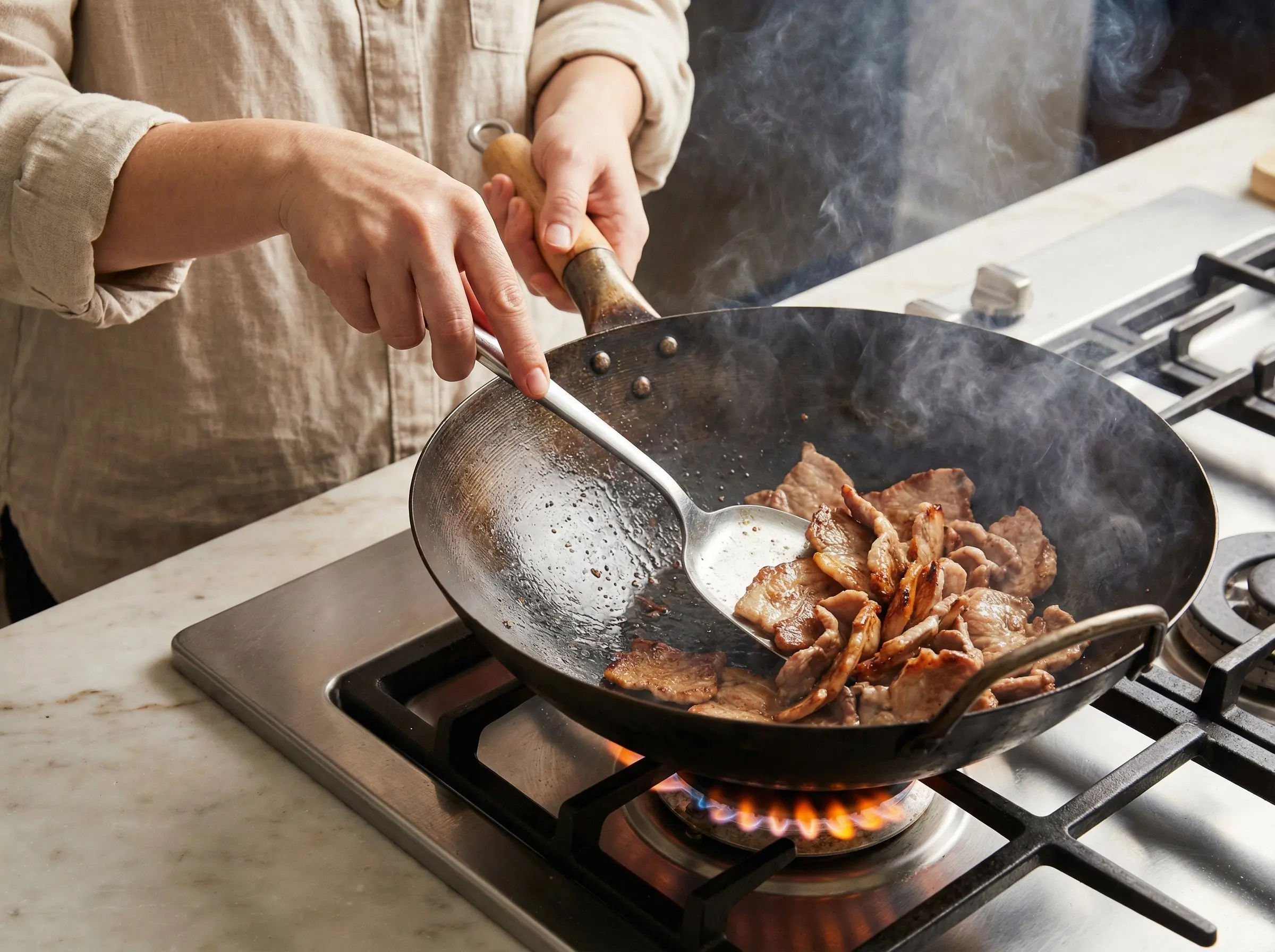
Heat a large wok, flat griddle, or wide skillet over high heat until very hot. Add 1 tablespoon of the vegetable oil and swirl to coat. Add the sliced pork in a single layer and let it sear without stirring for about 1 minute until browned on the bottom. Stir-fry for another 1-2 minutes until the pork is cooked through and has some caramelized edges. Season lightly with salt and pepper. Transfer the pork to a plate and set aside. Do not wipe out the pan - the pork fat adds flavor.
Step 4
Add the remaining tablespoon of oil to the hot pan. Add the white parts of the green onions, sliced onion, and julienned carrot. Stir-fry over high heat for 1-2 minutes until slightly softened but still crisp. Add the shredded cabbage and stir-fry for another 2-3 minutes until the cabbage is wilted but still has some crunch. The vegetables should have some charred edges from the high heat - this adds flavor. Season lightly with salt and pepper. Push the vegetables to the side of the pan.
Step 5
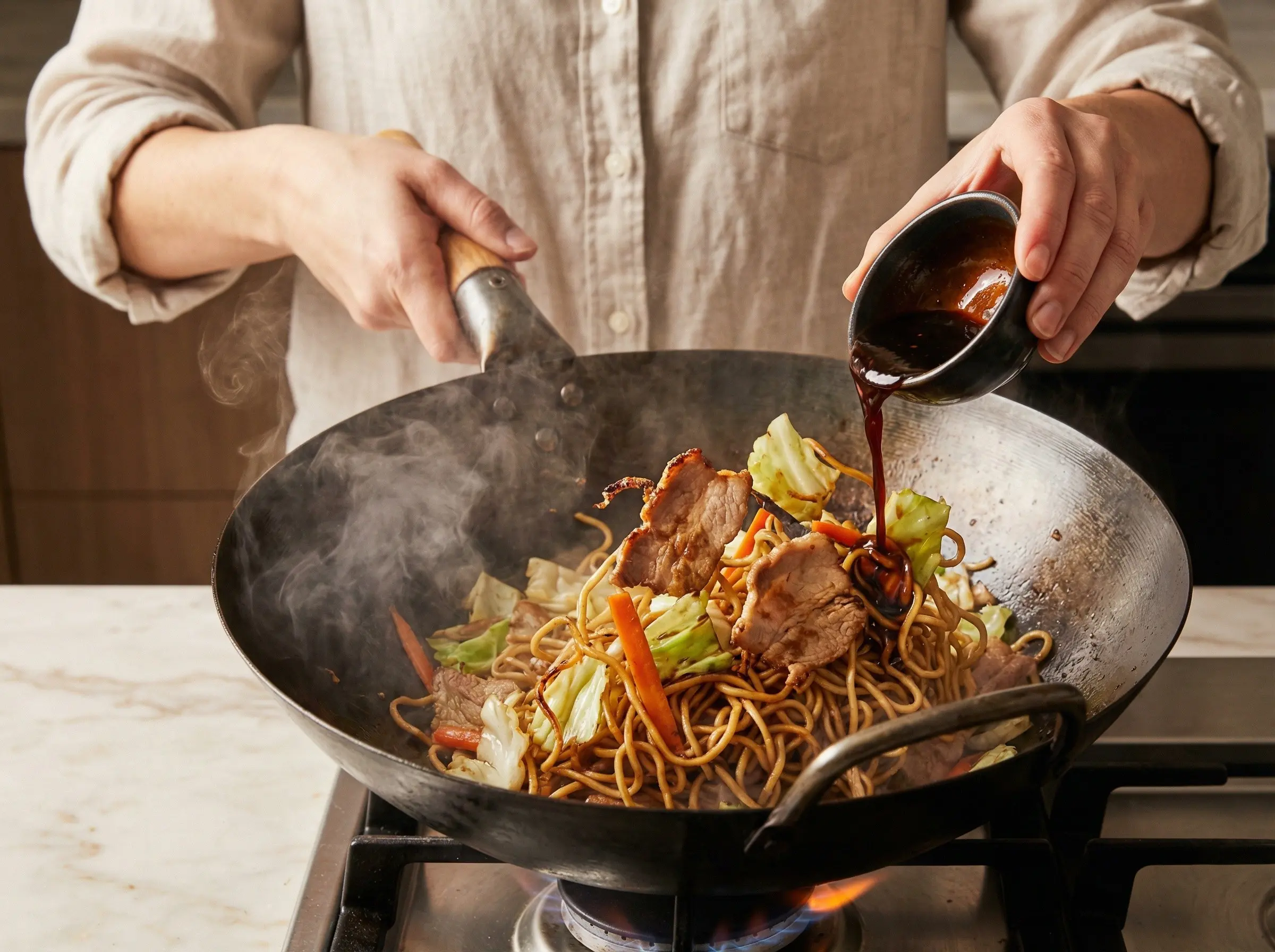
Add the noodles to the center of the pan. Let them sear against the hot surface for about 30 seconds without stirring to develop some crispy, caramelized bits - this texture is highly prized in good yakisoba. Toss the noodles with the vegetables and continue stir-frying for 1-2 minutes. Return the cooked pork to the pan. Pour the prepared sauce over everything and toss vigorously to coat the noodles and vegetables evenly. The sauce should sizzle and caramelize slightly on contact with the hot pan. Continue tossing for another minute until everything is well combined and the noodles are heated through and glossy with sauce.
Step 6
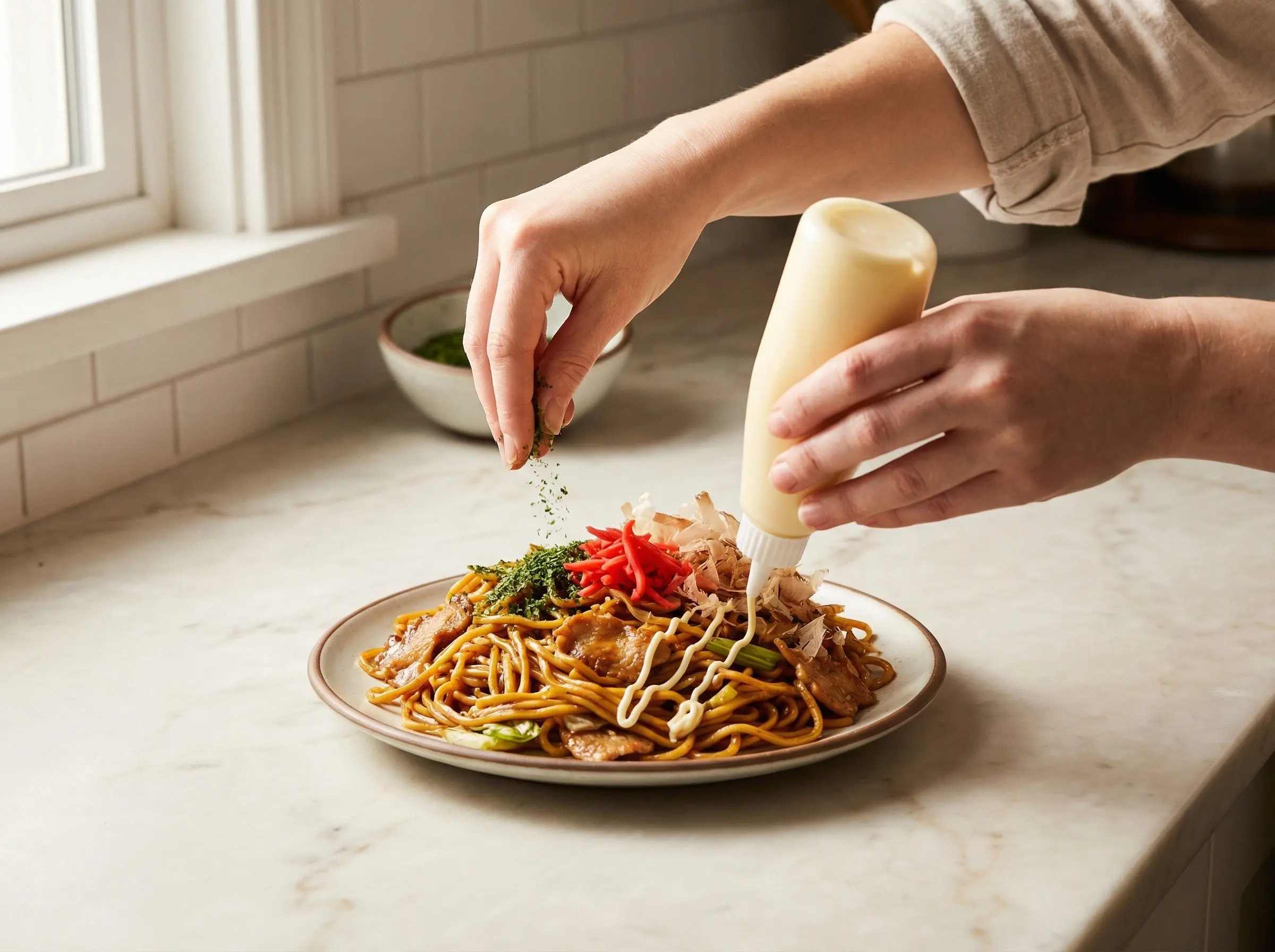
Add the green parts of the green onions and toss briefly. Taste and adjust seasoning if needed - you may want more sauce, a splash of soy sauce, or a pinch of salt. Transfer the yakisoba to serving plates, mounding it attractively. Top generously with the traditional garnishes: a sprinkle of ao-nori (green seaweed flakes), a pile of beni shoga (red pickled ginger), a handful of katsuobushi (bonito flakes) which will dance and wave from the residual heat, and a drizzle of Japanese mayonnaise in a zigzag pattern. These toppings are not optional - they are essential to the authentic yakisoba experience, each adding its own flavor and texture. Serve immediately while hot. Yakisoba is also delicious stuffed into a hot dog bun to make yakisoba pan, a popular Japanese convenience store snack.
You Might Also Like
Master Your Kitchen with PantryAI
Love this recipe? Save it, shop for it, and cook it with ease. Download the PantryAI app to organize your pantry, track expirations, and discover recipes based on what you already have.

On a computer?Scan with your iPhone camera to download PantryAI.








Swipe to see more screenshots