
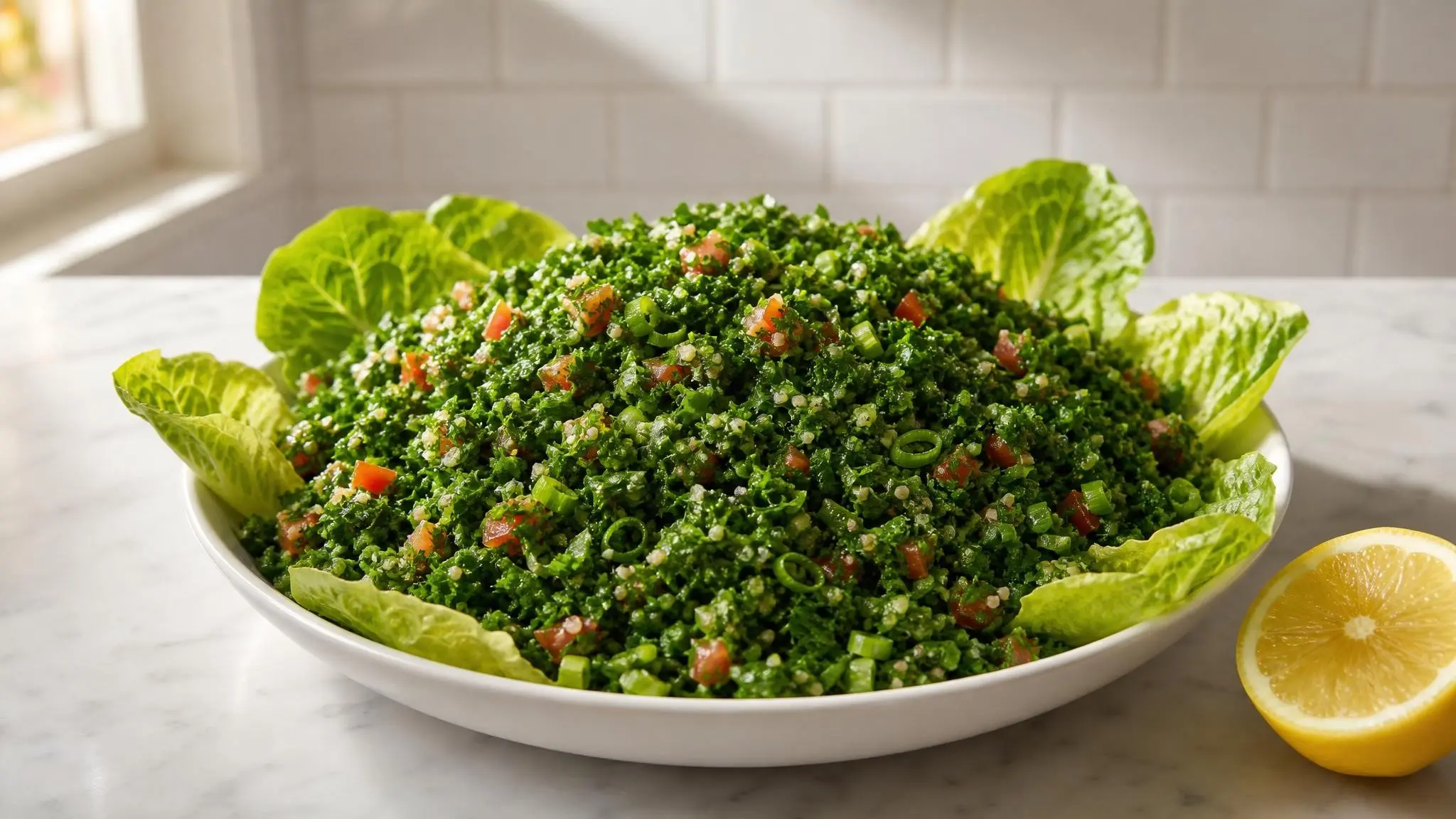
Tabbouleh
Learn how to make authentic Lebanese tabbouleh, the vibrant herb salad that is more parsley than grain. This refreshing mezze classic is bright with lemon, fragrant with mint, and utterly addictive!
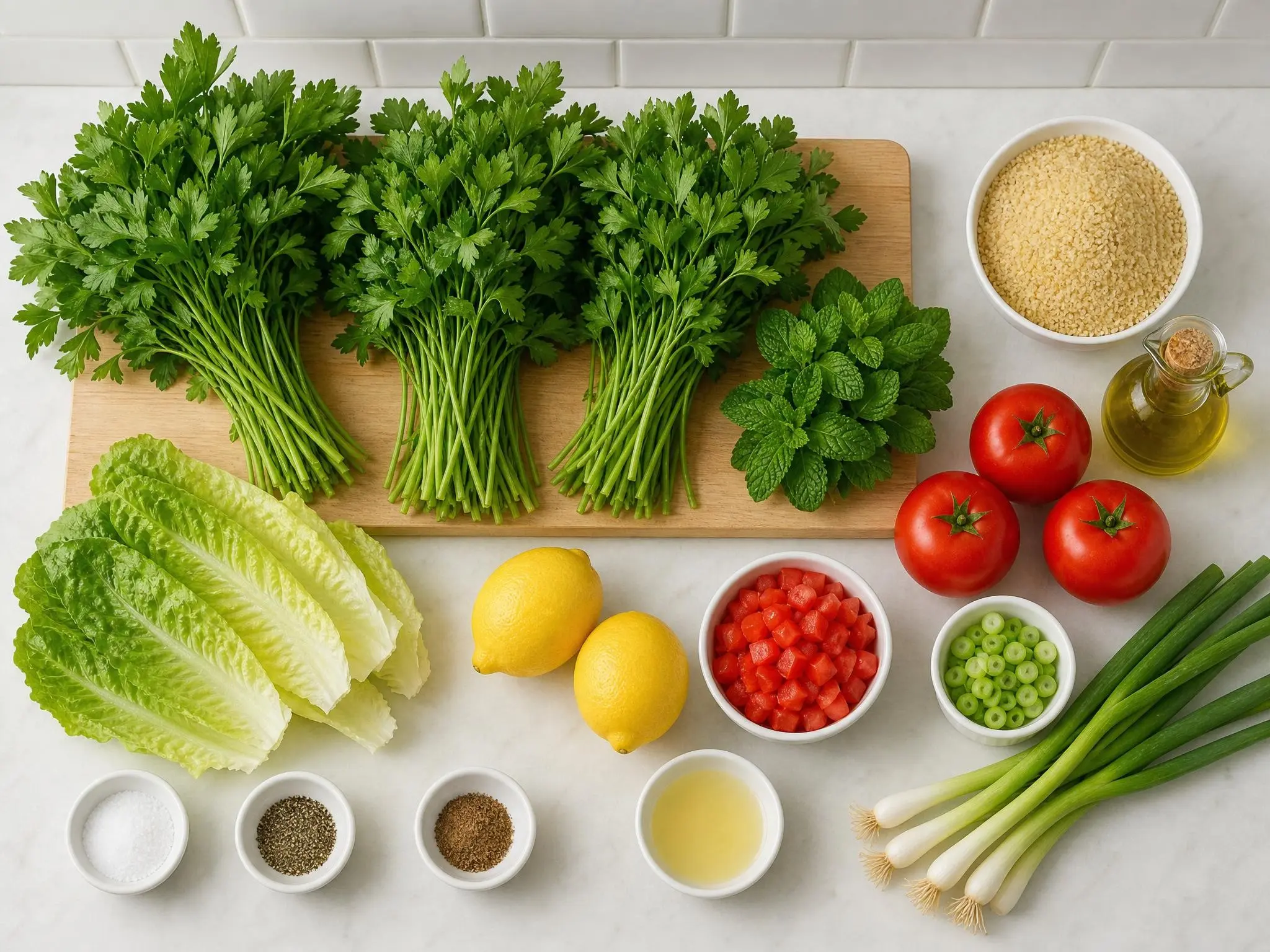
Ingredients
The Story
Tabbouleh is the crown jewel of Lebanese mezze, a vibrant green salad of finely chopped parsley, mint, tomatoes, and bulgur wheat dressed with lemon juice and olive oil. The dish originated in the mountains of Lebanon and Syria, where it has been prepared for centuries as a refreshing accompaniment to grilled meats and other rich foods. The name derives from the Arabic word "tabil," meaning seasoning or dip, and true tabbouleh is meant to be scooped up with crisp romaine lettuce leaves or tender grape leaves, each bite a burst of fresh, herbaceous flavor. What distinguishes authentic Lebanese tabbouleh from the grain-heavy versions found elsewhere is the ratio of parsley to bulgur. In Lebanon, tabbouleh is emphatically a parsley salad with a small amount of bulgur for texture - the green herbs should dominate completely, with bulgur playing a supporting role. Many Western adaptations reverse this ratio, creating something closer to a bulgur salad with herbs, which Lebanese cooks consider a culinary crime. The proper ratio is roughly five parts parsley to one part bulgur. The parsley must be flat-leaf (Italian) parsley, chopped very fine but not minced to a paste. The mint should be fresh and abundant. The tomatoes should be ripe and diced small. This is a dish where ingredient quality and proper technique matter immensely. What makes tabbouleh so extraordinary is the way its simple ingredients harmonize into something greater than their parts. The parsley provides grassy, peppery freshness. The mint adds cooling brightness. The tomatoes contribute sweetness and moisture. The bulgur offers a pleasant chewy contrast. The lemon juice brings bracingly sour acidity. The olive oil rounds everything into silky cohesion. Together, they create a salad that is simultaneously light and satisfying, refreshing and complex. Tabbouleh is traditionally served as part of a mezze spread, alongside hummus, baba ganoush, fattoush, and warm pita bread. It is also the perfect accompaniment to grilled lamb, chicken, or fish. In Lebanon, no summer gathering is complete without a bowl of tabbouleh - its bright green presence on the table promises freshness and joy.
Instructions
Step 1
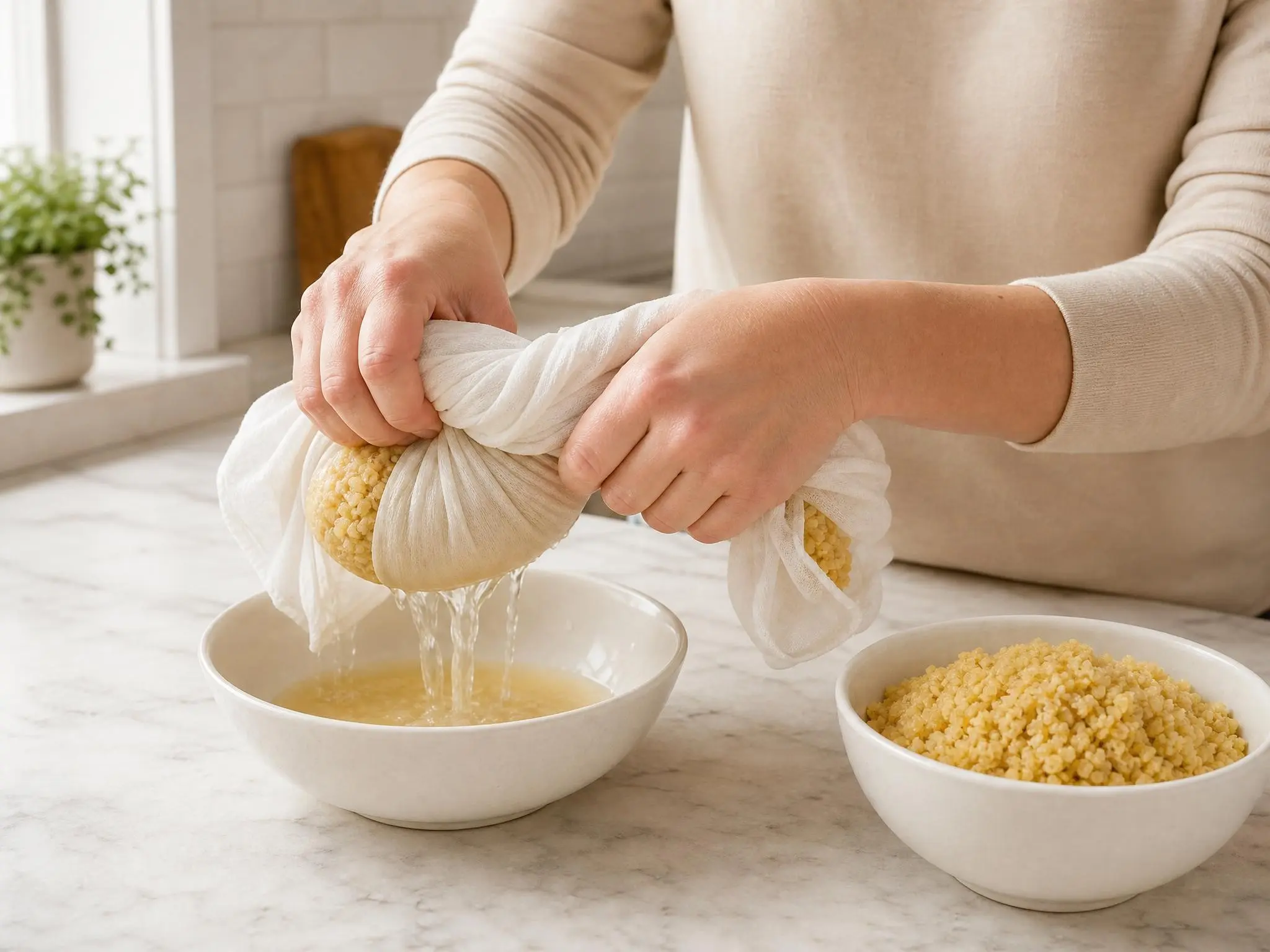
Prepare the bulgur. Place the fine bulgur in a small bowl. Add just enough cold water to barely cover - about 1/4 cup. Let soak for 15-20 minutes until the bulgur has absorbed the water and softened but still has a slight bite. Do not oversoak or the bulgur will become mushy. If using medium bulgur, soak longer and use hot water. Once softened, drain any excess water and squeeze the bulgur dry in a clean kitchen towel. Set aside.
Step 2
Prepare the parsley. This is the most important step - tabbouleh lives or dies by the parsley. Wash the parsley thoroughly and dry completely in a salad spinner or with towels. Remove the leaves from the thick stems - some thin tender stems are fine to include. Using a very sharp knife on a dry cutting board, chop the parsley very fine but not to a paste. Work in batches for better control. The pieces should be uniform and small but still distinguishable as parsley. You should have about 6 cups of finely chopped parsley - this is the foundation of the salad.
Step 3
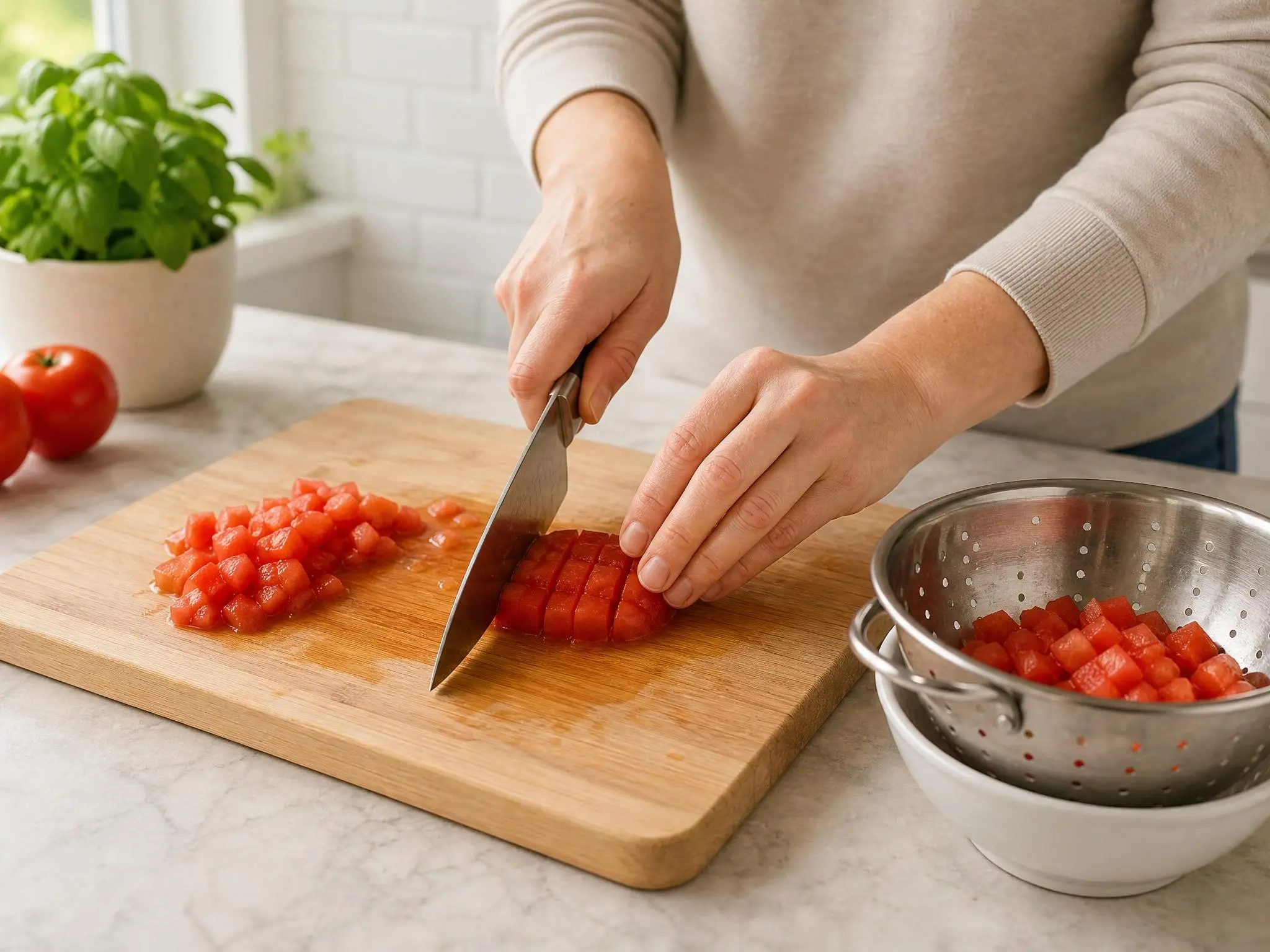
Prepare remaining ingredients. Finely chop the mint leaves in the same manner as the parsley. Dice the tomatoes small - about 1/4 inch pieces - and let them drain briefly in a colander to remove excess liquid that would make the salad soggy. Thinly slice the white and light green parts of the green onions. Juice the lemons, straining out seeds.
Step 4
Combine the salad. In a large bowl, combine the chopped parsley and mint. Add the drained bulgur and toss to distribute evenly. Add the diced tomatoes and sliced green onions. The parsley should clearly dominate - if the salad does not look overwhelmingly green, you need more parsley or less bulgur. The ratio should be roughly 5 parts parsley to 1 part bulgur.
Step 5
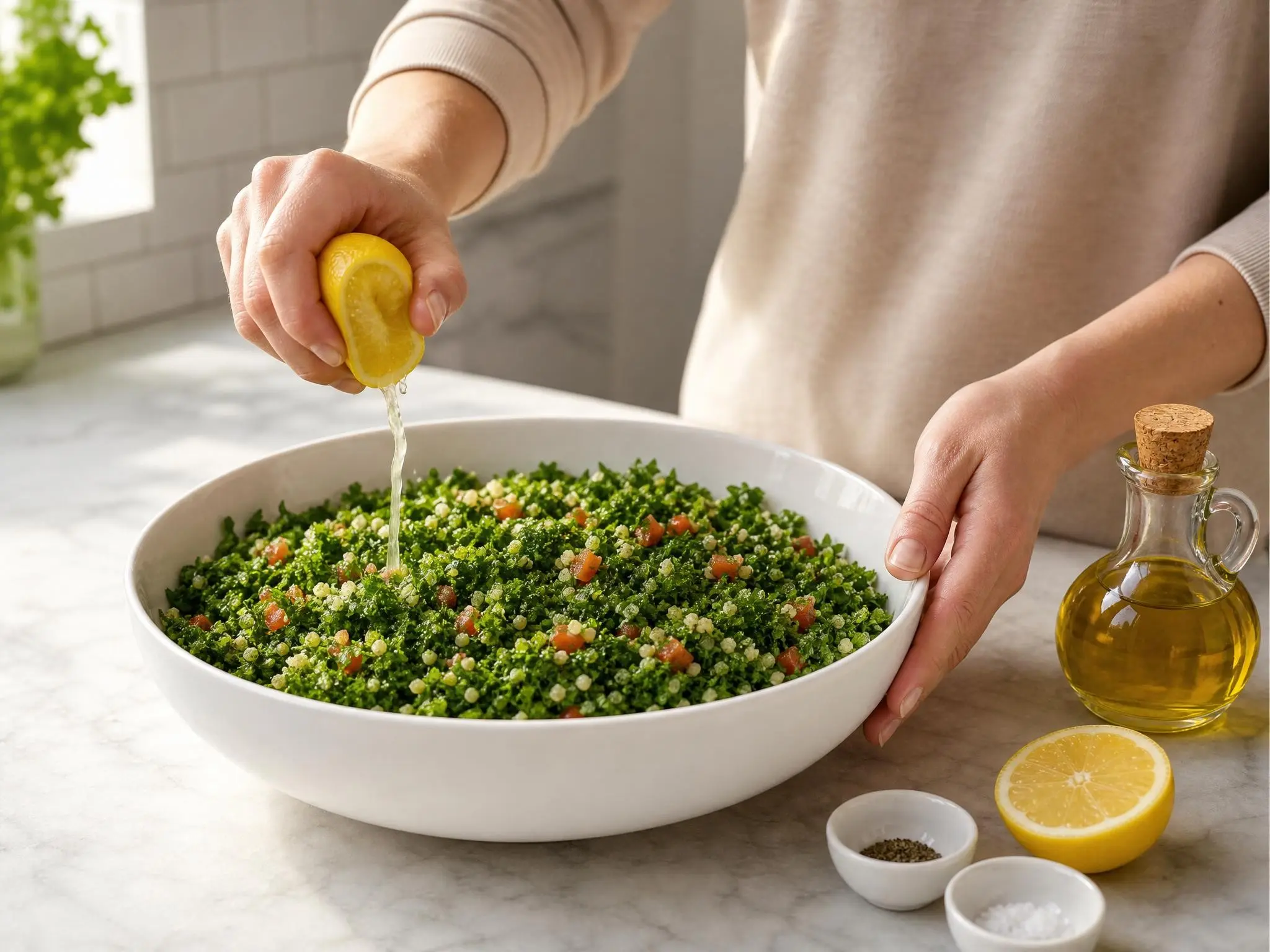
Dress the tabbouleh. Drizzle the olive oil and lemon juice over the salad. Add the salt, pepper, and allspice if using. Toss gently but thoroughly to combine, ensuring the dressing coats all the herbs evenly. Taste and adjust - tabbouleh should be bright and lemony, well-salted, with the olive oil providing richness but not heaviness. Add more lemon for brightness, more salt to amplify flavors, or more oil for richness.
Step 6
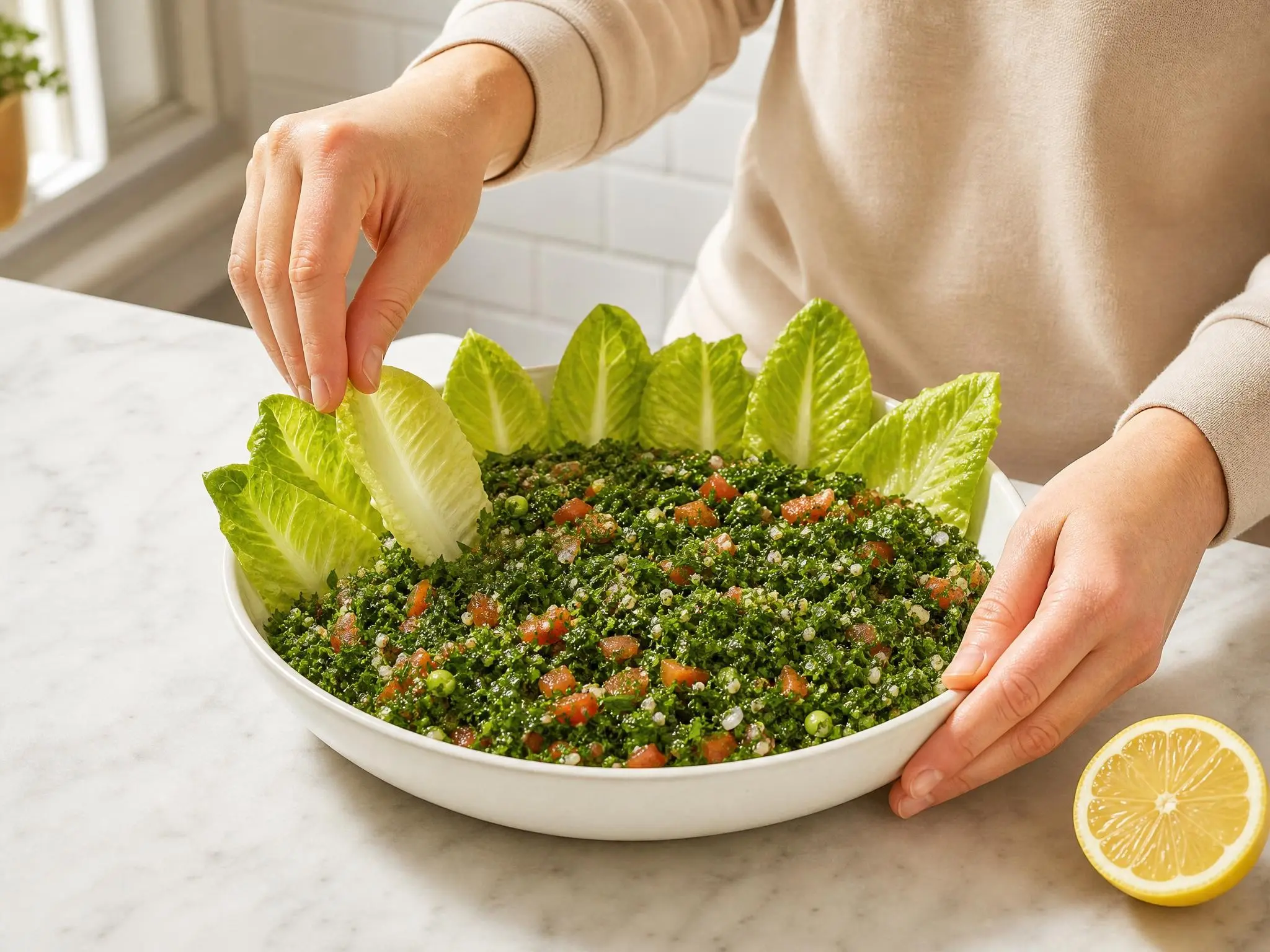
Rest and serve. Let the tabbouleh rest for at least 15-30 minutes at room temperature before serving - this allows the flavors to meld and the herbs to slightly soften. Taste again after resting and adjust seasoning if needed. Transfer to a serving platter and arrange romaine lettuce leaves or grape leaves around the edge for scooping. The traditional way to eat tabbouleh is to scoop it with the lettuce leaves like an edible spoon. Tabbouleh is best served the day it is made, though it keeps refrigerated for 1-2 days. The herbs will darken but the flavor remains good. Serve as part of a mezze spread alongside hummus, baba ganoush, falafel, warm pita, and olives.
You Might Also Like
Master Your Kitchen with PantryAI
Love this recipe? Save it, shop for it, and cook it with ease. Download the PantryAI app to organize your pantry, track expirations, and discover recipes based on what you already have.

On a computer?Scan with your iPhone camera to download PantryAI.








Swipe to see more screenshots