
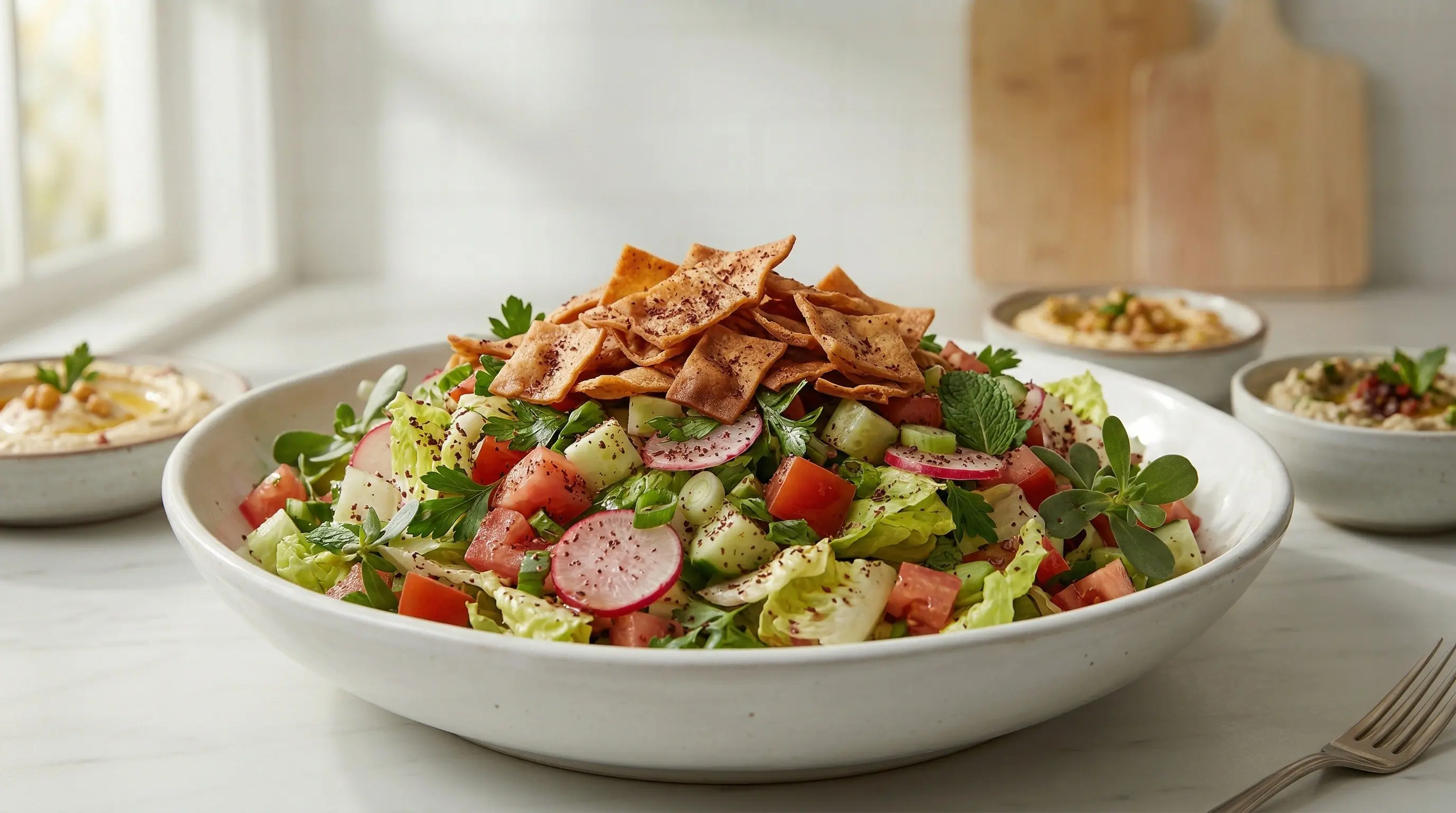
Fattoush
Learn how to make authentic fattoush, the vibrant Lebanese bread salad with crispy pita, fresh vegetables, and tangy sumac dressing. This beloved Levantine classic is bright, crunchy, and utterly refreshing!
Ingredients
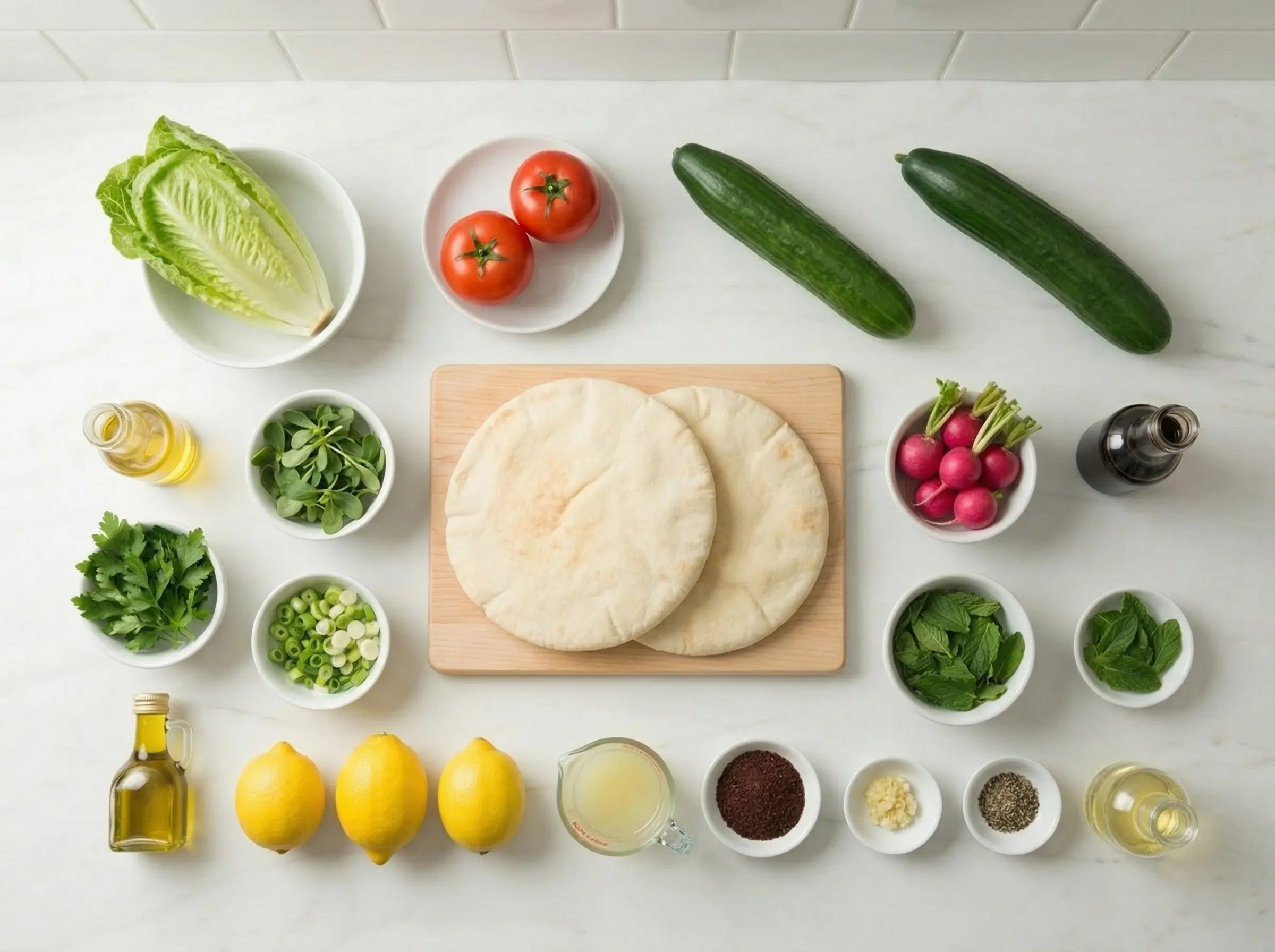
The Story
Fattoush is one of the great salads of the Levantine kitchen, a vibrant celebration of fresh vegetables, crispy fried or toasted pita bread, and a tangy sumac-lemon dressing that has been a staple of Lebanese, Syrian, Palestinian, and Jordanian tables for generations. The name "fattoush" derives from the Arabic word "fatt," meaning to break or crumble bread, reflecting the dish's origins as a clever way to use up stale flatbread rather than waste it. This tradition of transforming day-old bread into delicious dishes is found throughout the Mediterranean - Italian panzanella, Spanish gazpacho, and Middle Eastern fattoush all share this resourceful philosophy. Fattoush is particularly associated with the holy month of Ramadan, when the refreshing salad is served at iftar meals to break the daily fast. The combination of hydrating vegetables, tangy dressing, and crispy bread is especially welcome after a day without food or water. However, fattoush is enjoyed year-round in Lebanon and throughout the Middle East, appearing at family meals, restaurant tables, and mezze spreads. Each household has its own version - some add purslane (a tangy green vegetable traditional to Levantine cuisine), others include radishes, pomegranate seeds, or fresh mint. The one constant is the crispy pita and the sumac-laden dressing that gives fattoush its distinctive character. What makes fattoush so extraordinary is the interplay of textures and the bright, assertive flavor of sumac that ties everything together. Unlike tabbouleh, where parsley dominates, fattoush celebrates the full spectrum of fresh vegetables - crisp romaine, juicy tomatoes, crunchy cucumbers, sharp radishes, and aromatic herbs. The fried or toasted pita chips provide shatteringly crisp contrast that softens just slightly as they absorb the tangy dressing. And that dressing - built on sumac's fruity tartness, bright lemon juice, and grassy olive oil - is what elevates fattoush from a simple salad to something transcendent. Sumac, the ground dried berries of the sumac shrub, contributes a sour, almost citrusy flavor without the sharpness of lemon, creating a complexity that makes each bite compelling. Fattoush proves that the simplest ingredients, treated with respect and balanced carefully, can create dishes of remarkable sophistication.
Instructions
Step 1
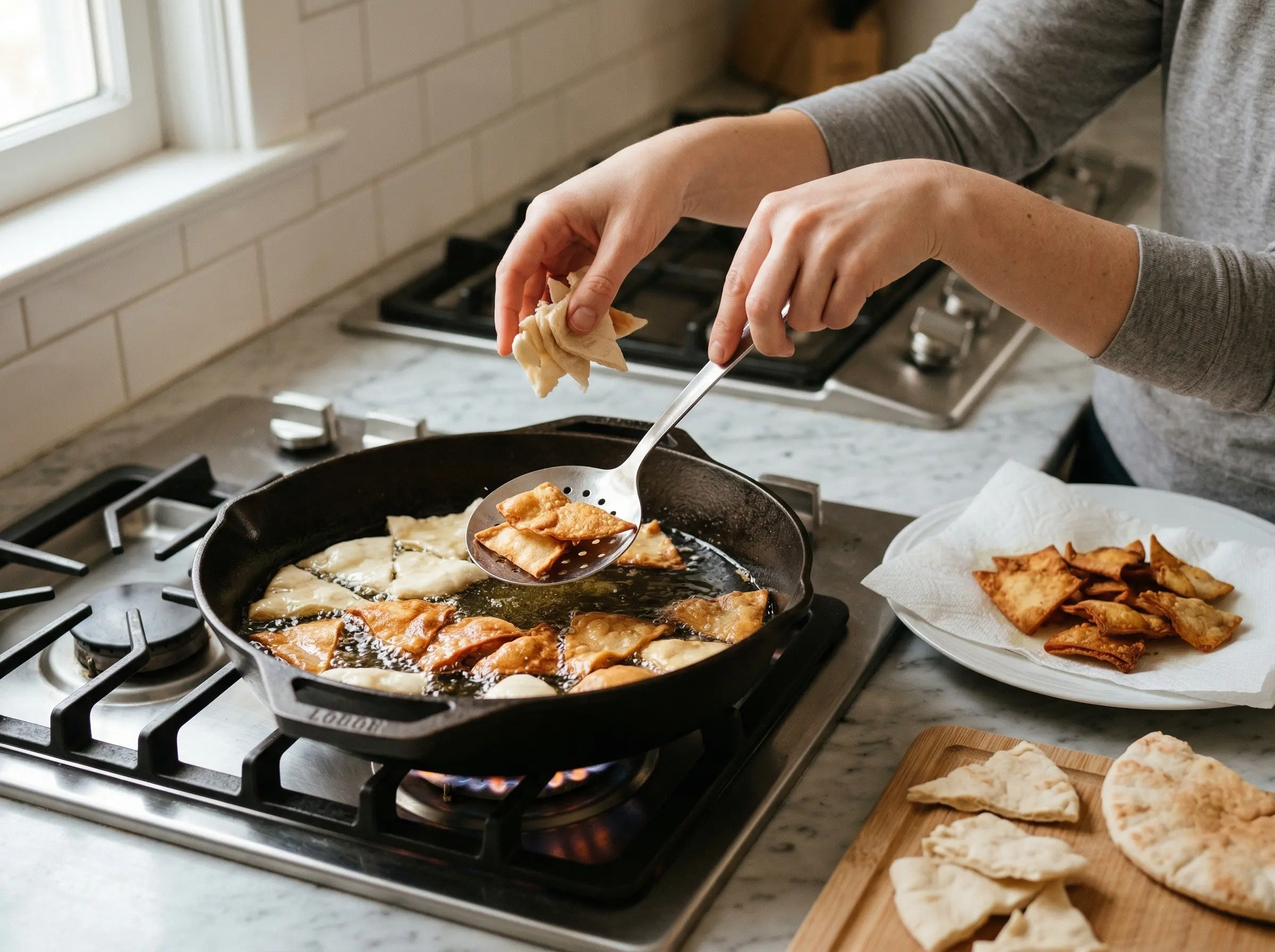
Prepare the pita chips. For the crispiest chips, fry the pita: cut or tear the pita bread into roughly 1-inch irregular pieces. Heat about 1/2 inch of vegetable oil in a skillet over medium-high heat until shimmering. Fry the pita pieces in batches for 1-2 minutes per side until deeply golden and crispy. Transfer to a paper towel-lined plate to drain and season immediately with a pinch of salt. For a lighter version, brush pita pieces with olive oil, spread on a baking sheet, and bake at 375 degrees F for 10-12 minutes until golden and crispy. The pita chips can be made ahead and stored in an airtight container for up to 3 days.
Step 2
Make the sumac dressing. In a small bowl or jar, whisk together the olive oil, lemon juice, ground sumac, minced garlic, salt, and pepper until well combined. If using pomegranate molasses, add it now - it contributes a sweet-tart depth that is traditional in some versions. Taste and adjust: the dressing should be bracingly tangy with the distinctive fruity sourness of sumac shining through. Set aside to let the flavors meld while you prepare the vegetables. The dressing can be made a day ahead and refrigerated.
Step 3
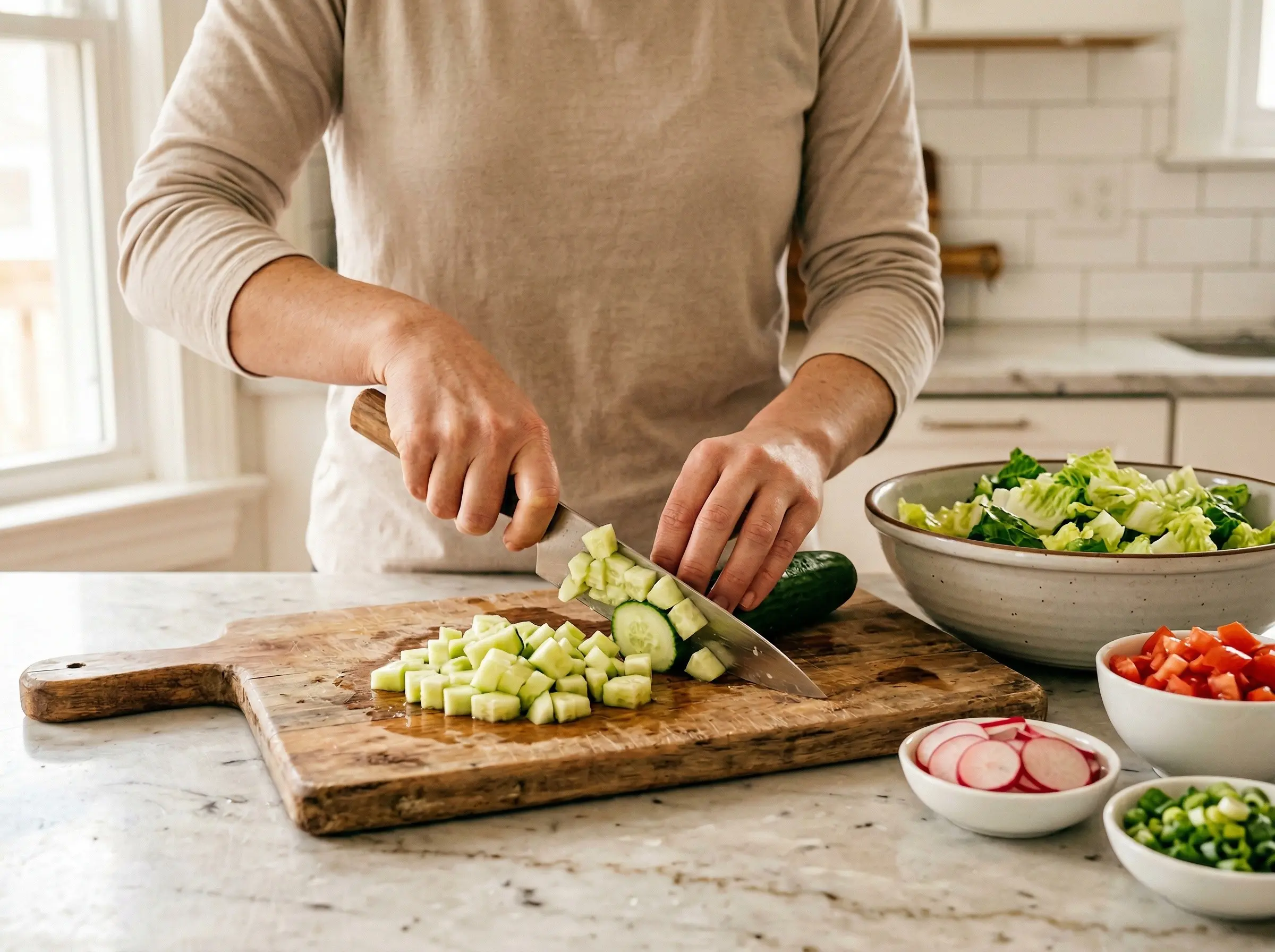
Prepare the vegetables. Chop the romaine lettuce into bite-sized pieces and place in a large salad bowl. Dice the tomatoes into 1/2-inch pieces, removing excess seeds if very juicy to prevent a watery salad. Dice the cucumber similarly - if using English cucumber, no need to peel or seed; if using regular cucumber, peel and seed it. Thinly slice the radishes into rounds. Slice the green onions. Add all vegetables to the bowl with the lettuce.
Step 4
Add the herbs and greens. Roughly chop the parsley and mint - you want visible pieces of herb, not finely minced. Add them to the salad bowl. If using purslane (the traditional green), add it now; arugula makes a good substitute if purslane is unavailable. The purslane adds a pleasant lemony-peppery note and slight crunch that is characteristic of authentic fattoush, though the salad is delicious without it.
Step 5
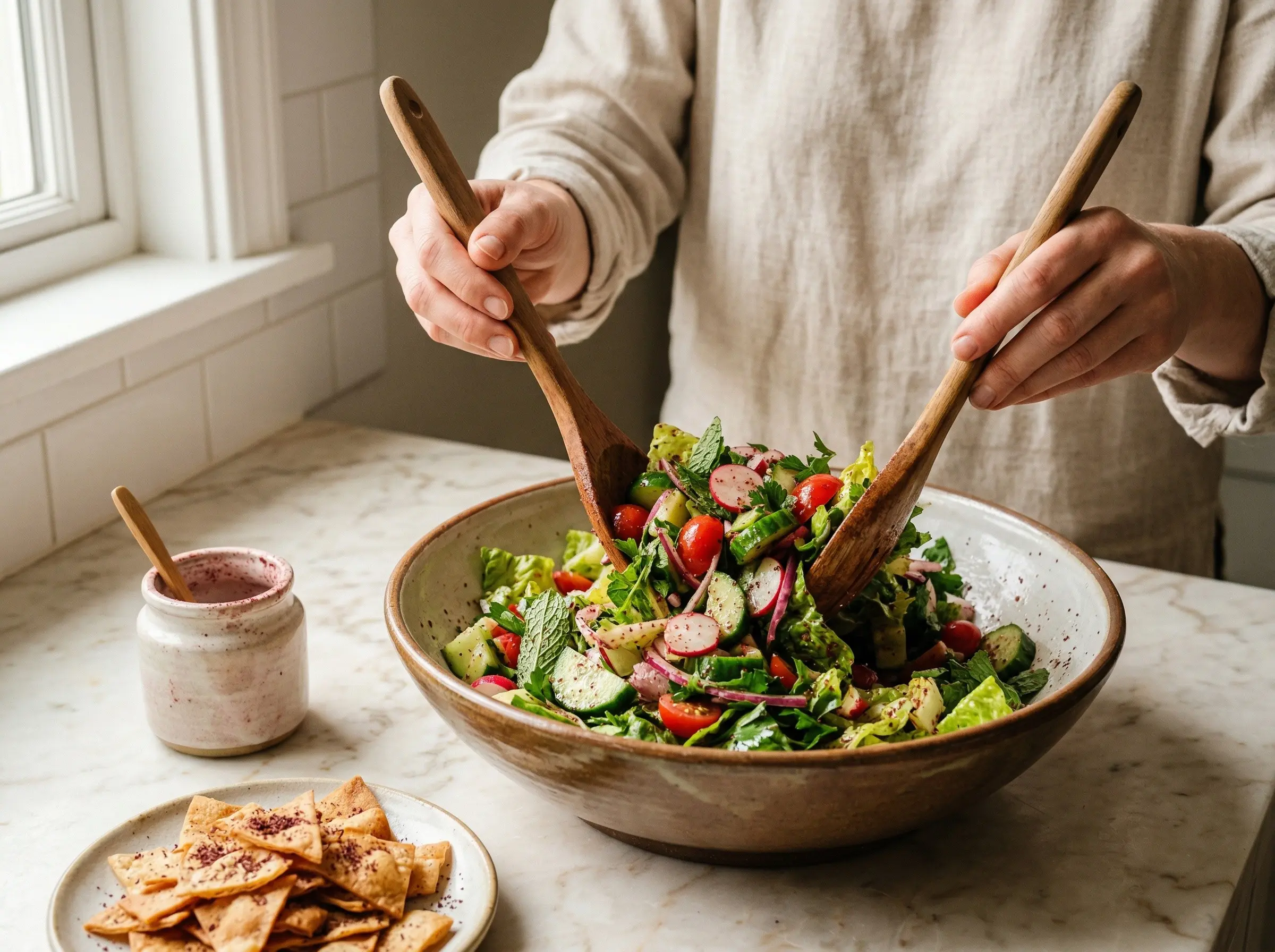
Toss the salad. Give the dressing a final whisk to re-emulsify, then pour it over the vegetables and herbs. Toss gently but thoroughly to coat everything evenly with the sumac dressing. The romaine should glisten, and you should see the rosy tint of sumac throughout. Taste and adjust seasoning if needed - you may want more lemon for brightness, more sumac for tartness, or more salt to bring out the flavors.
Step 6
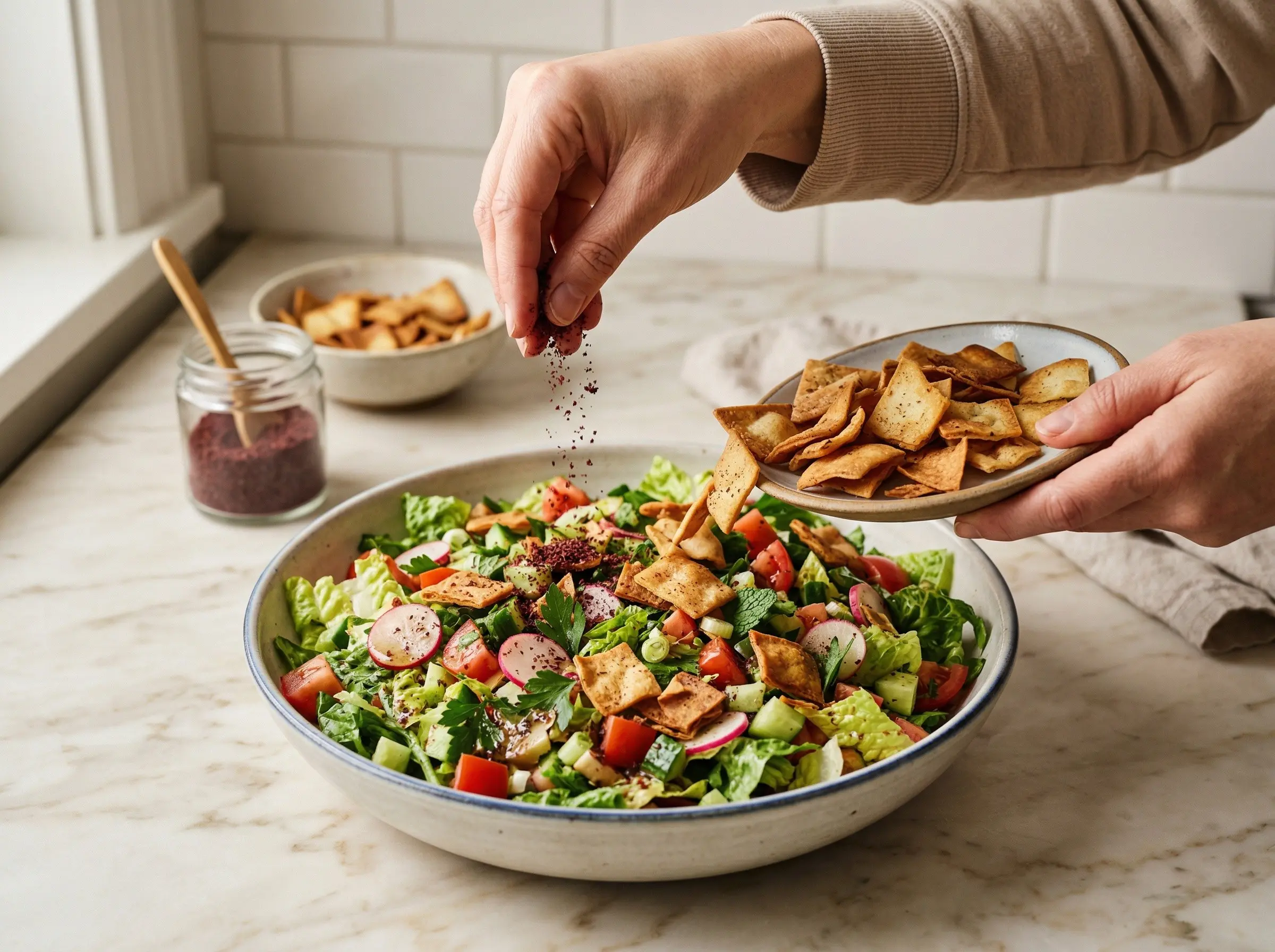
Add the pita chips and serve immediately. Just before serving, add the crispy pita chips to the salad and toss briefly to incorporate. The timing is crucial - the chips should be added at the last moment so they retain their crunch while absorbing just enough dressing to become flavorful without getting soggy. Transfer to a serving platter or individual plates. Sprinkle additional ground sumac over the top for visual appeal and extra tang. Serve immediately as part of a mezze spread alongside hummus, baba ganoush, and grilled meats, or as a refreshing side to any Mediterranean meal. Fattoush does not hold well once dressed - the vegetables release liquid and the pita becomes soggy - so assemble only as much as you will eat immediately. Keep undressed salad and pita chips separate if preparing ahead.
You Might Also Like
Master Your Kitchen with PantryAI
Love this recipe? Save it, shop for it, and cook it with ease. Download the PantryAI app to organize your pantry, track expirations, and discover recipes based on what you already have.

On a computer?Scan with your iPhone camera to download PantryAI.








Swipe to see more screenshots