
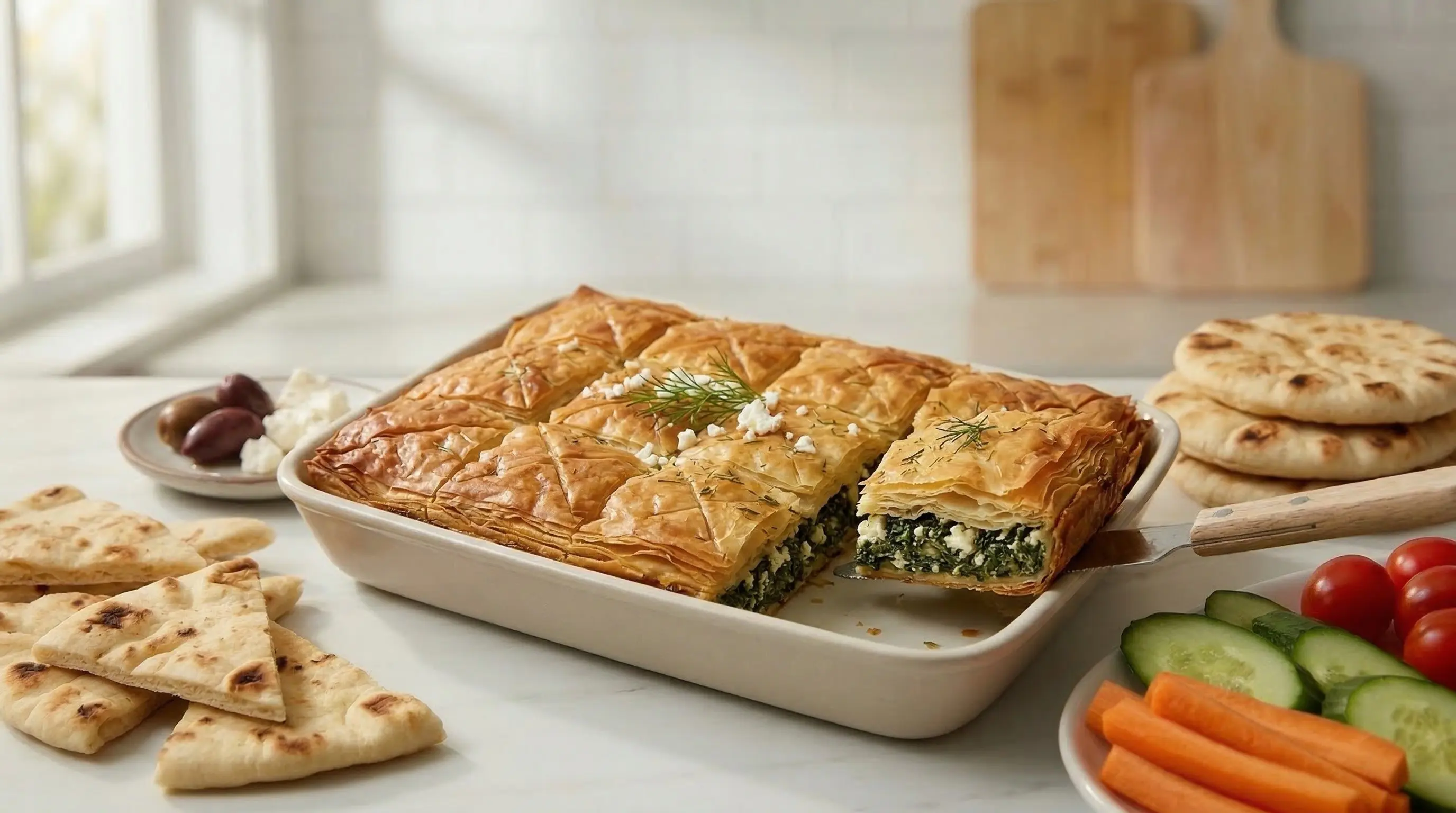
Spanakopita
Learn how to make authentic spanakopita, the beloved Greek spinach and feta pie wrapped in crispy, golden phyllo dough. This savory pastry is flaky, flavorful, and perfect for any occasion!
Ingredients
The Story
Spanakopita is one of Greece's most iconic savory pastries, layers of buttery, shatteringly crisp phyllo dough encasing a rich filling of spinach, feta cheese, and fresh herbs. The name combines "spanaki" (spinach) and "pita" (pie), and the dish has been a cornerstone of Greek cuisine for centuries. Phyllo-wrapped pies called "pites" are found throughout Greece, each region boasting its own variations - tiropita with cheese, kotopita with chicken, kreatopita with meat - but spanakopita is perhaps the most beloved of all. The dish has roots in both ancient Greek and Ottoman culinary traditions, with layered pastries appearing throughout the Eastern Mediterranean in various forms. In Greece, spanakopita occupies a special place in both everyday life and celebrations. It is sold in bakeries and street stalls, served at family gatherings and holiday tables, packed for picnics and school lunches, and eaten warm from the oven or at room temperature for a simple meal. During Lent and fasting periods in the Greek Orthodox tradition, a dairy-free version omits the feta and eggs, relying solely on spinach, herbs, and olive oil. Every Greek grandmother has her own recipe, passed down through generations - some use only spinach, others add leeks or wild greens like vlita (amaranth greens) or horta. The debate over the proper ratio of spinach to feta, the ideal herb combination, and whether to fold into triangles or bake as a large pan pie can become quite animated. What makes spanakopita so extraordinary is the textural contrast between the impossibly crisp phyllo and the soft, flavorful filling within. Working with phyllo requires patience and a generous hand with butter - each paper-thin sheet must be brushed to ensure it crisps properly and separates into those distinctive flaky layers. The filling balances the mineral earthiness of spinach with the salty tang of feta, brightened by fresh dill and green onions. When perfectly executed, biting through the crackling golden layers into the warm, savory filling is one of Greek cuisine's greatest pleasures. Spanakopita proves that simple ingredients - greens, cheese, pastry - can be transformed through technique into something truly magnificent.
Instructions
Step 1
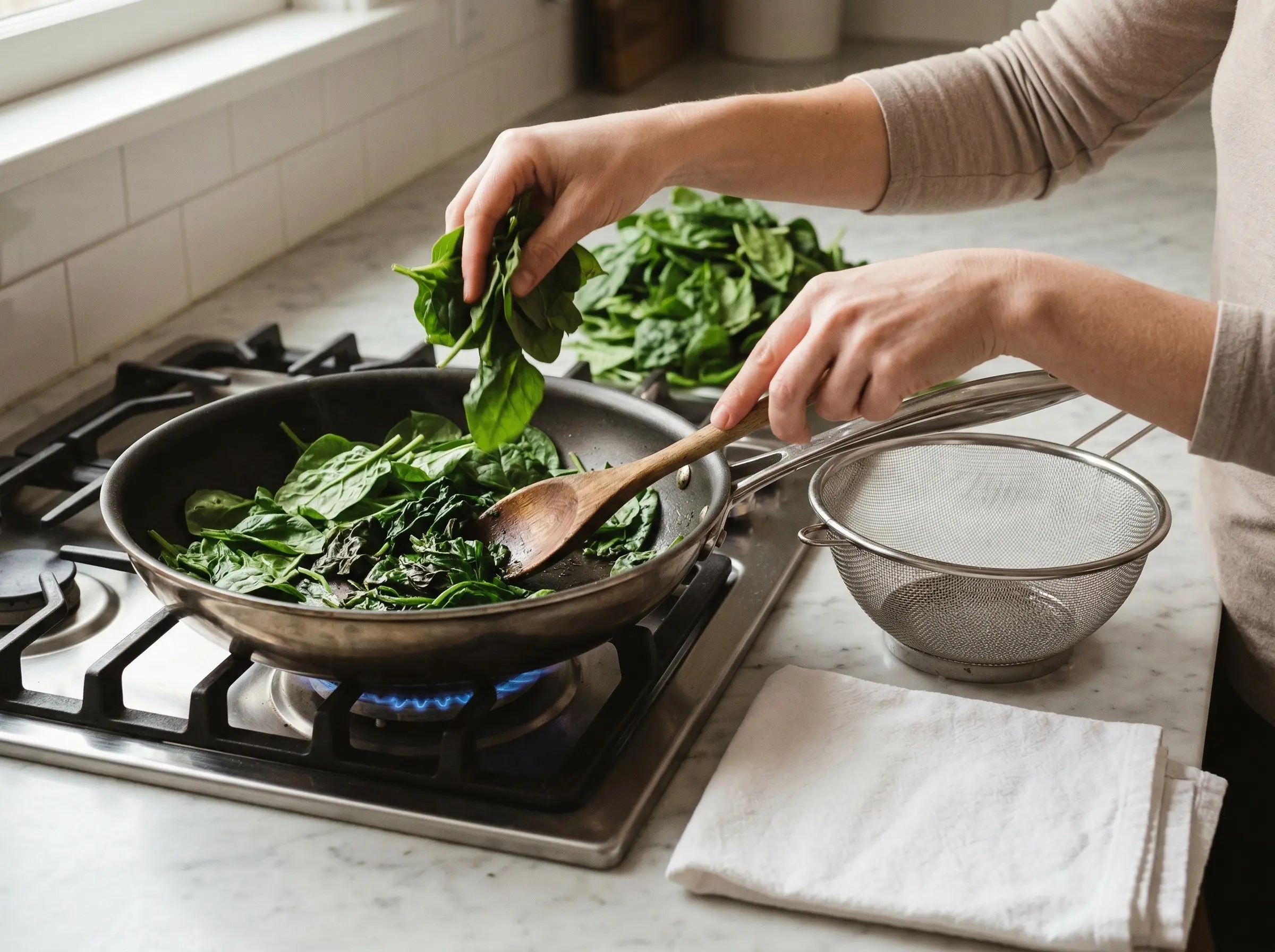
Prepare the spinach. If using fresh spinach, wash thoroughly and remove tough stems. Heat a large skillet over medium-high heat with the olive oil. Add the spinach in batches, stirring until wilted - this takes only 2-3 minutes. Transfer to a colander and let cool. If using frozen spinach, thaw completely in the refrigerator overnight. Once cool enough to handle, squeeze the spinach firmly in a clean kitchen towel or cheesecloth to remove as much moisture as possible - this is critical. Wet spinach will make the phyllo soggy. Squeeze until absolutely no more liquid drips out. Roughly chop the squeezed spinach.
Step 2
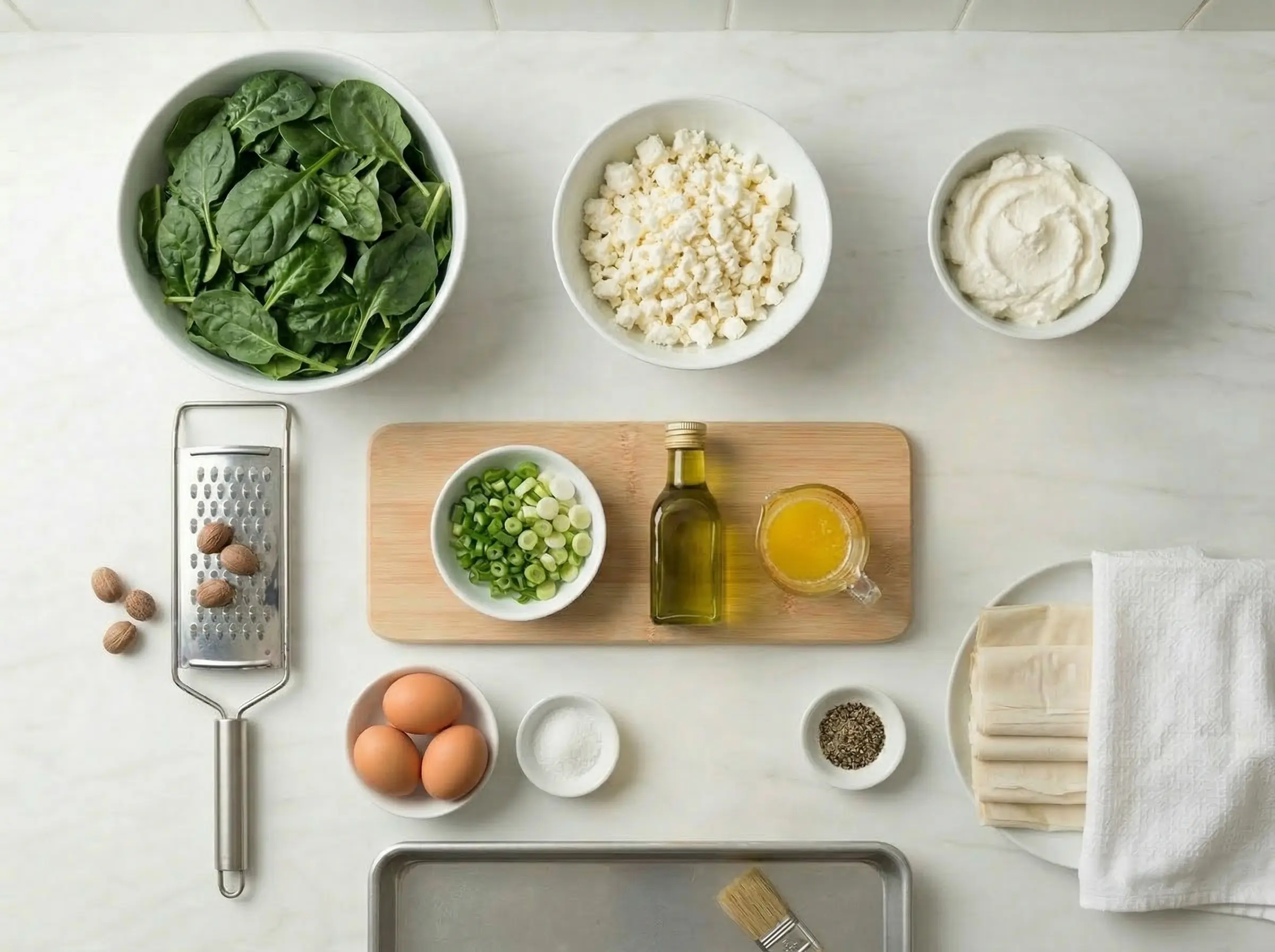
Make the filling. In a large bowl, combine the squeezed, chopped spinach, crumbled feta, ricotta cheese, sliced green onions, fresh dill, and parsley. Add the beaten eggs, nutmeg, salt, and pepper. Mix thoroughly until everything is well combined. Taste the filling - feta saltiness varies, so you may need more or less salt. The filling should be well-seasoned and cohesive but not wet. If it seems too moist, add a tablespoon of breadcrumbs to absorb excess liquid. Set aside while you prepare the phyllo.
Step 3
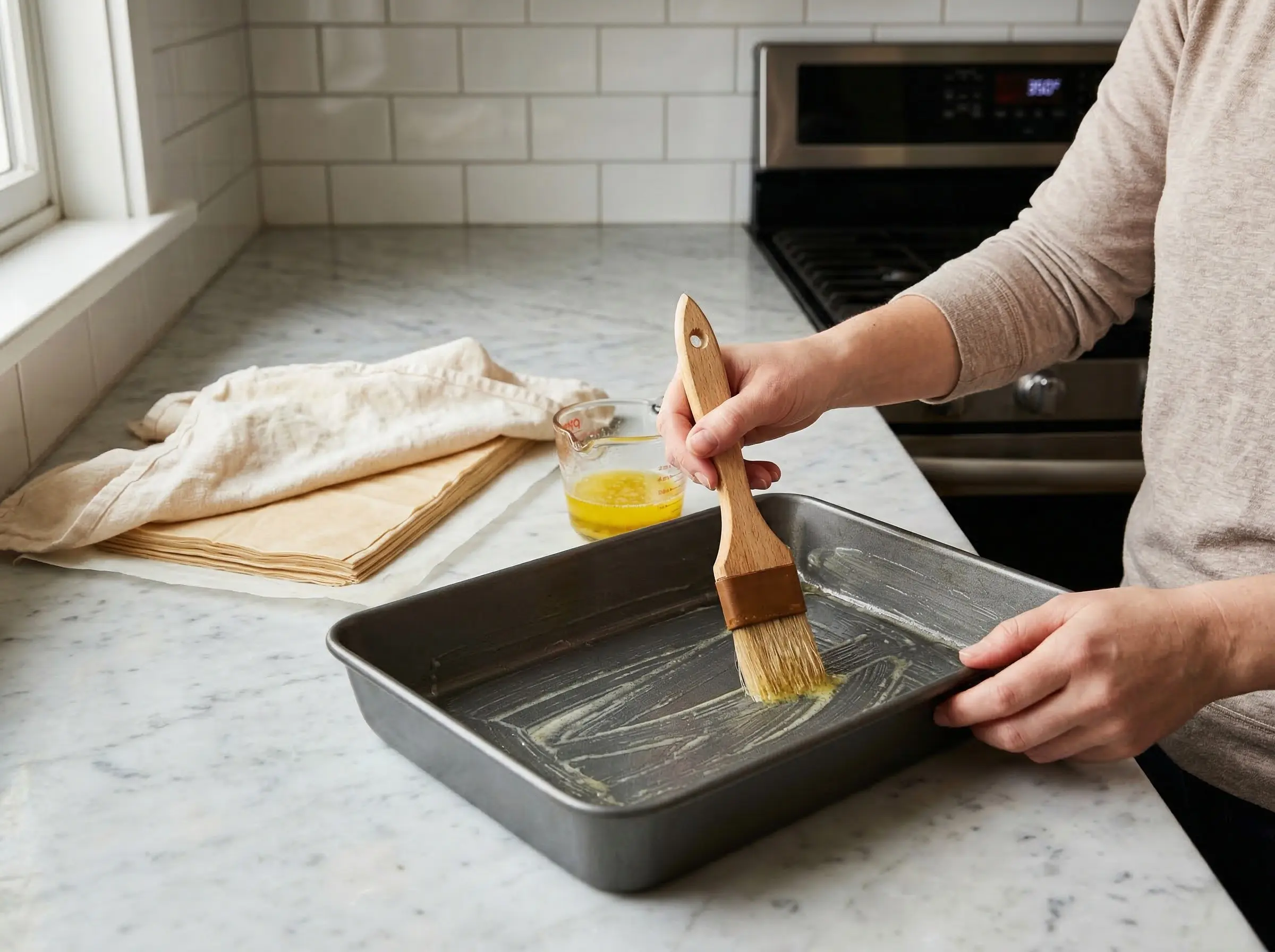
Prepare the phyllo and pan. Remove the phyllo from the refrigerator and let it come to room temperature for 20-30 minutes before unrolling - cold phyllo cracks. Preheat your oven to 350 degrees F. Brush a 9x13 inch baking pan generously with melted butter. Unroll the phyllo sheets and cover with a slightly damp kitchen towel to prevent drying - phyllo dries out very quickly and becomes brittle. Work with one sheet at a time, keeping the rest covered. Mix the melted butter with the olive oil for brushing.
Step 4
Layer the bottom phyllo sheets. Place one phyllo sheet in the prepared pan, pressing it gently into the corners and letting the edges hang over the sides. Brush generously with the butter-oil mixture - do not skimp, as the butter creates the crispy layers. Repeat with 7-8 more sheets, brushing each one with butter. The bottom should have about half the phyllo sheets to create a sturdy, crispy base. If the phyllo sheets are larger than your pan, fold them to fit or let them drape over the edges.
Step 5
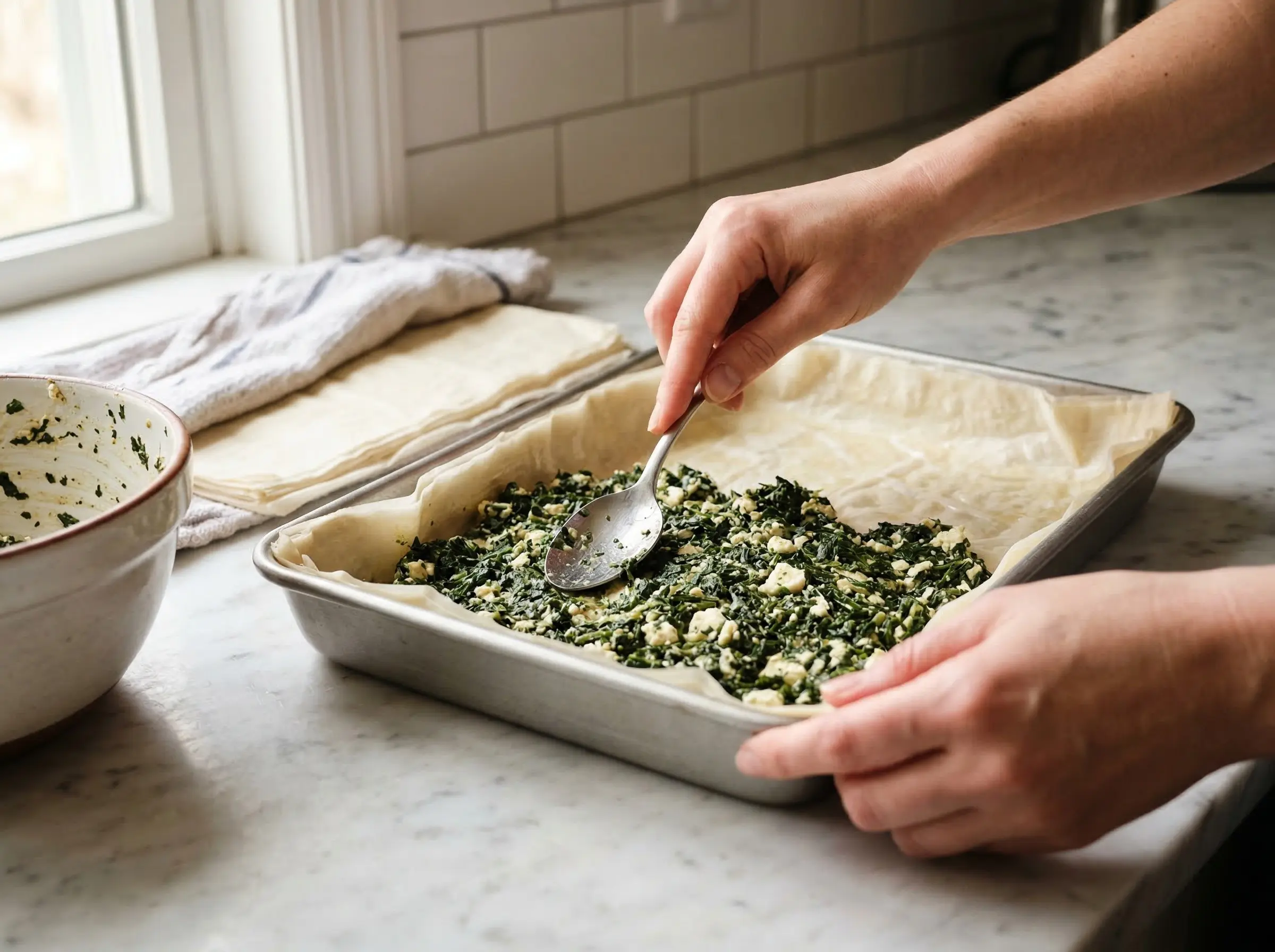
Add the filling and top with remaining phyllo. Spread the spinach-feta filling evenly over the layered phyllo, pressing gently to create an even layer. Fold any overhanging phyllo edges over the filling. Layer the remaining phyllo sheets on top, brushing each one with butter just as you did for the bottom. Tuck or fold the top edges under to create a neat border, or roll them inward to create a decorative edge. Brush the top generously with butter.
Step 6
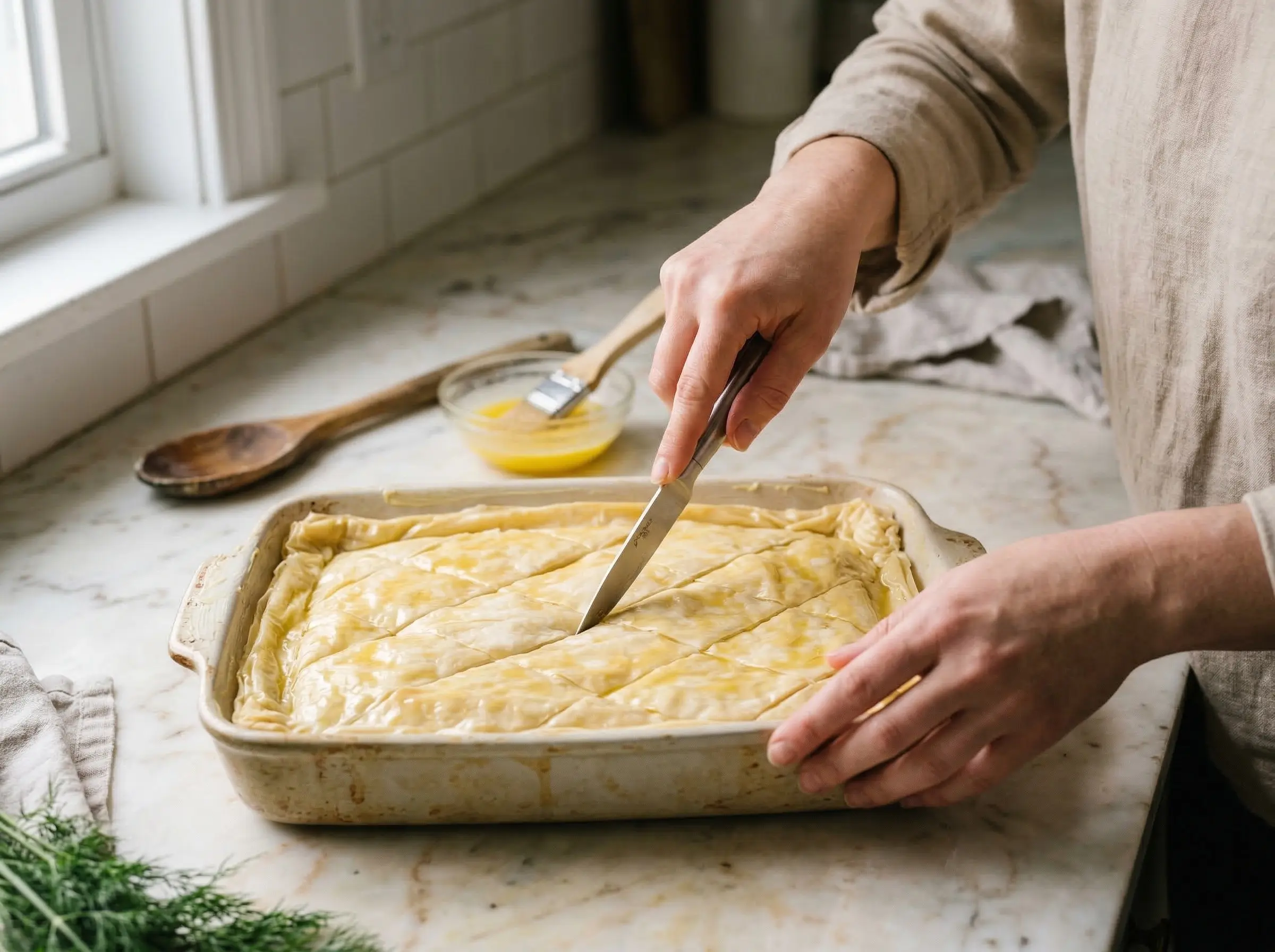
Score and bake. Using a sharp knife, score the top layers of phyllo into squares or diamonds - cut through only the top few layers, not all the way to the filling. This makes cutting easier after baking and allows steam to escape. Some bakers sprinkle a few drops of water over the top to help the phyllo puff. Bake at 350 degrees F for 45-55 minutes until the top is deeply golden brown and crispy. The phyllo should be richly colored, not pale. Let cool in the pan for at least 15 minutes before cutting along the scored lines. Spanakopita can be served warm or at room temperature - many Greeks prefer it at room temperature when the flavors have settled and the filling has set. Store covered at room temperature for 1 day, or refrigerate for up to 4 days. Reheat in a 350 degree F oven for 10-15 minutes to re-crisp the phyllo. Spanakopita can also be assembled and frozen unbaked for up to 3 months - bake directly from frozen, adding 15-20 minutes to the cooking time.
You Might Also Like
Master Your Kitchen with PantryAI
Love this recipe? Save it, shop for it, and cook it with ease. Download the PantryAI app to organize your pantry, track expirations, and discover recipes based on what you already have.

On a computer?Scan with your iPhone camera to download PantryAI.

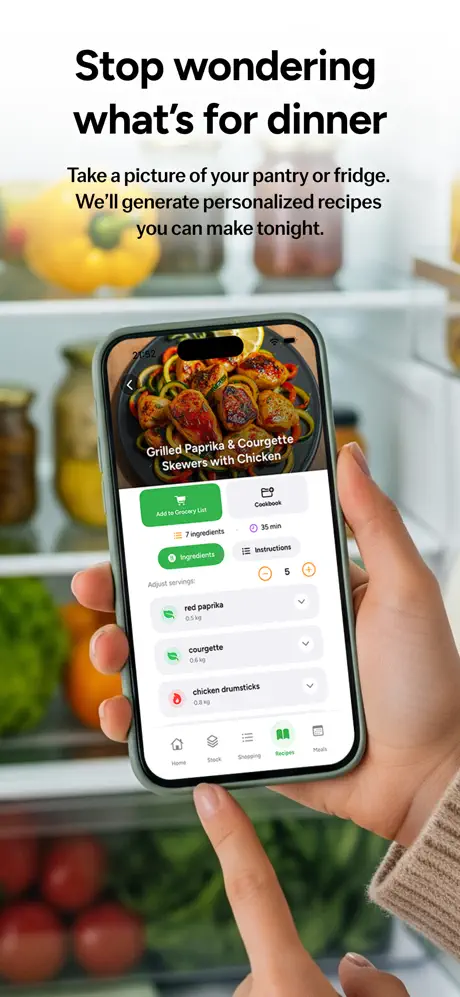
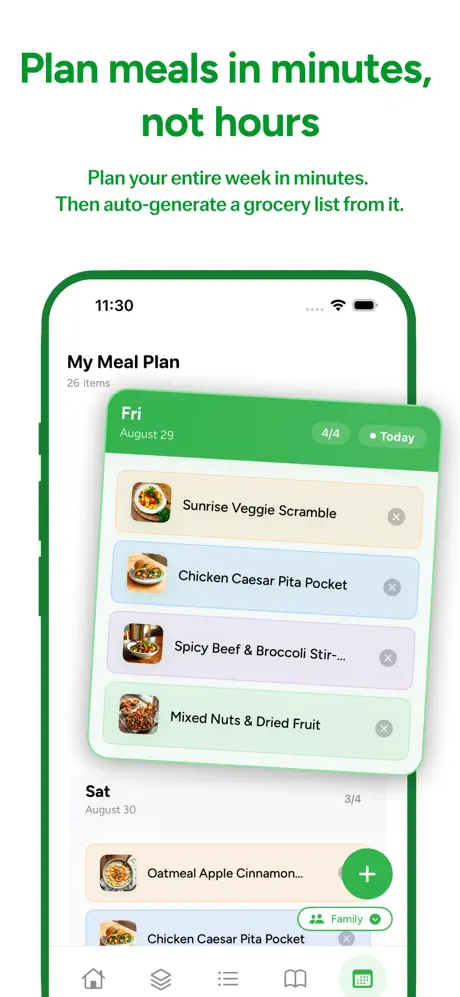




Swipe to see more screenshots