
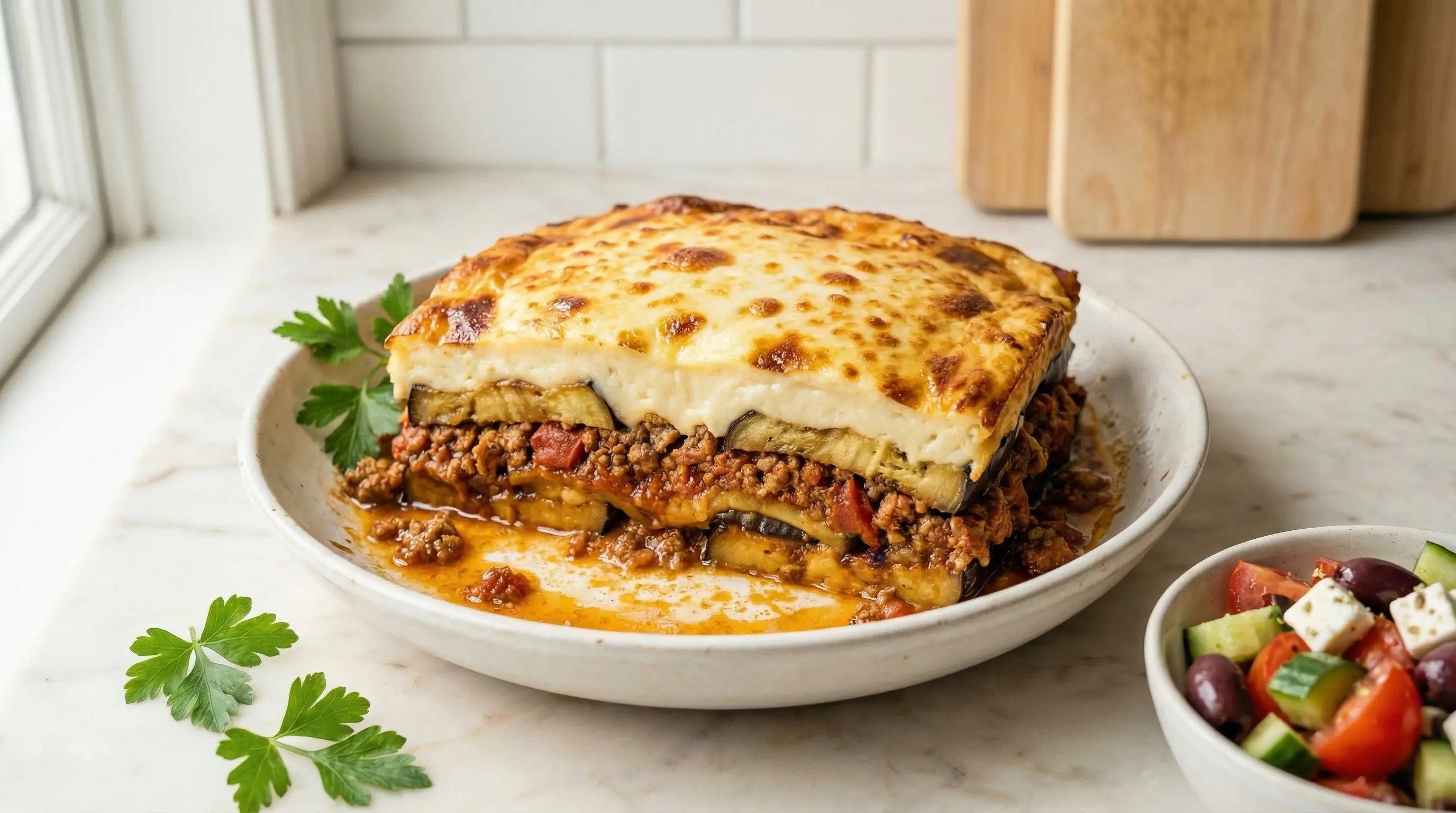
Moussaka
Learn how to make authentic Greek moussaka with layers of silky eggplant, spiced meat sauce, and creamy béchamel. This beloved Mediterranean classic is rich, comforting, and absolutely delicious!
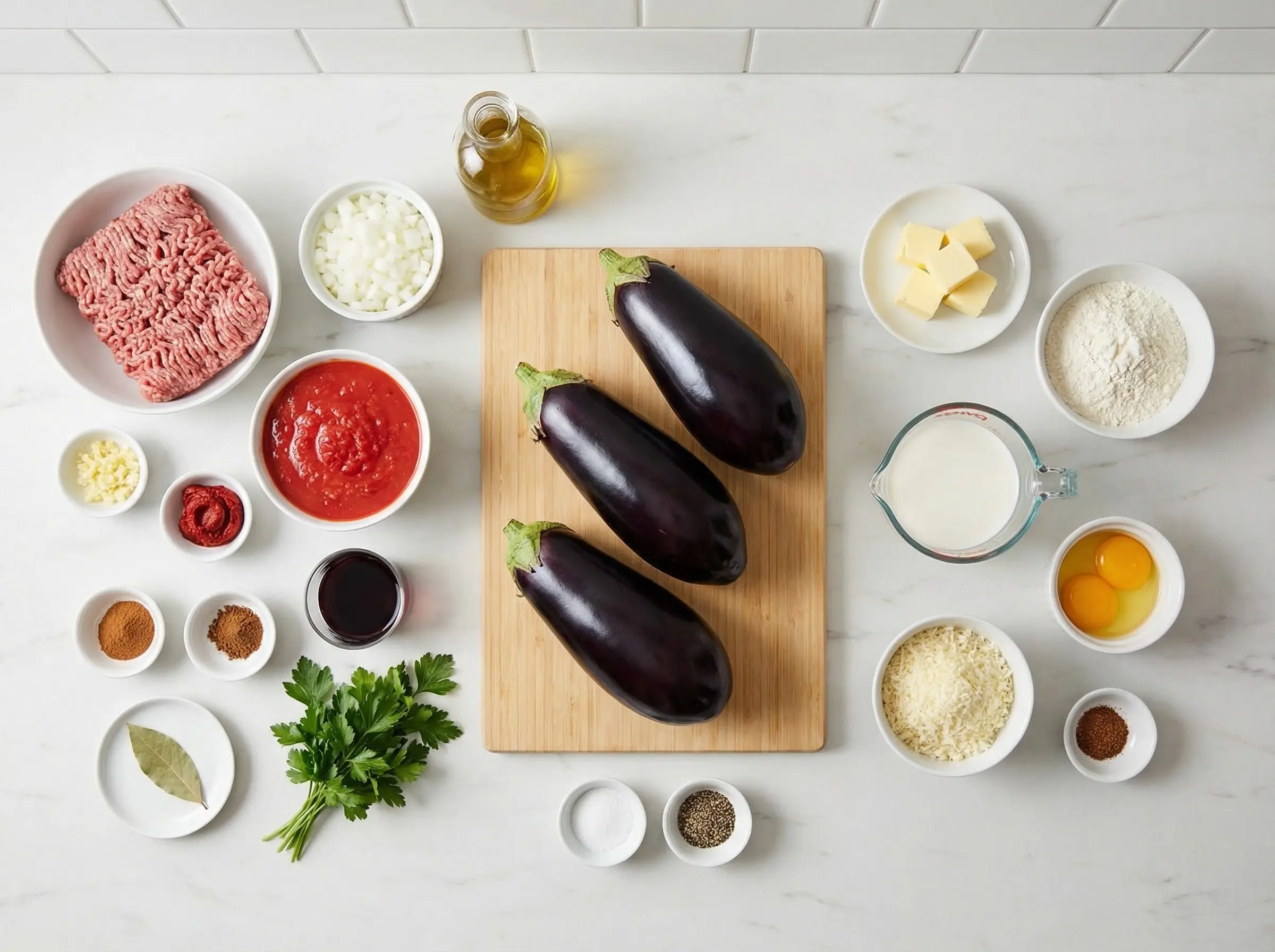
Ingredients
The Story
Moussaka is the undisputed queen of Greek cuisine, a magnificent layered casserole that combines silky eggplant, richly spiced meat sauce, and a luscious béchamel topping baked until golden and bubbling. While versions of eggplant and meat dishes exist throughout the Middle East and Balkans - from Turkish musakka to Egyptian moussaqa - the version most recognized internationally is distinctly Greek, codified in the early 20th century by the legendary chef Nikolaos Tselementes. His interpretation, which added the French-inspired béchamel sauce to the traditional layered dish, transformed moussaka from a humble peasant food into an elegant centerpiece worthy of the finest tavernas. The history of moussaka stretches back centuries, long before Tselementes formalized the recipe in the 1920s. Eggplant was introduced to Greece from India via Arab traders during the medieval period, and Greeks quickly embraced it as a beloved vegetable. The combination of eggplant with meat and tomatoes evolved naturally in the Eastern Mediterranean, where these ingredients were abundant. The name "moussaka" likely derives from the Arabic "musaqqaa," meaning "chilled" or "moistened," referring to an earlier cold preparation. When Tselementes, who had trained in European culinary traditions, returned to Greece with a mission to elevate Greek cuisine, he transformed this rustic dish by adding the creamy béchamel layer that has become its defining characteristic. What makes moussaka so extraordinary is the way each layer contributes to a harmonious whole. The eggplant, traditionally salted and fried until silky and golden (though modern versions often roast it for lightness), provides a tender, almost meaty base that absorbs the surrounding flavors. The meat sauce - lamb or beef cooked with onions, garlic, tomatoes, cinnamon, and allspice - brings warmth and depth that is distinctly Greek. The béchamel, enriched with egg yolks and sometimes cheese, crowns the dish with luxurious creaminess that becomes golden and slightly souffléed in the oven. When you cut into a properly rested moussaka, you see the beautiful striations of dark eggplant, ruddy meat sauce, and ivory cream - a cross-section as satisfying to view as it is to eat.
Instructions
Step 1
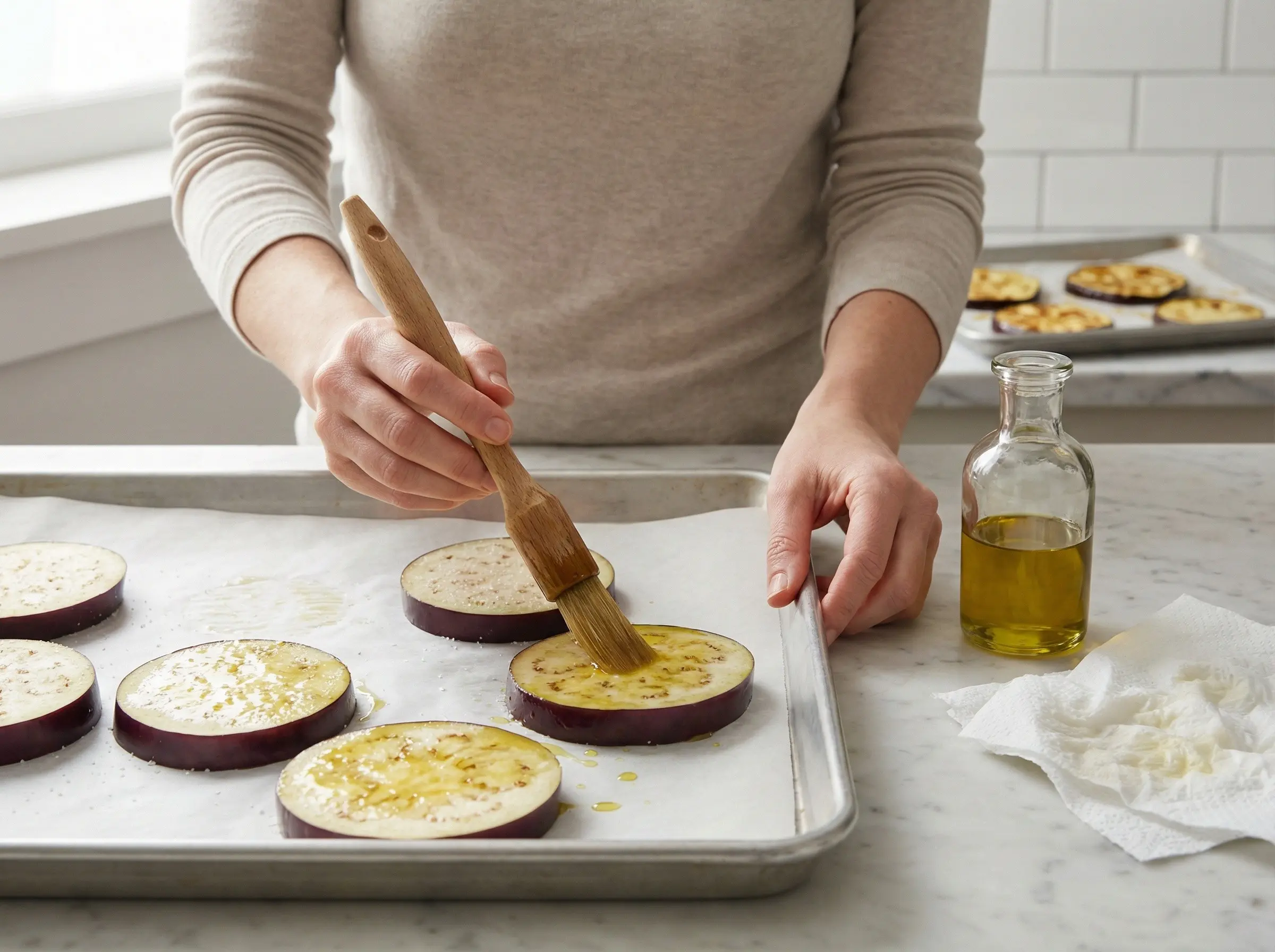
Prepare the eggplant. Slice the eggplants into rounds about 1/2 inch thick. Lay them in a single layer on baking sheets lined with paper towels. Sprinkle generously with salt on both sides and let sit for 30-45 minutes - this draws out moisture and any bitterness, and prevents the eggplant from absorbing too much oil during cooking. After salting, pat the slices thoroughly dry with paper towels. Preheat your oven to 400 degrees F. Brush both sides of the eggplant slices with olive oil and arrange on baking sheets in a single layer. Roast for 25-30 minutes, flipping halfway through, until golden brown and soft. This roasting method is lighter than the traditional frying but produces excellent results.
Step 2
While the eggplant roasts, prepare the meat sauce. Heat 2 tablespoons olive oil in a large skillet over medium-high heat. Add the ground lamb or beef and cook, breaking it up with a wooden spoon, until browned and no longer pink, about 6-8 minutes. Drain excess fat if desired, leaving about 1-2 tablespoons. Add the diced onion and cook for 5 minutes until softened. Add the minced garlic and cook for another minute until fragrant. Pour in the red wine, scraping up any browned bits from the bottom, and let it simmer until mostly evaporated, about 2-3 minutes.
Step 3
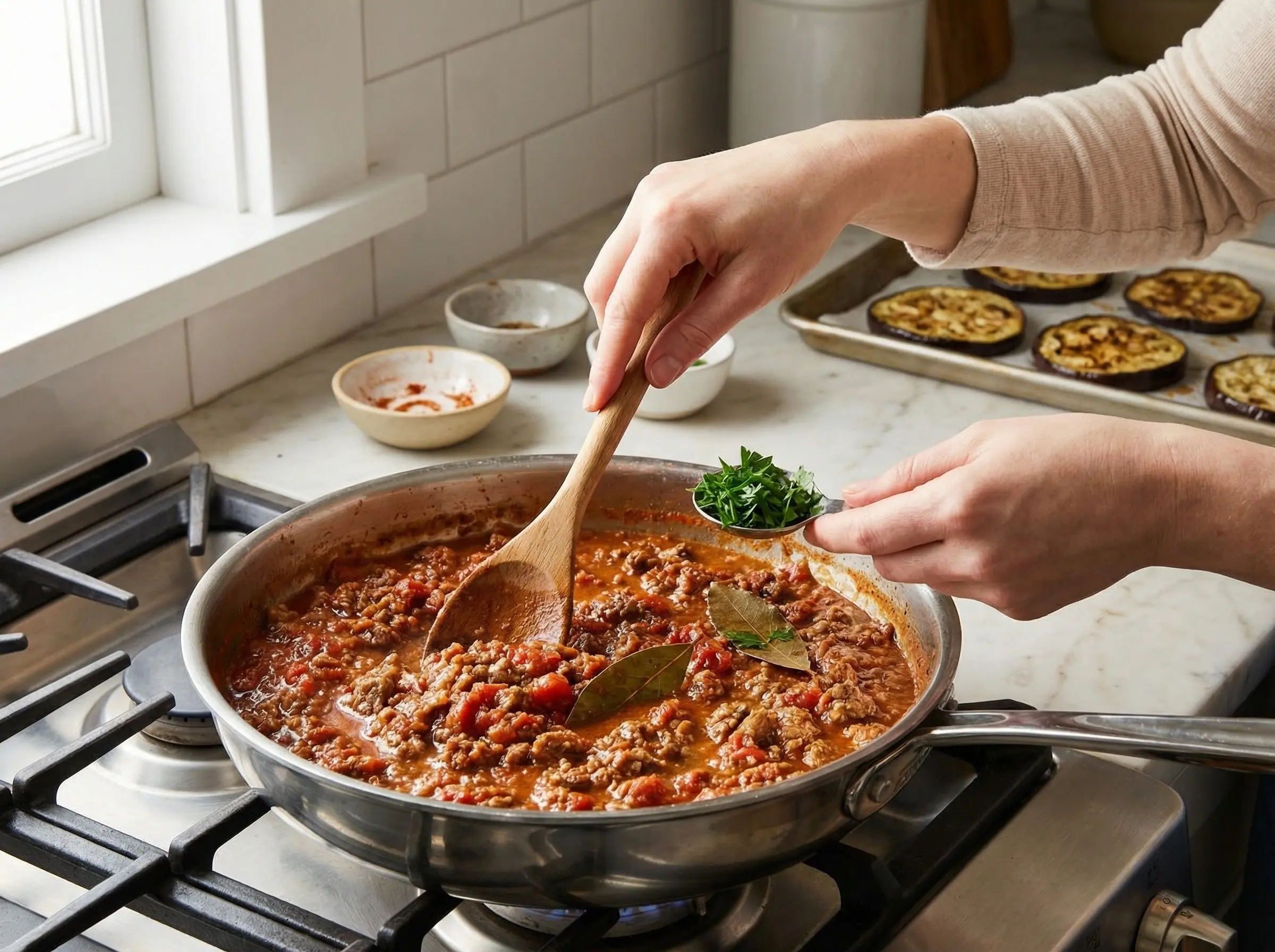
Add the crushed tomatoes, tomato paste, cinnamon, allspice, and bay leaf to the meat. Season with salt and pepper. Stir well, bring to a simmer, then reduce heat to low. Cook uncovered for 20-25 minutes, stirring occasionally, until the sauce has thickened and the flavors have melded. The sauce should be thick enough to hold its shape when layered - not watery. Remove the bay leaf and stir in the chopped parsley. Taste and adjust seasoning. The warm spices should be noticeable but not overwhelming - they give moussaka its distinctive Greek character.
Step 4
Make the béchamel sauce. In a medium saucepan, melt the butter over medium heat. Add the flour and whisk constantly for 1-2 minutes to cook out the raw flour taste without browning - this is your roux. Gradually pour in the warm milk, whisking constantly to prevent lumps. Continue whisking and cooking for 5-7 minutes until the sauce thickens and coats the back of a spoon. Remove from heat and let cool for 2-3 minutes. Whisk the egg yolks in a small bowl, then temper them by slowly whisking in a few tablespoons of the warm sauce. Pour the tempered yolks back into the saucepan, whisking constantly. Add half the grated cheese and the nutmeg. Season with salt and pepper. The béchamel should be thick but pourable.
Step 5
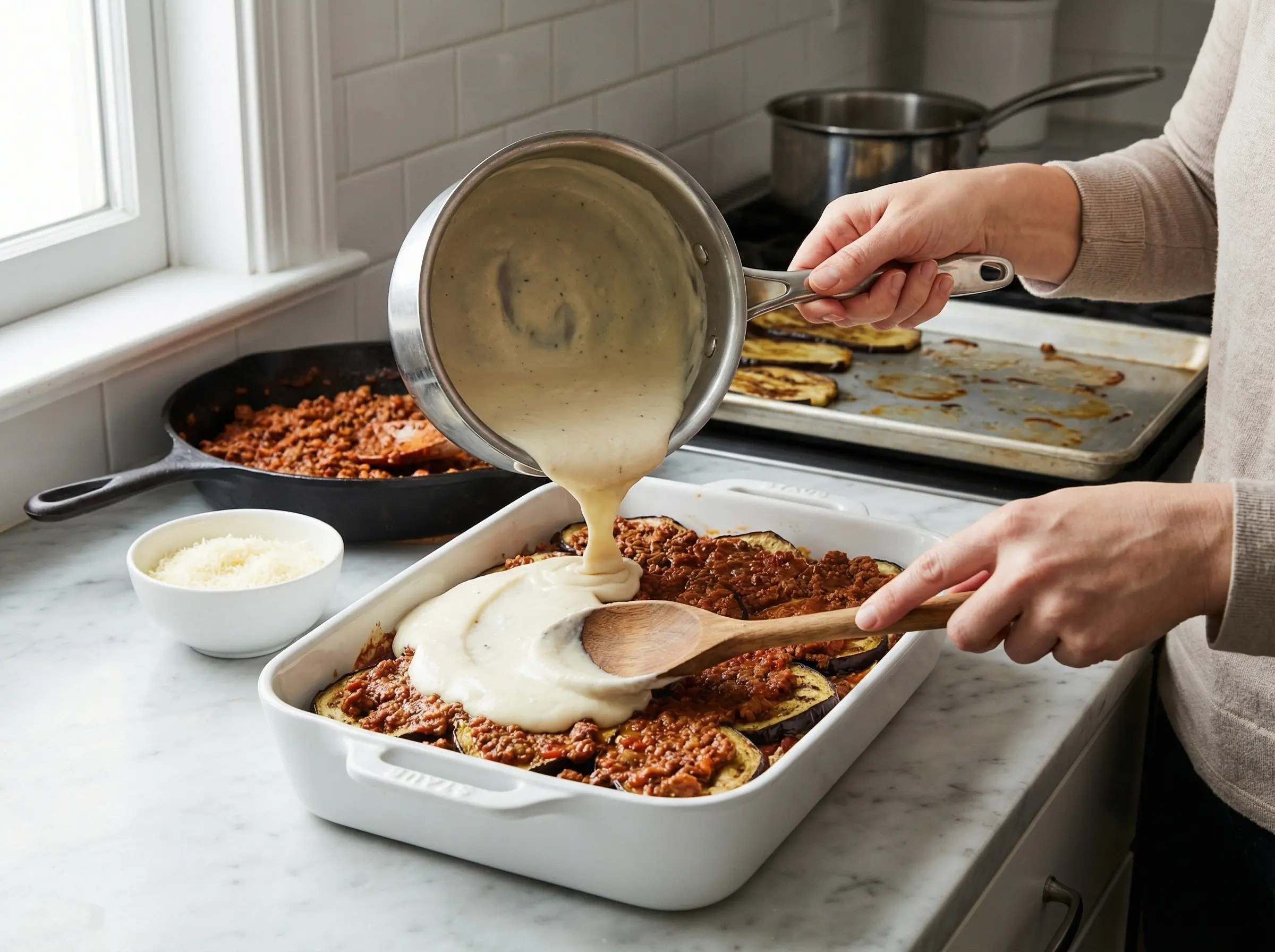
Assemble the moussaka. Reduce oven temperature to 375 degrees F. Lightly grease a 9x13 inch baking dish. Arrange half of the roasted eggplant slices in a single layer on the bottom, overlapping slightly if needed. Spread all of the meat sauce evenly over the eggplant. Arrange the remaining eggplant slices in a layer over the meat sauce. Pour the béchamel sauce evenly over the top, spreading gently to cover completely and reach the edges. Sprinkle the remaining cheese over the béchamel. For a beautiful presentation, you can score the top lightly with a fork to create a pattern.
Step 6
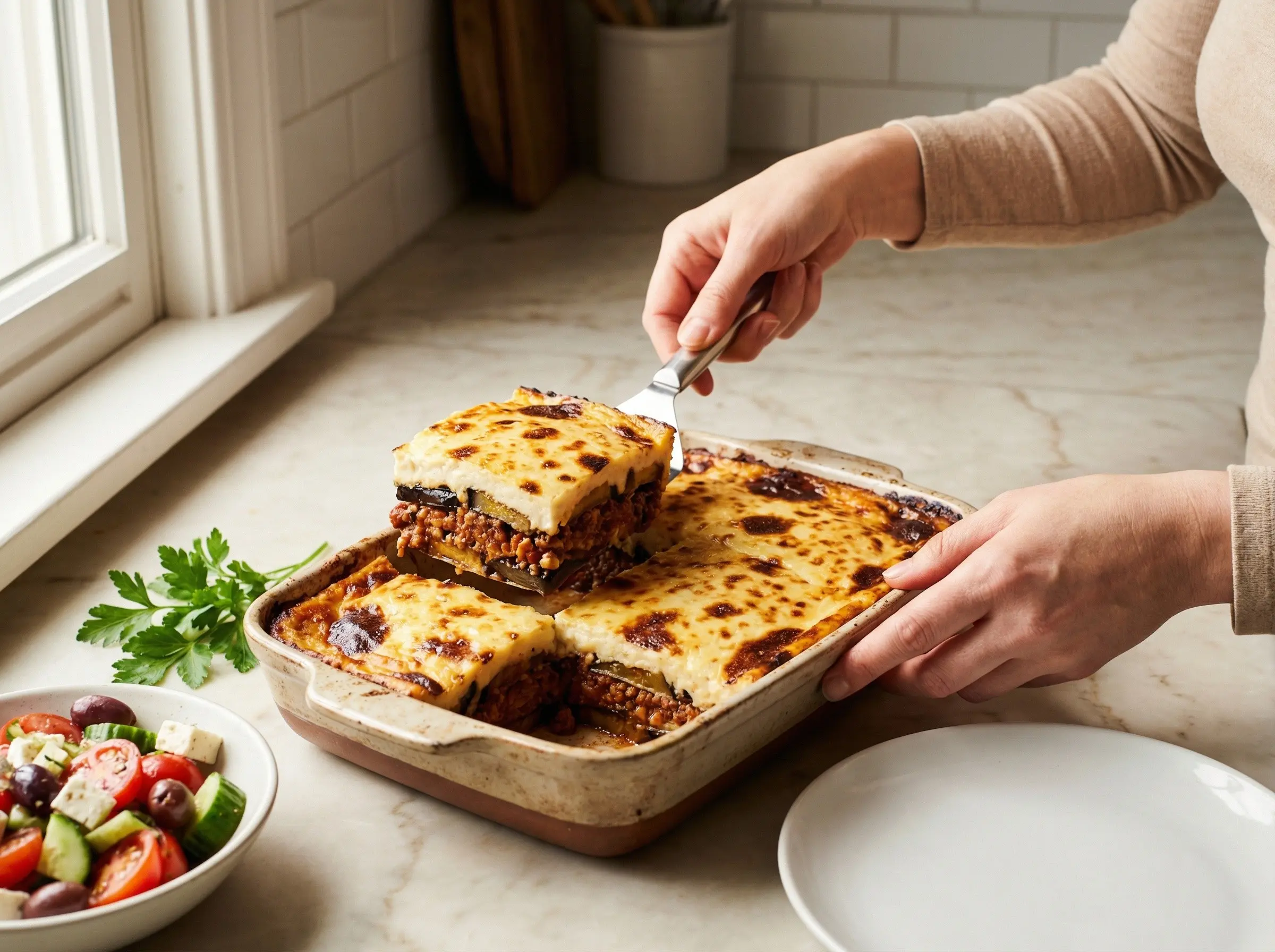
Bake the moussaka at 375 degrees F for 45-50 minutes until the top is deeply golden brown and the casserole is bubbling around the edges. The béchamel should puff slightly like a soufflé and develop beautiful golden spots. This is the most critical step: remove the moussaka from the oven and let it rest for at least 20-30 minutes before cutting. This resting period is essential - it allows the layers to set so they hold together when sliced rather than collapsing into a delicious but messy heap. Cut into squares and serve warm, not hot. Moussaka is traditionally accompanied by a simple Greek salad with tomatoes, cucumber, olives, and feta, and crusty bread for soaking up any remaining sauce. The dish actually tastes even better the next day after the flavors have fully melded - reheat individual portions in the oven at 350 degrees F until warmed through.
You Might Also Like
Master Your Kitchen with PantryAI
Love this recipe? Save it, shop for it, and cook it with ease. Download the PantryAI app to organize your pantry, track expirations, and discover recipes based on what you already have.

On a computer?Scan with your iPhone camera to download PantryAI.








Swipe to see more screenshots