
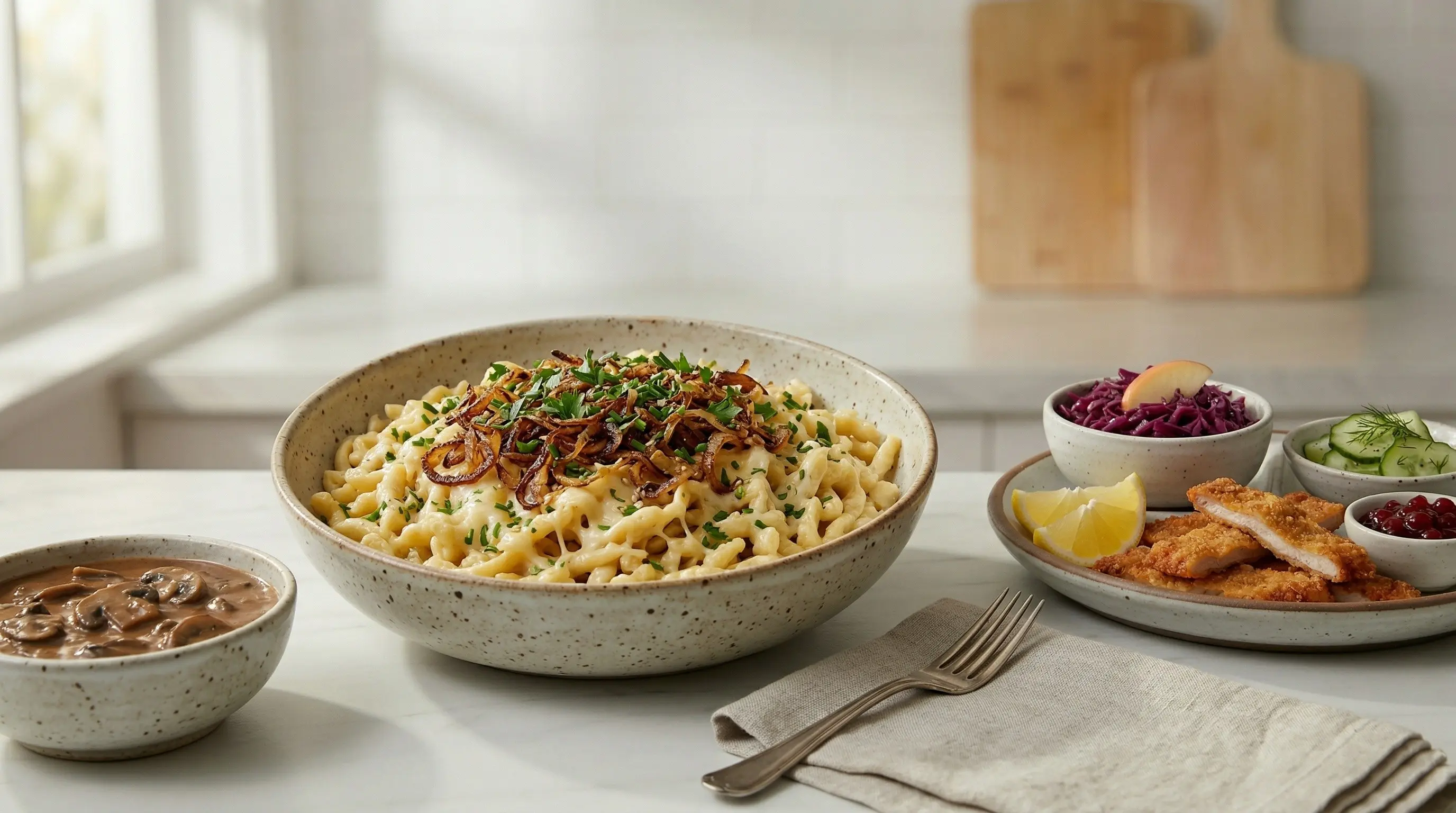
Spaetzle
Learn how to make authentic spaetzle, the beloved German egg noodles with a tender, chewy texture. These rustic dumplings are the perfect side dish for stews, schnitzel, and creamy sauces!
Ingredients
The Story
Spaetzle are the quintessential comfort food of southern Germany, Austria, and Switzerland - small, irregularly shaped egg noodle dumplings that have been nourishing families in the Swabian region for centuries. The name comes from the Swabian dialect word "Spatzen," meaning "little sparrows," referring to the small, elongated shape of the dumplings that supposedly resemble the birds. While the exact origins are lost to history, spaetzle have been documented in recipes since at least the 18th century and were likely made in home kitchens long before that. They represent the ingenious peasant cooking of the region, transforming simple pantry staples - flour, eggs, salt, and water - into something deeply satisfying. Spaetzle hold a special place in the culinary identity of Swabia, the southwestern region of Germany that includes Stuttgart and much of Baden-Wurttemberg. The dish is so central to Swabian culture that the people of the region are affectionately nicknamed "Schwabenspatzen" (Swabian sparrows). Every Swabian grandmother has her own recipe, fiercely guarded and passed down through generations, with subtle variations in the ratio of eggs to flour, the addition of nutmeg or herbs, and the technique used to form the dumplings. Traditional methods include scraping the batter from a wooden board into boiling water, pressing it through a special spaetzle press, or using a spaetzle hobel (a flat board with holes that the batter is scraped across). What makes spaetzle so beloved is their unique texture and incredible versatility. Unlike dried pasta, spaetzle have a tender, slightly chewy bite with an eggy richness that absorbs sauces and gravies beautifully. Their irregular shapes create pockets that catch melted butter, cheese, and braising liquids. Spaetzle are the traditional accompaniment to countless German and Austrian dishes: beef rouladen with rich gravy, jaegerschnitzel with mushroom sauce, goulash, and sauerbraten. They can also be transformed into main dishes like kasespaetzle (the German answer to mac and cheese, with caramelized onions and melted cheese) or fried until crispy in butter. Freshly made spaetzle, tossed with brown butter and fresh herbs, is a revelation - proof that the humblest ingredients, prepared with care and tradition, can create something extraordinary.
Instructions
Step 1
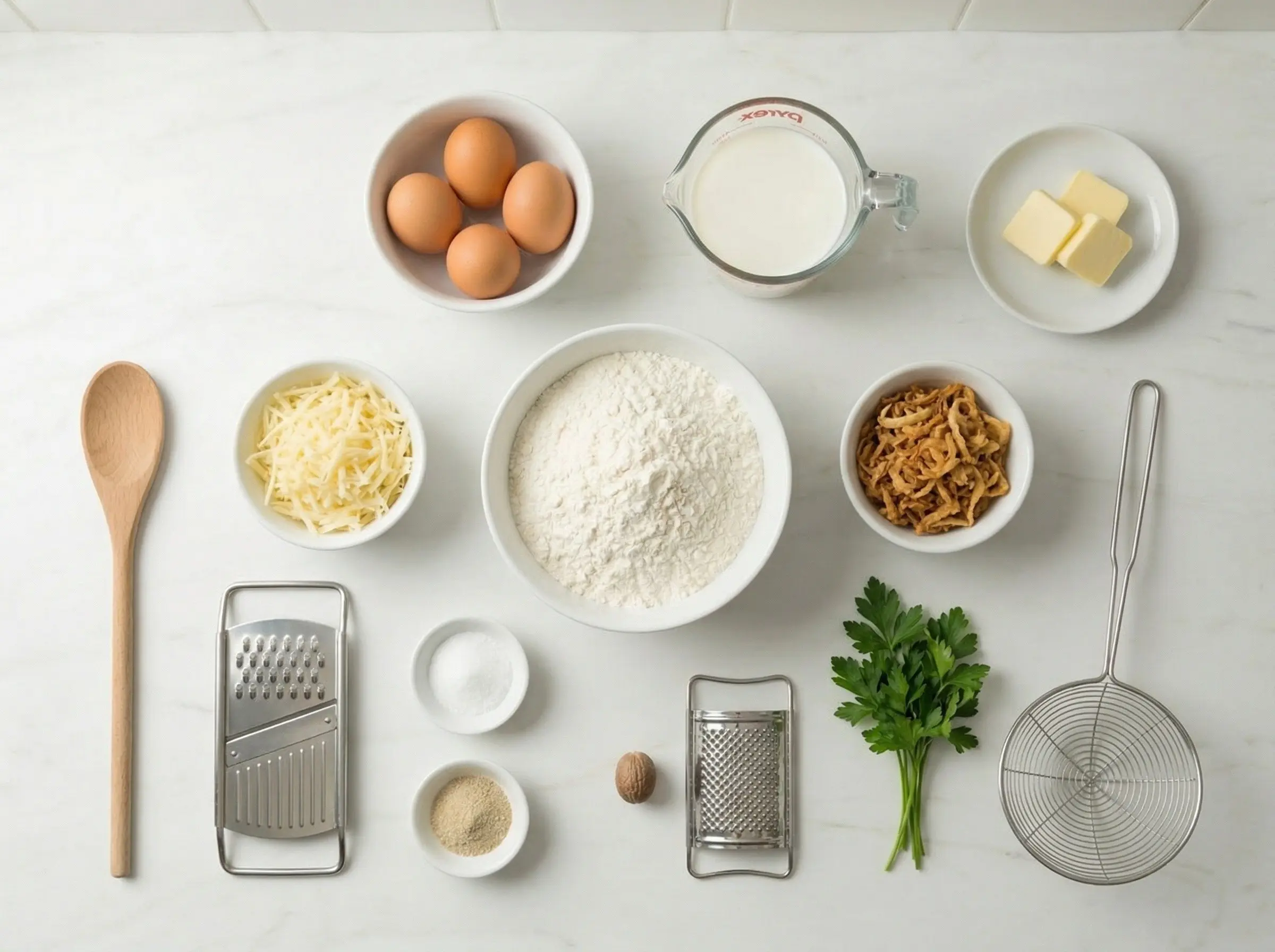
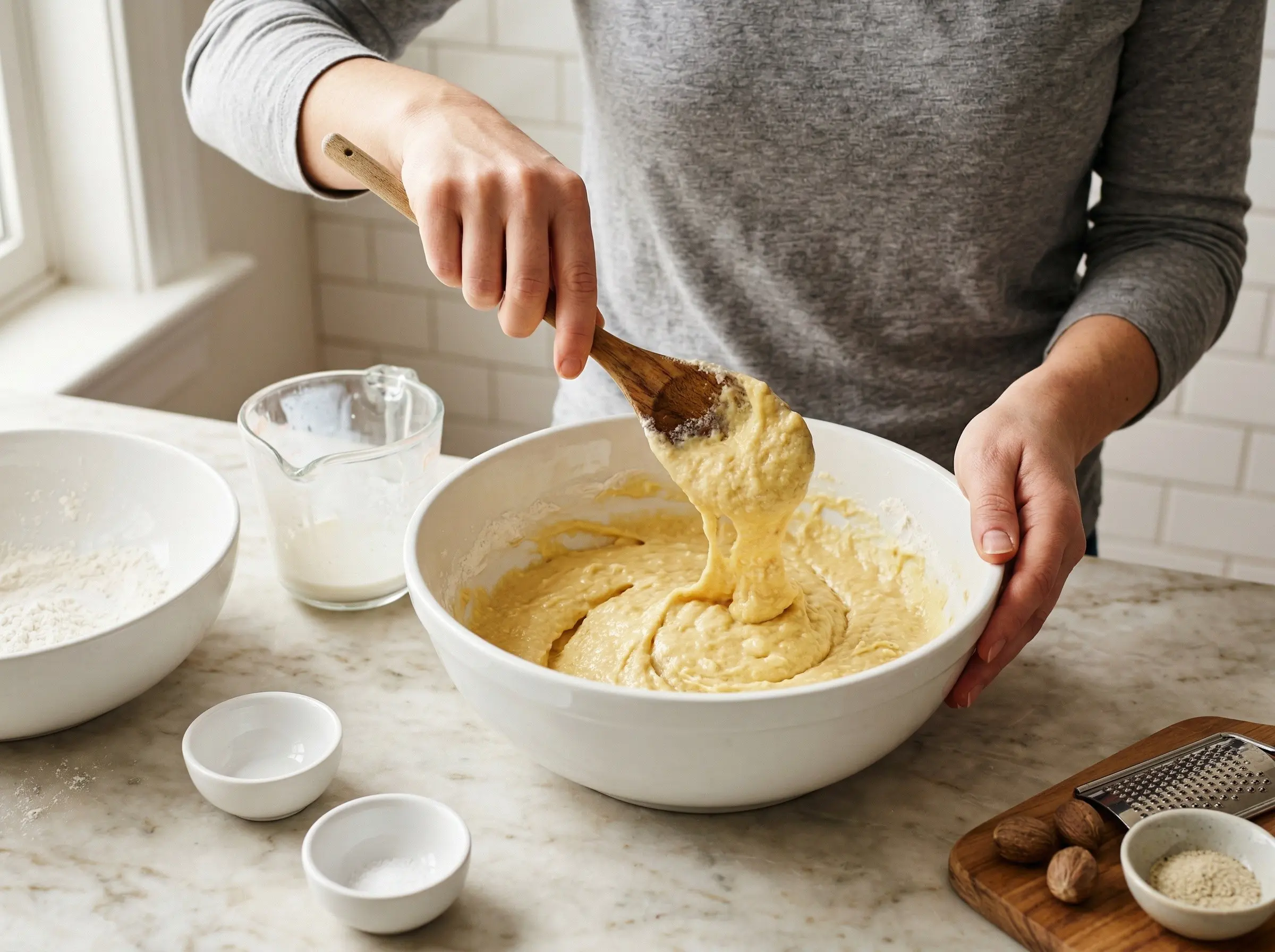
Make the batter. In a large bowl, whisk together the flour, salt, nutmeg, and white pepper. Make a well in the center. In a separate bowl, beat the eggs with the milk (or water - milk makes slightly richer spaetzle, water makes them lighter). Pour the wet ingredients into the well and stir vigorously with a wooden spoon until a thick, sticky batter forms. The batter should be smooth with no lumps, thick enough to slowly drop from a spoon but not so thick it holds its shape. Adjust with more flour or liquid as needed. Let the batter rest for 15-30 minutes - this allows the gluten to relax and produces more tender spaetzle.
Step 2
Prepare your cooking setup. Bring a large pot of generously salted water to a boil - it should taste like the sea. Have ready a large bowl of ice water for shocking the spaetzle (if making ahead) or a colander for draining. Reduce the heat to maintain a gentle boil rather than a rolling boil, which can break apart delicate spaetzle. Set up your spaetzle-forming tool of choice next to the pot.
Step 3
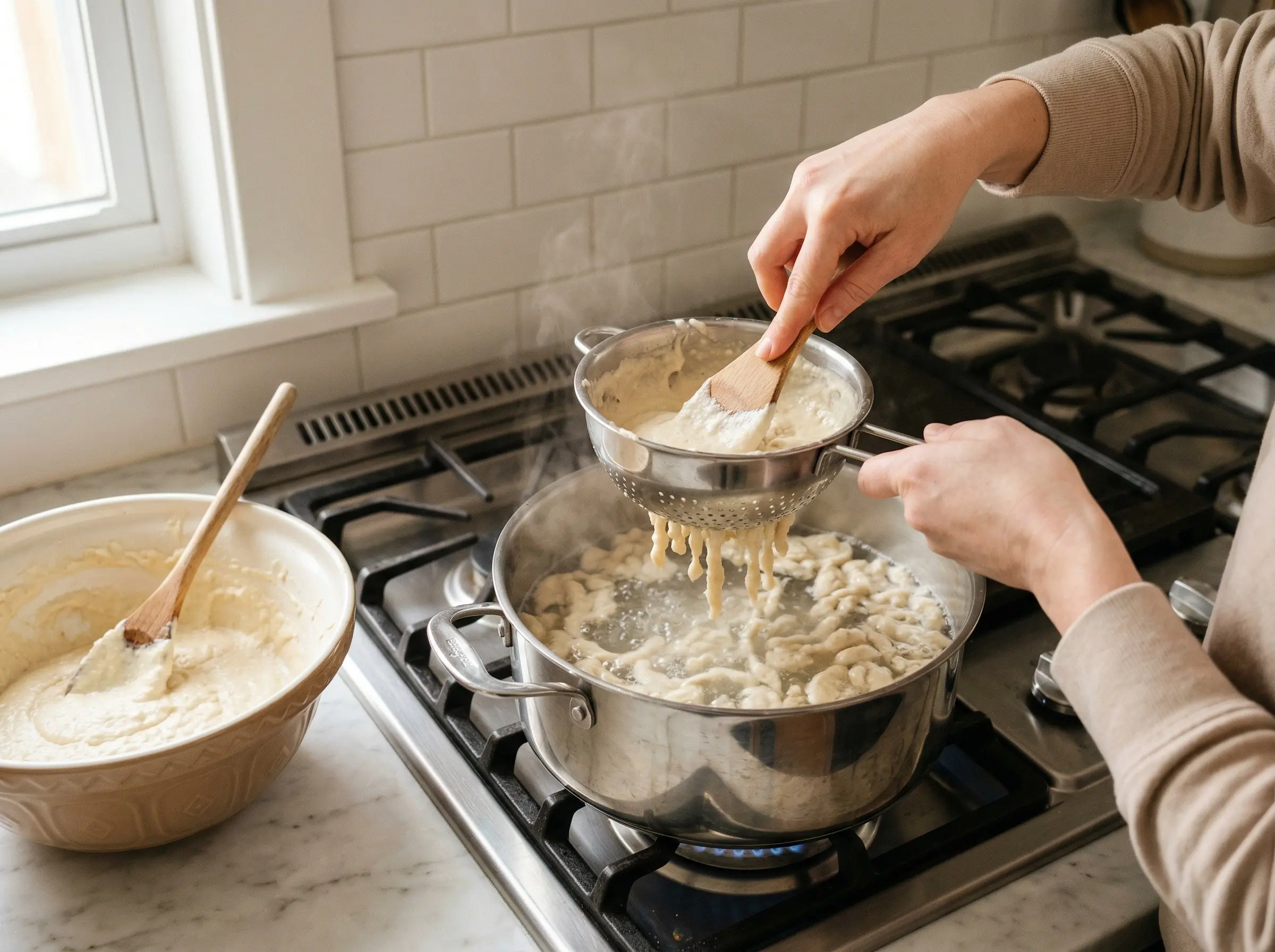
Form and cook the spaetzle using your preferred method. The traditional spaetzle press or hobel works best, pushing the batter through holes directly into the water. Alternatively, use a colander or flat grater with large holes - place it over the pot and press the batter through with a spatula or the back of a spoon. For the board-scraping method, spread batter on a wet cutting board, hold it at an angle over the water, and use a knife or bench scraper to cut small strips of batter into the boiling water. Work in batches to avoid overcrowding.
Step 4
Cook until they float. The spaetzle will sink to the bottom when dropped into the water, then float to the surface as they cook - this takes only 2-3 minutes. Once floating, let them cook for another 30 seconds to 1 minute until cooked through but still tender. Remove with a slotted spoon or spider strainer. If serving immediately, transfer to a warm serving bowl. If making ahead, plunge into ice water to stop cooking, drain well, and toss with a drizzle of oil to prevent sticking. Repeat with remaining batter.
Step 5
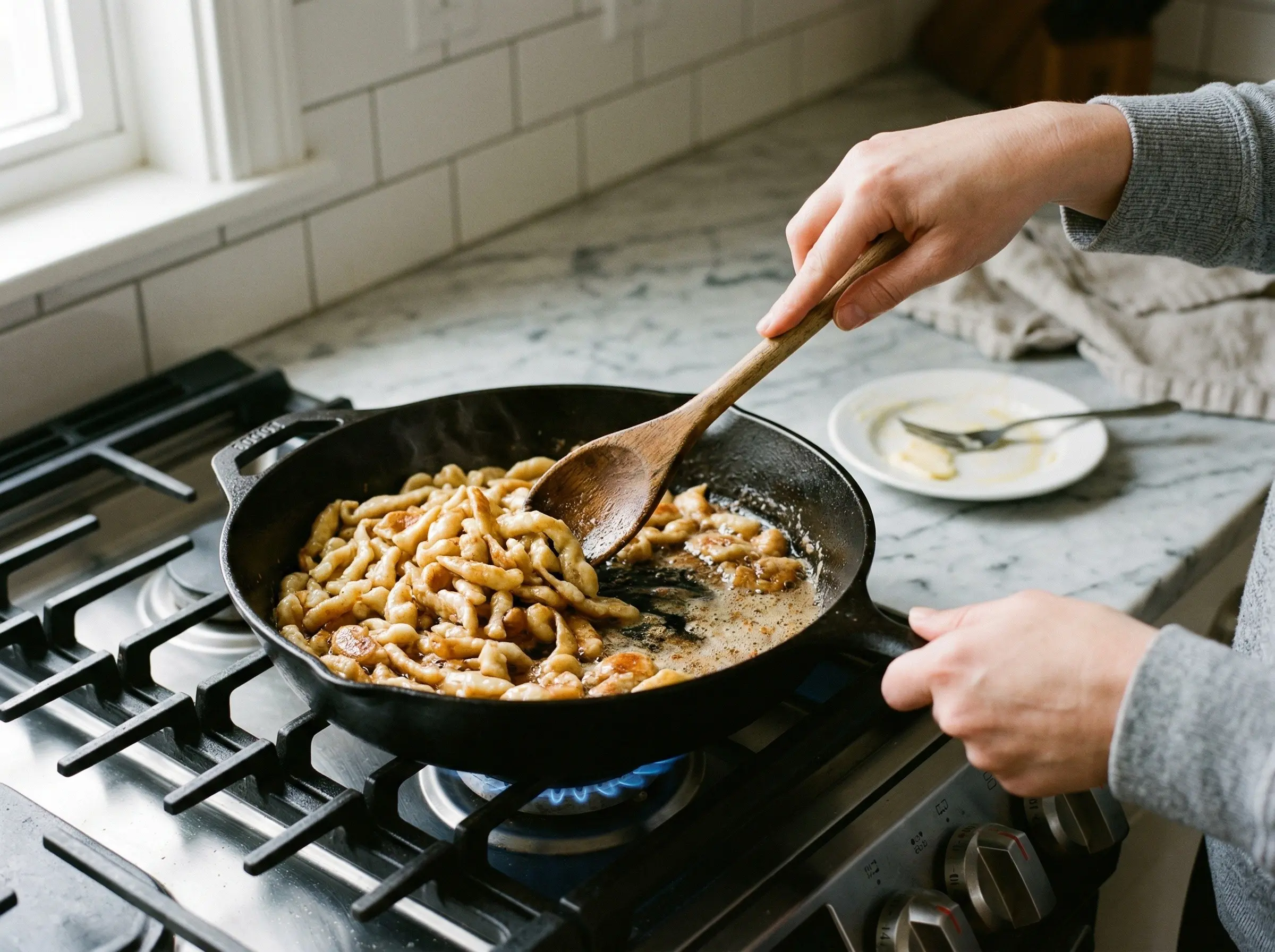
Finish with brown butter for classic preparation. In a large skillet, melt the butter over medium heat. Continue cooking, swirling occasionally, until the butter turns golden brown and smells nutty - about 3-4 minutes. Watch carefully as it can burn quickly. Add the drained spaetzle to the brown butter and toss to coat. Season with additional salt if needed. The spaetzle can also be cooked in the butter for a few extra minutes until lightly golden and slightly crispy on the edges - this adds wonderful texture.
Step 6
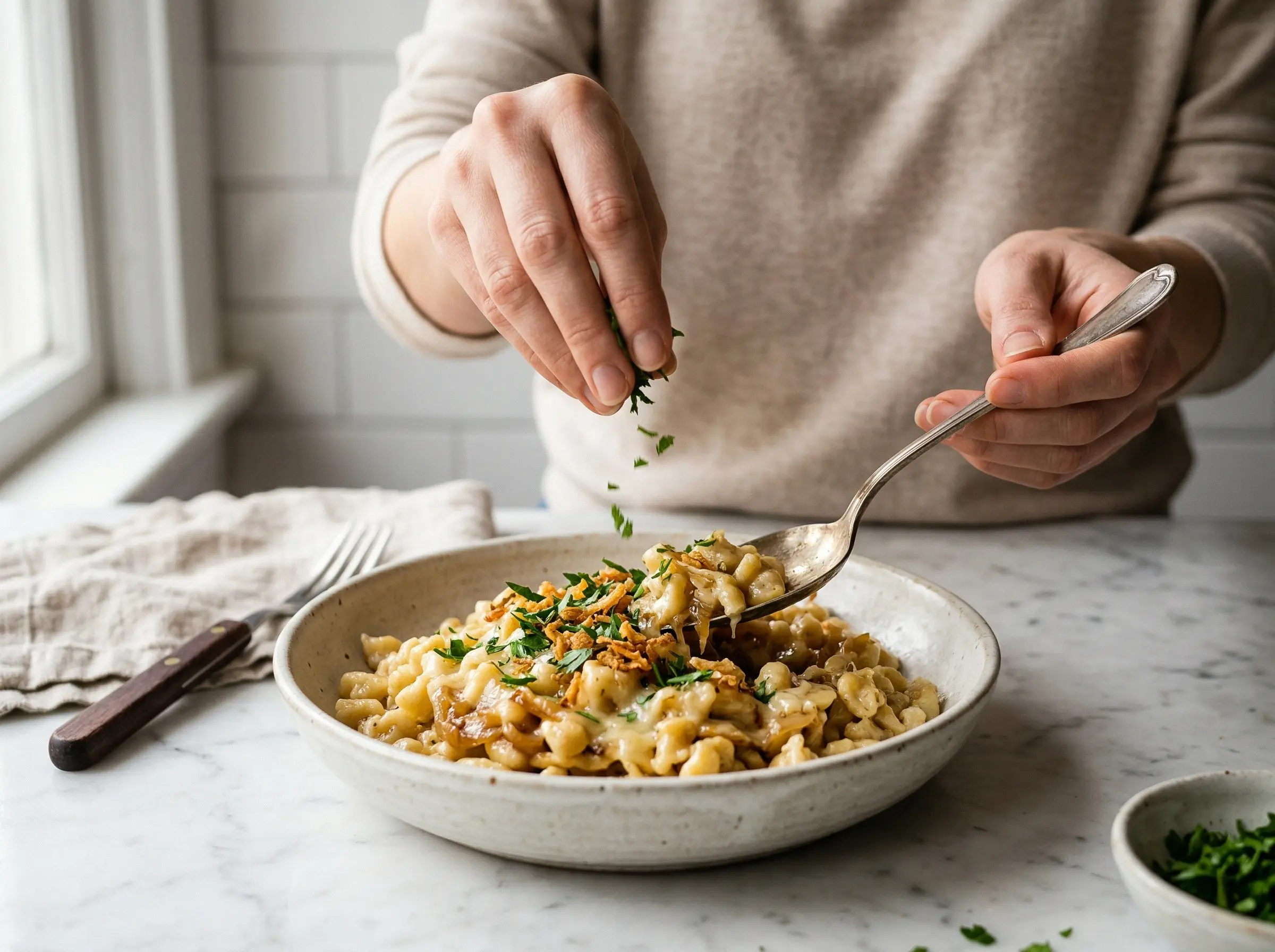
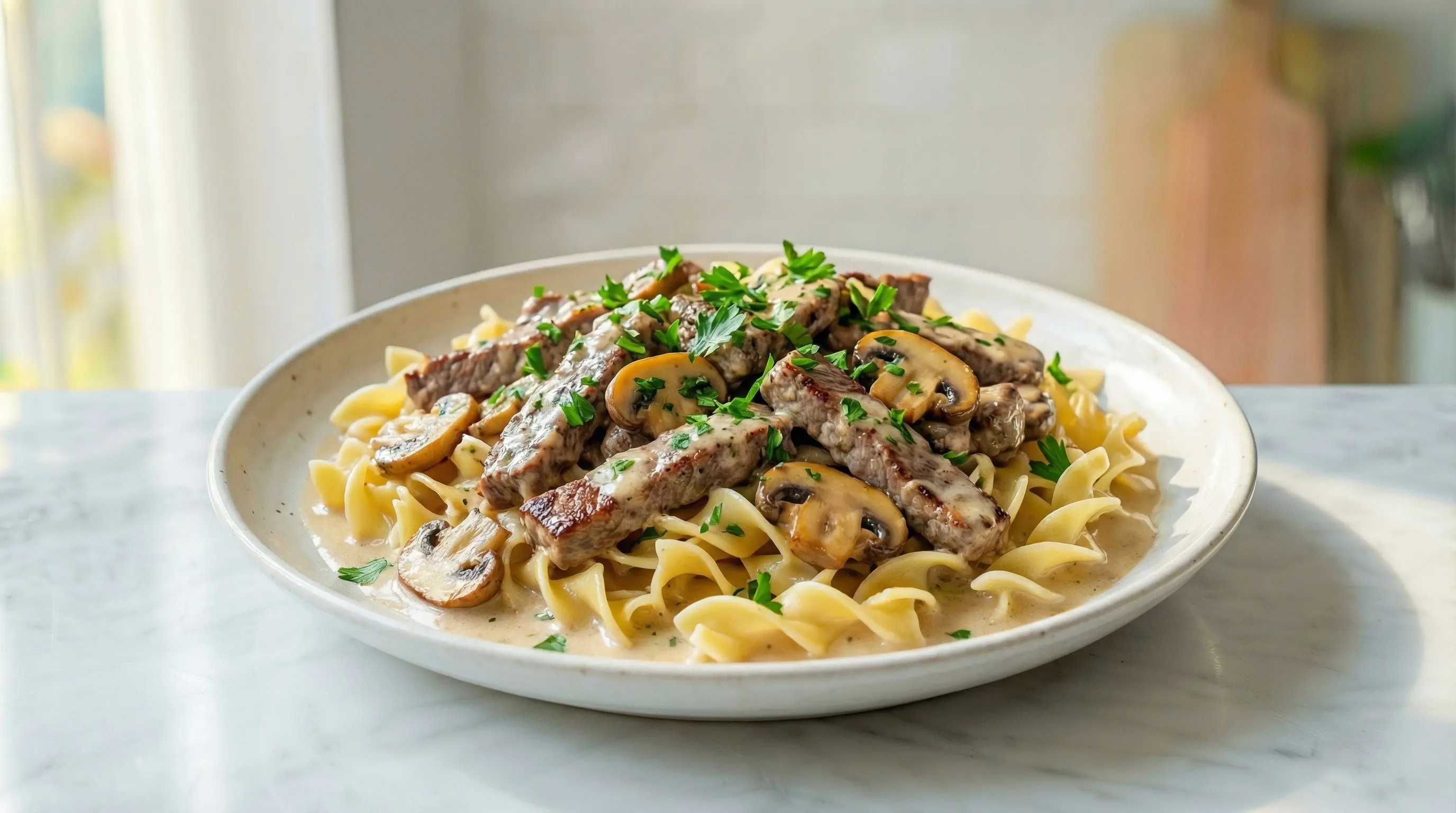
Serve immediately. Transfer the buttered spaetzle to a warm serving dish and garnish with freshly chopped parsley or chives. For kasespaetzle (cheese spaetzle), layer the warm spaetzle with shredded Gruyere or Emmentaler cheese and caramelized onions, then broil until the cheese is melted and bubbly. For a simple presentation, top with crispy fried onions. Spaetzle are the perfect accompaniment to dishes with rich gravies and sauces - serve alongside beef stroganoff, goulash, schnitzel, sauerbraten, or any braised meat. The tender dumplings soak up sauces beautifully while providing satisfying, chewy texture. Leftover spaetzle can be refrigerated for up to 3 days and reheated by sauteing in butter until warmed through and slightly crispy - many people prefer them this way.
You Might Also Like

Master Your Kitchen with PantryAI
Love this recipe? Save it, shop for it, and cook it with ease. Download the PantryAI app to organize your pantry, track expirations, and discover recipes based on what you already have.

On a computer?Scan with your iPhone camera to download PantryAI.






Swipe to see more screenshots