Cacio e Pepe
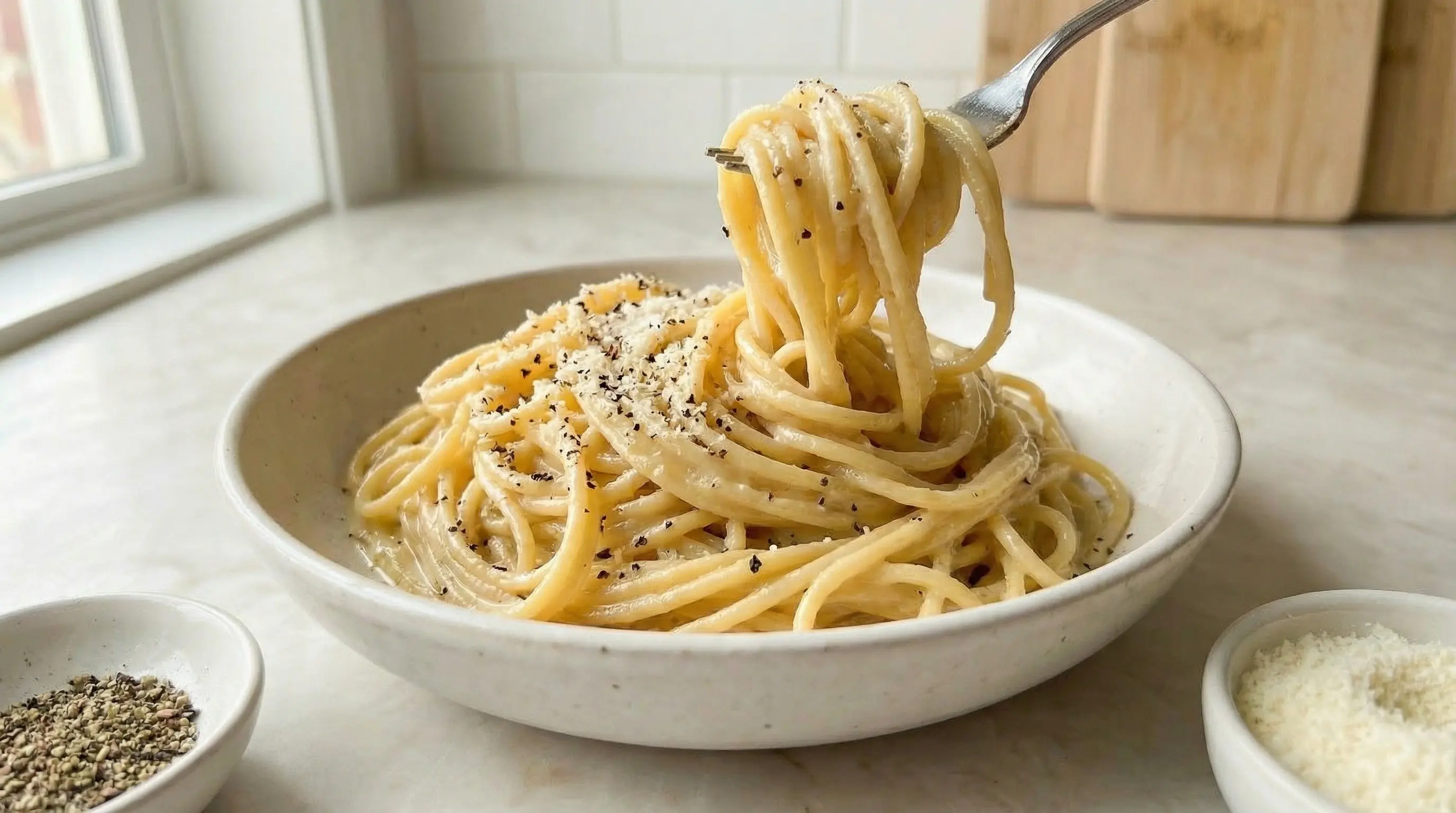
Learn how to make authentic cacio e pepe, the legendary Roman pasta with just cheese, pepper, and pasta water. This deceptively simple dish is silky, peppery, and absolutely magnificent!
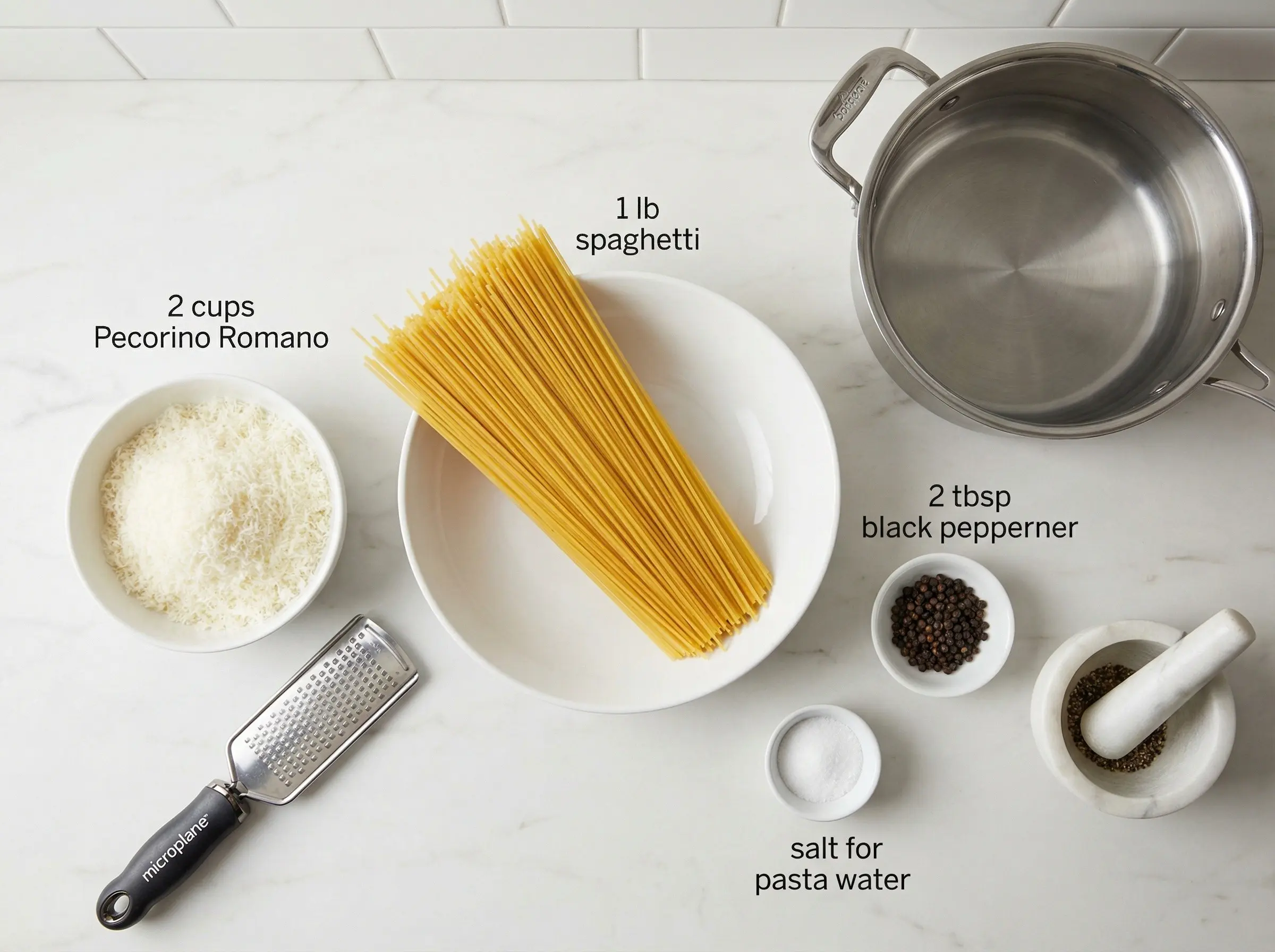
Ingredients
The Story
Cacio e pepe is one of the most ancient and revered pasta dishes in Roman cuisine, a masterpiece of simplicity that has been made in the Lazio region for centuries. The name translates literally to "cheese and pepper" in the local Roman dialect - "cacio" being the Roman word for cheese (specifically pecorino Romano) and "pepe" meaning black pepper. These two ingredients, along with pasta and its starchy cooking water, are the only components of this dish. Legend traces its origins to the shepherds of the Roman Campagna and the mountains of Lazio, who would carry dried pasta, aged pecorino, and black peppercorns on their long journeys with their flocks. These shelf-stable, lightweight ingredients could be transformed into a hot, nourishing meal with just water and fire. For centuries, cacio e pepe remained a humble dish of shepherds and peasants, virtually unknown outside of Rome and its surrounding region. It was the kind of recipe passed down through generations without ever being written, made by feel and instinct rather than measurement. Only in recent decades has cacio e pepe achieved international fame, becoming one of the most celebrated Italian pasta dishes. This fame has been a double-edged sword: while it introduced the world to this magnificent dish, it also led to countless poor imitations. True cacio e pepe requires no cream, no butter, no garlic, and no olive oil - just the three core ingredients transformed through technique. What makes cacio e pepe so extraordinary - and so notoriously difficult to master - is the alchemy required to create a silky, emulsified sauce from just cheese and pasta water. The pecorino Romano must be finely grated and added at precisely the right temperature, then vigorously worked with starchy pasta water to create a creamy coating that clings to each strand of pasta. Too hot, and the cheese clumps into stringy globs. Too cold, and it will not melt at all. The black pepper, toasted and freshly cracked, provides aromatic heat that cuts through the richness of the cheese. When executed perfectly, cacio e pepe is transcendent - the pasta coated in a glossy, creamy sauce that tastes of nothing but the purest essence of cheese and pepper.
Instructions
Step 1
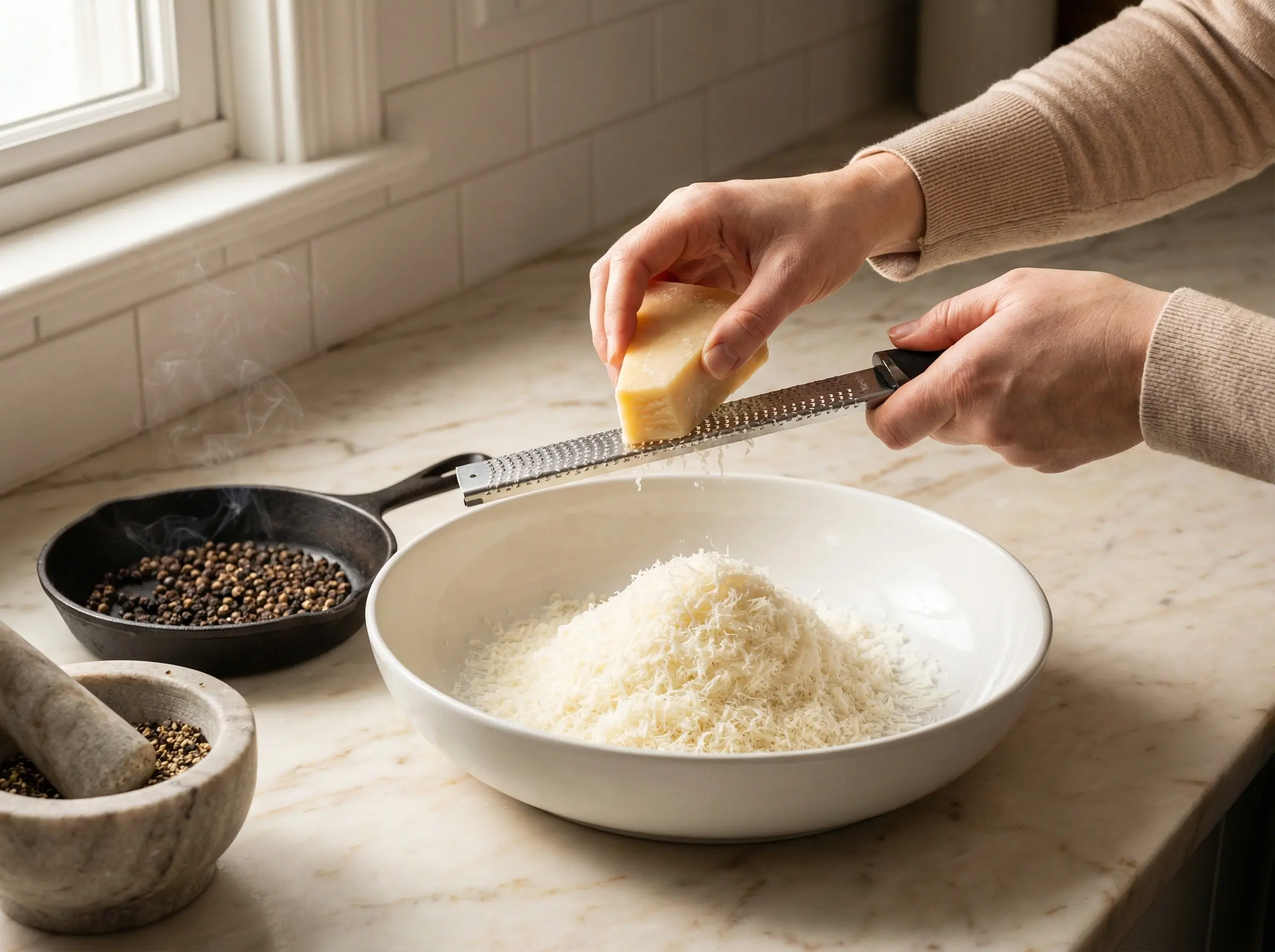
Prepare the two key ingredients with care - this dish has nowhere to hide, so every detail matters. Grate the pecorino Romano on the finest holes of a box grater or, ideally, use a Microplane to create an almost fluffy pile of cheese. Pre-grated cheese will not work - it is coated with anti-caking agents that prevent proper melting. The finer you grate the cheese, the smoother your sauce will be. Place the grated cheese in a large bowl and set aside. Toast the whole black peppercorns in a dry skillet over medium heat for 2-3 minutes, shaking frequently, until fragrant and slightly smoking. Transfer to a mortar and pestle or spice grinder and crack coarsely - you want irregular pieces, not a fine powder.
Step 2
Bring a large pot of water to a boil. Salt the water, but more lightly than you would for other pasta dishes - the pecorino is already very salty, and oversalting is a common mistake with cacio e pepe. Use about half your normal amount of salt. Add the spaghetti or tonnarelli and cook until just shy of al dente - about 1-2 minutes less than the package directions. The pasta will finish cooking in the sauce. This pasta requires extra starchy water to create the emulsified sauce, so do not use too much water - just enough to cover the pasta.
Step 3
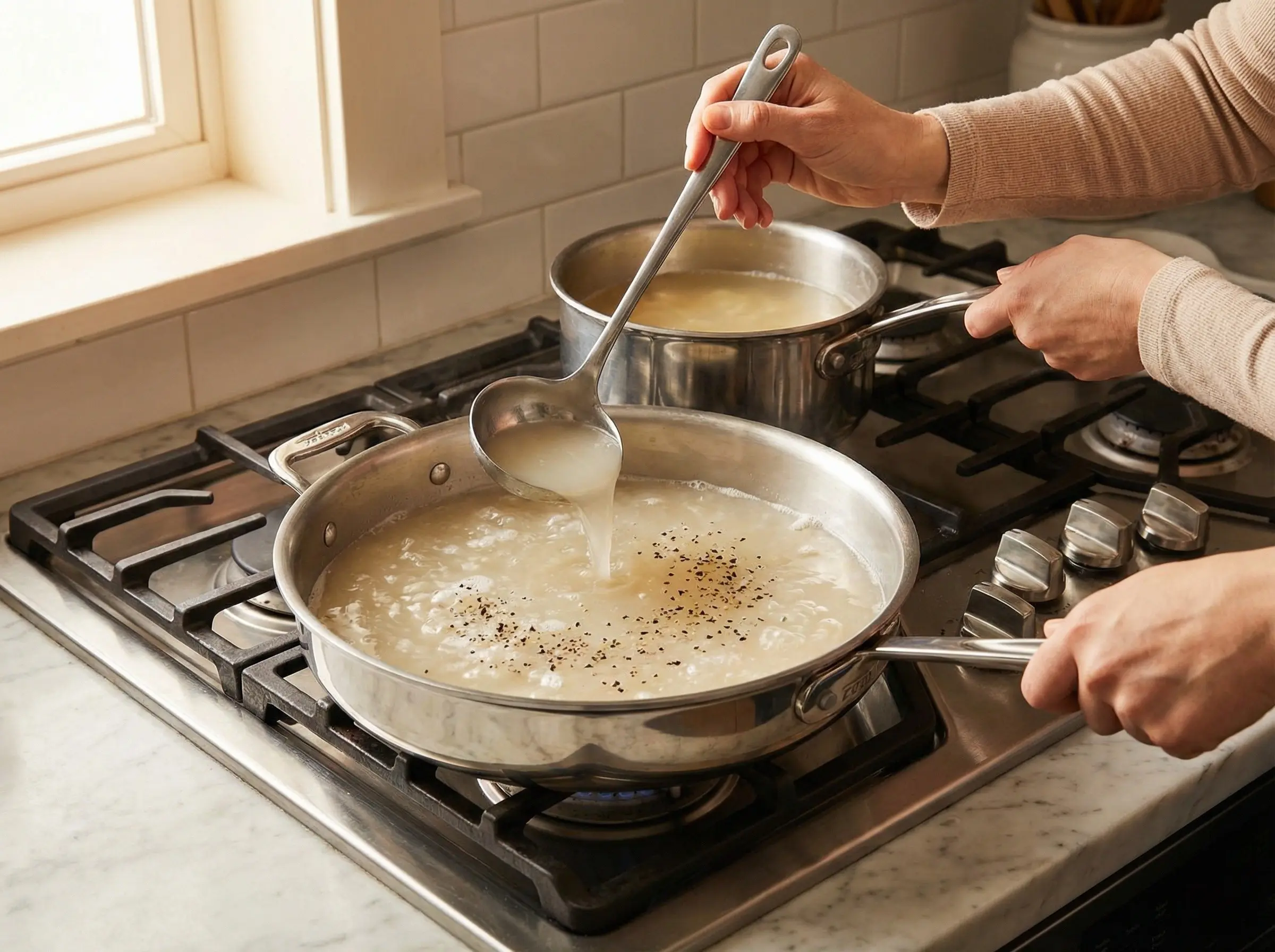
While the pasta cooks, prepare the pepper base. Add about 1 cup of pasta water to the skillet with the toasted pepper. Bring to a simmer over medium-low heat. This step blooms the pepper aromatics into the water and begins building your sauce base. The water should be starchy and slightly cloudy. Keep this at a bare simmer.
Step 4
Create the cheese cream. This is the crucial step that determines success or failure. Ladle about 1/2 cup of hot (but not boiling) pasta water into the bowl with the grated pecorino. Whisk vigorously until you have a thick, creamy paste - it should look like a smooth cream, not a clumpy mess. Add more pasta water a tablespoon at a time if needed to achieve this consistency. The temperature is critical: the water must be hot enough to melt the cheese but not so hot that it causes the proteins to seize and clump. If it clumps, your water was too hot; if it will not melt, it was too cold. This cheese cream is the foundation of your sauce.
Step 5
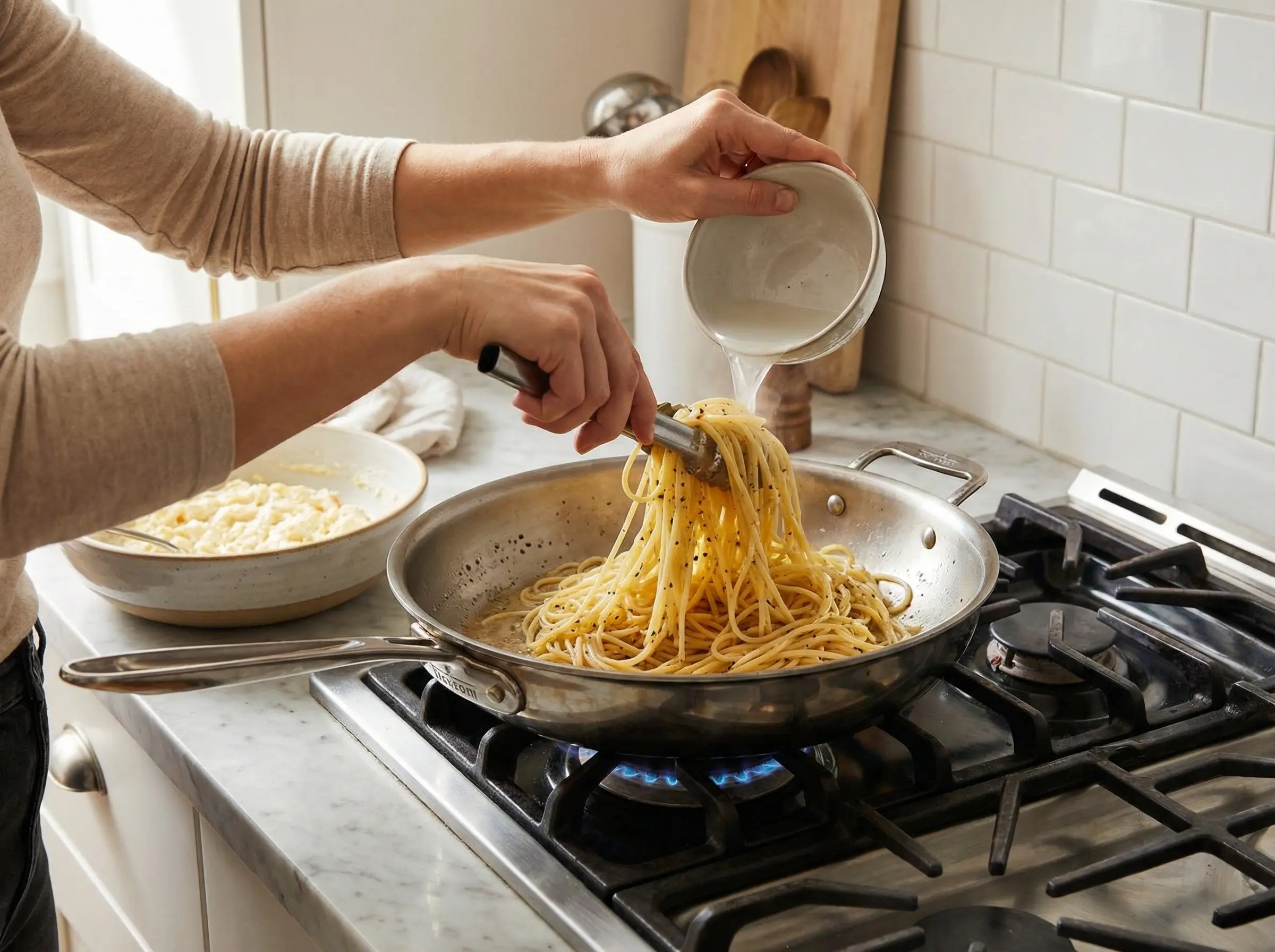
Combine pasta with pepper water. Using tongs, transfer the pasta directly from the boiling water into the skillet with the peppered water. Do not drain into a colander - you want to carry over some cooking water with the pasta. Toss vigorously over medium-low heat for 1 minute, allowing the pasta to finish cooking and absorb the peppery liquid. Add splashes of pasta water as needed to keep everything loose and fluid. The pasta should be just al dente and coated with peppery, starchy water. Remove the skillet from heat entirely.
Step 6
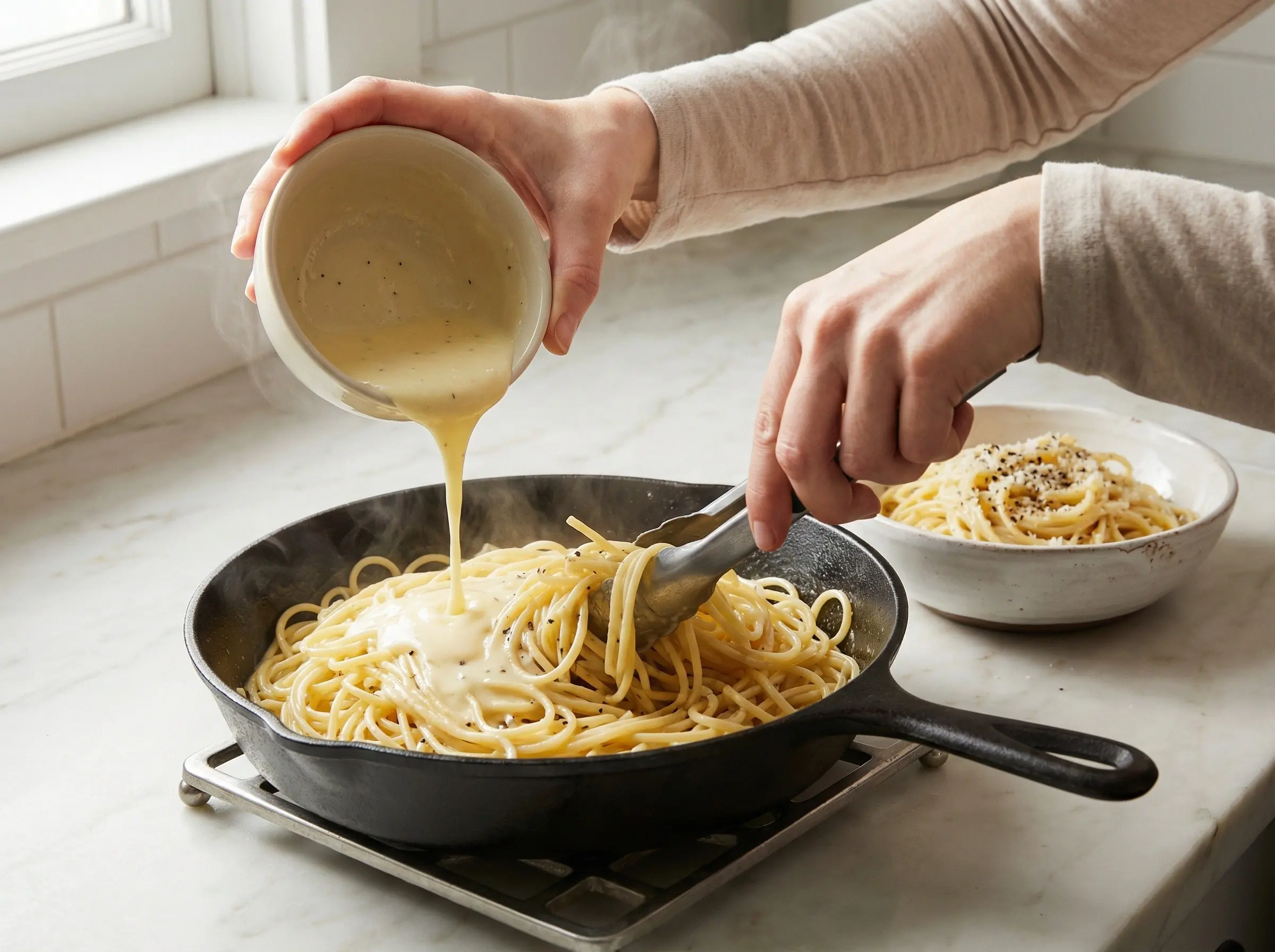
Finish the dish off the heat. This is where most people fail - the pan must be off the heat for this step. Let the pasta cool for about 30 seconds, then pour the cheese cream over the pasta. Toss vigorously and constantly, using tongs to lift and turn the pasta, incorporating the cheese cream into a silky, glossy sauce. The residual heat from the pasta will continue melting the cheese without causing it to clump. Add more reserved pasta water a tablespoon at a time if the sauce becomes too thick or sticky. The final dish should have a creamy, fluid sauce that coats each strand of pasta like a second skin, with visible specks of black pepper throughout. Serve immediately on warm plates, topped with additional cracked pepper and a light shower of pecorino. Cacio e pepe waits for no one - it must be eaten the moment it is plated, while the sauce is still flowing and the cheese is perfectly emulsified.
You Might Also Like