
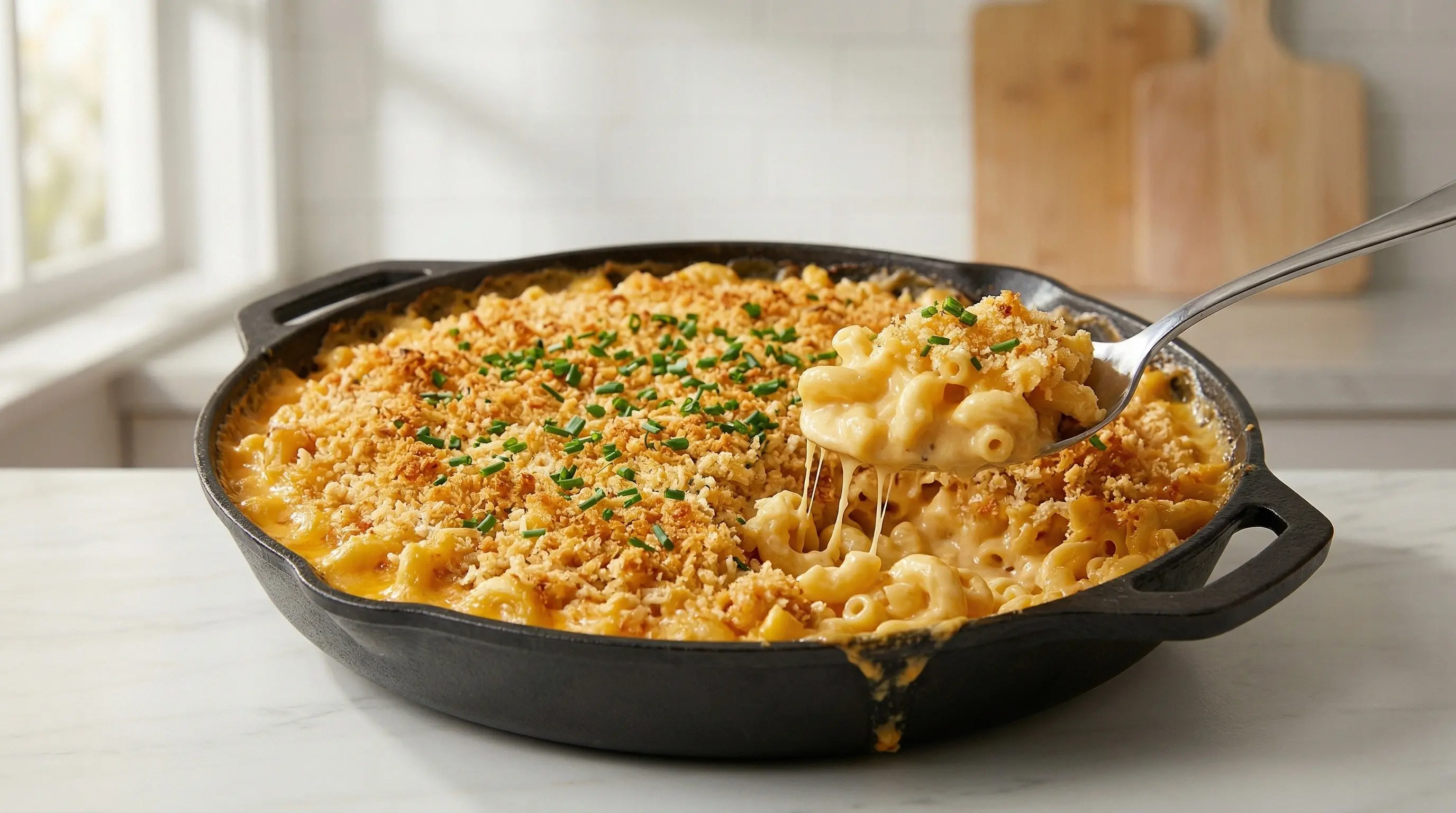
Mac and Cheese
Learn how to make the ultimate mac and cheese with a silky cheese sauce, tender pasta, and crispy breadcrumb topping. This American comfort food classic is rich, creamy, and impossibly delicious!
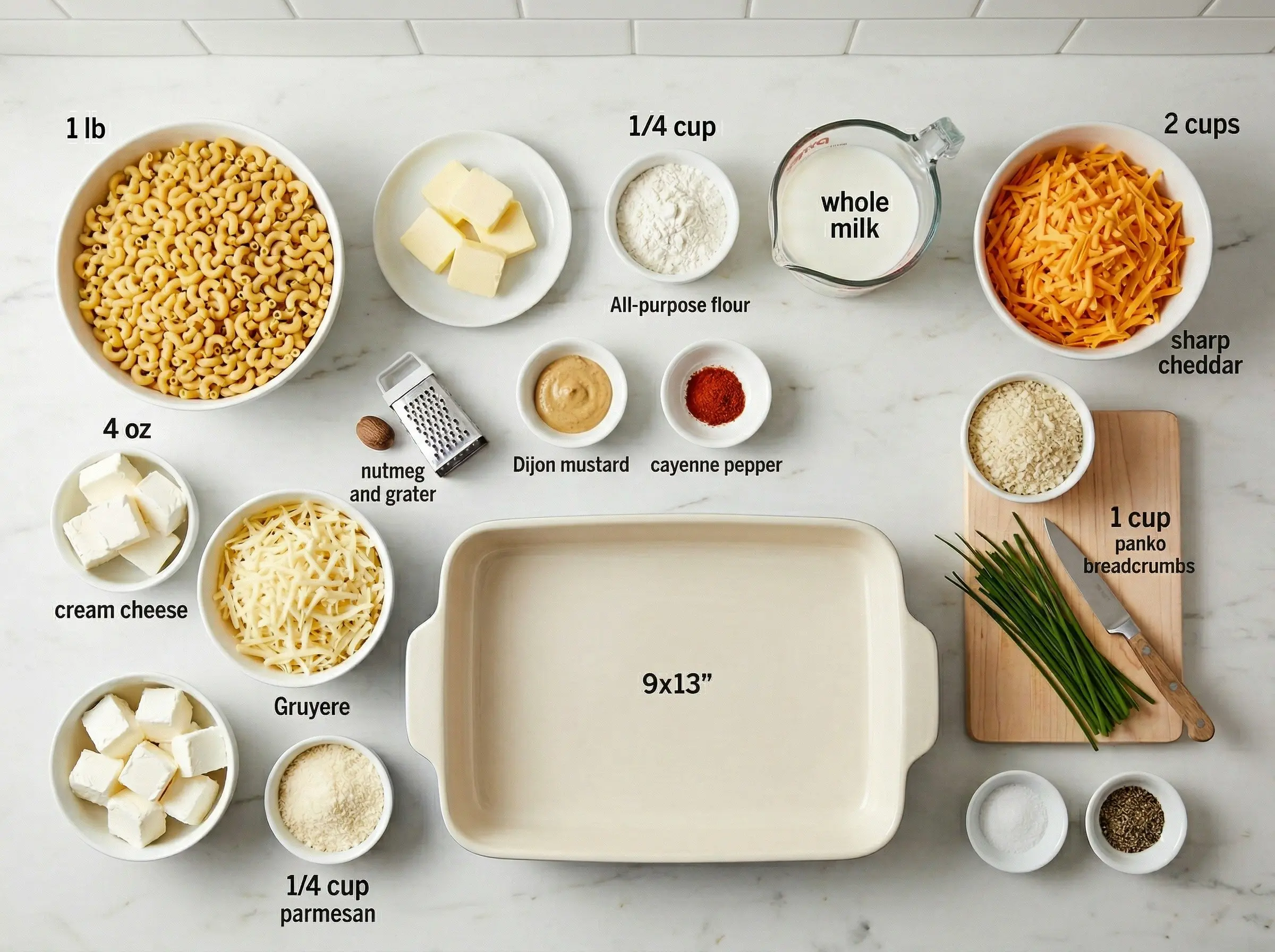
Ingredients
The Story
Macaroni and cheese is the undisputed king of American comfort food, a dish so beloved that it transcends age, region, and occasion. While pasta with cheese existed in European cuisines for centuries - Italian cacio e pepe and French macaroni au gratin among them - the American version emerged as something distinctly its own. The dish's American history is often traced to Thomas Jefferson, who encountered macaroni during his time in France and Italy and brought a pasta machine back to Monticello. His cousin Mary Randolph published the first American recipe for "macaroni and cheese" in her 1824 cookbook "The Virginia Housewife," establishing the dish in the American culinary canon. However, it was the introduction of Kraft Macaroni & Cheese in 1937, during the Great Depression, that cemented mac and cheese as an American staple - the affordable, shelf-stable blue box fed families for just 19 cents. Mac and cheese has evolved to occupy a unique position in American food culture, equally at home at elegant dinner parties and backyard barbecues, on Thanksgiving tables and in school cafeterias. Regional variations abound: Southern baked mac and cheese, often made with eggs for a custard-like texture, is a soul food tradition served at holidays and celebrations. New England versions tend to be simpler, with sharp cheddar and a cracker crumb topping. Upscale restaurants have embraced the dish, adding truffles, lobster, or artisan cheeses. Meanwhile, the humble blue box remains a pantry staple in millions of American homes, a reliable comfort for college students and busy parents alike. What makes homemade mac and cheese so extraordinary is the luxurious cheese sauce and the ability to customize it to your heart's desire. The foundation is a proper bechamel - butter, flour, and milk cooked into a silky base - into which cheese is melted to create a smooth, glossy sauce called Mornay. The choice of cheese is crucial: sharp cheddar provides tang and depth, Gruyere adds nuttiness, fontina contributes supreme meltability, and a touch of cream cheese or American cheese ensures silky smoothness. The pasta should be slightly undercooked before saucing, as it will continue to absorb liquid during baking. And the topping - buttery breadcrumbs crisped to golden perfection - provides the textural contrast that elevates mac and cheese from good to transcendent. A perfect bite delivers crispy, creamy, cheesy, and tender all at once.
Instructions
Step 1
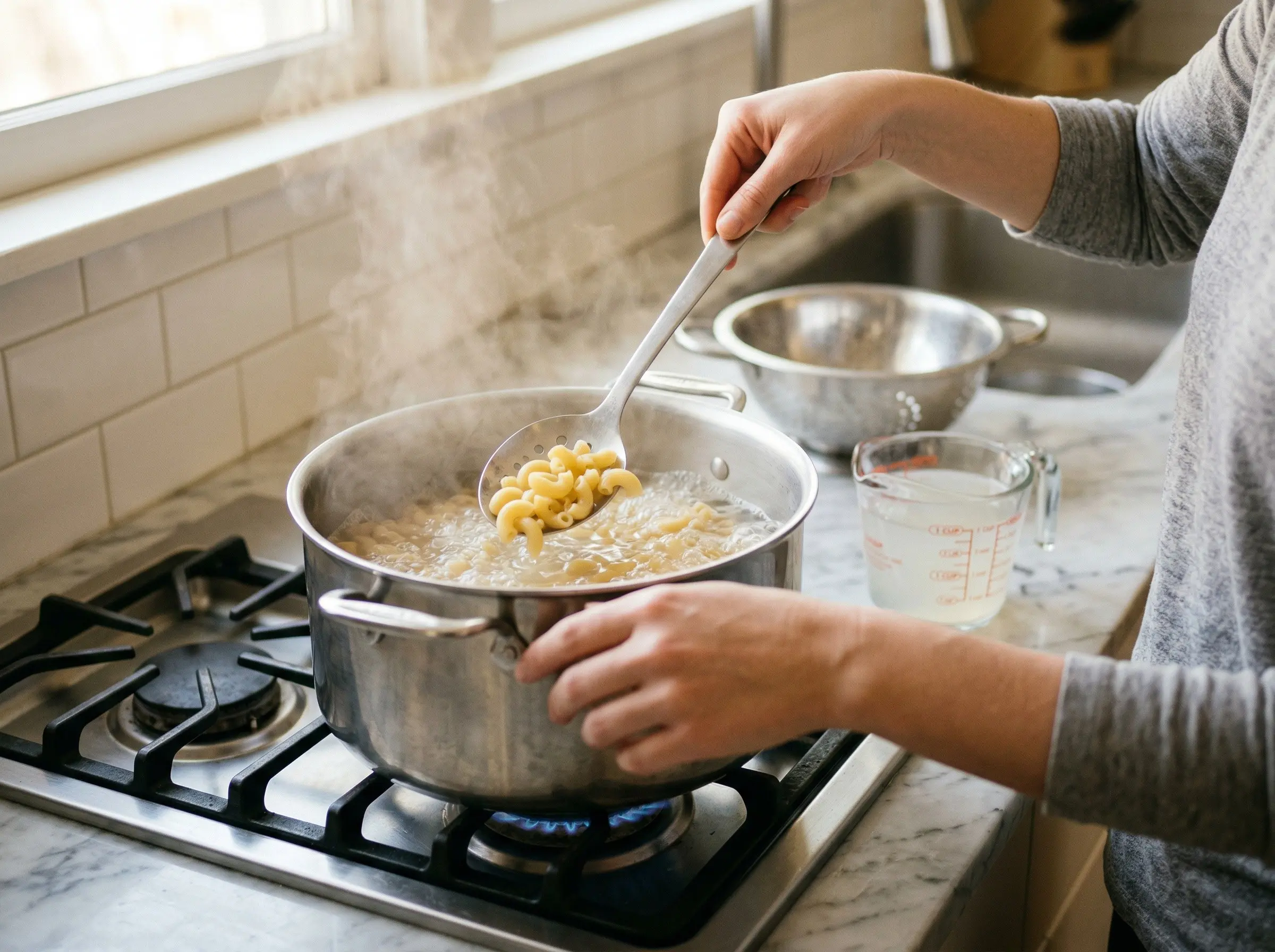
Cook the pasta. Bring a large pot of generously salted water to a boil - it should taste like the sea. Add the macaroni and cook until just shy of al dente, about 1-2 minutes less than the package directions. The pasta will continue cooking in the sauce and oven. Reserve 1 cup of the starchy pasta water, then drain the pasta and set aside. Do not rinse - the starch helps the sauce cling to the pasta. Toss with a drizzle of olive oil to prevent sticking if needed.
Step 2
Make the bechamel base. In a large saucepan or Dutch oven, melt the 4 tablespoons of butter over medium heat. Add the flour and whisk constantly for 1-2 minutes to cook out the raw flour taste - this is your roux. It should be bubbling and pale golden but not browned. Gradually pour in the warm milk while whisking constantly to prevent lumps. Continue whisking and cooking for 5-7 minutes until the sauce thickens and coats the back of a spoon. Warming the milk beforehand prevents the sauce from seizing.
Step 3
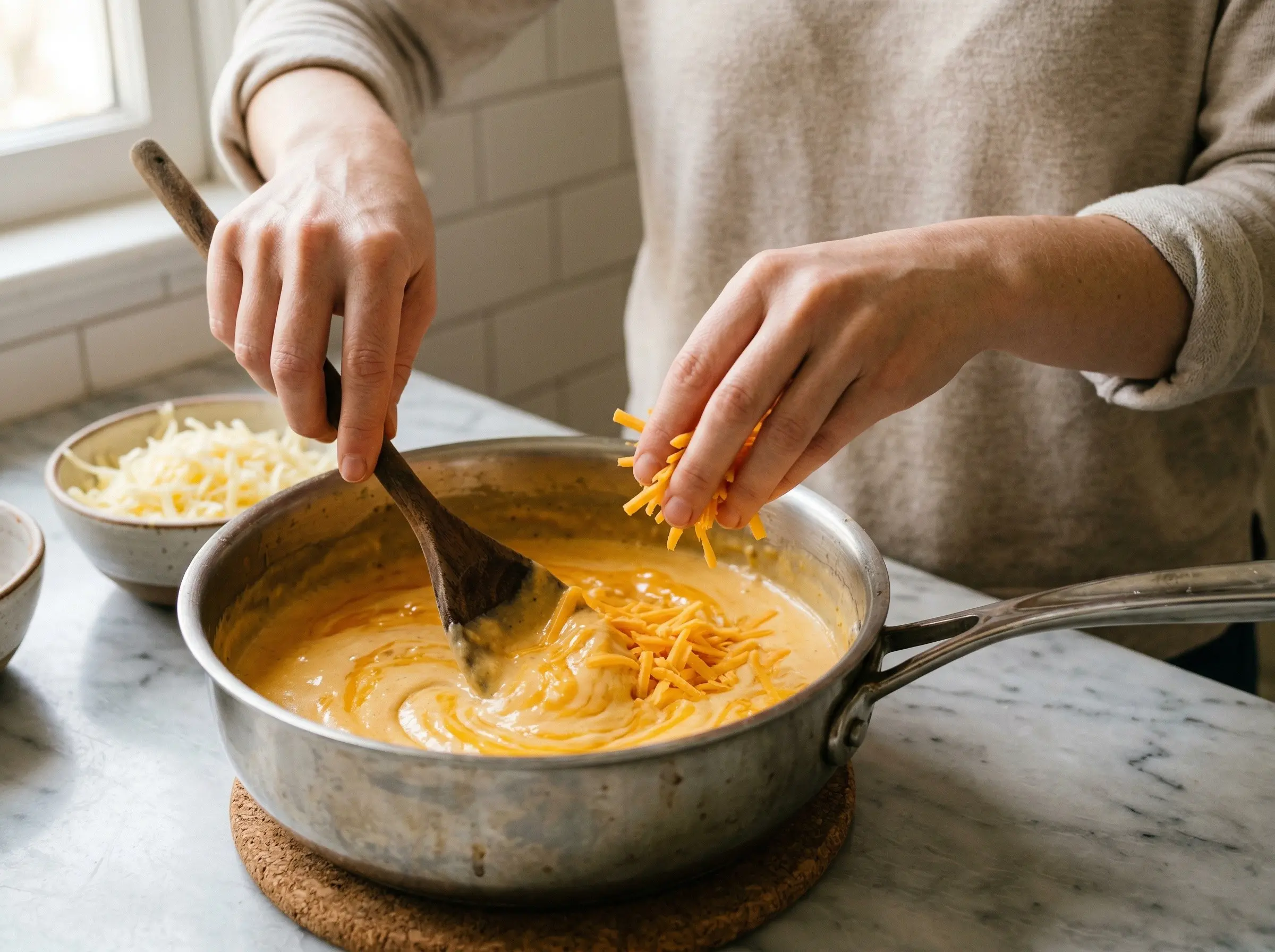
Add the seasonings and cheese. Remove the saucepan from heat - this is important to prevent the cheese from becoming grainy. Stir in the Dijon mustard, cayenne pepper, nutmeg, salt, and black pepper. Add the cubed cream cheese first, stirring until melted and smooth. Then add the shredded cheddar and Gruyere in handfuls, stirring between each addition until completely melted and the sauce is silky smooth. The sauce should be glossy and pourable. If too thick, add splashes of the reserved pasta water to reach desired consistency.
Step 4
Combine pasta and sauce. Add the cooked macaroni to the cheese sauce and fold gently until every piece of pasta is thoroughly coated. Taste and adjust seasoning - it may need more salt to bring out the cheese flavor. For stovetop mac and cheese, you can serve it now, while ultra-creamy. For baked mac and cheese with a crispy topping, transfer the mixture to a buttered 9x13 inch baking dish or individual ramekins, spreading it into an even layer.
Step 5
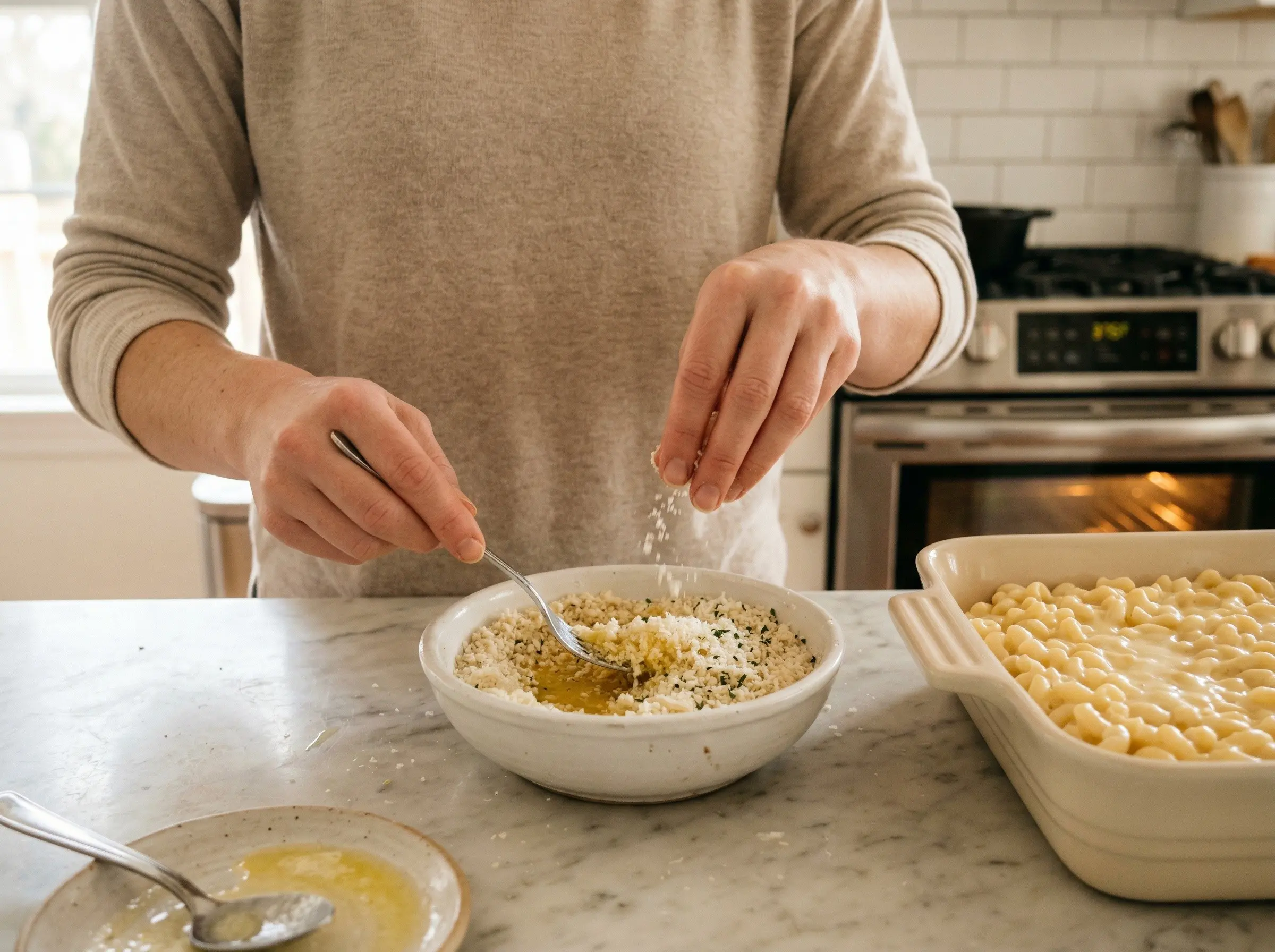
Prepare the breadcrumb topping. Preheat your oven to 375 degrees F. Melt the remaining 2 tablespoons of butter and toss with the panko breadcrumbs and grated Parmesan until evenly coated. The butter helps the breadcrumbs toast to golden perfection while the Parmesan adds savory depth. Sprinkle the buttered breadcrumbs evenly over the top of the mac and cheese.
Step 6
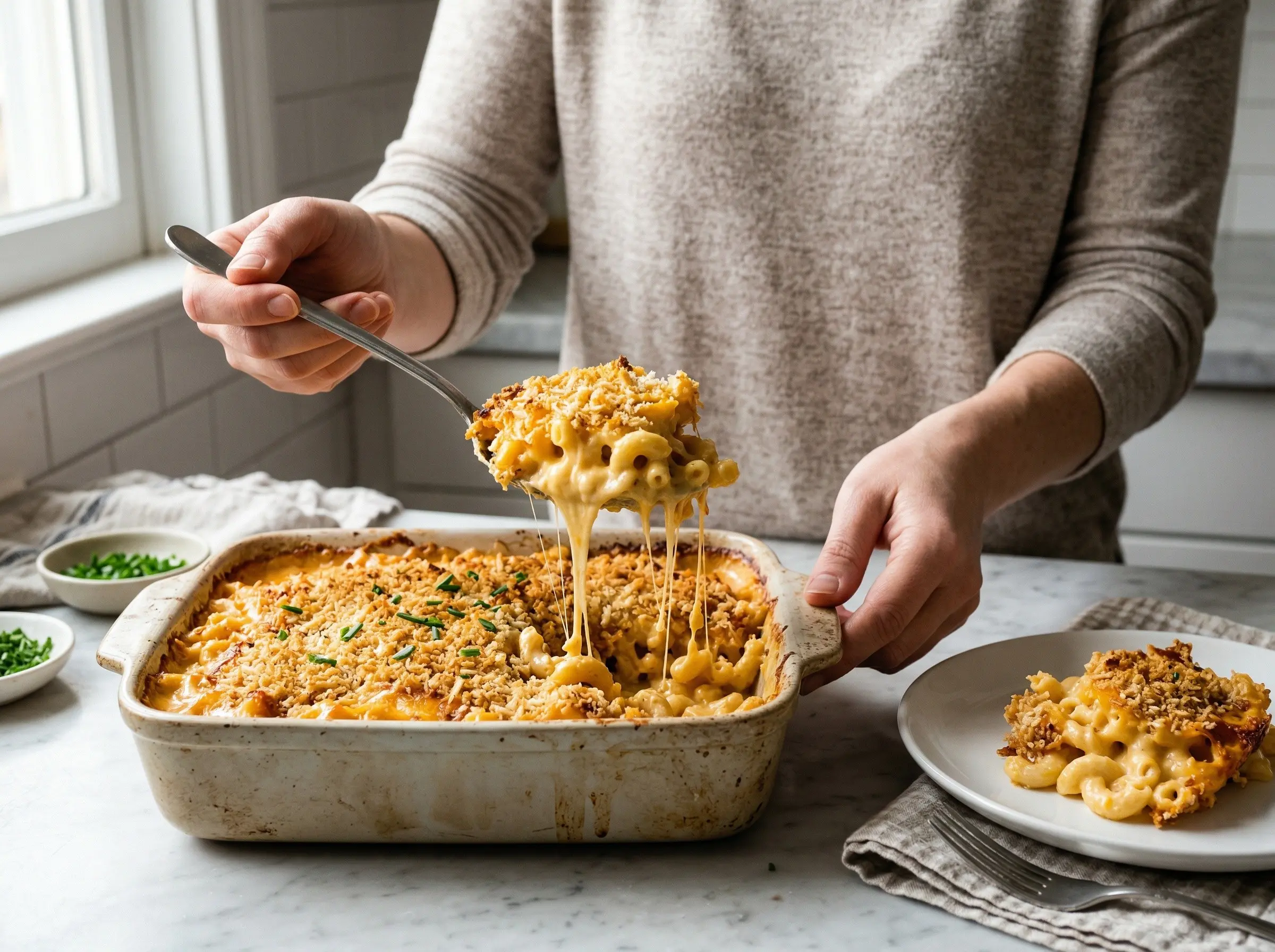
Bake until golden and bubbling. Bake the mac and cheese at 375 degrees F for 25-30 minutes until the sauce is bubbling around the edges and the breadcrumb topping is deeply golden brown and crispy. For an extra-crispy top, broil for the last 2-3 minutes, watching carefully to prevent burning. Let rest for 5 minutes before serving - this allows the sauce to set slightly so it does not run everywhere when you scoop. Garnish with fresh chopped chives if desired. Serve hot, making sure each portion gets plenty of crispy topping along with the creamy pasta beneath. Mac and cheese is best eaten fresh from the oven when the contrast between crispy top and creamy interior is at its peak. Leftovers can be refrigerated and reheated with a splash of milk to restore creaminess - or embrace the firmer, sliceable texture of cold mac and cheese, which some people actually prefer.
You Might Also Like
Master Your Kitchen with PantryAI
Love this recipe? Save it, shop for it, and cook it with ease. Download the PantryAI app to organize your pantry, track expirations, and discover recipes based on what you already have.

On a computer?Scan with your iPhone camera to download PantryAI.








Swipe to see more screenshots