
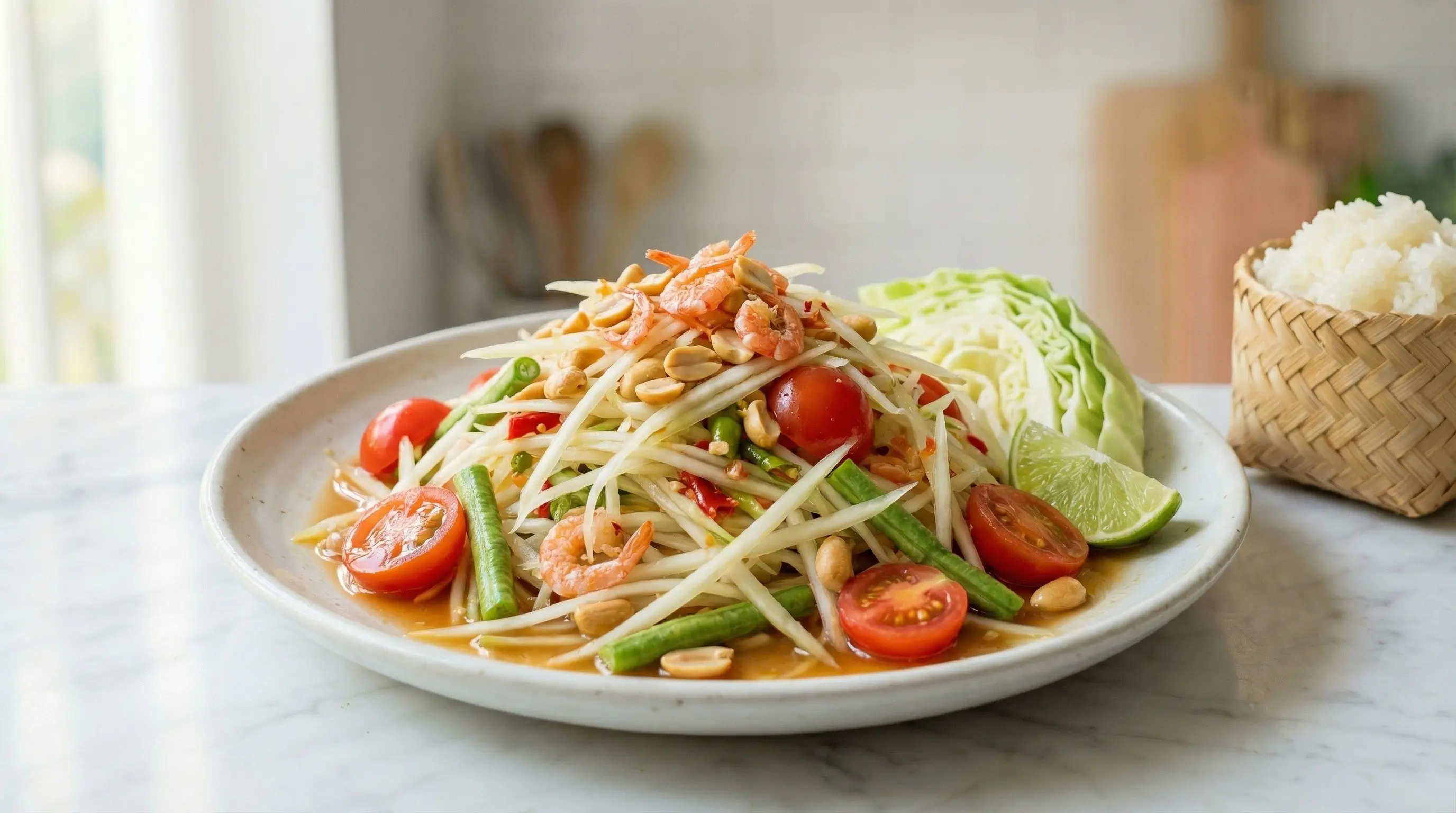
Tasty Som Tum
Learn how to make authentic som tum, Thailand's famous green papaya salad with a spicy, tangy, and sweet dressing. This refreshing salad is bright, bold, and addictively delicious!
Ingredients
The Story
Som tum is one of Thailand's most iconic dishes, originating from the Isan region in the northeastern part of the country, which shares cultural and culinary ties with neighboring Laos. The name breaks down simply: "som" means sour and "tum" refers to the pounding action used to make the salad in a clay mortar and pestle called a krok. This ancient preparation method, where ingredients are bruised and pounded rather than simply mixed, is what gives som tum its distinctive character - the flavors meld together while the papaya retains its refreshing crunch. For centuries, Isan farmers and villagers have made variations of this salad using whatever vegetables were available, with green papaya becoming the most popular base. Som tum rose from humble regional origins to become one of Thailand's most beloved national dishes, found everywhere from roadside vendors to high-end restaurants. Its popularity exploded in the latter half of the 20th century as people from Isan migrated to Bangkok and other cities for work, bringing their culinary traditions with them. Today, som tum vendors are ubiquitous throughout Thailand, typically setting up simple stalls with a large mortar, baskets of fresh vegetables, and an array of seasonings. Customers can customize their salad to taste - specifying how many chilies, how sour, how sweet - and watch as the vendor pounds the ingredients together with practiced rhythm. The sound of pestles striking mortars is a familiar soundtrack in Thai markets and streets. What makes som tum so extraordinary is its perfect balance of the five Thai flavor profiles: sour from lime, salty from fish sauce, sweet from palm sugar, spicy from chilies, and umami from fermented elements like dried shrimp or fish sauce. Each bite delivers an explosion of contrasting flavors and textures - the crunch of raw papaya, the pop of tomatoes, the chewiness of dried shrimp, and the lingering heat of chilies. Som tum is typically eaten with sticky rice and grilled chicken or pork, creating a complete Isan meal. The dish is also remarkably healthy - low in calories, high in vitamins and fiber, with the papaya enzyme papain aiding digestion. Som tum represents the genius of Thai cuisine: transforming simple, inexpensive ingredients into something complex, vibrant, and utterly addictive.
Instructions
Step 1
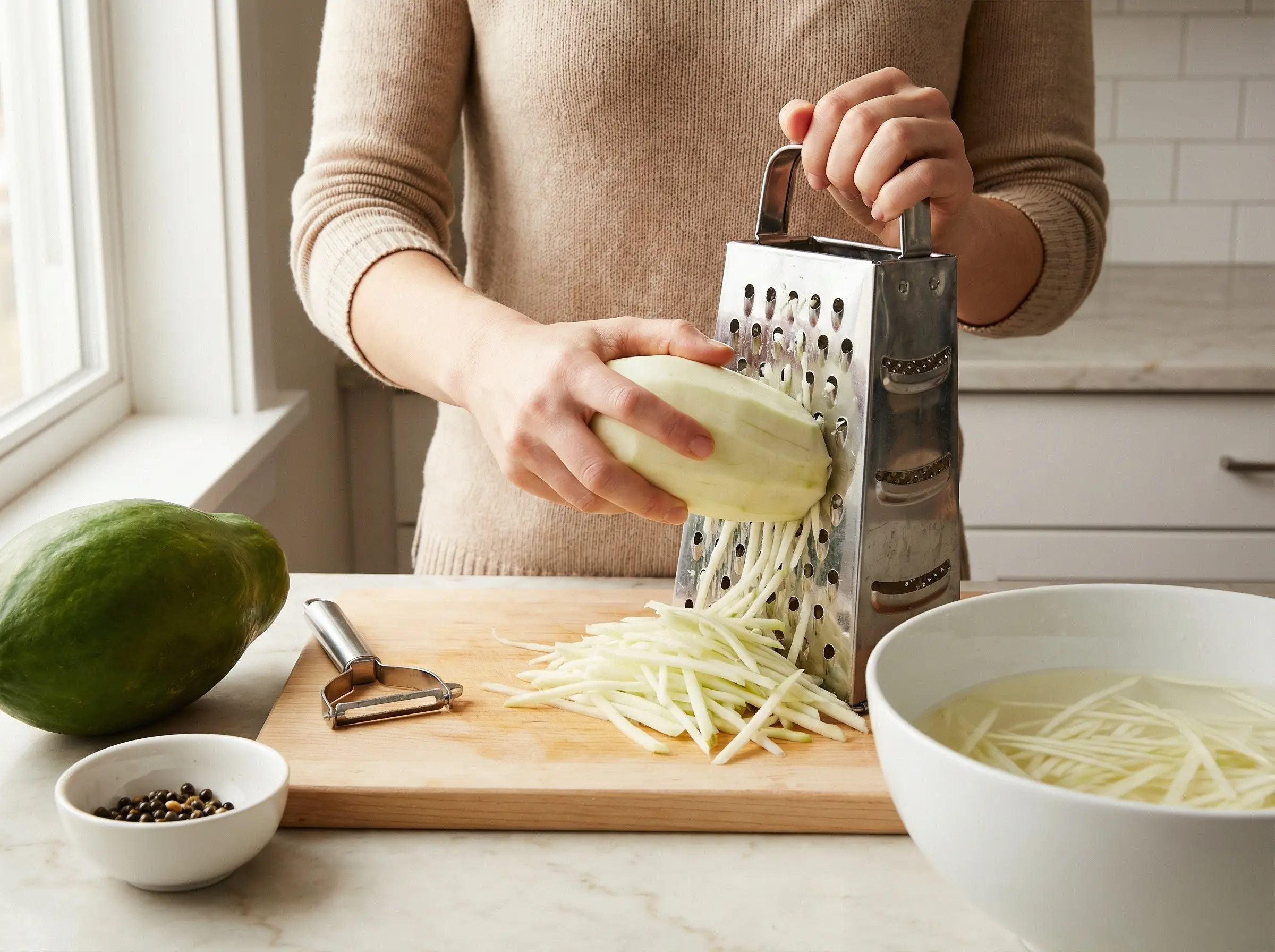
Prepare the green papaya. Choose a firm, unripe papaya that is completely green with no yellow spots - ripe papaya is too soft and sweet for som tum. Peel the papaya with a vegetable peeler, then cut it in half lengthwise and scoop out the seeds. Shred the papaya using the large holes of a box grater, a julienne peeler, or the traditional method of scoring the flesh with a knife and then shaving off thin strips. You want long, thin shreds about the thickness of matchsticks. Alternatively, you can use a food processor with a shredding disc. Place the shredded papaya in cold water until ready to use to keep it crisp. You should have about 3 cups of shredded papaya.
Step 2
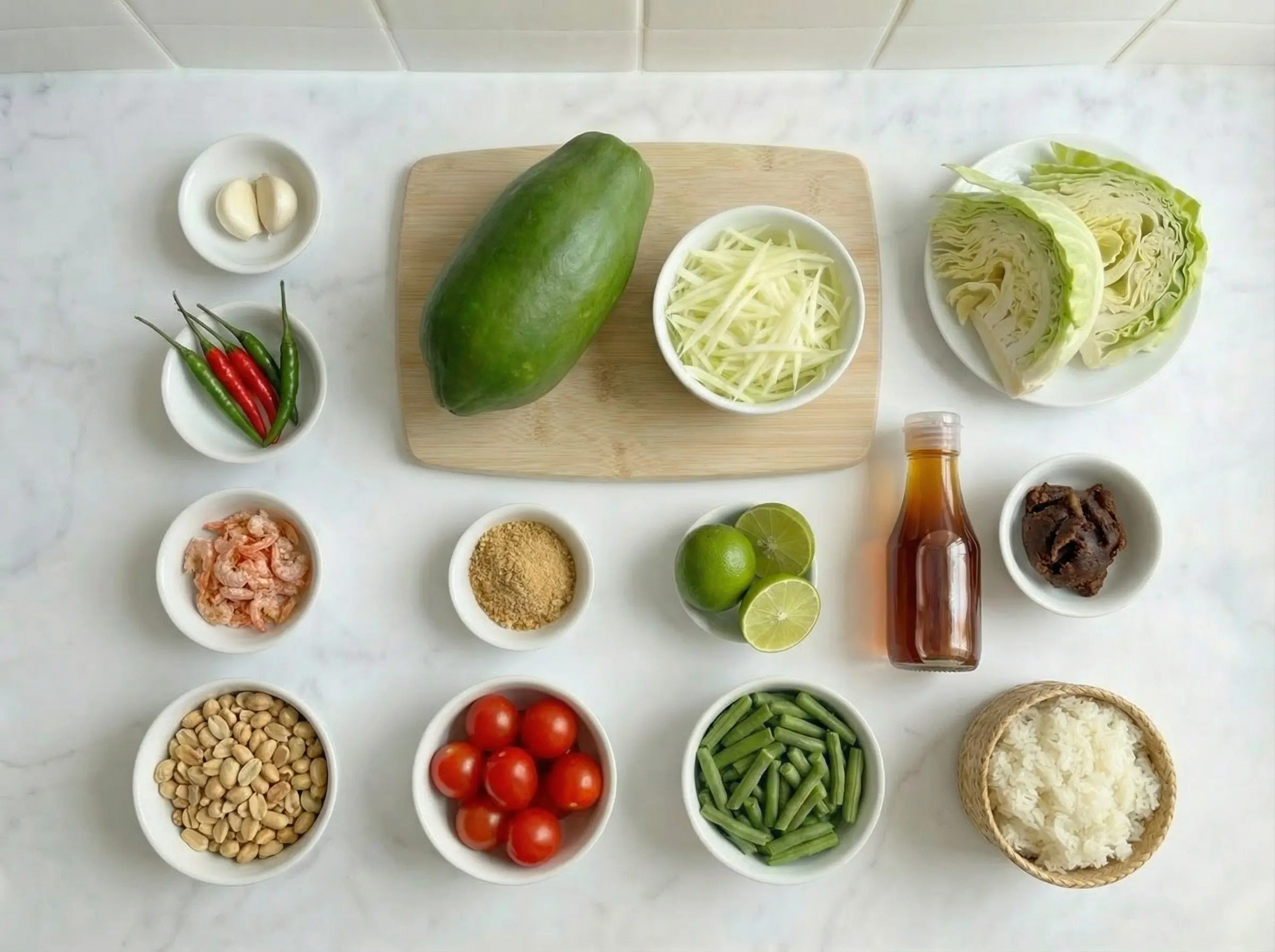
Prepare the remaining ingredients. Cut the long beans into 1-inch pieces - long beans are traditional but green beans can be substituted. Halve the cherry tomatoes. Measure out the dried shrimp and roasted peanuts. Make the dressing by combining the fish sauce, palm sugar, lime juice, and tamarind paste if using in a small bowl. Stir until the sugar dissolves. The dressing should taste balanced - sour, salty, and sweet in equal measure with sour being slightly dominant. Adjust to your taste. Traditional som tum is made to order with seasonings added directly to the mortar, but preparing the dressing separately works well for home cooking.
Step 3
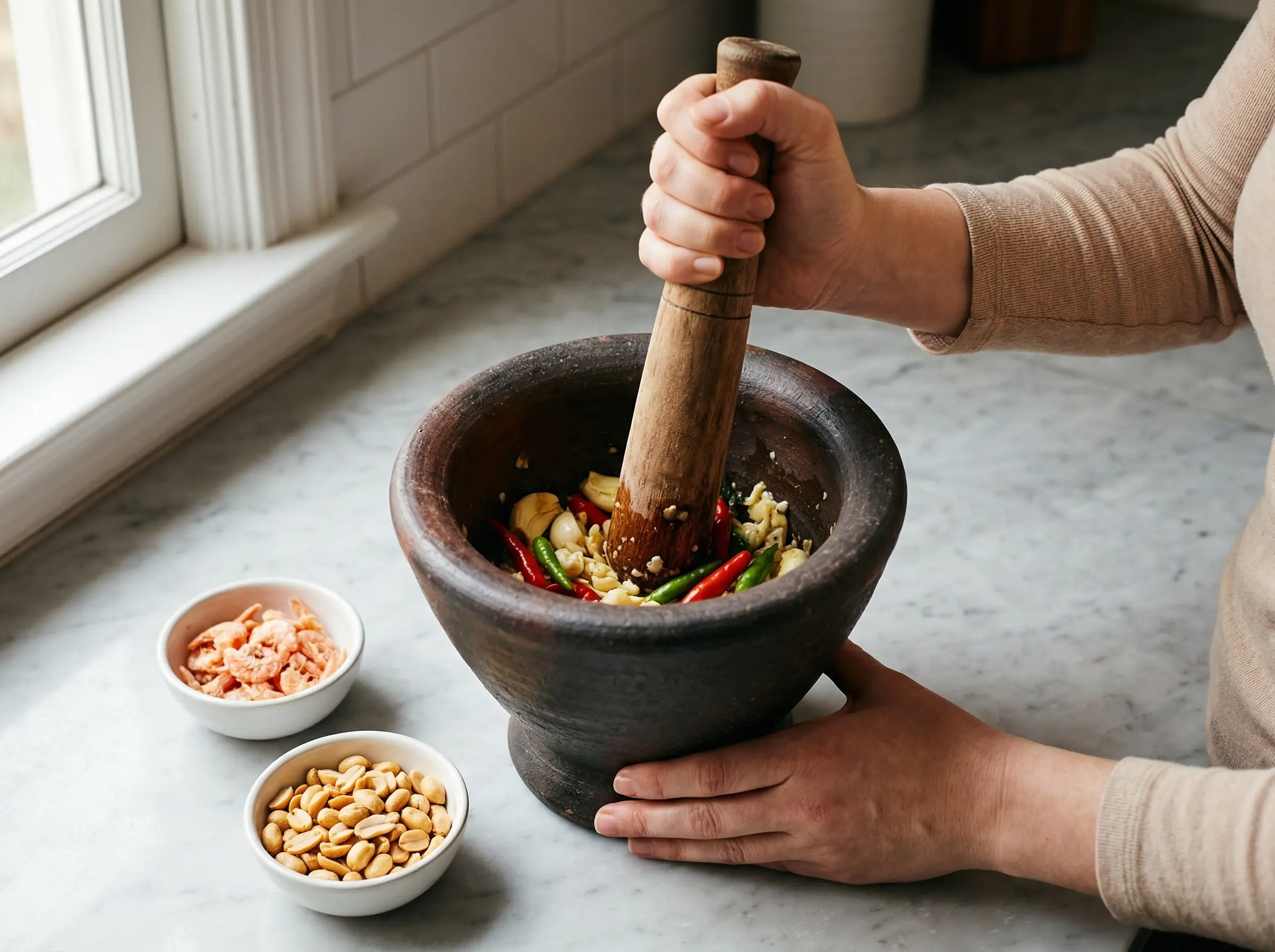
Using a large mortar and pestle (Thai clay mortar called krok is traditional), add the garlic and Thai chilies. Pound them together until roughly broken down but not completely pulverized - you want some texture remaining. The number of chilies determines the heat level: 3 chilies is mild to medium, 4-5 is hot, and 6 or more is Thai spicy. Add the dried shrimp and pound a few more times to break them up slightly and release their flavor. Add the peanuts and pound just enough to crack them - you want chunky pieces, not powder.
Step 4
Add the long beans and tomatoes to the mortar. Pound and bruise them gently using a combination of pressing and light pounding - the tomatoes should release some juice but not turn into mush, and the beans should be slightly bruised to absorb the dressing. The pounding motion should be more of a pressing and turning action rather than aggressive smashing. If you do not have a mortar and pestle large enough, you can bruise the vegetables in a large bowl using the end of a rolling pin or a wooden spoon, or simply skip the bruising and mix everything in a bowl for a less traditional but still delicious version.
Step 5
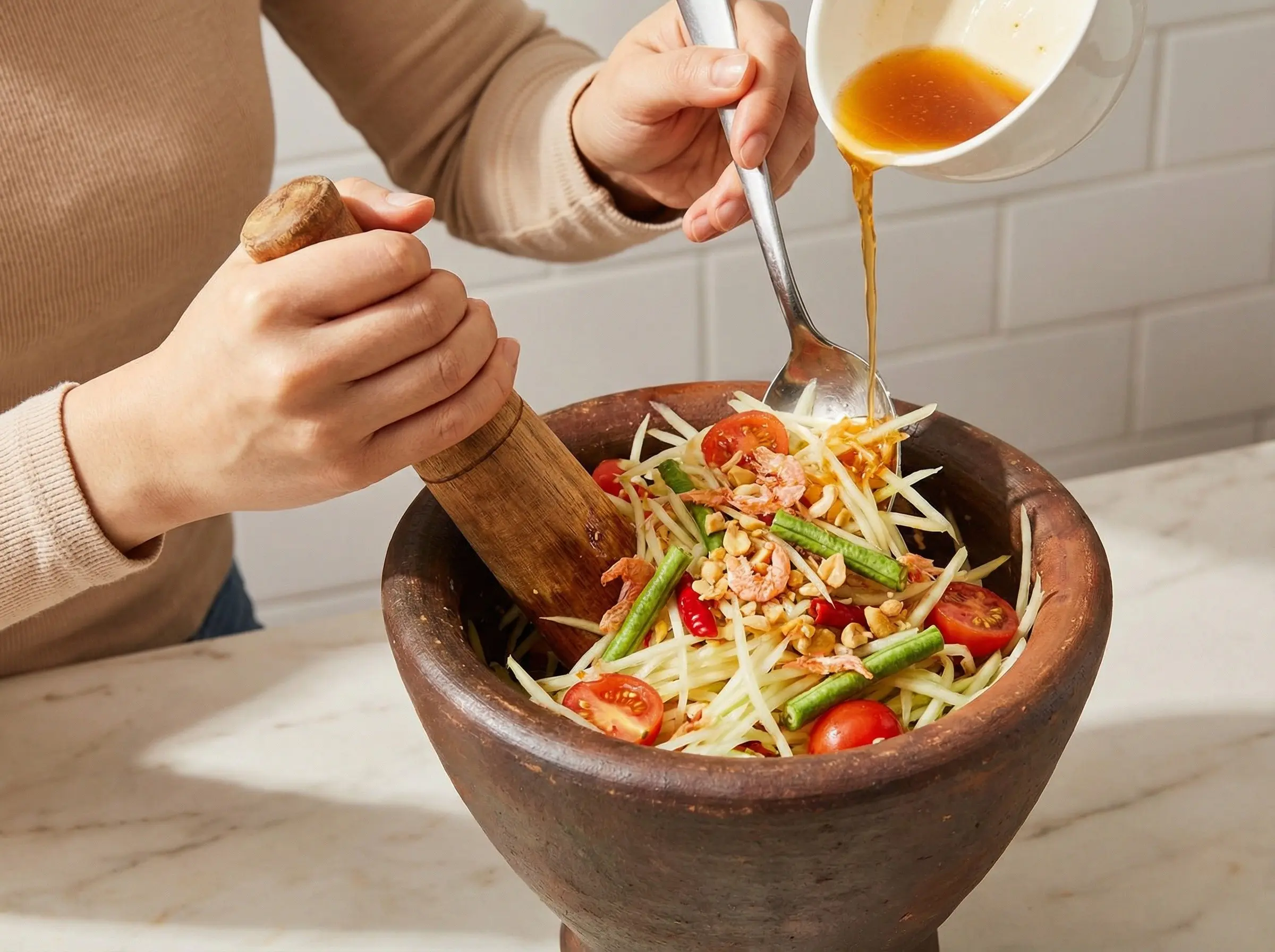
Drain the shredded papaya well and add it to the mortar. Pour the prepared dressing over the papaya. Using the pestle in one hand and a large spoon in the other, pound and toss the salad repeatedly. The technique involves pounding down with the pestle while simultaneously turning and lifting the ingredients with the spoon. This action bruises the papaya slightly, helping it absorb the dressing while maintaining its crunch. Continue for 1-2 minutes, tasting as you go. Adjust the seasoning if needed - add more lime for sourness, more fish sauce for saltiness, more sugar for sweetness, or more chilies for heat. The flavors should be bold and well-balanced.
Step 6
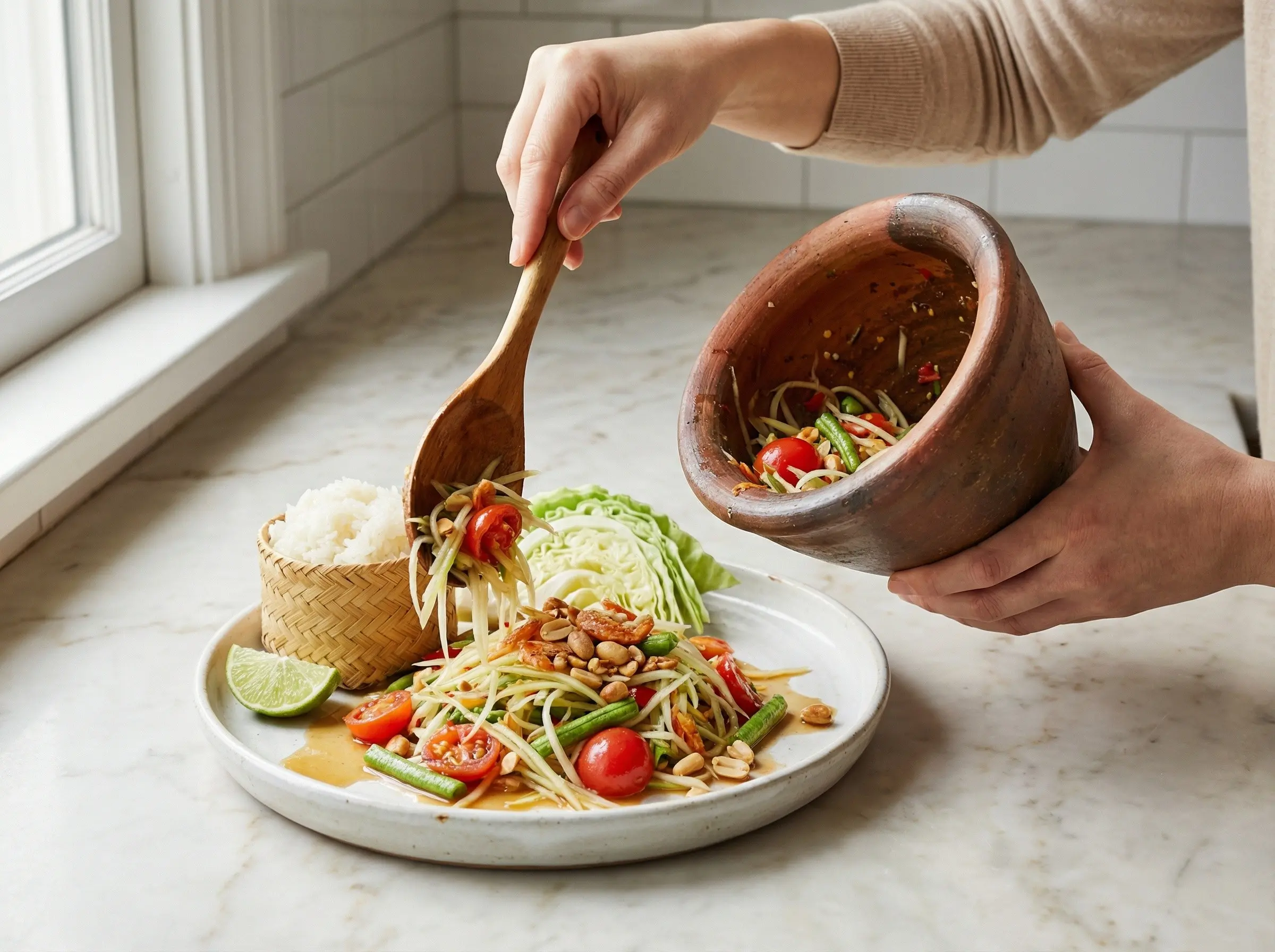
Transfer the som tum to a serving plate, scraping out all the delicious juices from the mortar. The salad should look vibrant with green papaya, red tomatoes, and visible peanuts and dried shrimp. Serve immediately while the papaya is still crisp and the flavors are fresh. Som tum is traditionally served with sticky rice - tear off small pieces of sticky rice and use them to scoop up the salad. Fresh cabbage wedges are also served alongside for scooping and to provide a cooling contrast to the spicy salad. Grilled chicken (gai yang) or grilled pork neck (kor moo yang) are classic accompaniments for a complete Isan meal. Som tum is best eaten immediately and does not store well as the papaya will soften and release water.
You Might Also Like
Master Your Kitchen with PantryAI
Love this recipe? Save it, shop for it, and cook it with ease. Download the PantryAI app to organize your pantry, track expirations, and discover recipes based on what you already have.

On a computer?Scan with your iPhone camera to download PantryAI.








Swipe to see more screenshots