
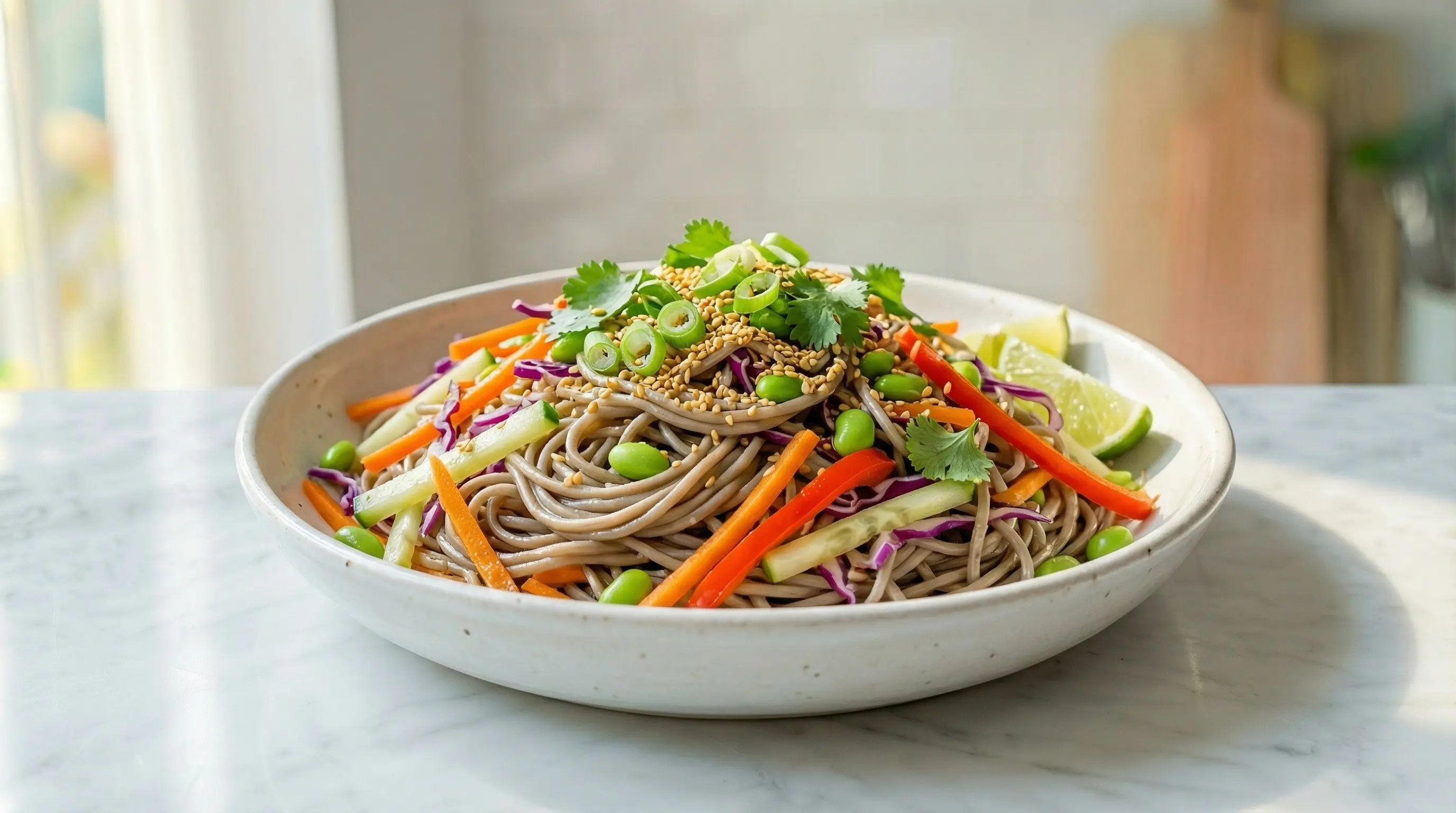
Soba Noodle Salad
Learn how to make refreshing soba noodle salad with nutty buckwheat noodles, crisp vegetables, and savory sesame dressing. This healthy Japanese-inspired dish is perfect for summer!
Ingredients
The Story
Soba noodles have a rich history in Japan dating back to the Edo period (1603-1868), when they became a staple food particularly in Tokyo (then called Edo) and the surrounding regions. The word "soba" means buckwheat, and these thin, grayish-brown noodles are made from buckwheat flour, often blended with wheat flour. Traditional soba is served either hot in a flavorful broth or cold on a bamboo mat with a dipping sauce (zaru soba). The cold preparation, known as "hiyashi soba" or chilled soba, became particularly popular during the hot summer months when appetite-stimulating cold dishes are preferred - a tradition that continues today. While traditional Japanese cold soba is elegantly minimalist, served simply with a soy-dashi dipping sauce and perhaps some nori and scallions, the concept of soba noodle salad represents a more modern, fusion interpretation that gained popularity in Western countries during the health food movements of the 1980s and 1990s. This style combines the nutty flavor and health benefits of soba noodles with colorful vegetables and bold Asian-inspired dressings, creating a dish that bridges Japanese tradition with contemporary global tastes. The salad format makes soba more accessible to Western diners while celebrating its inherent qualities: the earthy, slightly sweet flavor of buckwheat and its satisfying chewy texture. What makes soba noodle salad so appealing is its perfect balance of nutrition and flavor. Buckwheat is naturally rich in protein, fiber, and minerals, making soba one of the healthiest noodle options available. The noodles have a distinctive nutty, earthy flavor that pairs beautifully with sesame-based dressings and fresh vegetables. When chilled, soba takes on a pleasantly firm, chewy texture that holds up well in salads without becoming mushy. The vegetables add crunch, color, and freshness, while the dressing - typically a blend of sesame, soy sauce, rice vinegar, and ginger - ties everything together with umami depth and bright acidity. Served cold or at room temperature, soba noodle salad is the perfect light meal for warm weather, a healthy lunch option, or an elegant side dish for any Asian-inspired menu.
Instructions
Step 1
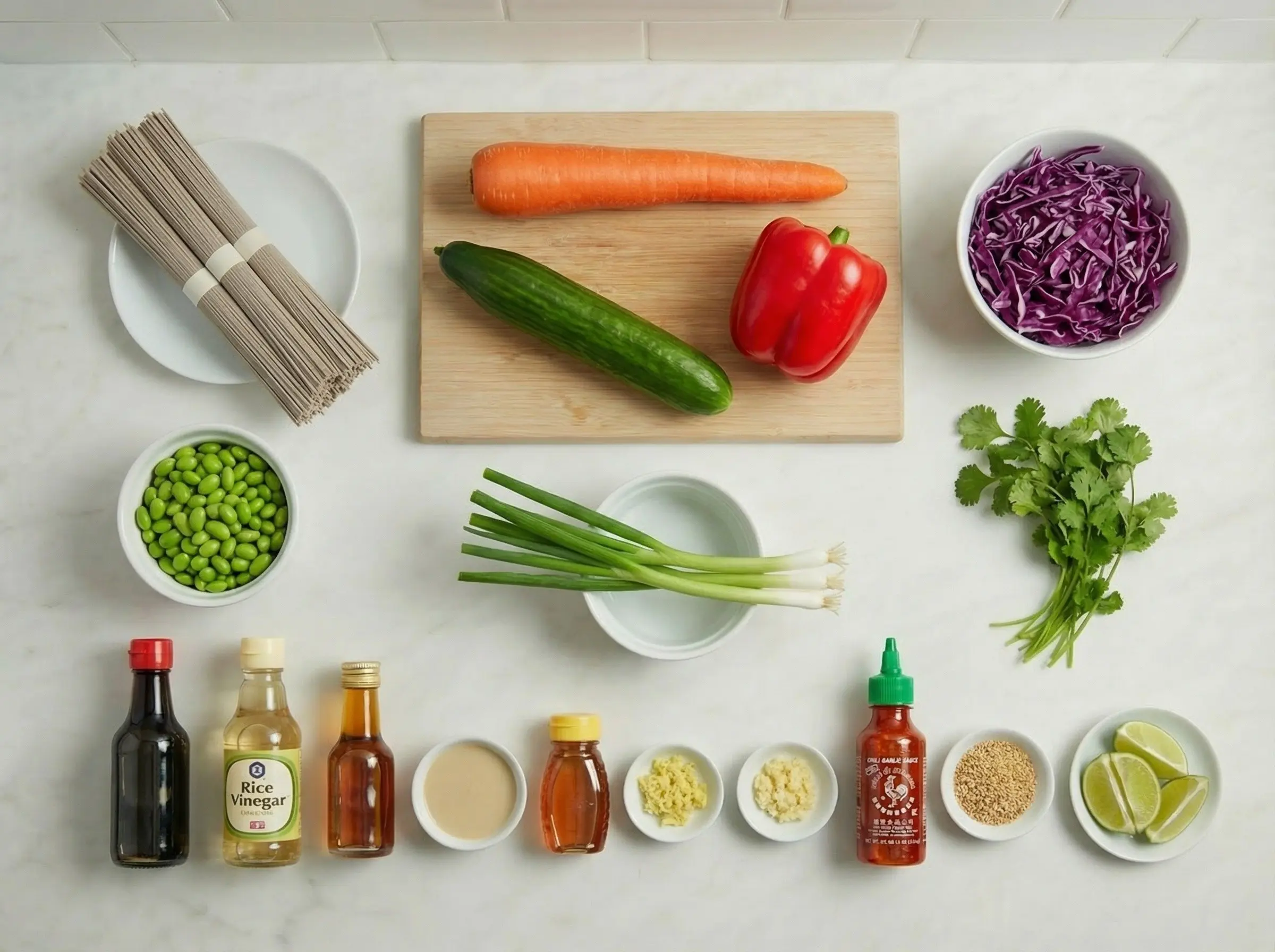
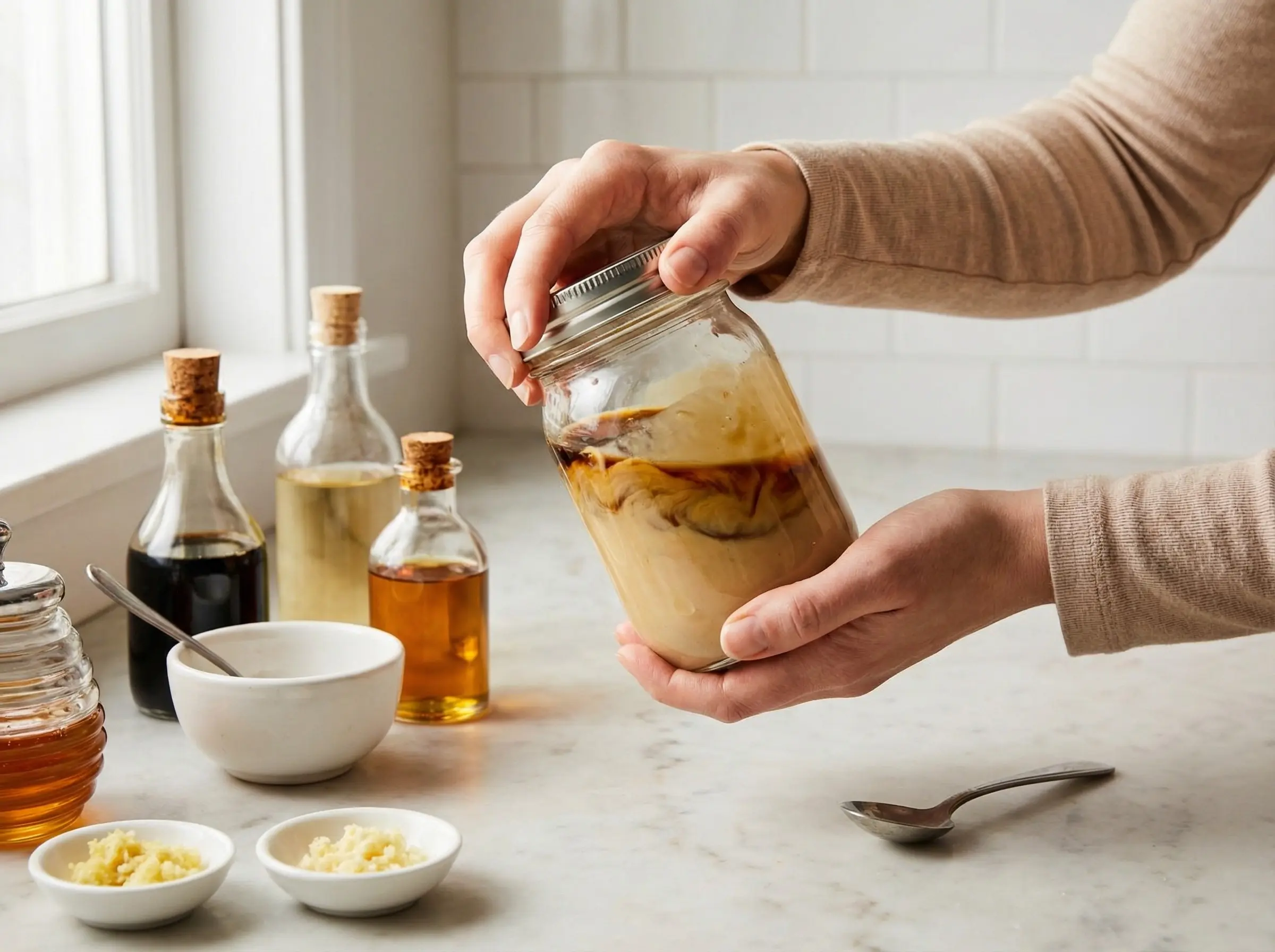
Make the sesame dressing first so the flavors have time to meld. In a jar with a tight-fitting lid or a small bowl, combine the soy sauce, rice vinegar, sesame oil, tahini (or sesame paste), honey, grated ginger, minced garlic, and chili garlic sauce if using. Shake vigorously or whisk until smooth and emulsified - the tahini should be fully incorporated with no lumps. Taste and adjust: add more honey for sweetness, more vinegar for tang, or more chili sauce for heat. The dressing should be bold and well-balanced since it will be absorbed by the noodles. Set aside or refrigerate until ready to use - it can be made up to 5 days ahead.
Step 2
Prepare all the vegetables while waiting for the water to boil. Thinly shred the red cabbage - it should be fine enough to eat raw comfortably. Julienne the carrot into thin matchsticks. Cut the cucumber in half lengthwise, scoop out the watery seeds with a spoon, then julienne into matchsticks similar to the carrots. Thinly slice the red bell pepper. Slice the green onions, separating the white and green parts. Roughly chop the cilantro. Having everything prepped before the noodles are ready ensures quick assembly and prevents the noodles from sitting too long.
Step 3
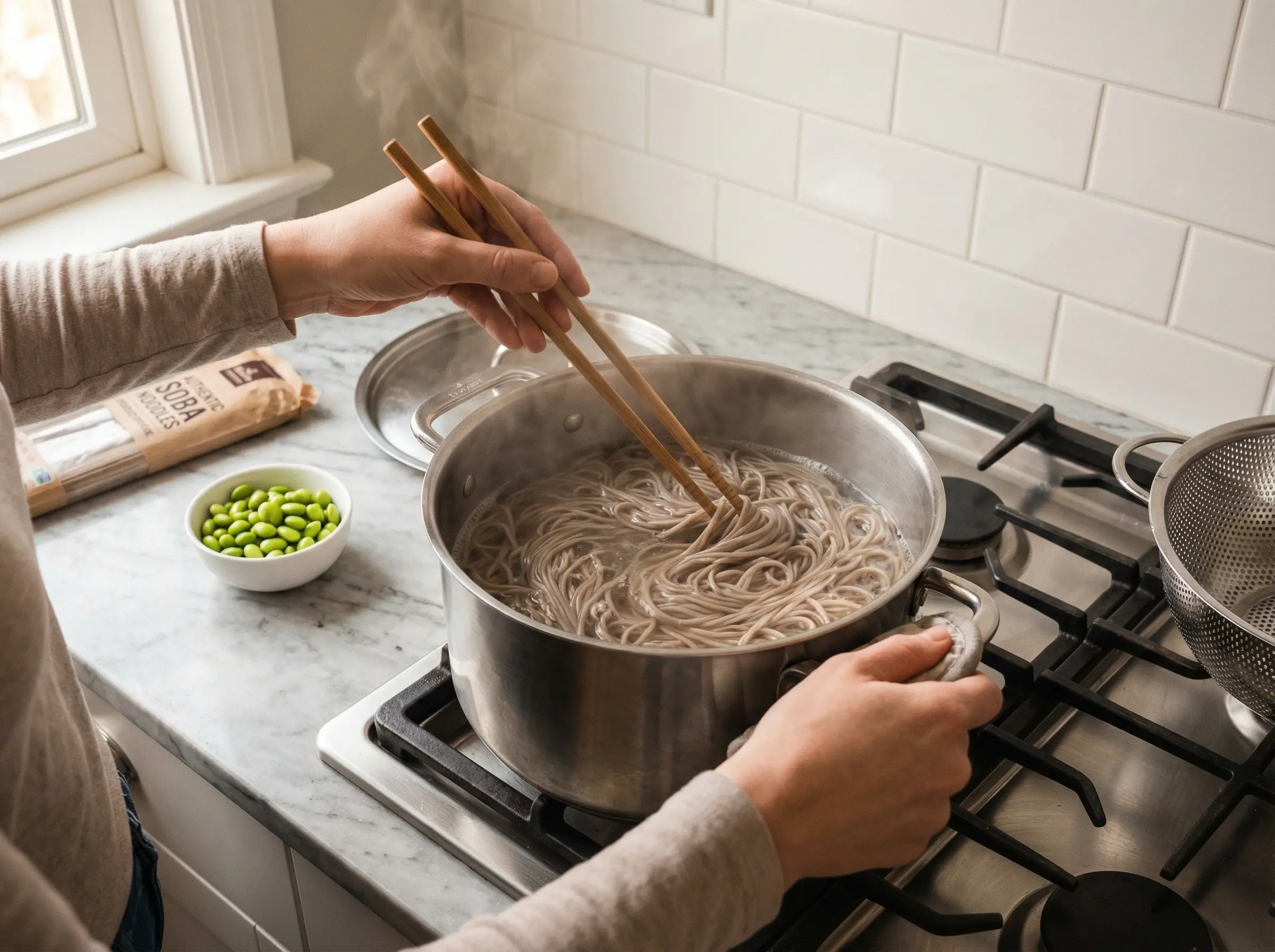
Cook the soba noodles. Bring a large pot of water to a rolling boil - do not add salt, as soba noodles are already seasoned. Add the noodles, stirring immediately to prevent sticking. Cook according to package directions, usually 4-5 minutes for dried soba, until al dente - they should be tender but still have a slight bite. Soba can quickly go from perfectly cooked to mushy, so watch carefully and taste frequently. Add the shelled edamame to the pot during the last minute of cooking to blanch them briefly.
Step 4
Drain the noodles and edamame immediately and rinse thoroughly under cold running water. This step is crucial - it stops the cooking process, removes excess starch that would make the noodles sticky, and chills them for the cold salad. Continue rinsing and gently agitating the noodles with your hands until they are completely cold, about 1-2 minutes. Drain very well, shaking off as much water as possible - wet noodles will dilute the dressing. Transfer to a large mixing bowl.
Step 5
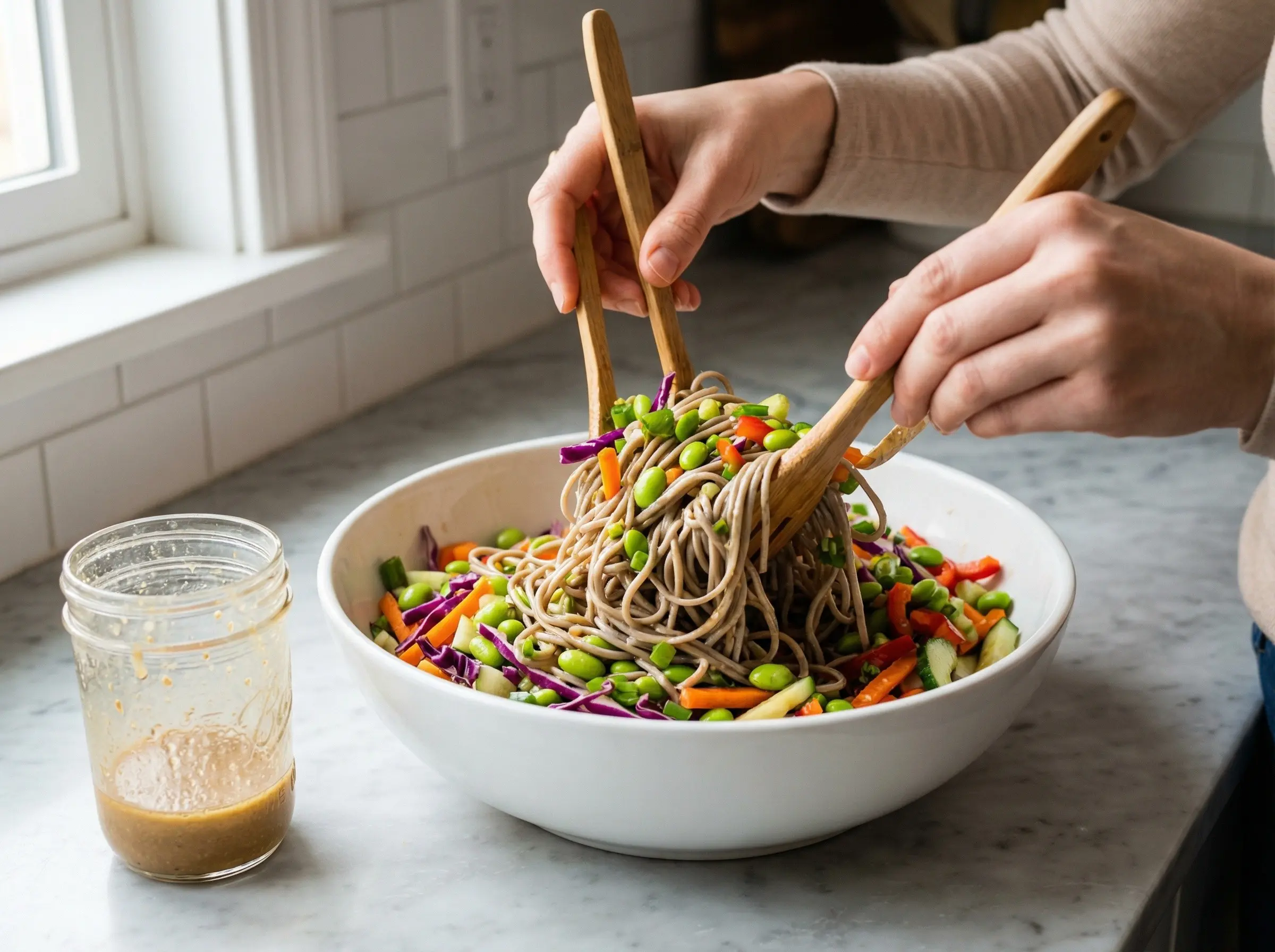
Add the prepared vegetables to the bowl with the cold soba noodles: red cabbage, carrot, cucumber, bell pepper, edamame, and the white parts of the green onions. Pour about three-quarters of the dressing over the noodles and vegetables. Using tongs or two forks, toss everything together thoroughly, lifting and turning to ensure the dressing coats every strand of noodle and piece of vegetable. The dressing should be evenly distributed throughout. Taste and add more dressing if needed - the noodles will continue to absorb the dressing as it sits.
Step 6
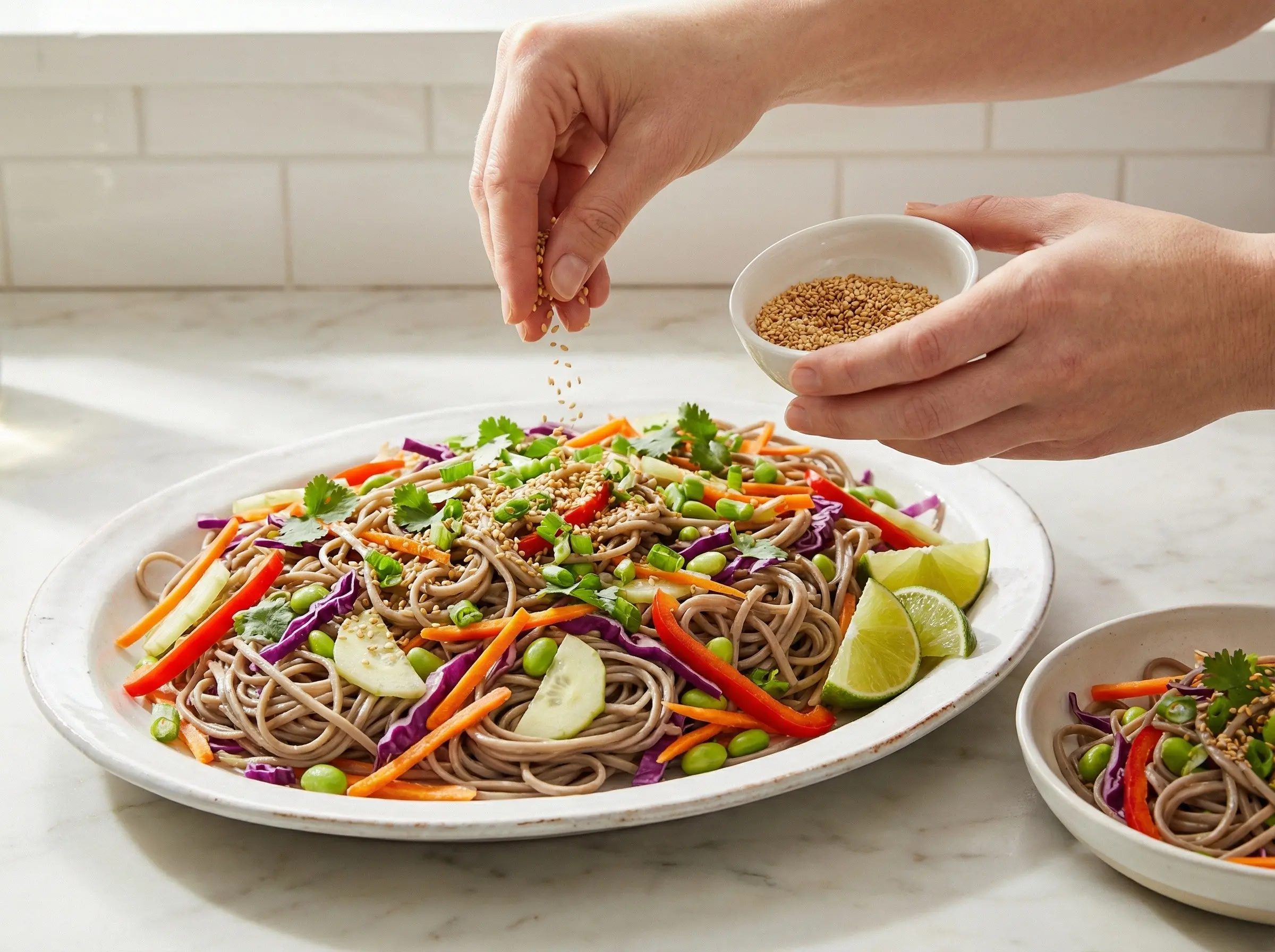
Transfer the soba noodle salad to a serving platter or divide among individual bowls. Garnish generously with the green parts of the sliced green onions, chopped fresh cilantro, and toasted sesame seeds. Serve with lime wedges on the side - a squeeze of fresh lime brightens all the flavors beautifully. The salad can be served immediately or refrigerated for up to 2 hours before serving. If making ahead, reserve some dressing and toss again just before serving, as the noodles will absorb the dressing over time. For a more substantial meal, top with grilled chicken, seared salmon, or pan-fried tofu. Soba noodle salad is best eaten the same day it is made - leftover noodles tend to dry out and clump together, though they can be refreshed with additional dressing and a splash of water.
You Might Also Like
Master Your Kitchen with PantryAI
Love this recipe? Save it, shop for it, and cook it with ease. Download the PantryAI app to organize your pantry, track expirations, and discover recipes based on what you already have.

On a computer?Scan with your iPhone camera to download PantryAI.







Swipe to see more screenshots