
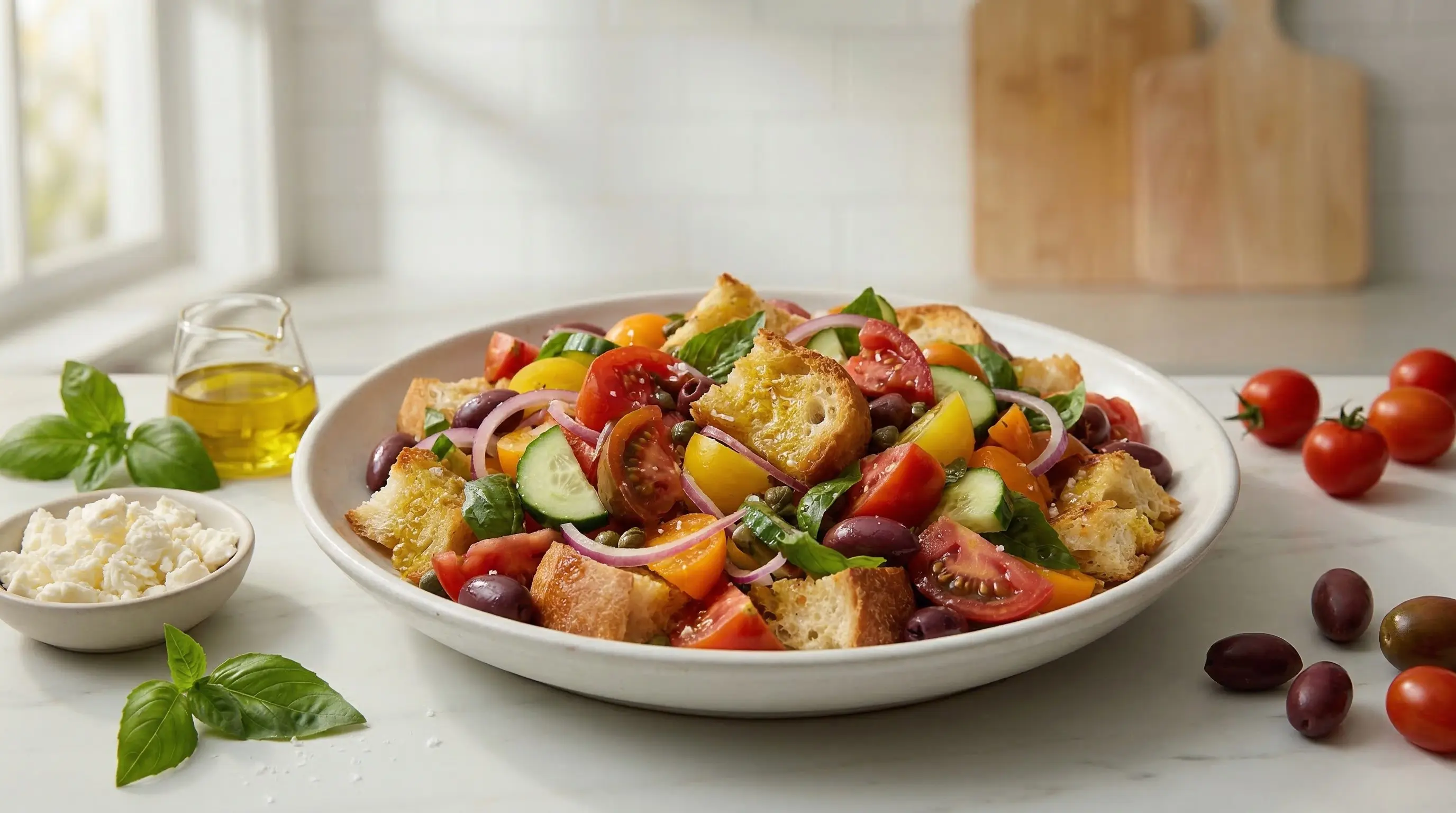
Panzanella
Learn how to make authentic panzanella, the beloved Tuscan bread salad with ripe tomatoes, cucumber, red onion, and basil in a simple vinaigrette. This rustic Italian classic transforms stale bread into summer perfection!
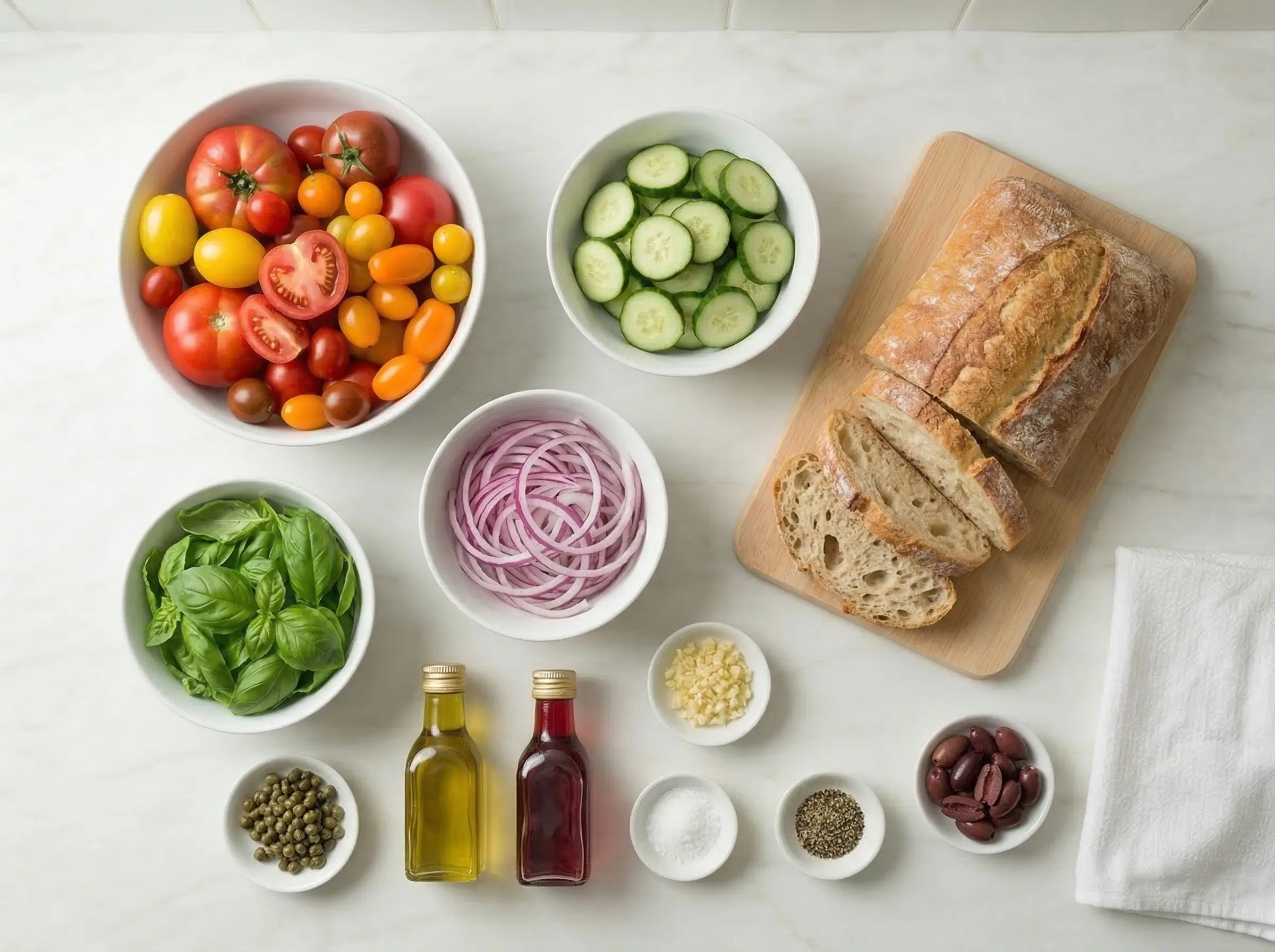
Ingredients
The Story
Panzanella is the quintessential Tuscan summer salad, a brilliant improvisation that transforms stale bread and peak-season tomatoes into something far greater than the sum of its parts. The dish embodies the Italian philosophy of cucina povera - peasant cooking that wastes nothing and elevates humble ingredients through simplicity and technique. The origins of panzanella stretch back centuries in Tuscany, where the region's famous unsalted bread (pane sciocco) becomes rock-hard within a day but is too valuable to discard. Soaking the bread in water and vinegar to soften it, then combining with whatever vegetables were at hand, created a satisfying meal from scraps that might otherwise be wasted. The earliest versions of panzanella were even simpler than today's - just bread, water, vinegar, and onion. Tomatoes, now considered essential, were actually a later addition, arriving only after the fruit from the Americas became accepted in Italian cuisine in the 18th and 19th centuries. Today, panzanella is inseparable from summer in Tuscany, appearing on trattoria menus and family tables when tomatoes are at their sun-ripened peak. The dish has spread throughout Italy and beyond, earning recognition as one of the great bread salads alongside Lebanese fattoush and Middle Eastern variations. What began as poverty food has become a celebrated expression of Italian culinary philosophy. What makes panzanella so extraordinary is the magical interplay between bread and tomato. The bread, whether truly stale or deliberately dried in the oven, must have enough structure to absorb the tomato juices and vinaigrette without disintegrating into mush. As the salad rests, the bread drinks in the flavors around it - the sweet acidity of ripe tomatoes, the sharpness of red onion mellowed by vinegar, the grassy brightness of olive oil and basil. Each bite delivers a different texture - some bread pieces soft and saturated with juice, others still slightly chewy at the center. The tomatoes must be impeccable, truly ripe and flavorful, as their juice is the lifeblood of the dish. Panzanella is not a salad for winter tomatoes or timid appetites. It is summer on a plate, simple and perfect, proof that the best cooking often requires nothing more than great ingredients and patient restraint.
Instructions
Step 1
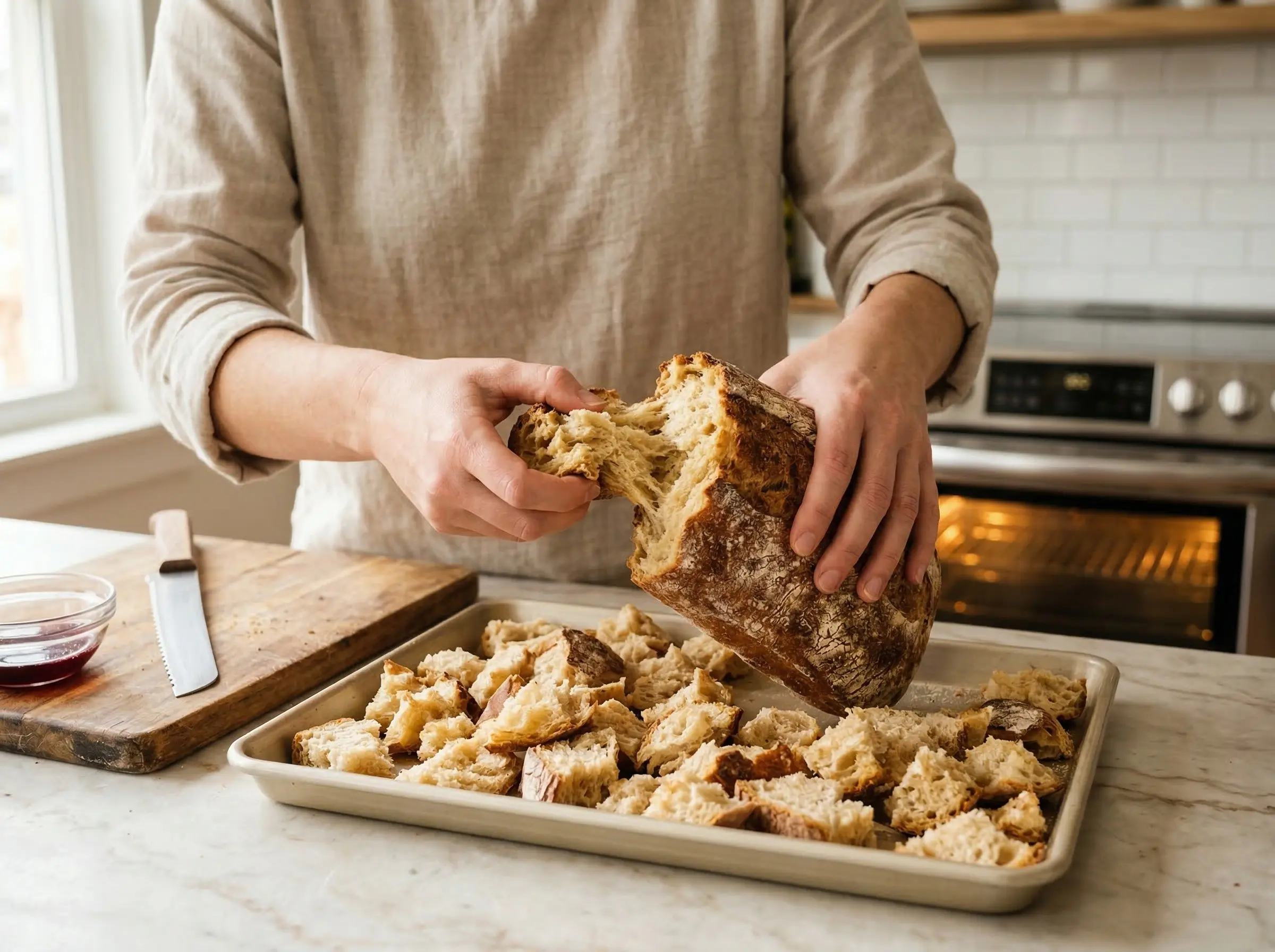
Prepare the bread. If your bread is fresh, cut or tear it into rough 1-inch chunks and spread on a baking sheet. Toast in a 375 degree F oven for 10-15 minutes, tossing halfway through, until dried out and lightly golden but not too hard - it should still have some give. If using truly stale bread that is rock-hard, place the chunks in a bowl and sprinkle with a few tablespoons of water and a splash of red wine vinegar to soften slightly, then squeeze out excess moisture. The bread should be dry enough to absorb tomato juices but not so hard it stays crunchy.
Step 2
Prepare the tomatoes - this step is crucial. Use the ripest, most flavorful tomatoes you can find - panzanella is only as good as its tomatoes. Cut the tomatoes into irregular chunks over a bowl to catch all the juices. Sprinkle with 1/2 teaspoon salt and let sit for 15-20 minutes. The salt draws out the tomato juices which will become part of the dressing that soaks into the bread. These juices are liquid gold - do not discard them.
Step 3
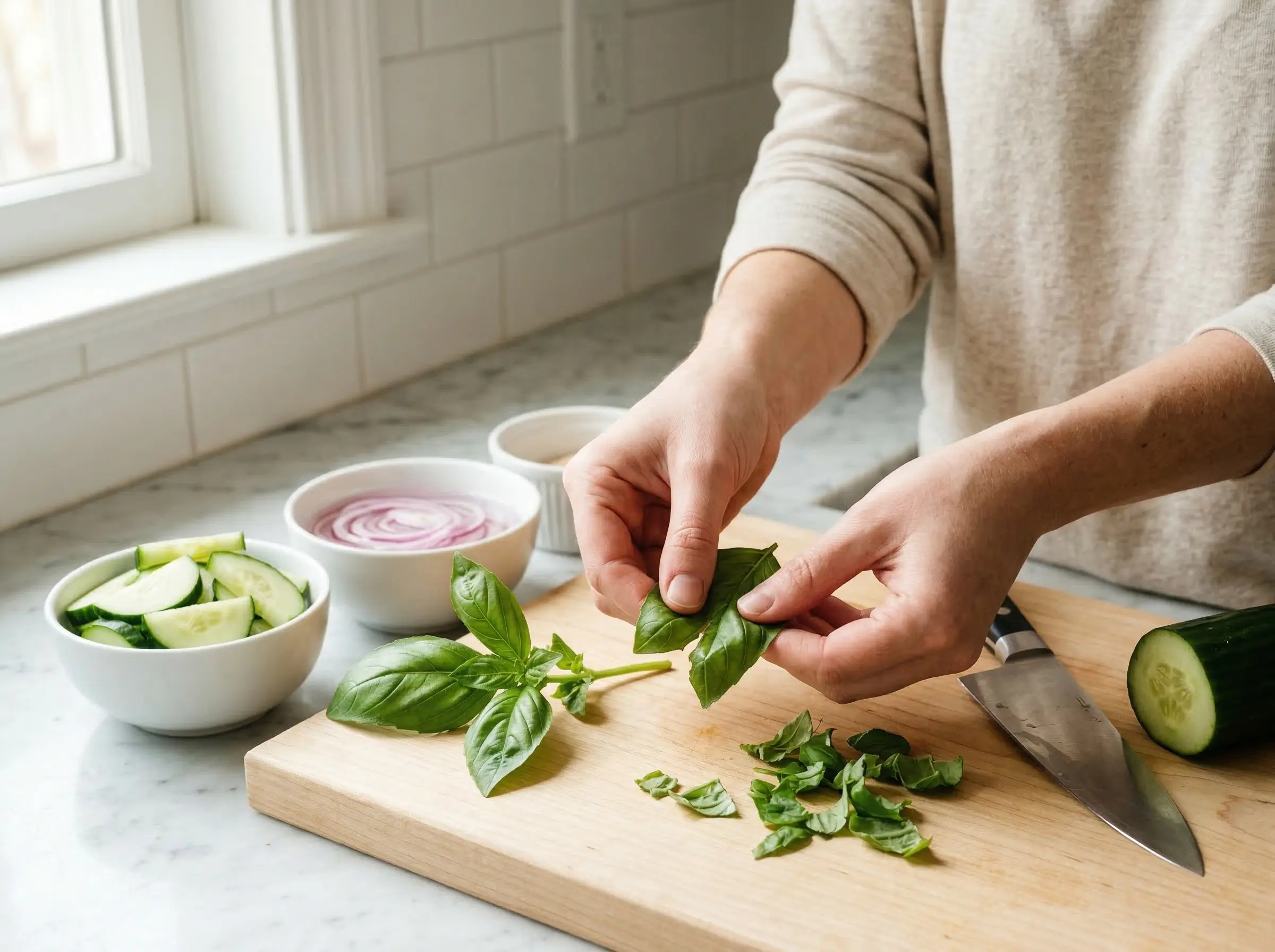
Prepare the other vegetables. Cut the cucumber in half lengthwise, then slice into half-moons about 1/4 inch thick. Thinly slice the red onion. To mellow the raw onion bite, soak the slices in cold water for 10 minutes, then drain well - or leave them sharp if you prefer. Tear the basil leaves by hand rather than cutting with a knife, which can bruise them and cause blackening.
Step 4
Make the vinaigrette. In a small bowl, whisk together the olive oil, red wine vinegar, minced garlic, remaining 1/2 teaspoon salt, and black pepper until emulsified. Taste and adjust - it should be bright and well-balanced with good acidity to stand up to the bread and tomatoes. The dressing can be made ahead and refrigerated; bring to room temperature and re-whisk before using.
Step 5
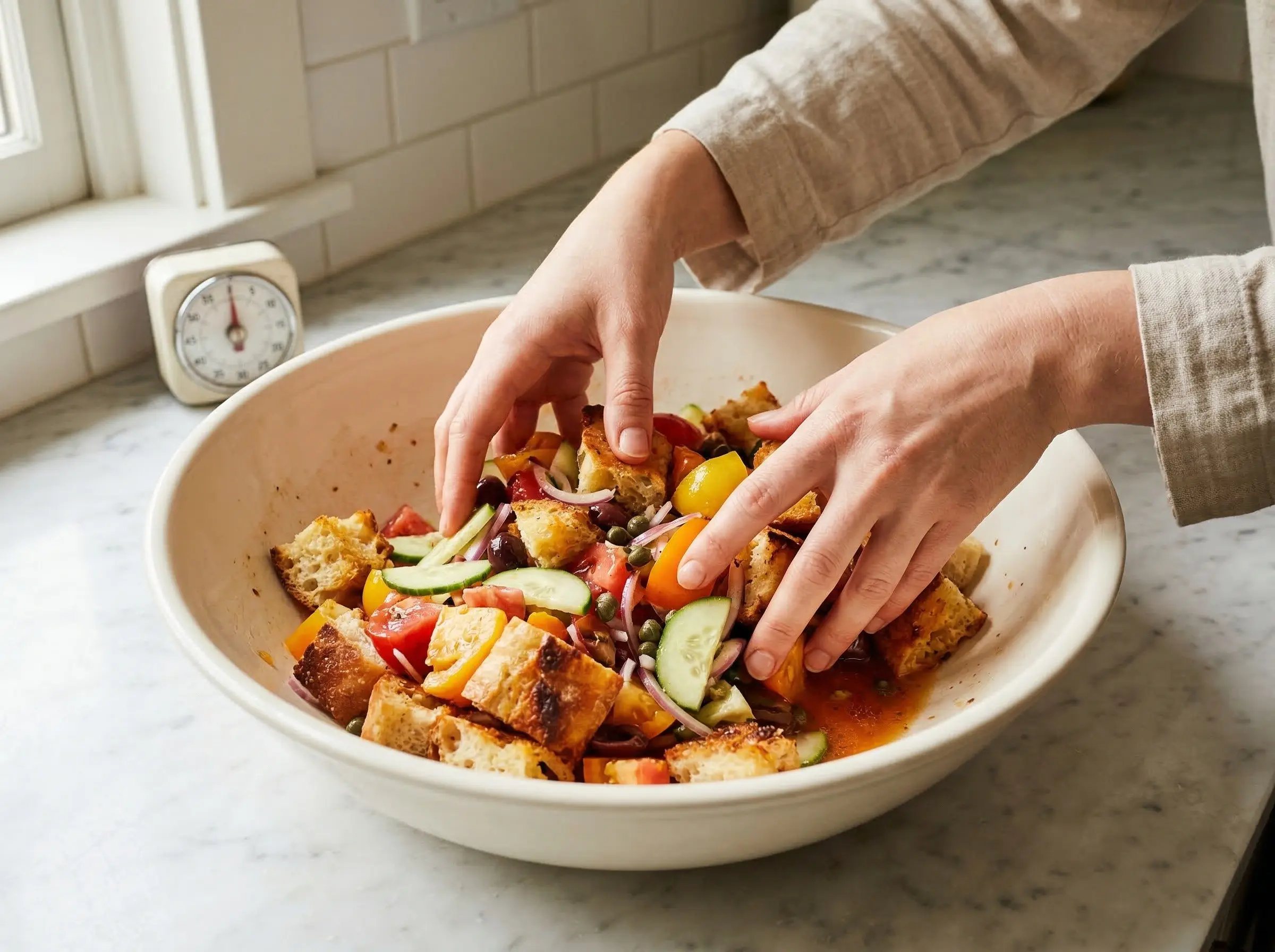
Combine the salad. In a large, wide bowl, combine the bread chunks, tomatoes with all their accumulated juices, cucumber, and red onion. Pour the vinaigrette over everything and toss gently to combine. Add the capers and olives if using. Let the salad rest at room temperature for at least 20-30 minutes - this is essential. The bread needs time to absorb the tomato juices and dressing, transforming from dry chunks into flavorful, juice-soaked bites. Toss occasionally during this resting time. Some prefer more saturation; others prefer some bread pieces to remain slightly chewy.
Step 6
Finish and serve. Just before serving, add the torn fresh basil and toss gently. Taste and adjust seasoning - panzanella often needs more salt to bring out all the flavors. If using fresh mozzarella, tear it into pieces and scatter over the top. Drizzle with additional extra virgin olive oil. Transfer to a serving platter or shallow bowl. Panzanella should be served at room temperature - never cold from the refrigerator, which mutes the flavors and hardens the olive oil. The salad can sit at room temperature for up to 2 hours before serving; beyond that, the bread becomes too soggy for most tastes. Leftovers are still delicious the next day, though the texture will be softer - some people even prefer it this way. Serve panzanella as a first course, a side dish for grilled meats or fish, or as a light summer meal on its own with good wine and perhaps some prosciutto or salami.
You Might Also Like
Master Your Kitchen with PantryAI
Love this recipe? Save it, shop for it, and cook it with ease. Download the PantryAI app to organize your pantry, track expirations, and discover recipes based on what you already have.

On a computer?Scan with your iPhone camera to download PantryAI.



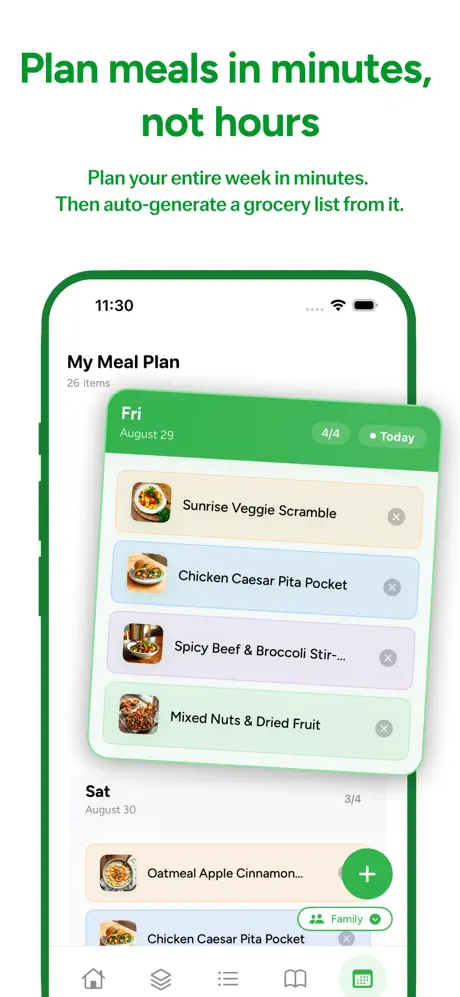




Swipe to see more screenshots