
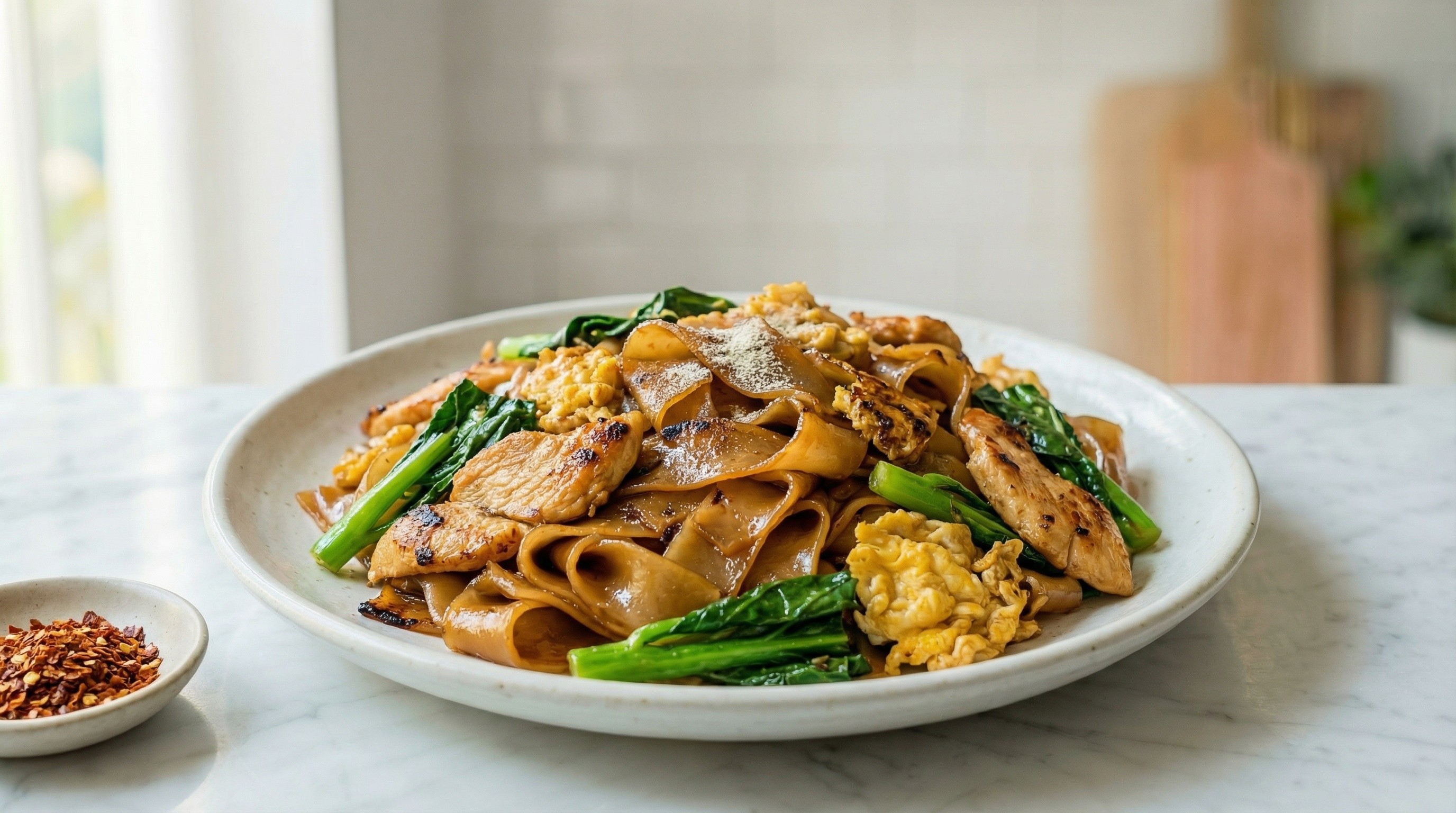
Pad See Ew
Learn how to make authentic pad see ew, Thailand's beloved stir-fried wide rice noodles with chicken, Chinese broccoli, and sweet soy sauce. Smoky, savory, and ready in 15 minutes!
Ingredients
The Story
Pad see ew is one of Thailand's most popular noodle dishes, with roots tracing back to Chinese immigrants who settled in Thailand centuries ago. The name comes from the Thai pronunciation of the Teochew Chinese words "chao guay teow," meaning stir-fried rice noodles with soy sauce - "see ew" being the Thai adaptation of the Chinese word for soy sauce. Like many iconic Thai dishes, pad see ew represents the beautiful fusion of Chinese cooking techniques with Thai flavors that occurred over generations as Chinese immigrants integrated into Thai society, particularly in Bangkok and other urban centers where Chinese-Thai communities flourished. The dish belongs to a family of stir-fried noodle dishes that emerged from Chinese-Thai street food culture in the early to mid-20th century. Street vendors, many of Chinese descent, would set up wok stations throughout Bangkok, cooking noodles to order over intense charcoal flames. Pad see ew became a staple of these vendors alongside pad thai and other noodle dishes. What distinguishes pad see ew from its Chinese predecessors is the use of Thai ingredients and the characteristic balance of flavors - the sweetness from dark soy sauce, the umami from regular soy sauce, and often a touch of fish sauce that adds a distinctly Thai dimension. The dish also traditionally uses Chinese broccoli (gai lan), which grows abundantly in Thailand. What makes pad see ew so beloved is its smoky, slightly charred flavor known as wok hei, or the breath of the wok. This elusive quality comes from cooking the noodles over extremely high heat, allowing them to sear and caramelize slightly against the hot metal. The wide, flat rice noodles should be slightly chewy with charred edges, coated in a glossy dark sauce that is savory-sweet without being cloying. The Chinese broccoli provides a pleasant bitter contrast and satisfying crunch, while the egg adds richness. Though simple in concept - essentially noodles, protein, vegetables, and sauce - pad see ew requires technique and high heat to achieve its characteristic flavor. It represents the pinnacle of Thai-Chinese wok cooking, a dish that looks deceptively simple but rewards skill and practice.
Instructions
Step 1
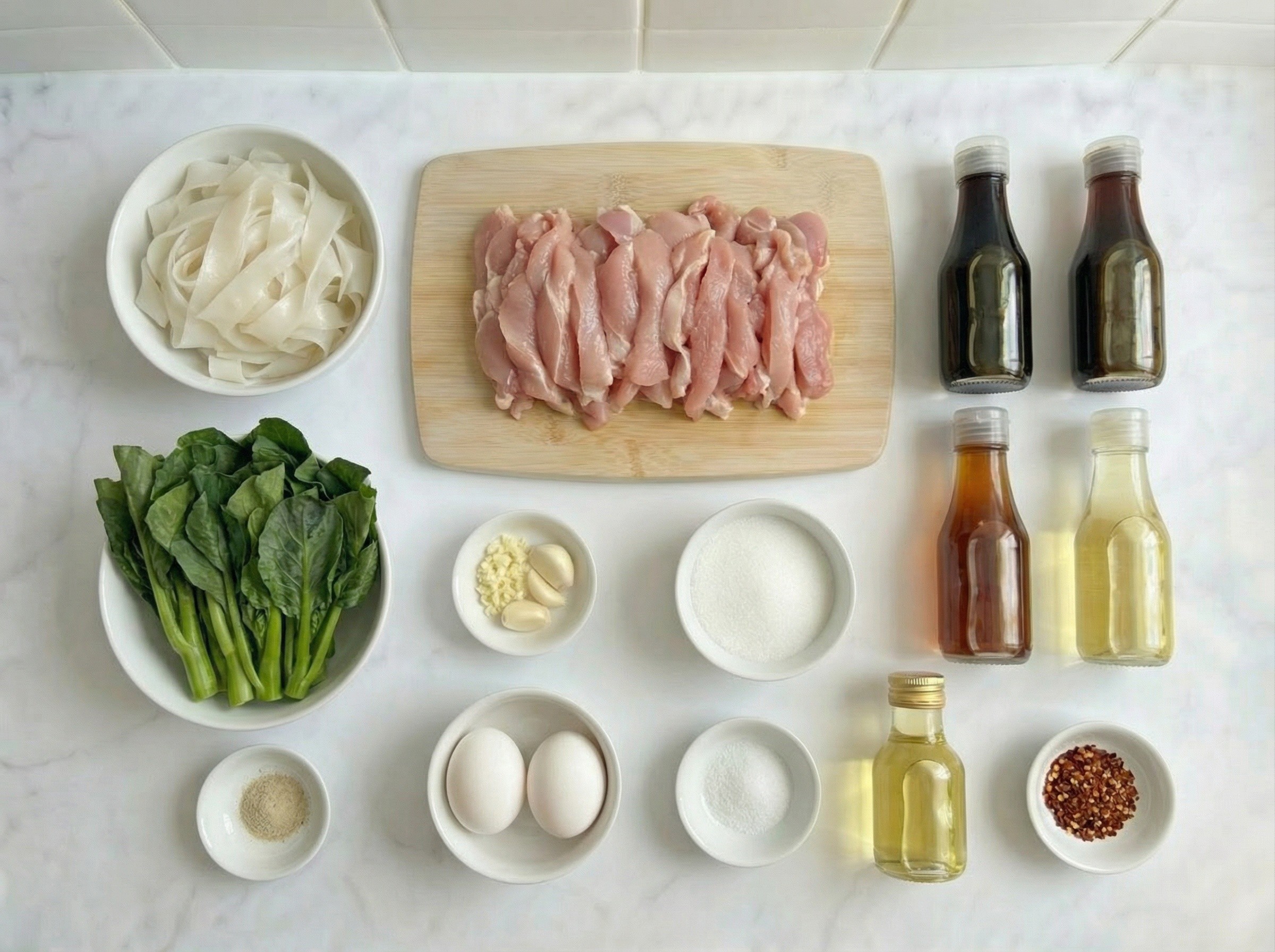
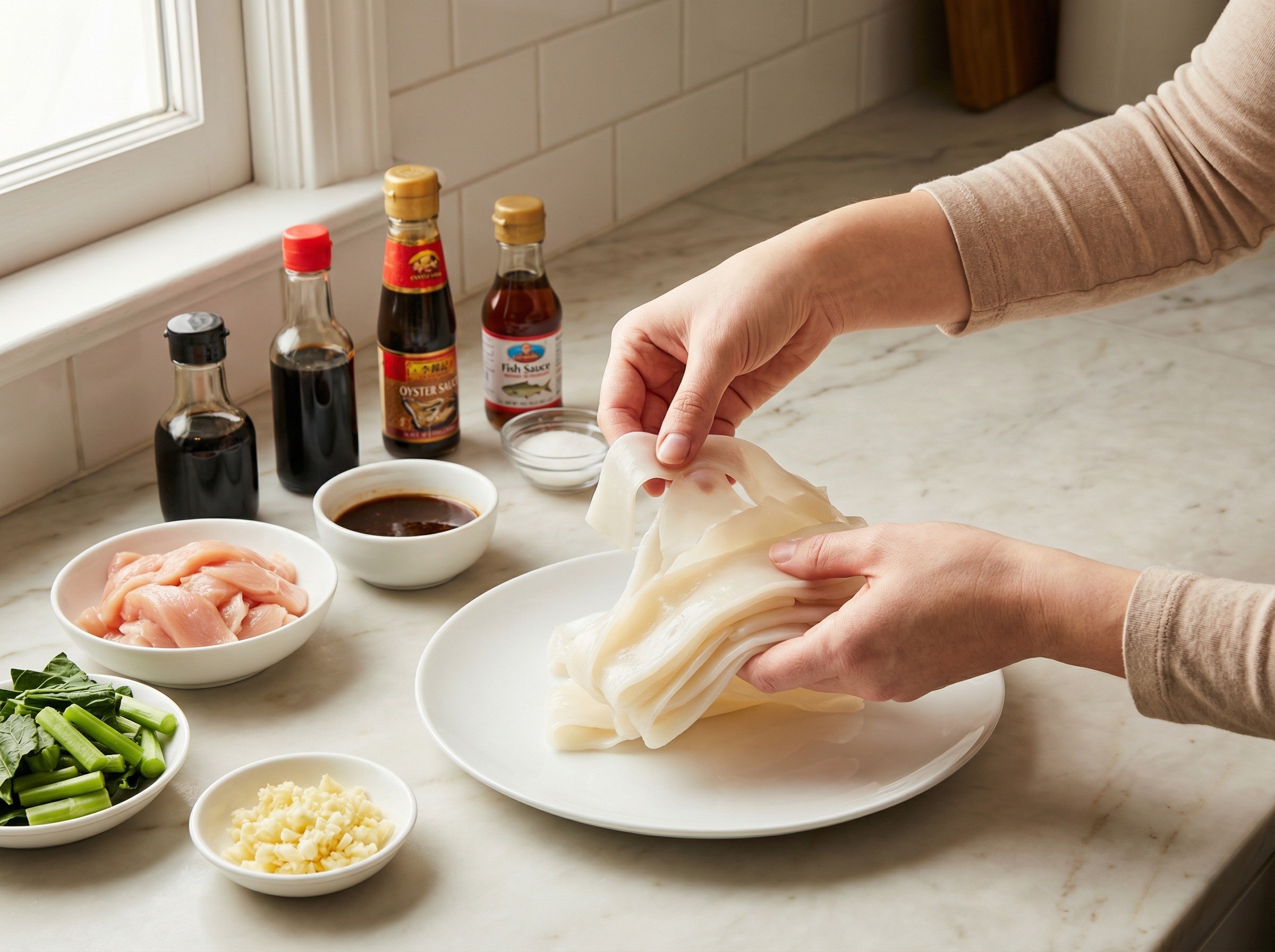
Prepare all ingredients before cooking as pad see ew comes together in just minutes over very high heat. If your fresh rice noodles are refrigerated and stuck together, gently separate them with your hands or microwave them for 20-30 seconds to soften. Do not soak fresh noodles in water as they will become mushy. If using dried wide rice noodles, soak them in room temperature water for 30-45 minutes until pliable but still slightly firm, then drain well. Slice the chicken thighs into thin strips, about 1/4 inch thick. Cut the Chinese broccoli, separating the stems from the leaves - the stems take longer to cook. Cut stems into 2-inch pieces and roughly chop the leaves. Mince the garlic. Mix together the dark soy sauce, regular soy sauce, oyster sauce, fish sauce, and sugar in a small bowl and set aside.
Step 2
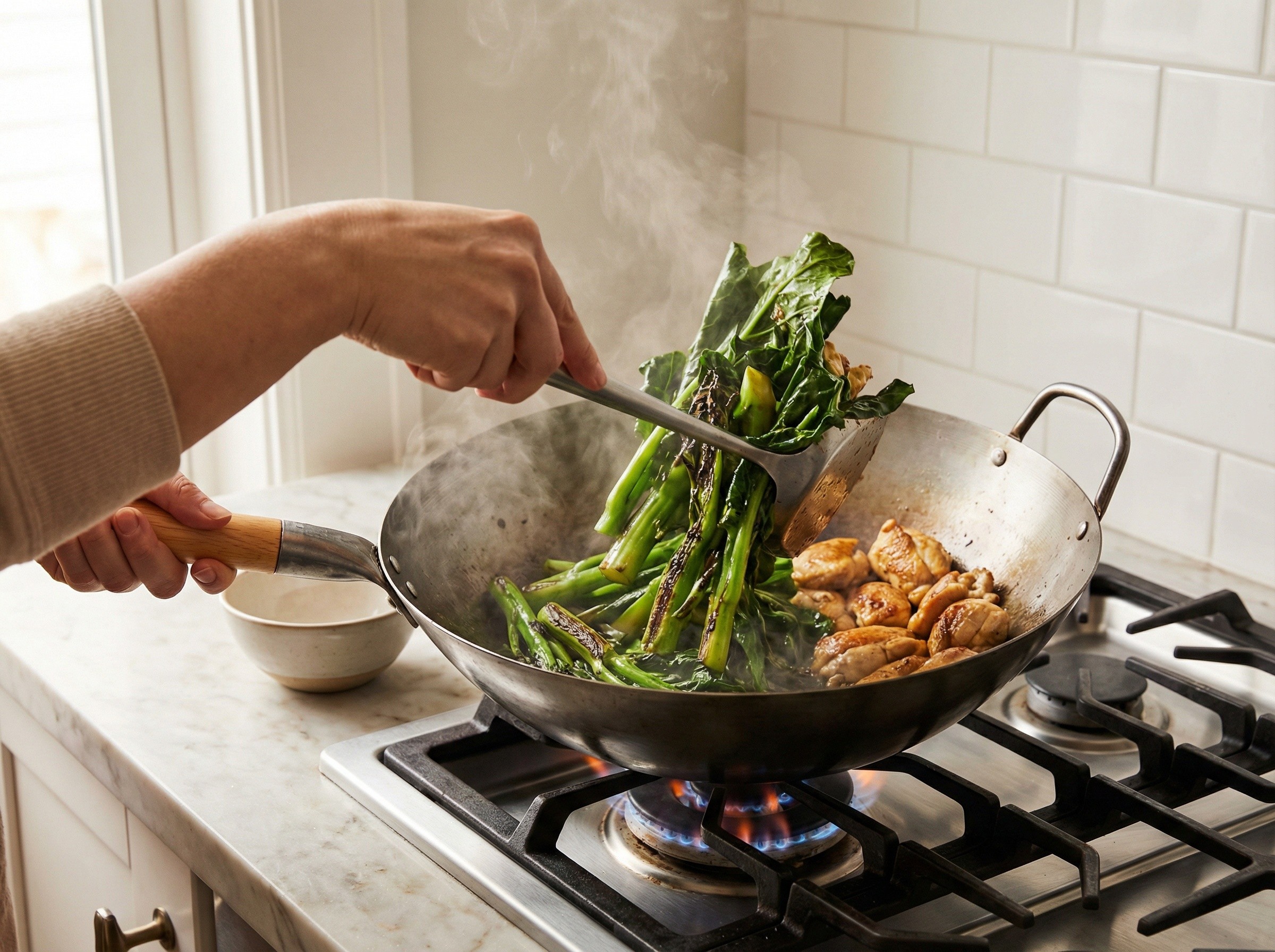
Heat a wok or large skillet over the highest heat possible until smoking. This is crucial for achieving the characteristic wok hei flavor. Add 2 tablespoons of the vegetable oil and swirl to coat. Add the sliced chicken in a single layer and let it sear without stirring for about 30-45 seconds until it develops a golden crust on the bottom. Then stir-fry for another 1-2 minutes until the chicken is almost cooked through but still slightly pink inside. Push the chicken to the side of the wok or transfer to a plate.
Step 3
Add the remaining tablespoon of oil to the wok. Add the minced garlic and stir-fry for 10-15 seconds until fragrant. Add the Chinese broccoli stems first and stir-fry for about 1 minute. Then add the leaves and stir-fry for another 30 seconds until the leaves are just wilted but still vibrant green. The stems should be crisp-tender. Push the vegetables to the side of the wok with the chicken.
Step 4
Crack the eggs directly into the center of the wok. Let them set for about 15-20 seconds, then scramble them roughly, breaking them into large pieces rather than small curds. Before the eggs are fully set, add the rice noodles to the wok. This is the critical moment - spread the noodles across the hot surface of the wok and let them sear without stirring for about 30-45 seconds. You want some of the noodles to char slightly and develop that characteristic smoky flavor. The sizzling should be loud and intense.
Step 5
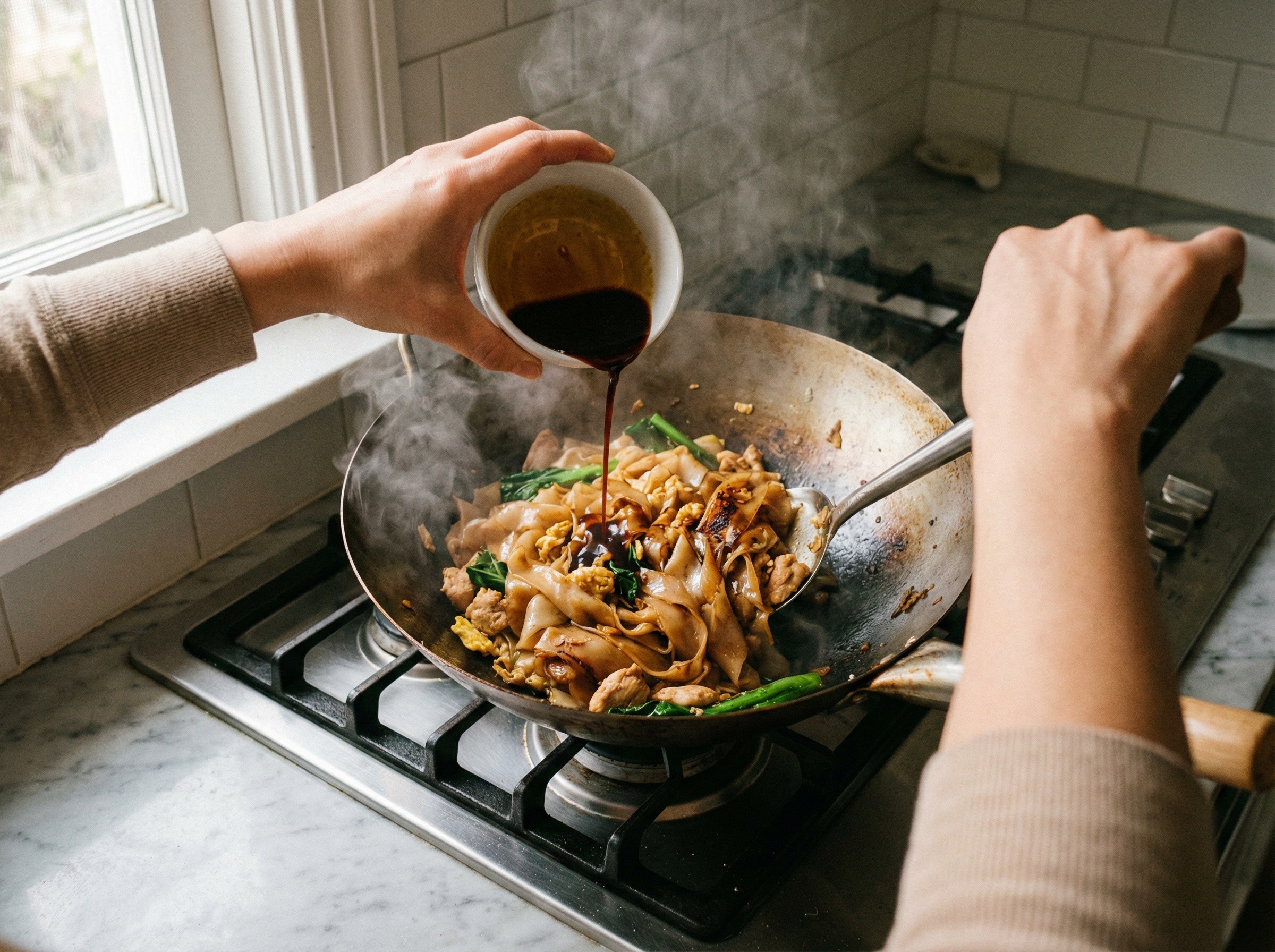
Pour the prepared sauce mixture over the noodles. Toss everything together vigorously, lifting and flipping the noodles to coat them evenly with the sauce. Continue tossing and stir-frying for another 1-2 minutes, occasionally letting the noodles sit against the hot wok for a few seconds to develop more char. The dark soy sauce will color the noodles a rich caramel brown. Make sure the chicken and vegetables are well distributed throughout. The noodles should be glossy, slightly chewy, and have some charred spots.
Step 6
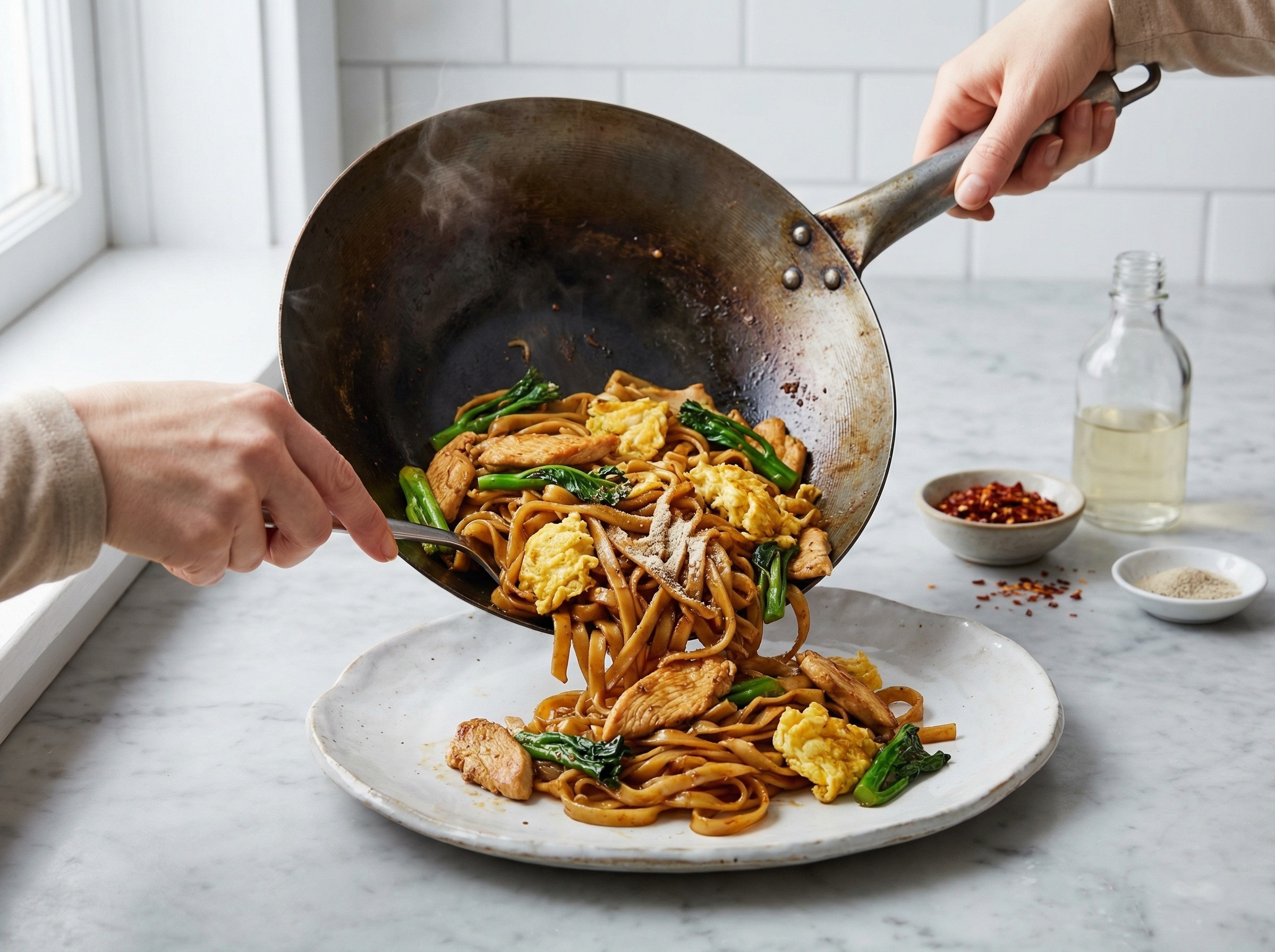
Add the white vinegar and toss once more - the vinegar adds a subtle brightness that balances the rich, sweet sauce. Season with white pepper to taste. Transfer immediately to serving plates. The dish should be steaming hot with visible charred edges on some of the noodles. Serve with dried chili flakes, additional white pepper, and white vinegar on the side - these condiments are traditionally offered at Thai noodle shops for diners to adjust to their taste. Some people also like fish sauce with sliced fresh chilies on the side. Pad see ew is best eaten immediately while the noodles are still hot and slightly crispy in places. The dish does not reheat well as the noodles will become soft and lose their charred character.
You Might Also Like
Master Your Kitchen with PantryAI
Love this recipe? Save it, shop for it, and cook it with ease. Download the PantryAI app to organize your pantry, track expirations, and discover recipes based on what you already have.

On a computer?Scan with your iPhone camera to download PantryAI.








Swipe to see more screenshots