
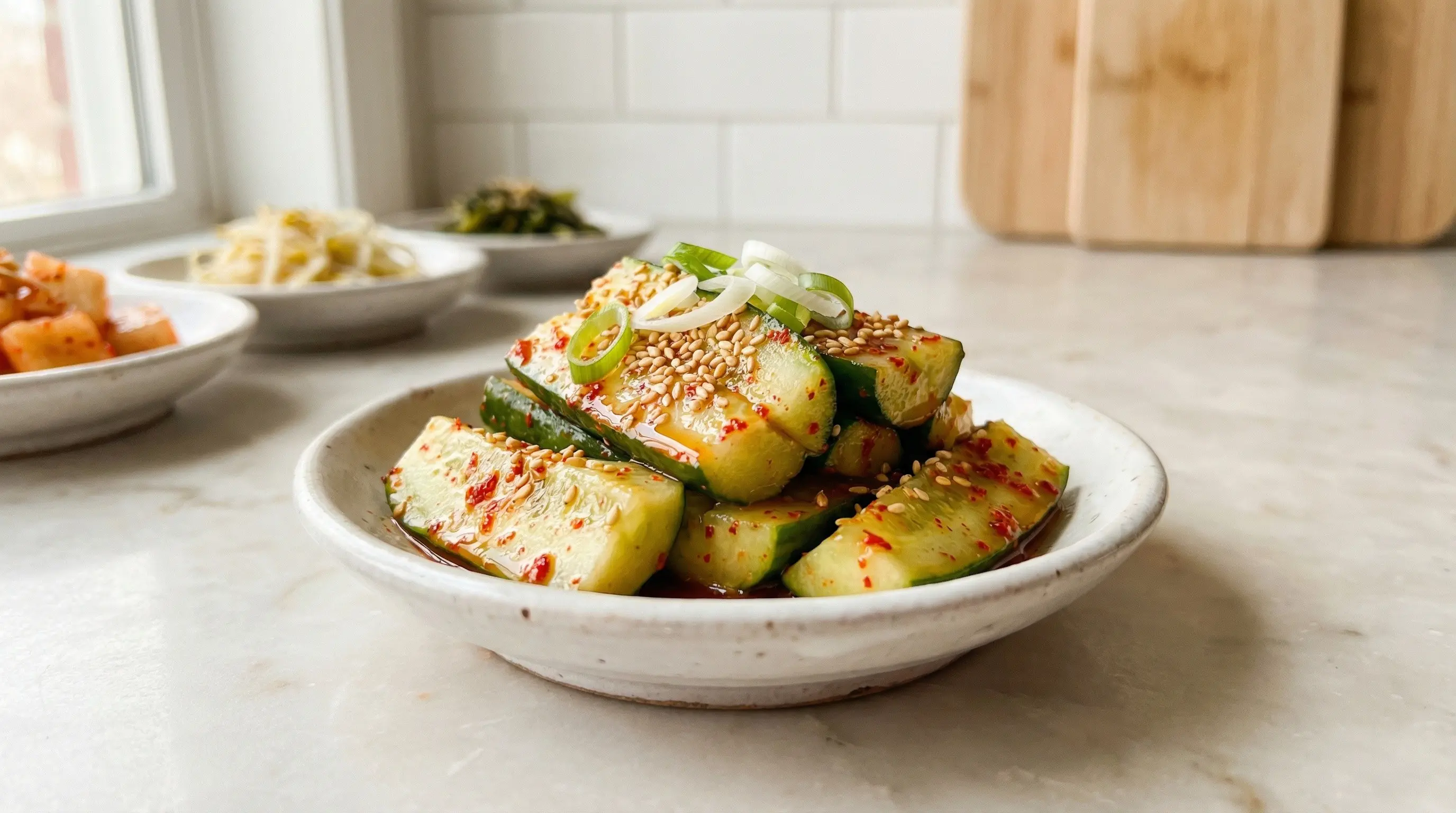
Oi Muchim
Learn how to make oi muchim, a refreshing Korean spicy cucumber salad with gochugaru, sesame oil, and garlic. This quick banchan is crunchy, tangy, and the perfect side dish for any Korean meal!
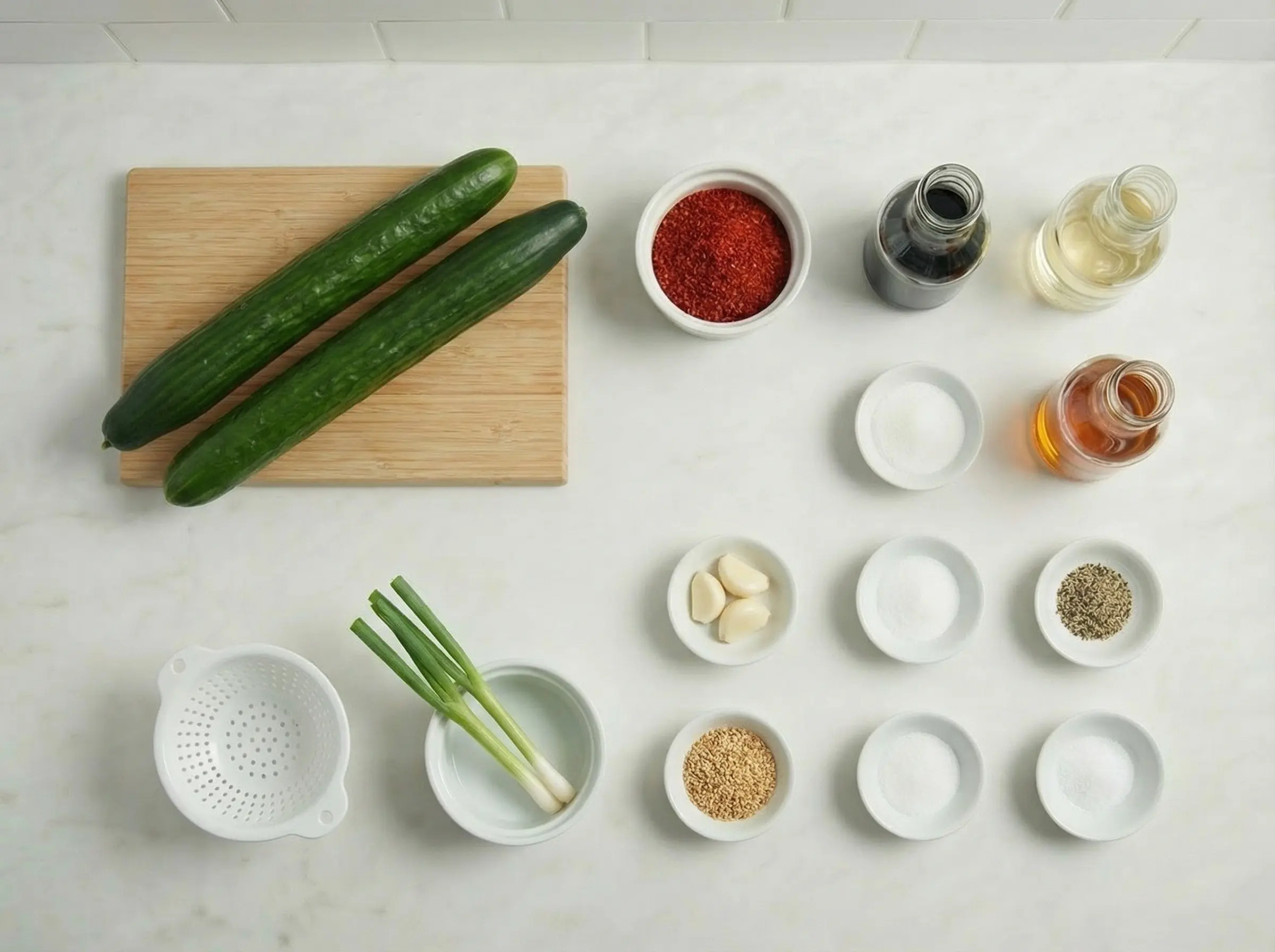
Ingredients
The Story
Oi muchim is one of Korea's most beloved banchan (side dishes), a refreshing cucumber salad that appears on tables across the country as part of nearly every meal. The name is straightforward: "oi" means cucumber in Korean, and "muchim" refers to the technique of seasoning or dressing vegetables - essentially a dressed or seasoned salad. This simple preparation transforms humble cucumbers into something extraordinary through the alchemy of Korean seasonings: gochugaru (red pepper flakes) for gentle heat and vibrant color, sesame oil for nutty richness, garlic for pungent depth, and rice vinegar for bright acidity. Banchan culture is central to Korean cuisine, where meals are traditionally composed of rice, soup, and an array of small shared dishes that provide variety, balance, and nutritional completeness. Oi muchim holds an important place in this tradition as one of the most common and refreshing banchan, particularly during the hot summer months when its cool crunch provides relief from the heat. The dish reflects the Korean culinary philosophy of balancing flavors (sweet, sour, salty, spicy, and umami) and textures (crunchy vegetables against soft rice and rich stews) within a meal. Every Korean grandmother has her own version, passed down through generations, with subtle variations in the ratio of seasonings. What makes oi muchim so appealing is its perfect simplicity and refreshing character. The cucumbers should be salted briefly to draw out excess moisture and concentrate their flavor, resulting in a pleasantly crisp texture that is neither watery nor limp. The dressing clings to each piece, delivering a gentle heat from gochugaru that builds slowly, the unmistakable fragrance of toasted sesame oil, and the sharp bite of raw garlic softened by vinegar's acidity. Finished with a sprinkle of sesame seeds and perhaps some sliced green onions, oi muchim is both beautiful and delicious. It is the kind of dish that disappears first from the banchan spread - refreshing, addictive, and the perfect counterpoint to rich Korean main dishes like bulgogi, samgyeopsal, or jjigae.
Instructions
Step 1
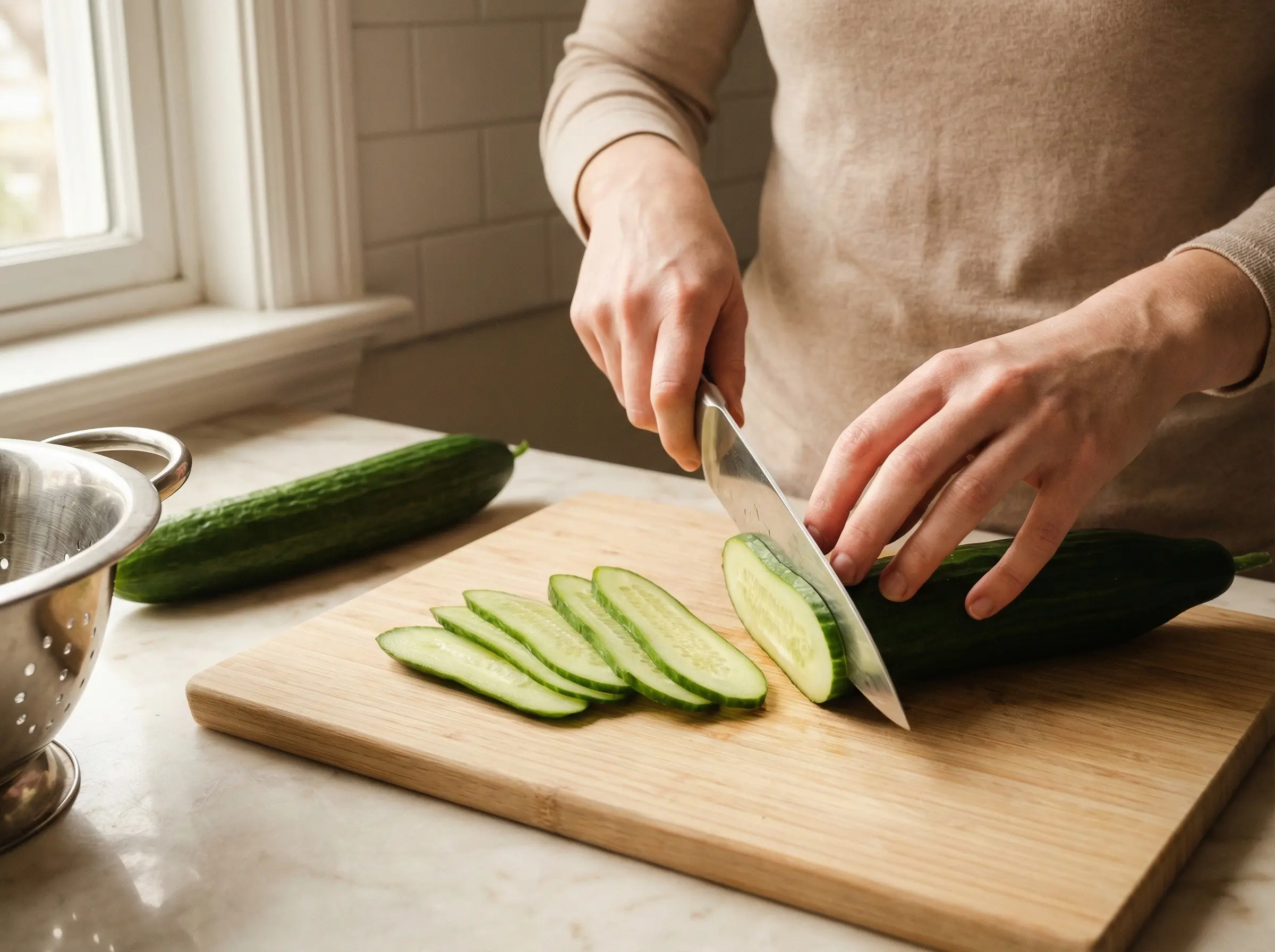
Prepare the cucumbers. If using English cucumbers, trim the ends and cut in half lengthwise. If using Korean cucumbers (which are thinner and have bumpy skin), you can leave them whole or halve them. Slice the cucumbers on a diagonal into pieces about 1/4 inch thick - the diagonal cut creates more surface area for the dressing to cling to and looks more attractive. Alternatively, you can smash the cucumbers by placing them on a cutting board and pressing down firmly with the flat side of a knife until they crack, then tearing into bite-sized pieces - this rustic method creates irregular surfaces that grab even more dressing.
Step 2
Salt the cucumbers to remove excess moisture. Place the sliced cucumbers in a colander or large bowl and sprinkle with 1 teaspoon of salt. Toss gently to distribute the salt evenly. Let the cucumbers sit for 15-20 minutes - you will see liquid pooling at the bottom as the salt draws out moisture. This step is crucial: it prevents the finished salad from becoming watery and concentrates the cucumber''s natural flavor. It also softens the cucumbers slightly, allowing them to better absorb the dressing while still remaining crisp.
Step 3
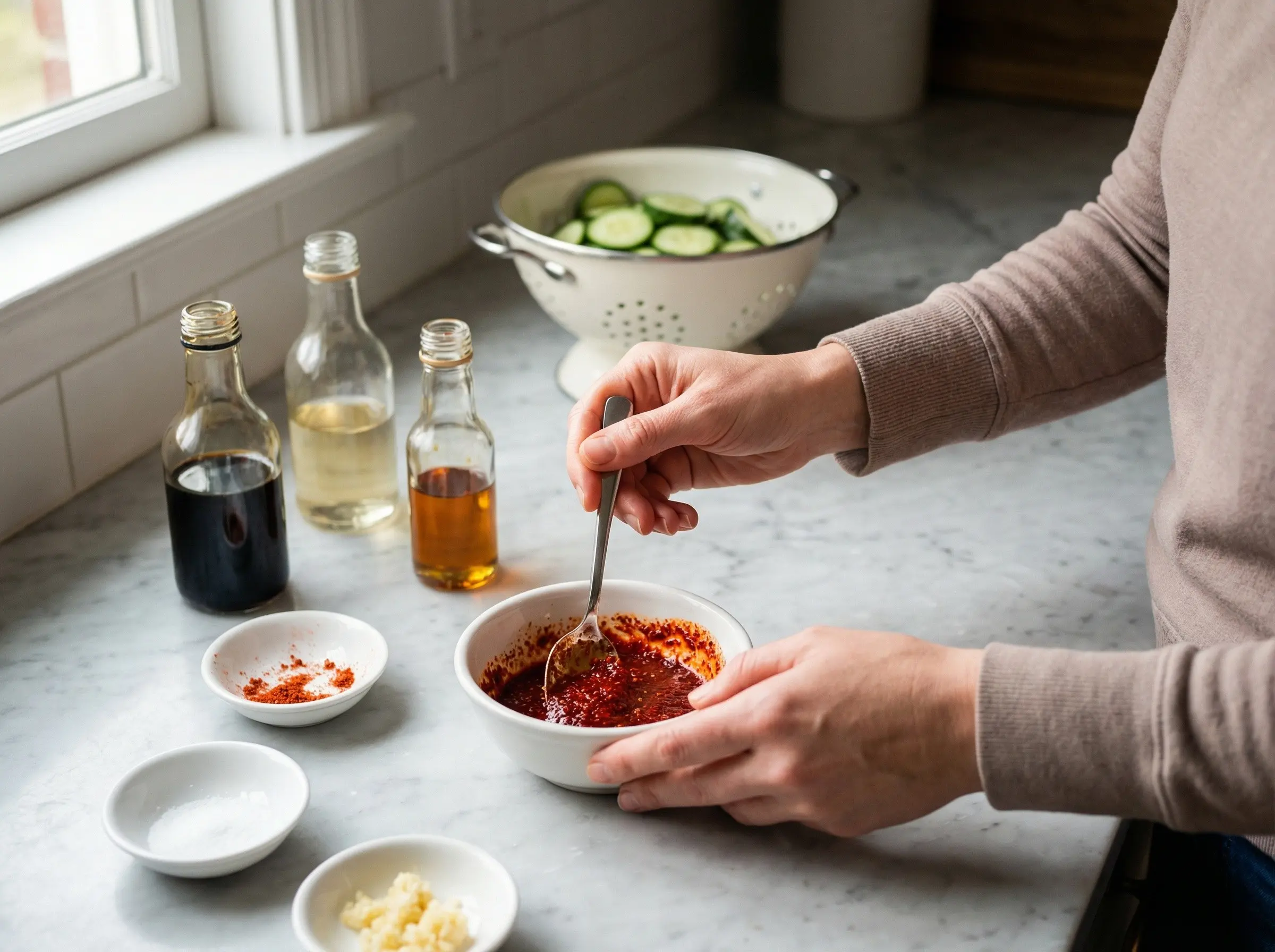
While the cucumbers are salting, prepare the dressing. In a small bowl, combine the gochugaru (Korean red pepper flakes), soy sauce, rice vinegar, sesame oil, sugar, and minced garlic. Whisk or stir until the sugar dissolves and everything is well combined. Taste the dressing - it should be balanced between spicy, savory, tangy, and slightly sweet, with the fragrance of sesame oil prominent. Adjust to your preference: more gochugaru for heat, more vinegar for tanginess, or more sugar if you prefer it sweeter. Let the dressing sit while the cucumbers finish salting - this allows the gochugaru to bloom and the flavors to meld.
Step 4
After 15-20 minutes, the cucumbers will have released quite a bit of liquid. Gently squeeze the cucumbers with your hands to remove excess moisture - do not be too aggressive or they will become mushy, but do squeeze out as much water as reasonably possible. You can also press them gently between clean kitchen towels or paper towels. The drier the cucumbers, the better the dressing will adhere and the less watery the final dish will be. Transfer the squeezed cucumbers to a clean, dry mixing bowl.
Step 5
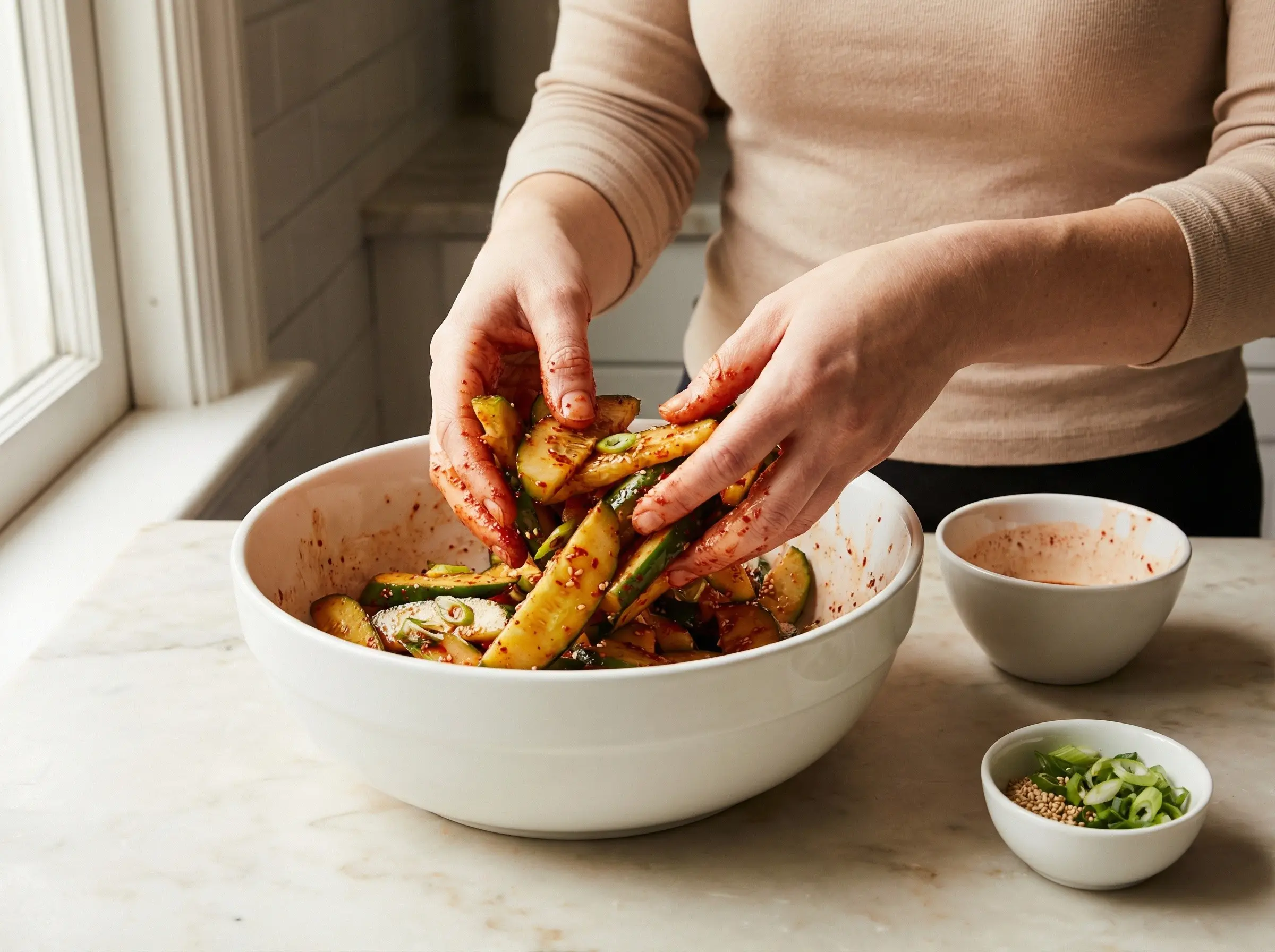
Pour the prepared dressing over the cucumbers. Add the sliced green onions (reserving some for garnish) and about two-thirds of the sesame seeds. Using your hands or two spoons, toss everything together gently but thoroughly, making sure each cucumber piece is evenly coated with the vibrant red dressing. The hands-on approach is traditional and allows you to feel when the cucumbers are properly dressed. Taste and adjust seasoning - you may want more salt, more sesame oil, or more gochugaru depending on your preference.
Step 6
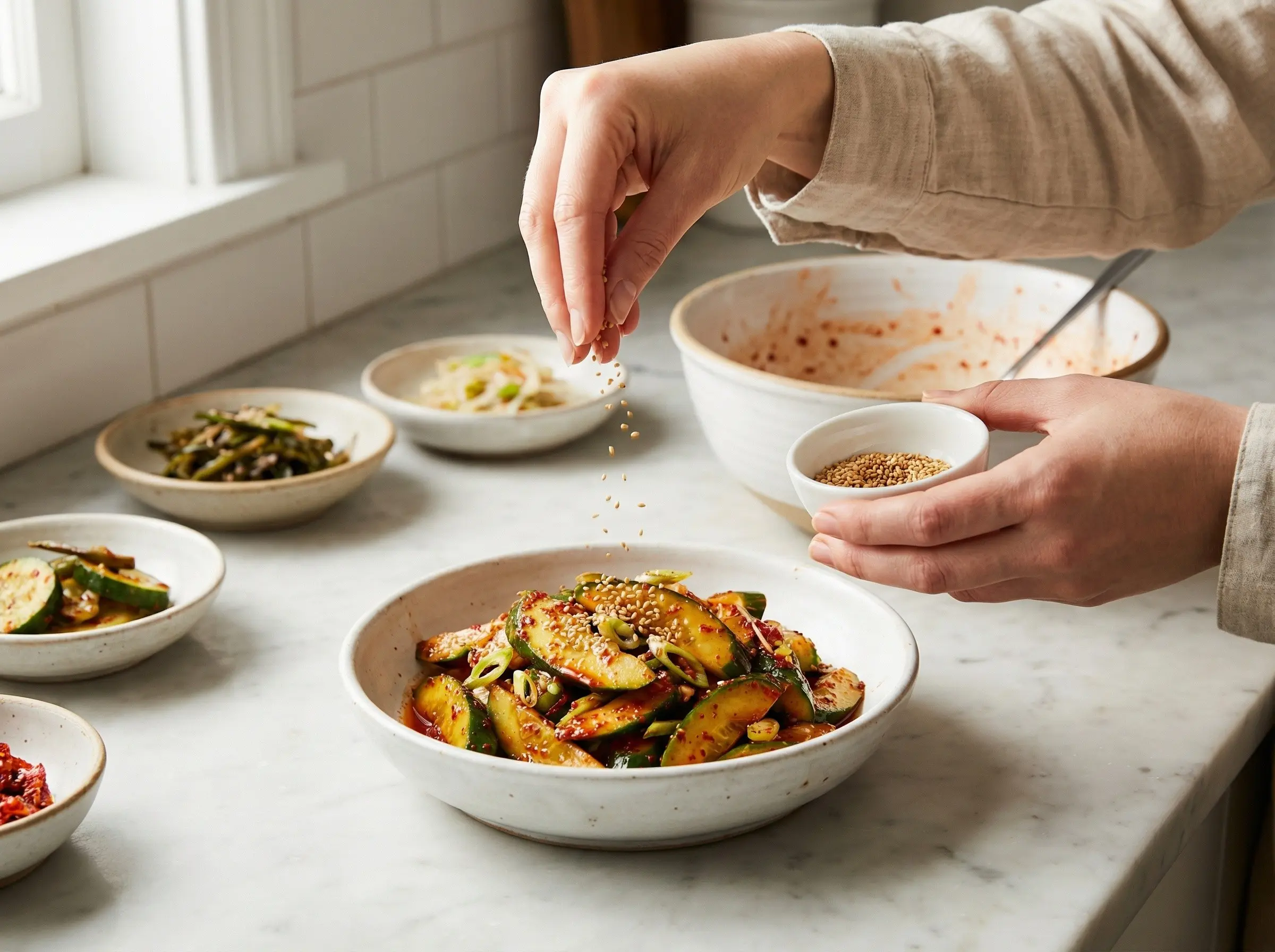
Transfer the oi muchim to a serving bowl or plate. Garnish with the reserved green onions and remaining sesame seeds. For the best texture, serve immediately while the cucumbers are still crisp and crunchy. Oi muchim can be refrigerated for a few hours if needed, but the cucumbers will continue to release moisture and soften over time - it is best eaten within 4-6 hours of preparation. Serve as part of a Korean meal alongside rice, soup, and other banchan, or as a refreshing side dish with any Asian-inspired meal. Oi muchim is particularly wonderful alongside rich, fatty dishes like samgyeopsal (grilled pork belly), bulgogi, or Korean fried chicken, where its cool crunch and tangy spice provide the perfect contrast.
You Might Also Like
Master Your Kitchen with PantryAI
Love this recipe? Save it, shop for it, and cook it with ease. Download the PantryAI app to organize your pantry, track expirations, and discover recipes based on what you already have.

On a computer?Scan with your iPhone camera to download PantryAI.








Swipe to see more screenshots