
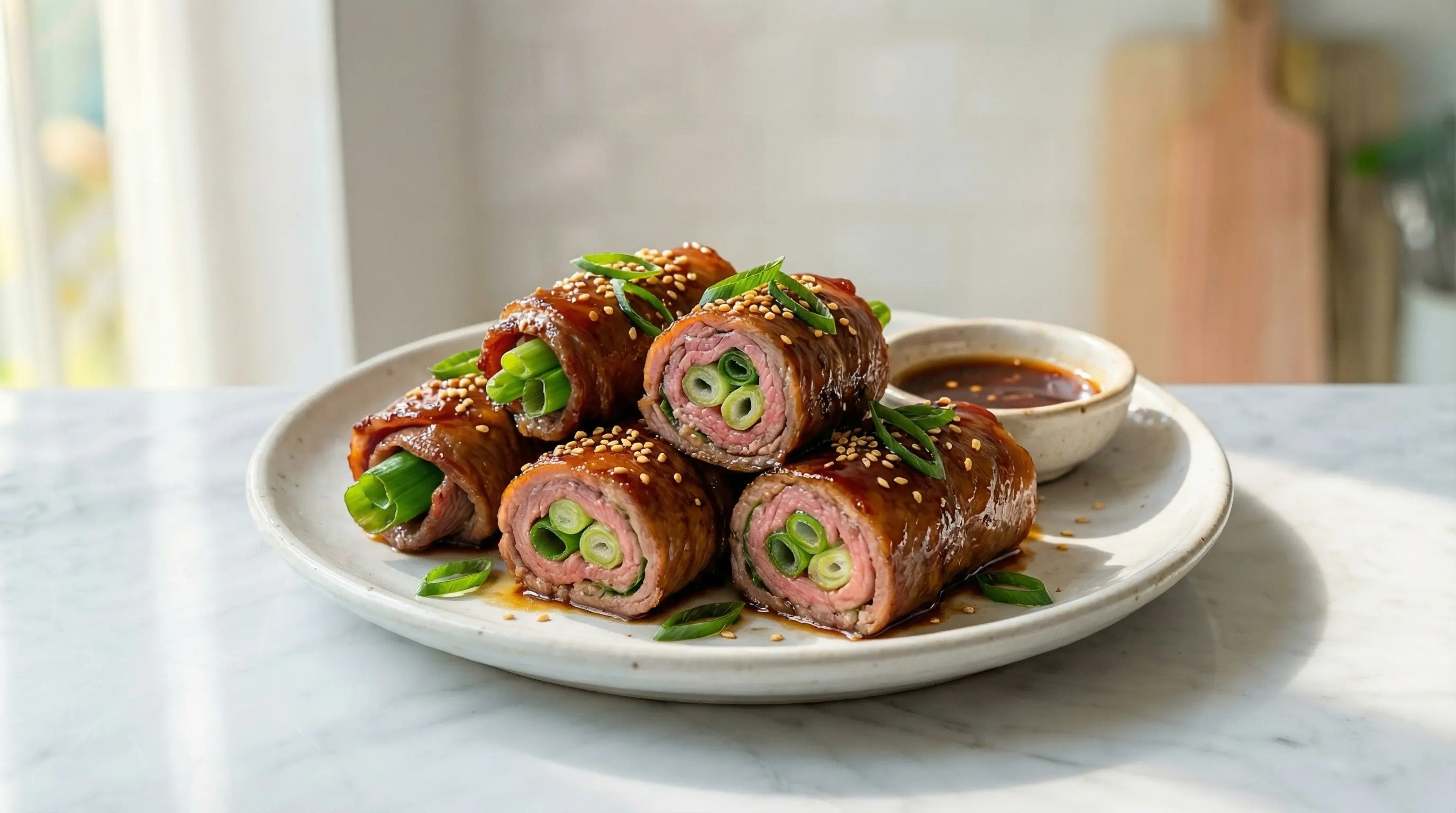
Negimaki
Learn how to make negimaki, tender Japanese beef rolls stuffed with scallions and glazed with sweet teriyaki sauce. This elegant appetizer is perfect for special occasions!
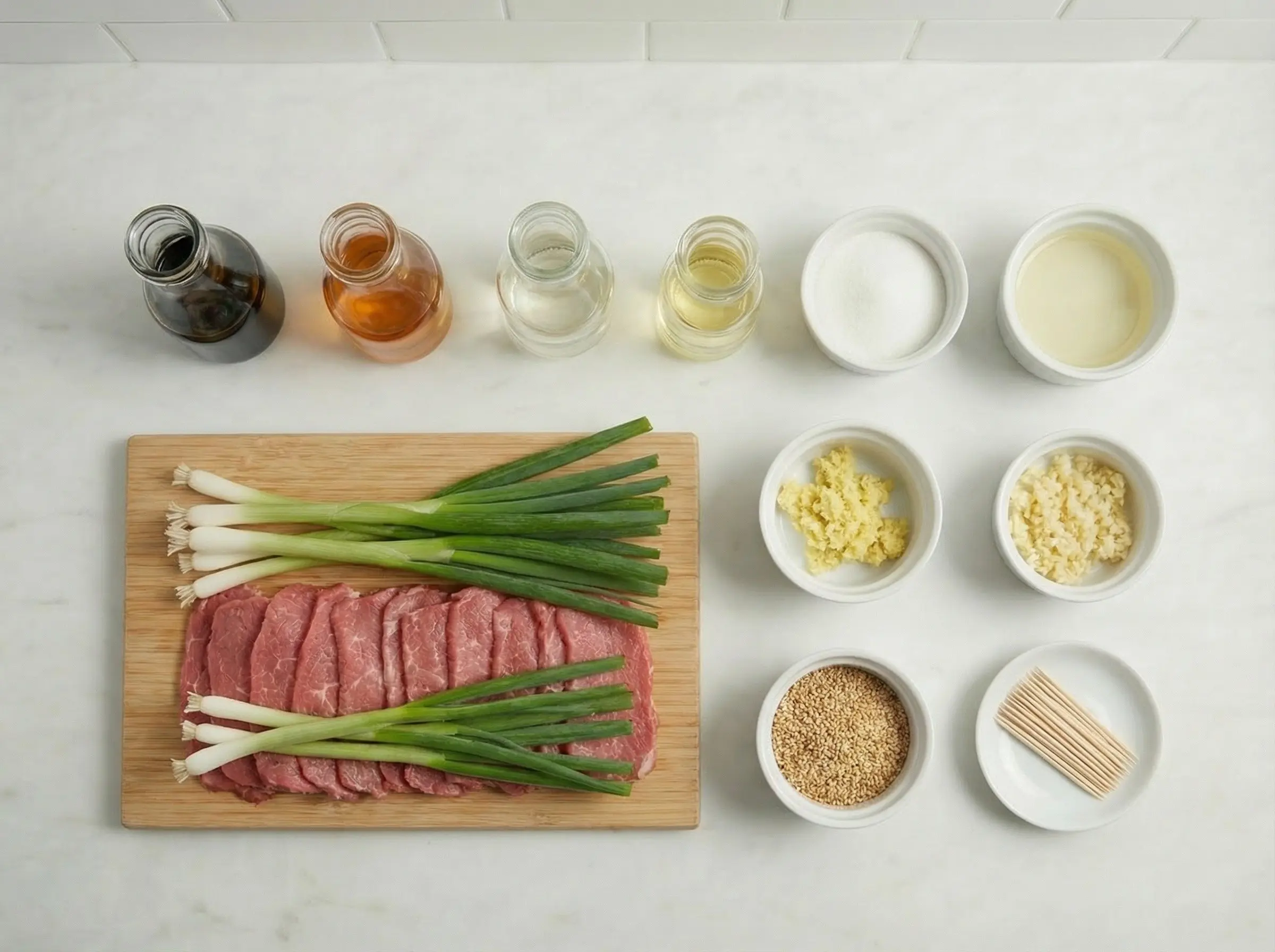
Ingredients
The Story
Negimaki is a classic Japanese dish that showcases the elegant simplicity of Japanese cuisine - thinly sliced beef wrapped around crisp scallions and glazed with a sweet-savory sauce. The name is straightforward: "negi" means scallion or green onion, and "maki" means roll, perfectly describing this beautiful preparation. While negimaki has become a staple of Japanese steakhouses and sushi restaurants worldwide, particularly in America, its roots lie in the Japanese tradition of wrapping vegetables in thin slices of meat - a technique that transforms simple ingredients into something visually stunning and delicious. The dish emerged from the broader Japanese culinary tradition of yakitori and kushiyaki (grilled skewered foods), where bite-sized portions of meat and vegetables are grilled over charcoal and glazed with tare sauce. Negimaki takes this concept off the skewer, rolling the beef around the scallions to create a more substantial and elegant presentation. The technique became particularly popular in Japanese-American restaurants during the 1970s and 1980s, where chefs sought to create impressive appetizers that highlighted the quality of Japanese beef and the umami-rich flavors of teriyaki-style glazes. Today, negimaki appears on menus ranging from casual izakayas to upscale Japanese steakhouses. What makes negimaki so appealing is the interplay of flavors and textures in every bite. The beef should be sliced thin enough to be tender when quickly seared, yet substantial enough to hold the scallion filling securely. The scallions provide a fresh, slightly sharp contrast to the rich beef, with a satisfying crunch that softens just slightly during cooking. The teriyaki-style glaze - a reduction of soy sauce, mirin, sake, and sugar - caramelizes on the surface of the beef, creating a glossy, lacquered finish that is both beautiful and intensely flavorful. Sliced on the bias to reveal the spiral of green scallion inside the pink-centered beef, negimaki is as much a feast for the eyes as for the palate.
Instructions
Step 1
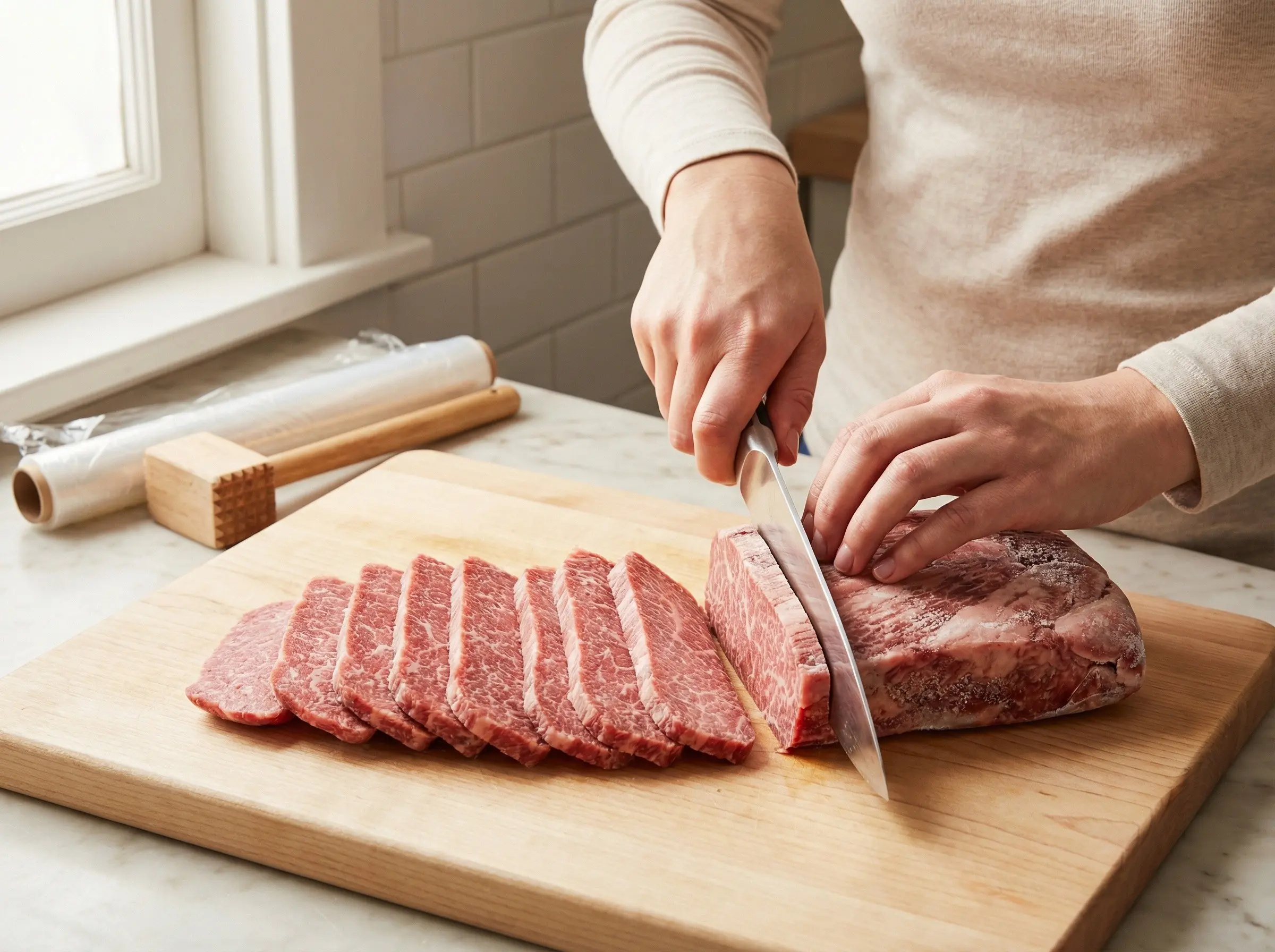
Prepare the beef by slicing it very thin - about 1/8 inch thick - against the grain. The easiest way to achieve thin, even slices is to partially freeze the beef for 1-2 hours until firm but not solid. Slice into pieces roughly 4-5 inches long and 2-3 inches wide. If the pieces are too small, you can slightly overlap two pieces to form a larger wrapper. Alternatively, ask your butcher to slice the beef thinly for you, or purchase pre-sliced beef marketed for sukiyaki, shabu-shabu, or bulgogi. Lay the slices flat between sheets of plastic wrap and pound gently with a meat mallet if needed to achieve even thickness.
Step 2
Prepare the scallions. Trim off the root ends and remove any wilted outer layers. Cut the scallions so they are about 4 inches long - you want them to extend just slightly beyond the edges of the beef when rolled. Use mostly the white and light green parts for the filling, as they have better texture and milder flavor. You can reserve the dark green tops for garnish. You will need 3-4 scallion pieces per roll, depending on their thickness. Keep the scallions bundled together in small groups for easy rolling.
Step 3
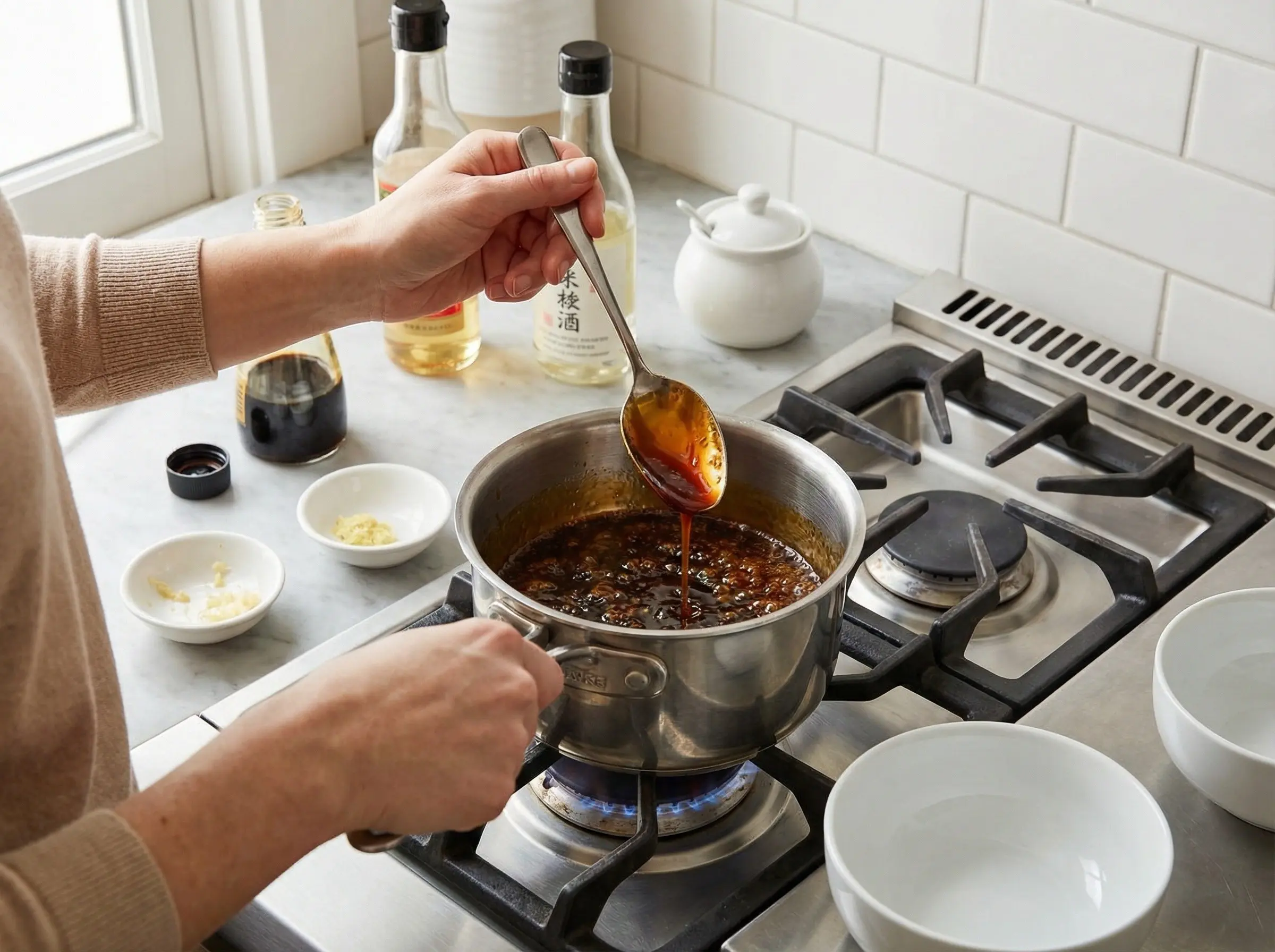
Make the teriyaki glaze. In a small saucepan, combine the soy sauce, mirin, sake, sugar, grated ginger, and minced garlic. Bring to a simmer over medium heat, stirring until the sugar dissolves. Let the sauce simmer for 3-5 minutes until it reduces slightly and becomes syrupy enough to coat the back of a spoon. The glaze will thicken further as it cools and again when it caramelizes on the beef. Set aside half of the glaze for brushing on the cooked rolls, and keep the other half for basting during cooking.
Step 4
Assemble the negimaki rolls. Lay a slice of beef flat on your work surface. Place 3-4 scallion pieces at one end of the beef, perpendicular to the length of the slice, allowing the ends to stick out slightly on both sides. Season the beef lightly with salt and pepper if desired. Roll the beef tightly around the scallions, starting from the end where the scallions are placed. Secure each roll with a toothpick through the center to prevent unraveling during cooking. Repeat with the remaining beef and scallions. You should get about 10-12 rolls depending on the size of your beef slices.
Step 5
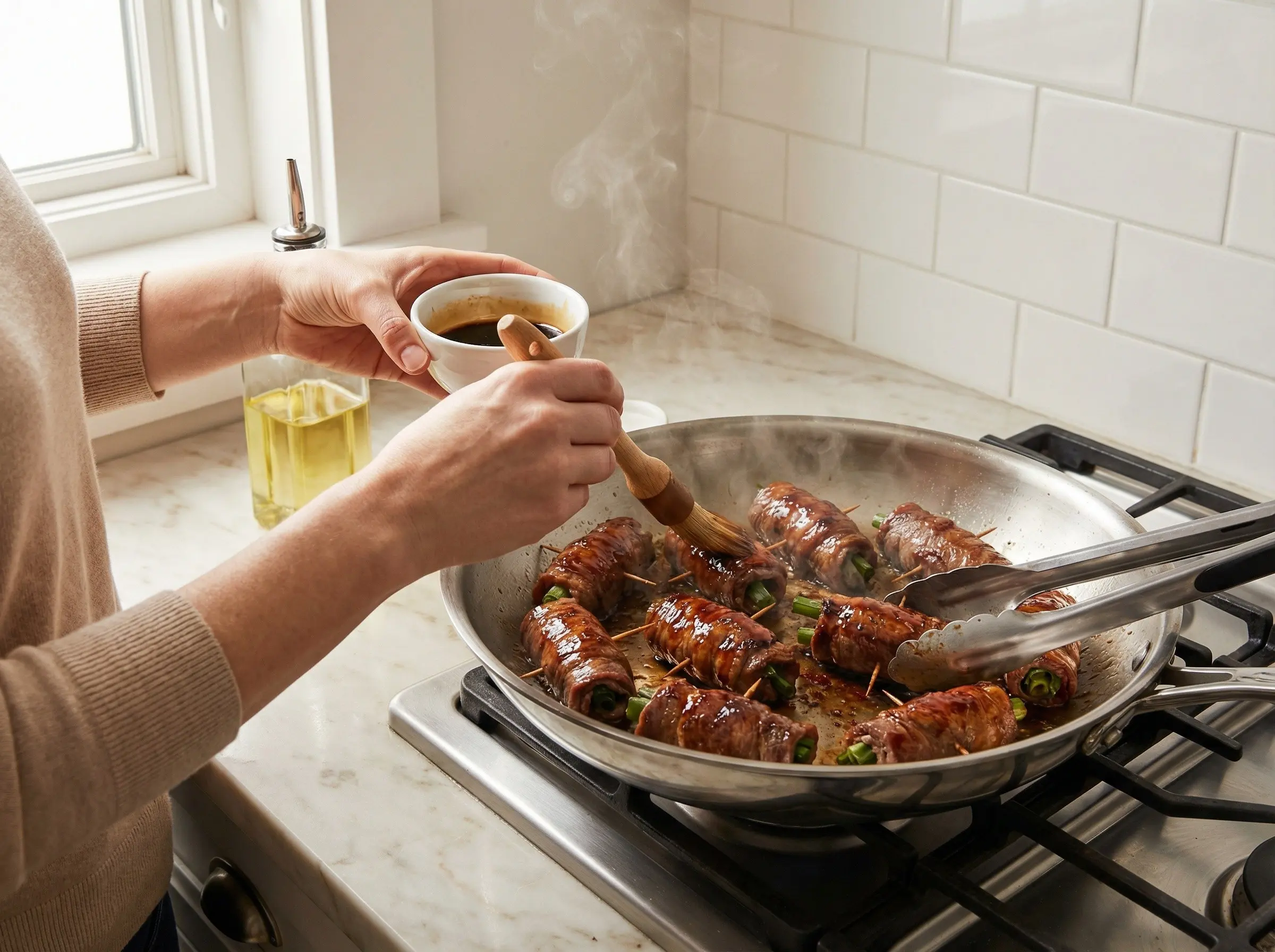
Cook the negimaki. Heat the vegetable oil in a large skillet or grill pan over medium-high heat until shimmering. Place the rolls seam-side down in the pan - this helps seal them closed. Cook for 2-3 minutes until the bottom is nicely browned and caramelized. Turn the rolls and brush the cooked side with the teriyaki glaze. Continue cooking and turning, brushing with glaze each time, for another 4-5 minutes total until all sides are browned and glazed and the beef is cooked to medium or your desired doneness. The glaze should caramelize and become sticky and lacquered on the surface.
Step 6
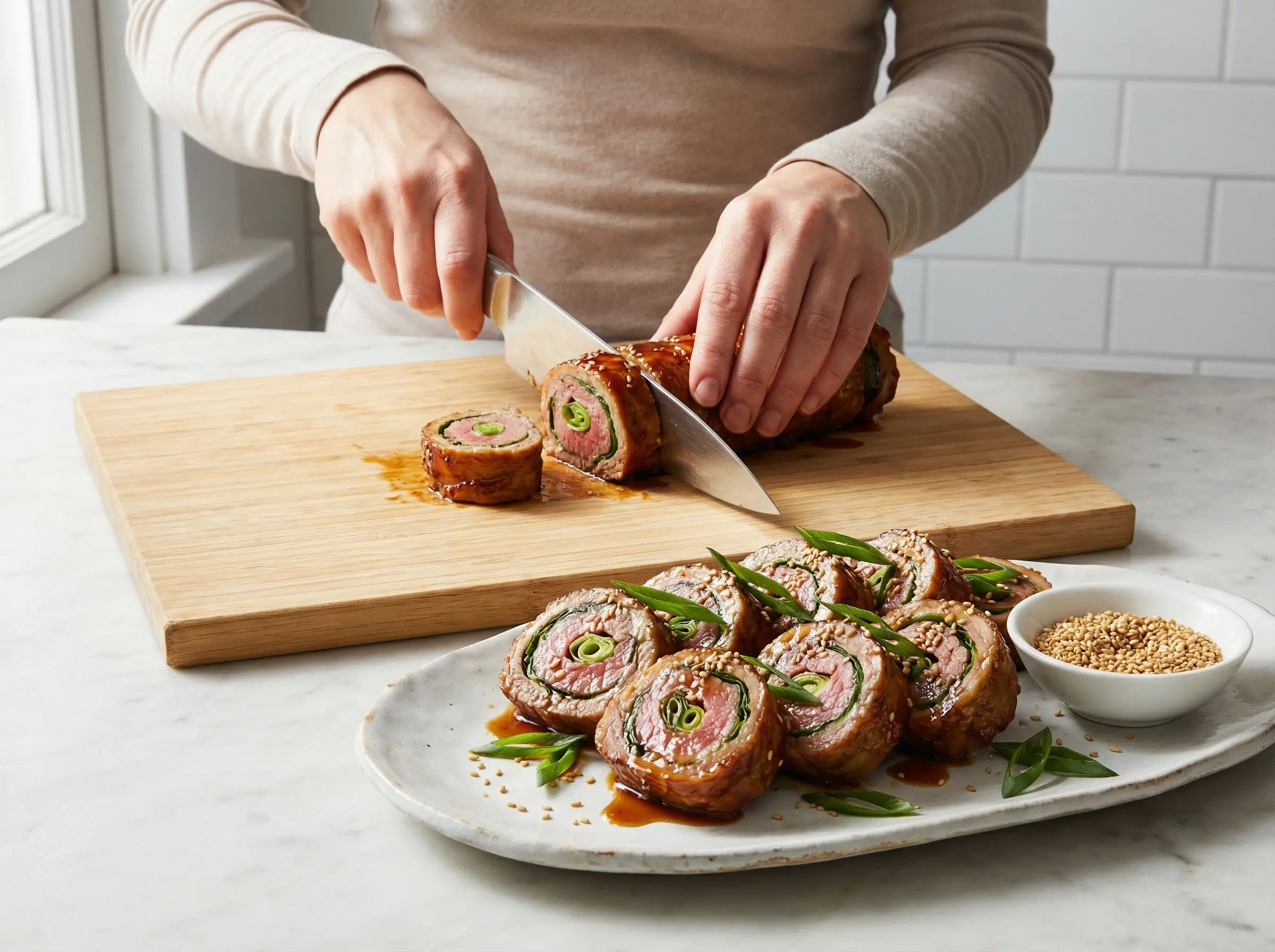
Remove the negimaki from the pan and let rest for 2-3 minutes. Remove the toothpicks carefully. Slice each roll on the bias (at a 45-degree angle) into 3-4 pieces, revealing the beautiful spiral of green scallion inside the pink-centered beef. Arrange the sliced pieces cut-side up on a serving platter to showcase the interior. Drizzle with the reserved teriyaki glaze and sprinkle with toasted sesame seeds. Garnish with the reserved dark green scallion tops, thinly sliced, if desired. Serve immediately as an appetizer or as part of a Japanese meal with steamed rice. Negimaki can also be served on a bed of shredded cabbage or alongside a simple cucumber salad. The rolls are best eaten right away while the glaze is still sticky and the scallions retain their crunch.
You Might Also Like
Master Your Kitchen with PantryAI
Love this recipe? Save it, shop for it, and cook it with ease. Download the PantryAI app to organize your pantry, track expirations, and discover recipes based on what you already have.

On a computer?Scan with your iPhone camera to download PantryAI.








Swipe to see more screenshots