
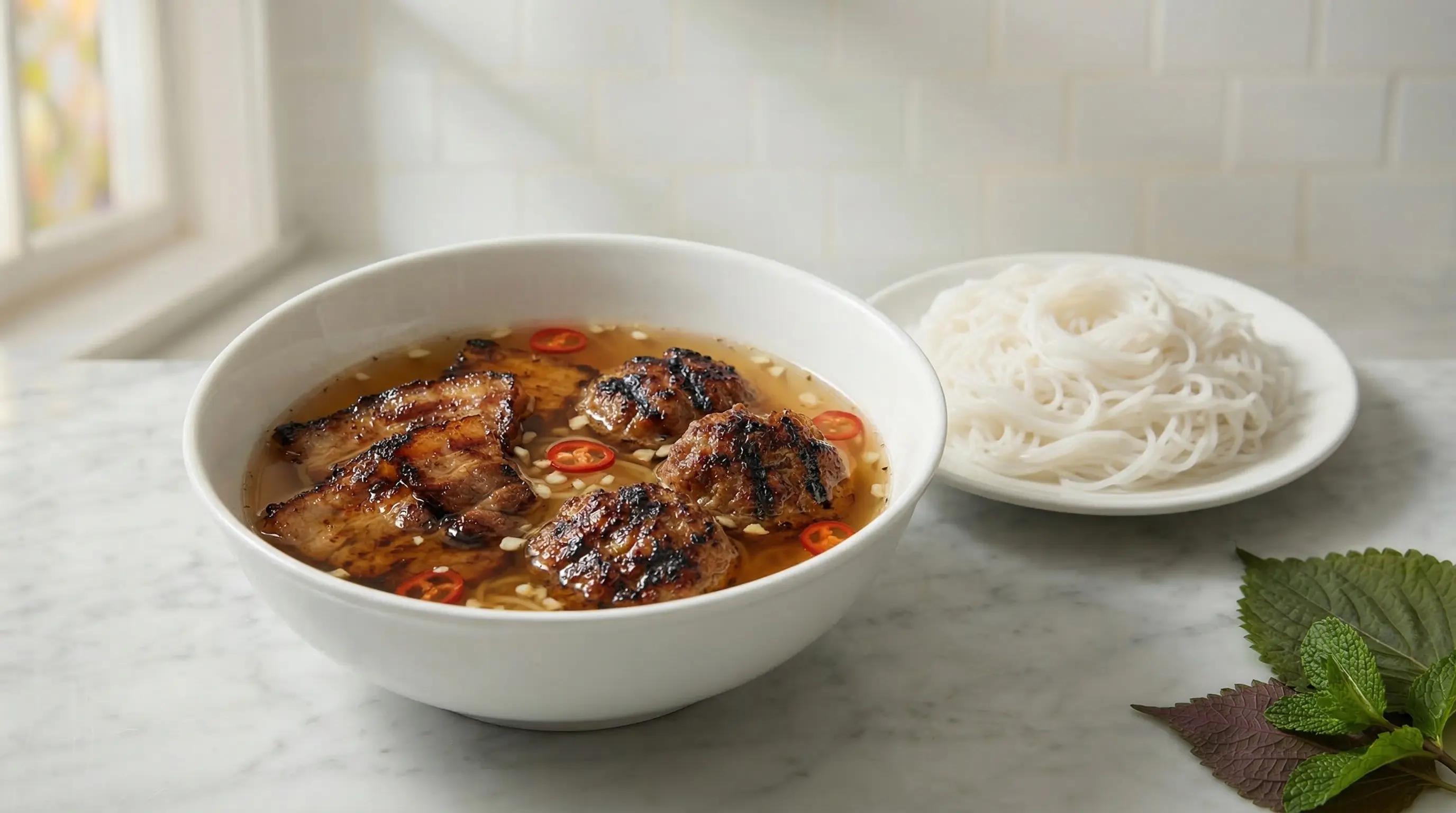
Bun Cha
Learn how to make authentic bun cha, Hanoi's beloved grilled pork and noodle dish with sweet-sour dipping sauce. This iconic Vietnamese street food is smoky, fresh, and President Obama's favorite!
Ingredients
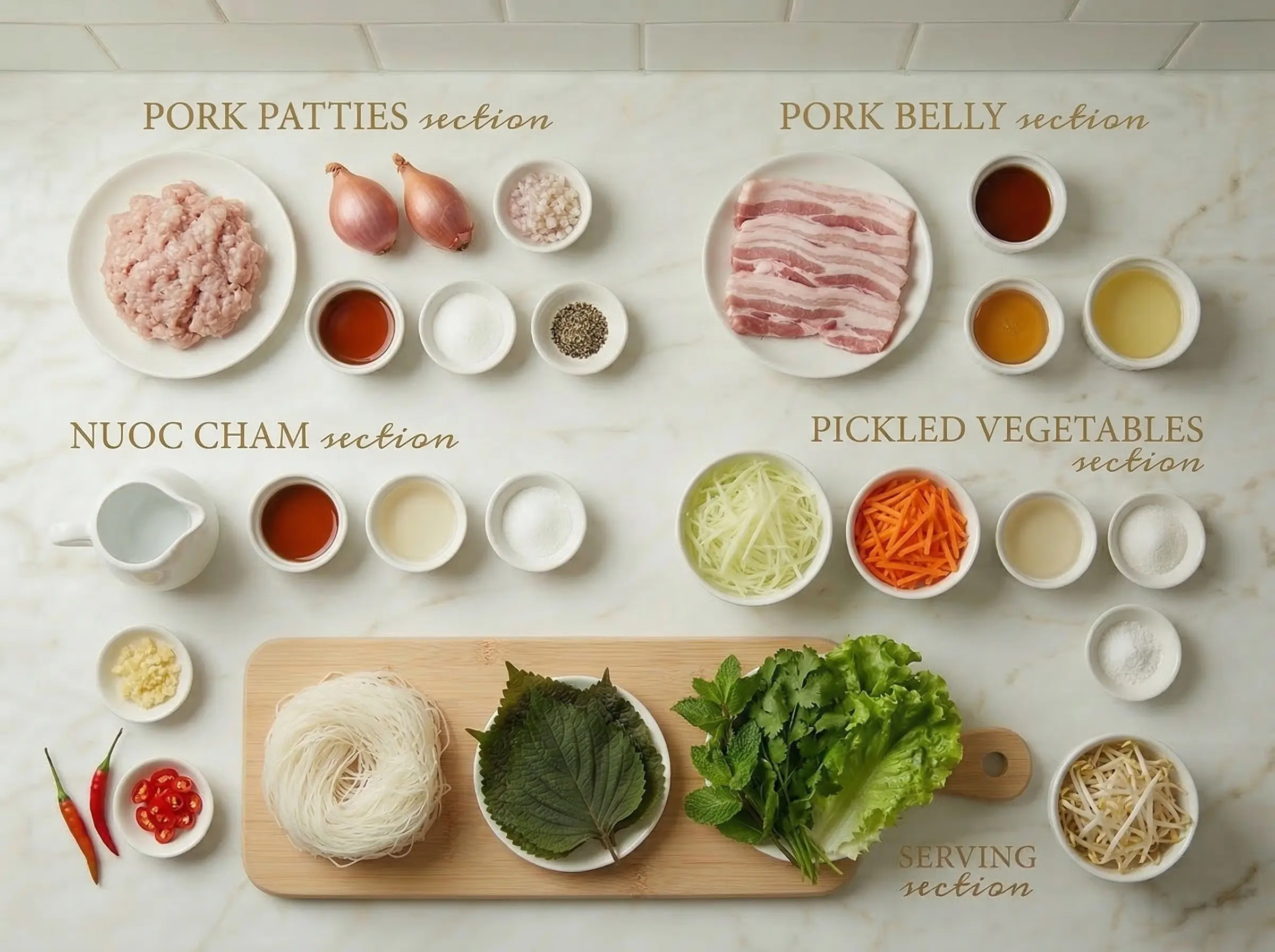
The Story
Bun cha is the quintessential dish of Hanoi, a deceptively simple combination of charcoal-grilled pork, rice vermicelli, fresh herbs, and a sweet-sour dipping broth that embodies the elegance and balance of northern Vietnamese cuisine. Unlike the bold, herb-heavy dishes of the south, Hanoi's cuisine tends toward subtlety and restraint, and bun cha is its perfect ambassador. The dish consists of two types of pork - fatty slices and seasoned patties - grilled over charcoal until smoky and caramelized, served swimming in a light broth of nuoc cham punctuated with pickled papaya and carrot. Rice noodles and a mountain of fresh herbs accompany the meat, allowing each diner to build their perfect bite. Bun cha achieved international fame in 2016 when President Barack Obama sat down with Anthony Bourdain at Bun Cha Huong Lien, a humble Hanoi restaurant, and shared a meal that was broadcast around the world. The restaurant, now known as "Bun Cha Obama," has preserved the table and stools where they sat, and displays photos of the visit. But bun cha's fame in Vietnam long predates this celebrity moment. The dish has been a Hanoi institution for generations, served from small shops and street stalls throughout the city, particularly around noon when the smoke from countless charcoal grills creates a haze over the old quarter. Hanoi locals are fiercely proud of their bun cha, and debates about the best shops are constant. What makes bun cha so extraordinary is the interplay of temperatures, textures, and flavors that come together in the bowl. The pork must be grilled over charcoal - no other method captures the smoky, slightly charred flavor that defines authentic bun cha. The meat is served still sizzling, dropped into a bowl of room-temperature nuoc cham that simultaneously cools the pork and warms the sauce. The rice noodles are served separately, at room temperature, to be dipped into the broth or added to the bowl. Fresh herbs - perilla, mint, coriander, and lettuce - add brightness and contrast. Pickled vegetables provide sweet-sour crunch. The proper technique is to take some noodles with chopsticks, dip them in the broth, add a piece of pork and some herbs, and eat all together. Each bite is a harmony of smoky, sweet, sour, salty, and fresh.
Instructions
Step 1
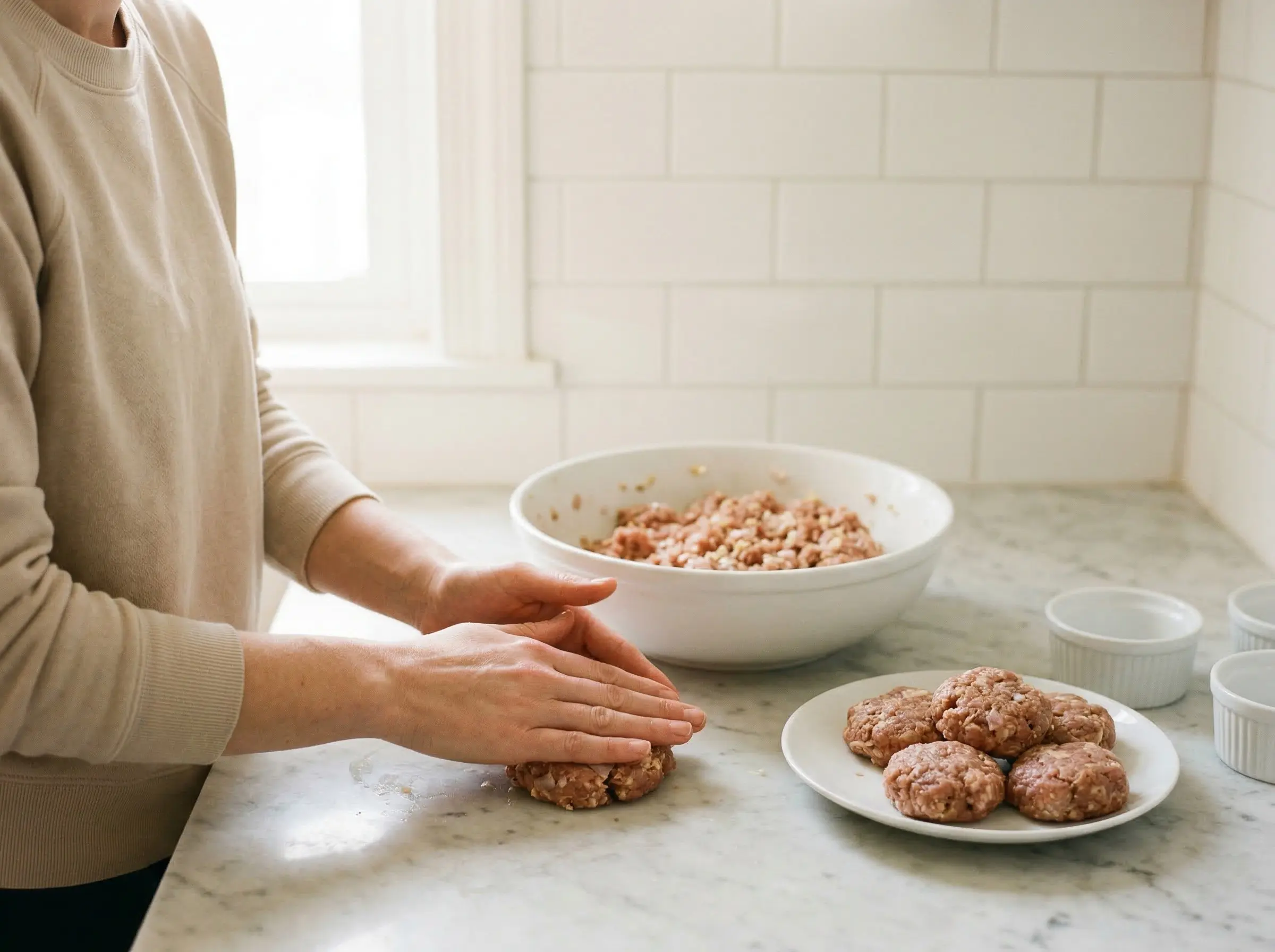
Make the pork patties. In a bowl, combine the ground pork with minced shallots, garlic, fish sauce, sugar, and black pepper. Mix thoroughly with your hands until the mixture is well combined and slightly sticky. The sugar and fish sauce will help caramelize on the grill. Form into small flattened patties, about 2 inches in diameter and 1/2 inch thick - they should be rustic, not perfectly shaped. Cover and refrigerate for at least 30 minutes to let the flavors meld.
Step 2
Marinate the pork belly. Slice the pork belly into thin strips, about 1/4 inch thick. In a bowl, combine the pork belly with fish sauce, honey, and vegetable oil. Toss to coat evenly. Let marinate for at least 30 minutes, or up to overnight in the refrigerator. The honey will help create caramelization and the characteristic sticky-sweet crust.
Step 3
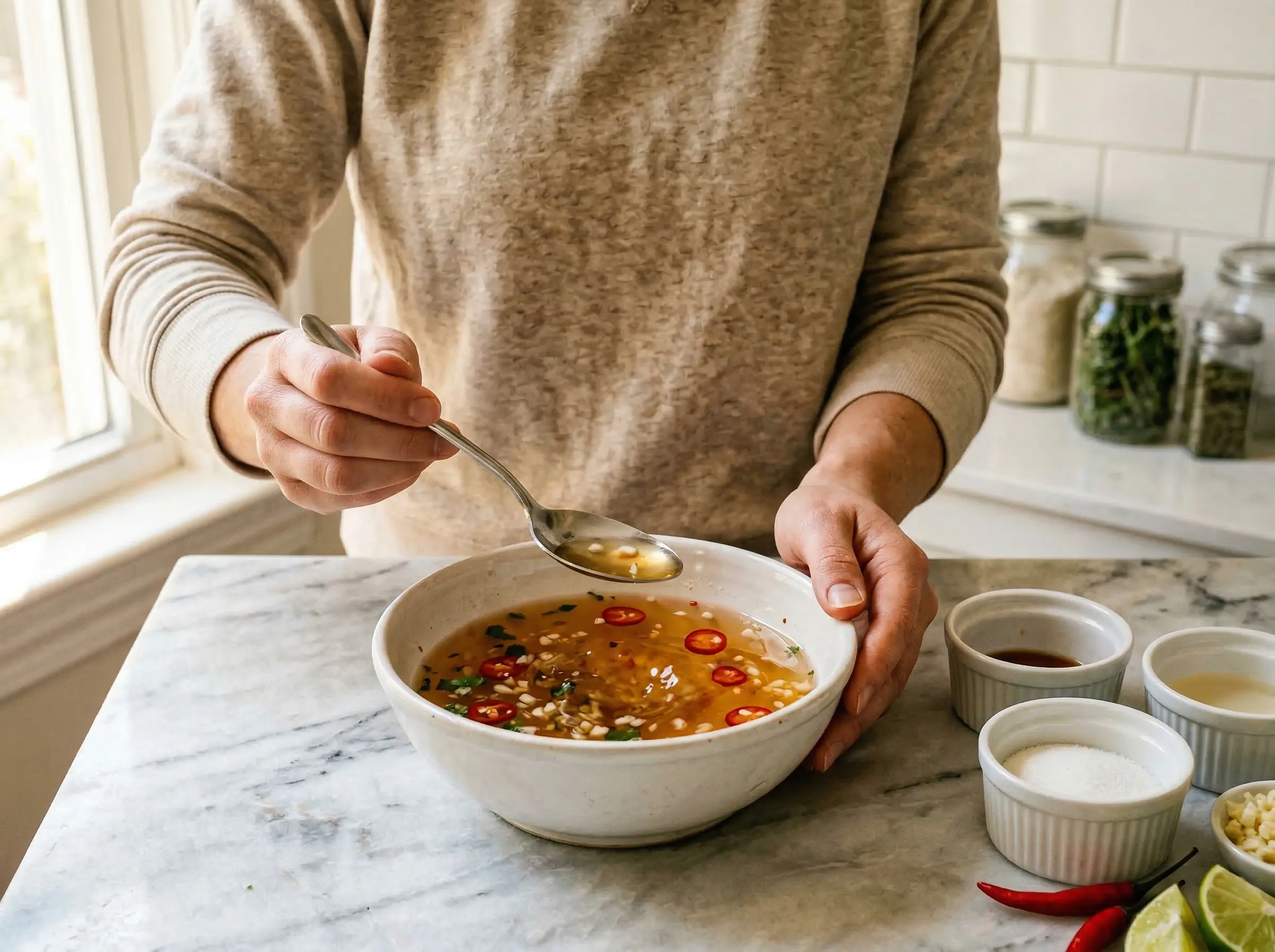
Make the nuoc cham dipping broth. In a bowl, combine the warm water with sugar, stirring until the sugar completely dissolves. Add the fish sauce and rice vinegar, then stir in the minced garlic and sliced chilies. Taste and adjust - the broth should be well-balanced between sweet, sour, salty, and spicy, with no single element dominating. Let sit for at least 15 minutes to allow the garlic and chili to infuse. This sauce is served at room temperature, not chilled.
Step 4
Prepare the pickled vegetables. Combine the julienned papaya (or daikon) and carrot in a bowl with rice vinegar, sugar, and a pinch of salt. Toss to combine and let sit for at least 20 minutes until slightly softened and pickled. These provide essential sweet-sour crunch in the dish. Green papaya is traditional but daikon or kohlrabi work well.
Step 5
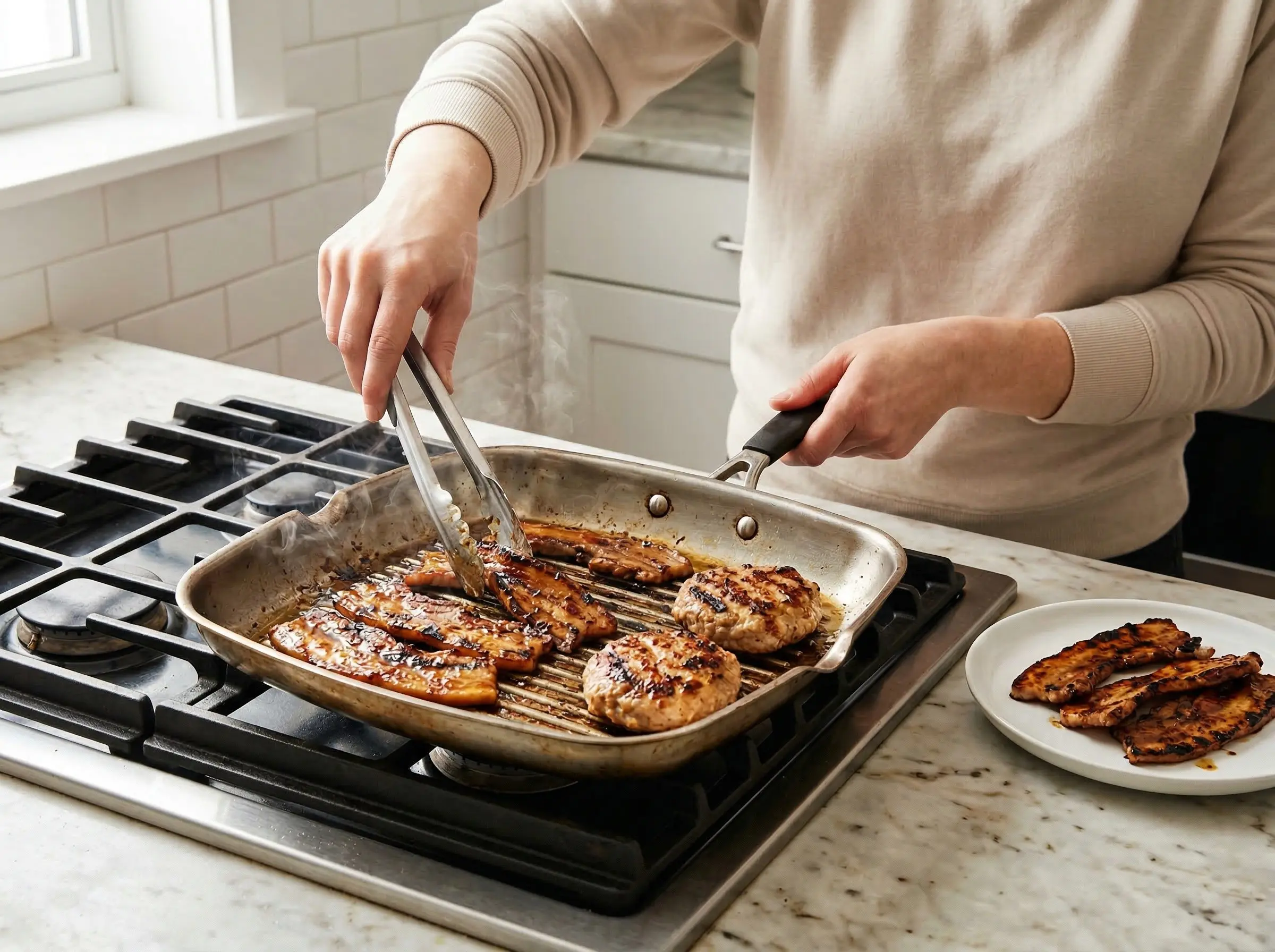
Grill the pork. For authentic flavor, grill over charcoal - this smoky char is what defines bun cha. If using a gas grill or grill pan, get it very hot. Grill the pork belly slices for 2-3 minutes per side until caramelized and slightly charred. Grill the patties for 3-4 minutes per side until cooked through with good grill marks. The fat from the pork belly should drip and cause flare-ups that add smokiness. Work in batches to avoid overcrowding. Keep warm while you grill the remaining pieces.
Step 6
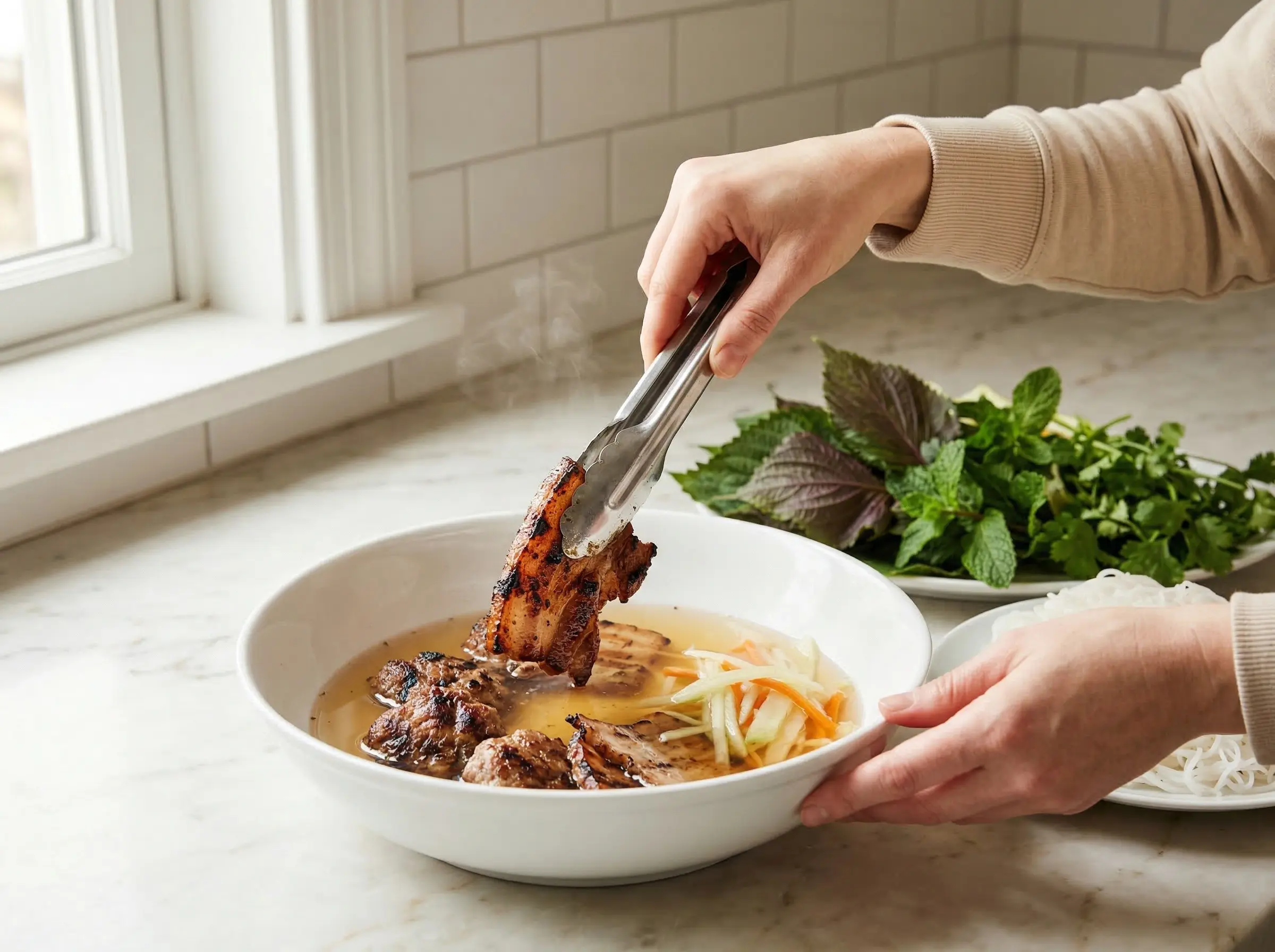
Assemble and serve. Cook the rice vermicelli according to package directions, rinse with cold water, and drain well. Arrange the fresh herbs, lettuce leaves, and bean sprouts on a platter. Divide the nuoc cham among individual dipping bowls. Add a few pieces of pickled vegetables to each bowl. Transfer the hot grilled pork directly into the bowls of nuoc cham - the pork should sizzle slightly when it hits the room-temperature sauce. Serve immediately with the noodles and herb platter on the side. The proper way to eat bun cha is to take some noodles with chopsticks, dip them in the broth with the pork, wrap with herbs and lettuce if desired, and eat together. Each bite should combine smoky pork, sweet-sour broth, soft noodles, and fresh herbs. Bun cha is traditionally a lunch dish in Hanoi, eaten between 11 AM and 2 PM when the grills are hottest and the smoke fills the streets.
You Might Also Like
Master Your Kitchen with PantryAI
Love this recipe? Save it, shop for it, and cook it with ease. Download the PantryAI app to organize your pantry, track expirations, and discover recipes based on what you already have.

On a computer?Scan with your iPhone camera to download PantryAI.








Swipe to see more screenshots