
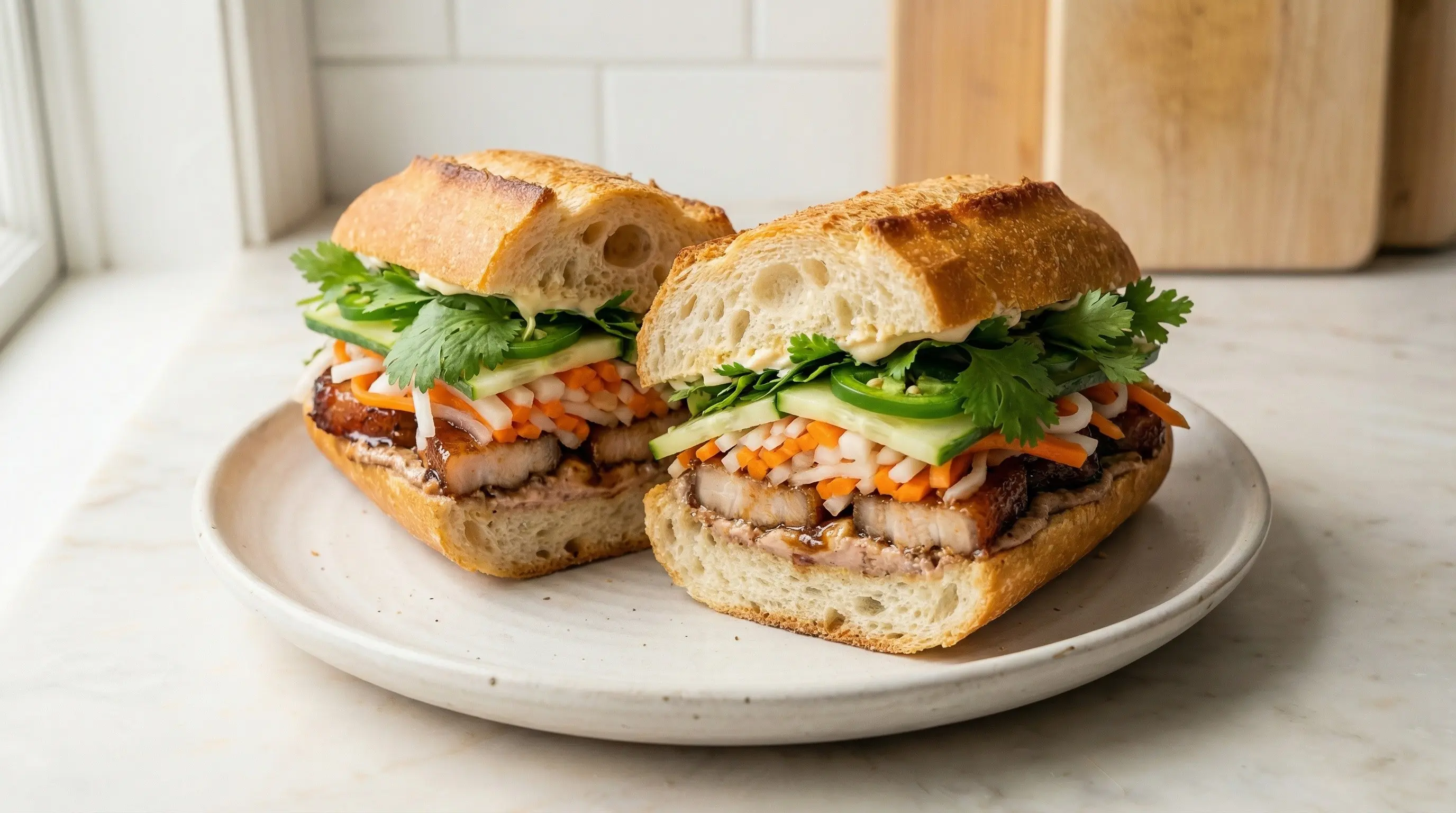
Banh Mi
Learn how to make authentic banh mi, the iconic Vietnamese sandwich with crispy baguette, savory meat, pickled vegetables, and fresh herbs. This perfect fusion of French and Vietnamese flavors is irresistible!
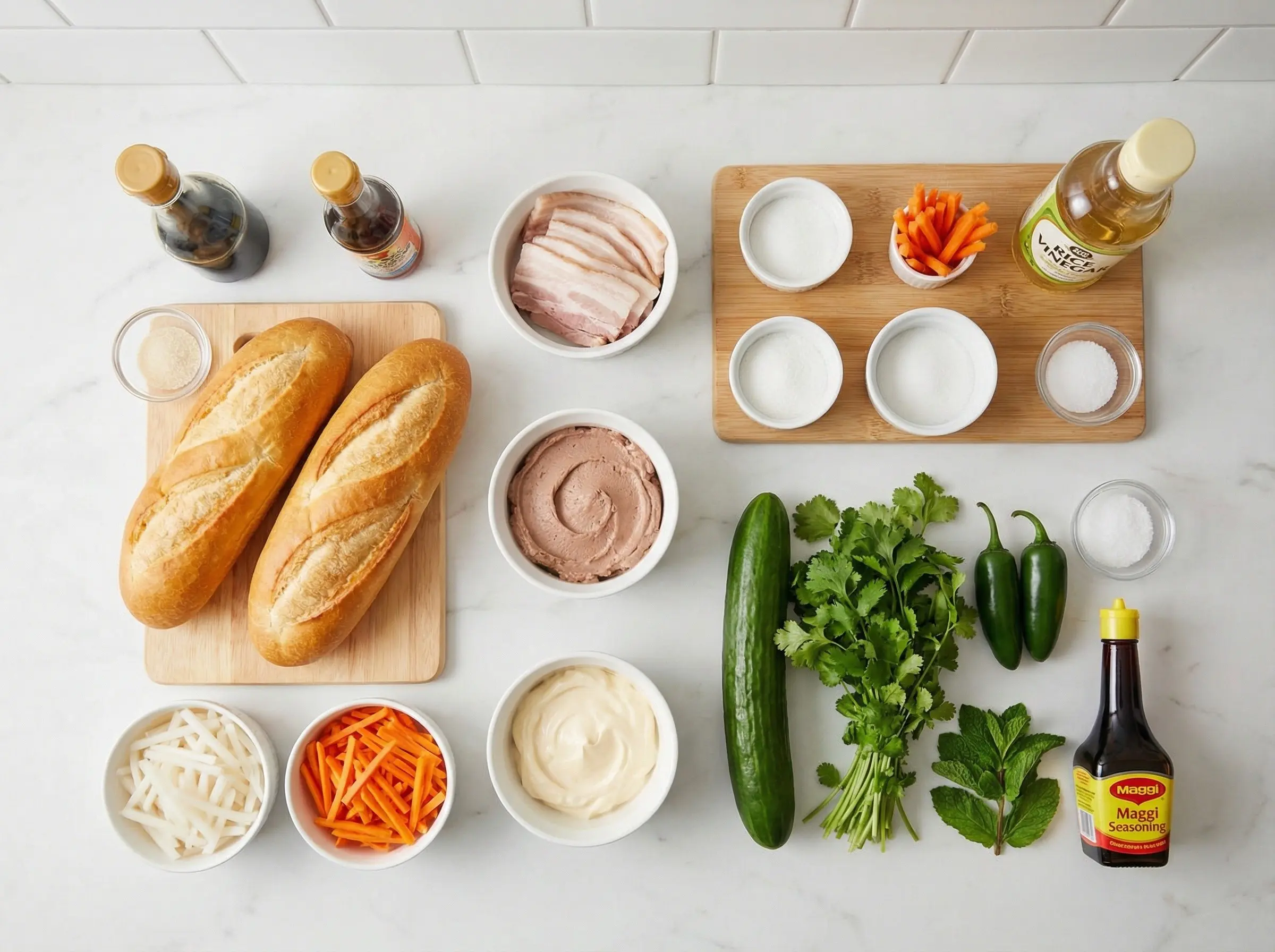
Ingredients
The Story
Banh mi is one of the world's great sandwiches and a perfect example of culinary fusion born from colonial history. The story begins in the mid-19th century when France colonized Vietnam and introduced the baguette to Southeast Asia. Vietnamese bakers adapted the French bread to local conditions and tastes, creating a lighter, airier version with a thinner, crispier crust - made possible by substituting some wheat flour with rice flour. For decades, banh mi simply meant "bread" in Vietnamese, and the baguette was eaten in the French style with butter and pate. But after Vietnam gained independence in 1954 and especially after the fall of Saigon in 1975, the sandwich evolved into something entirely new and uniquely Vietnamese. The transformation of banh mi from simple French-style sandwich to the iconic Vietnamese creation we know today happened primarily in Saigon (now Ho Chi Minh City) during the 1950s and 1960s. Street vendors began adding Vietnamese ingredients to the basic combination of bread, pate, and cold cuts: do chua (pickled daikon and carrot), fresh cilantro, sliced chilies, and cucumber. The result was a harmonious marriage of French technique and Vietnamese flavors - rich pate and mayonnaise balanced by bright, crunchy pickled vegetables, fresh herbs providing aromatic lift, and chilies adding heat. After 1975, Vietnamese refugees brought banh mi to communities around the world, and it has since become a global phenomenon, beloved for its perfect balance of flavors and textures. What makes banh mi so extraordinary is how every element works in concert to create something greater than the sum of its parts. The bread must be perfect - shatteringly crisp on the outside yet light and airy within, sturdy enough to hold the fillings but not so dense as to overwhelm them. The protein layer - traditionally a combination of pate, Vietnamese cold cuts, and mayonnaise - provides richness and umami depth. The do chua (pickled vegetables) delivers crucial acidity and crunch that cuts through the richness. Fresh cilantro and sometimes mint add brightness and herbal complexity. Sliced jalapenos or fresh chilies contribute heat. Cucumber adds cool crispness. When you bite into a properly made banh mi, you experience an explosion of textures and flavors: crispy, soft, crunchy, creamy, savory, tangy, fresh, and spicy all at once. It is street food perfection.
Instructions
Step 1
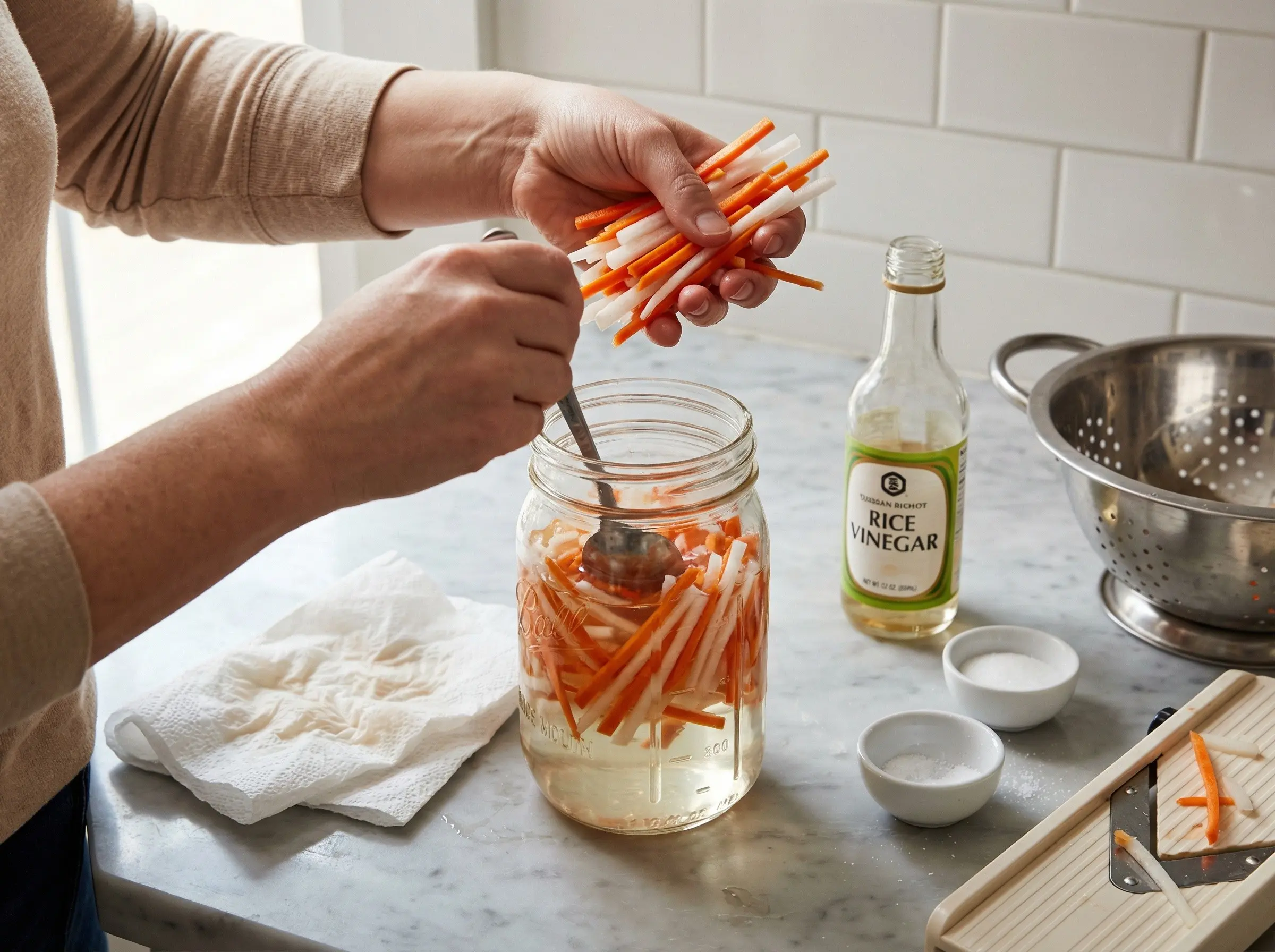
Make the do chua (pickled vegetables) first - they need time to pickle and are essential to authentic banh mi. Julienne the daikon radish and carrots into thin matchsticks about 2-3 inches long. Place them in a colander, sprinkle with the salt, and let sit for 15 minutes to draw out excess moisture. Gently squeeze out the liquid - this helps the vegetables stay crunchy and absorb the pickling brine better. In a bowl or jar, dissolve the sugar in the rice vinegar, stirring until completely dissolved. Add the squeezed vegetables and toss to coat. Let pickle for at least 30 minutes, or refrigerate for up to 2 weeks. The longer they pickle, the more flavorful they become.
Step 2
Prepare the protein. For classic pork belly banh mi, slice the pork belly into thin pieces about 1/4 inch thick. Season with soy sauce, fish sauce, and sugar. Cook in a hot skillet over medium-high heat for 2-3 minutes per side until caramelized and cooked through. The edges should be slightly crispy and glazed. Alternatively, use pre-cooked Vietnamese cold cuts (cha lua/pork roll, gio thu/head cheese) sliced thin, grilled lemongrass pork, or grilled chicken. For a traditional combination, use both pate and cold cuts or pork together. Set the cooked protein aside.
Step 3
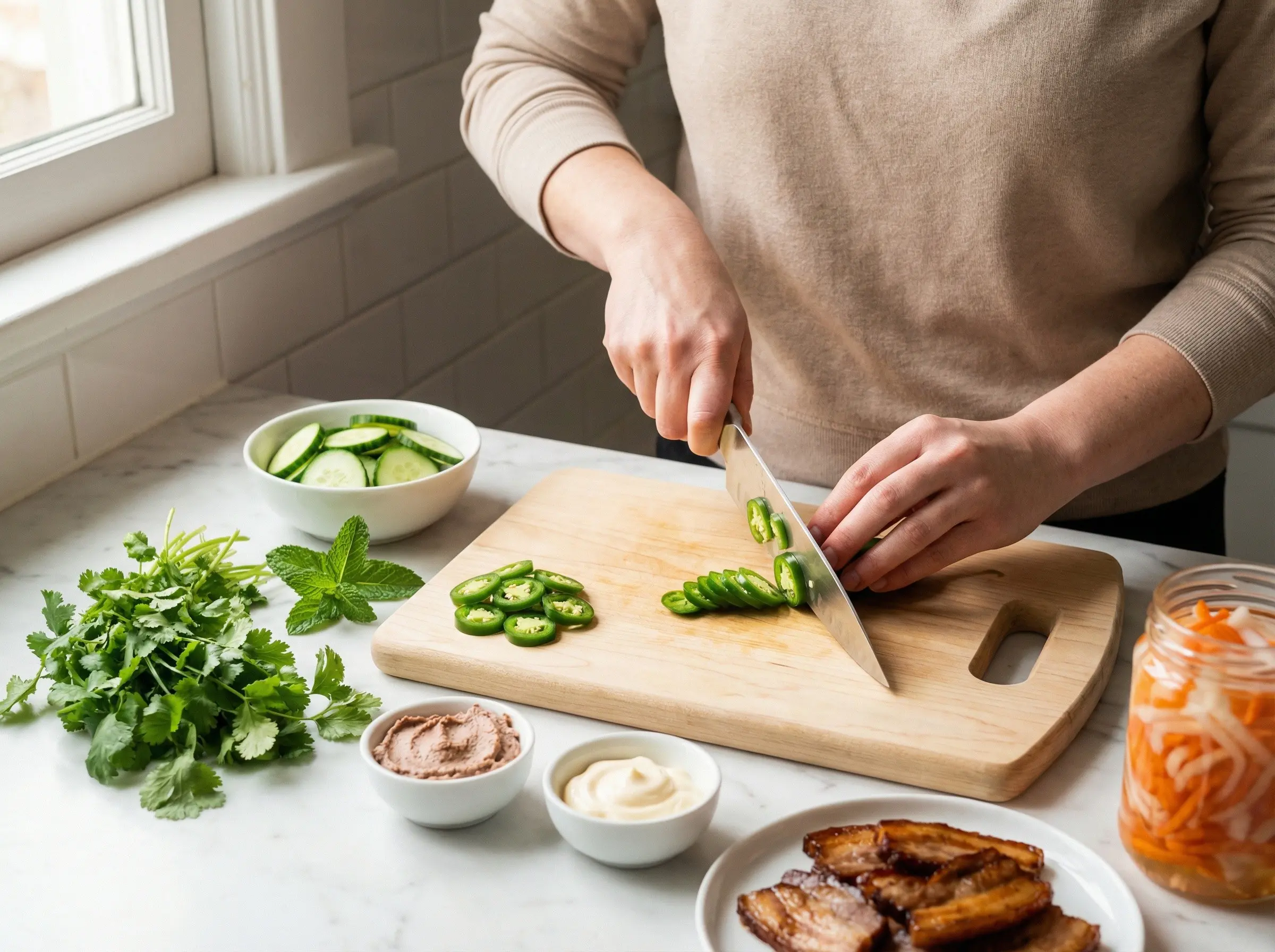
Prepare the remaining fresh components. Wash and dry the cilantro, keeping the stems attached - both leaves and tender stems are used in banh mi. Slice the cucumber into thin rounds or lengthwise into spears. Slice the jalapenos into thin rounds. If you prefer less heat, remove the seeds and membranes from the jalapenos. Have the pate and mayonnaise at room temperature for easy spreading. Some people mix a few drops of Maggi seasoning into the mayonnaise for extra umami depth.
Step 4
Prepare the bread. If your baguettes are not fresh from the oven, crisp them up by placing them in a 375 degrees F oven for 3-5 minutes until the crust is shatteringly crispy but the interior is still soft and airy. This step is crucial - the bread makes or breaks a banh mi. Cut each baguette in half crosswise for individual sandwiches, or leave whole for larger portions. Slice each piece horizontally, cutting about three-quarters of the way through so the bread opens like a book but remains hinged on one side. Remove a small amount of the interior soft bread to create more room for fillings.
Step 5
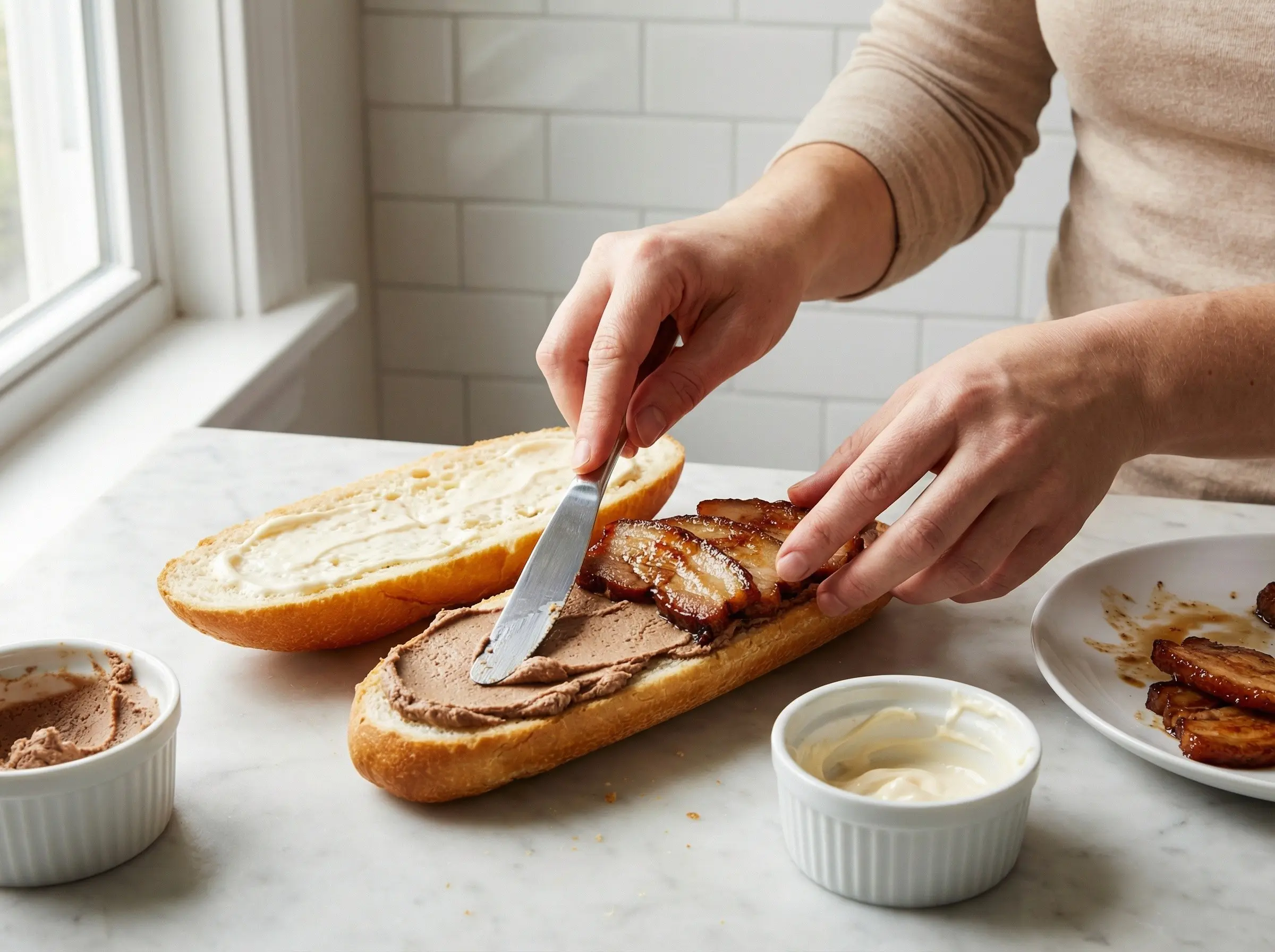
Assemble the banh mi in the proper order for the best experience. Open the baguette and spread a generous layer of pate on the bottom half - about 1 tablespoon per sandwich. Spread mayonnaise on the top half. Layer the protein (pork belly, cold cuts, or your choice) over the pate. The pate and meat form the rich, savory foundation of the sandwich.
Step 6
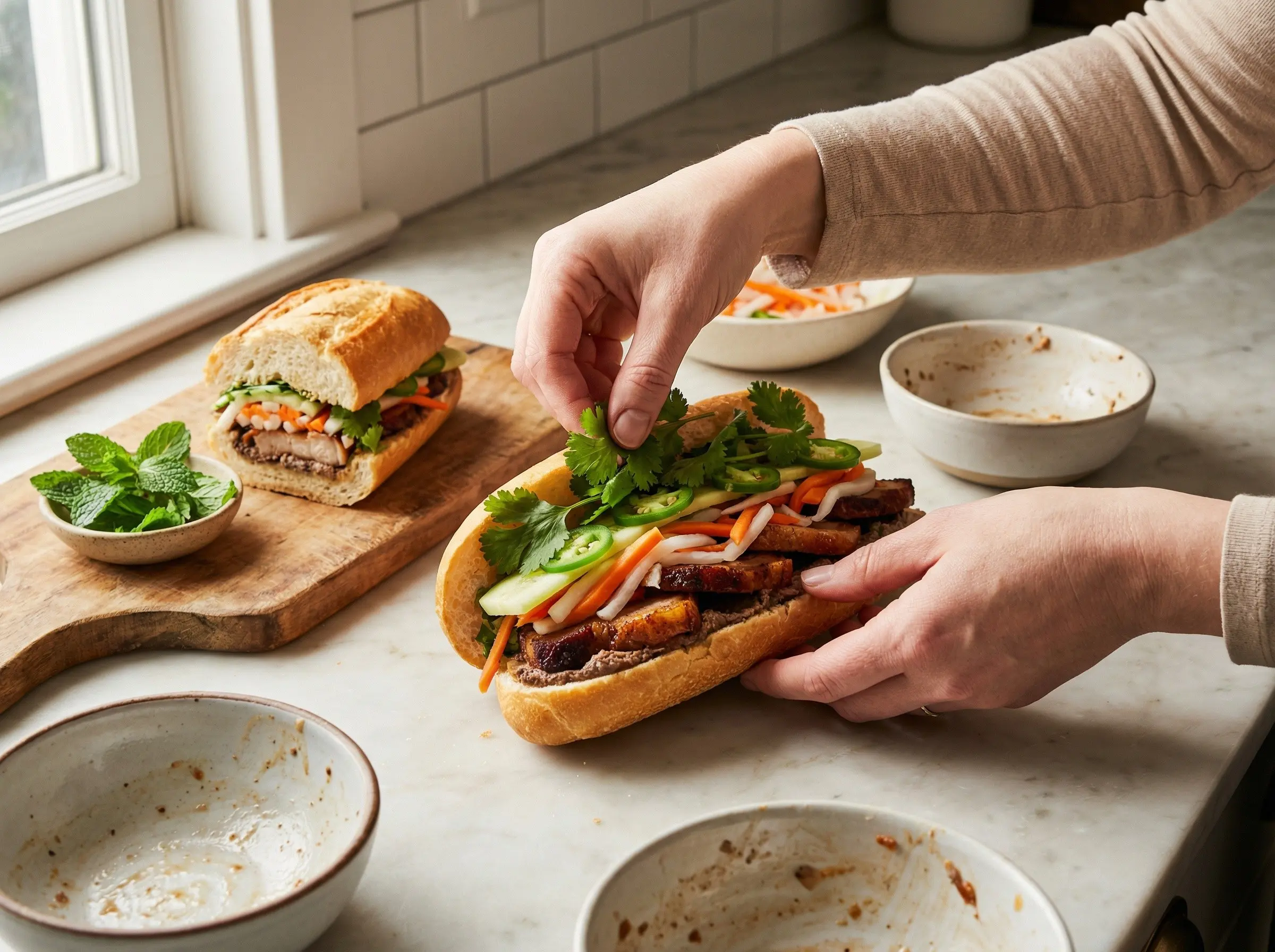
Add the fresh vegetables and herbs. Drain the do chua well and pile a generous amount of the pickled daikon and carrot over the meat - do not be shy, the pickled vegetables are essential for balance. Add cucumber slices, a generous handful of fresh cilantro sprigs, and sliced jalapenos to taste. Add fresh mint leaves if using. The sandwich should be stuffed full but still able to close. Press the top half down gently to compact the fillings slightly. Serve immediately while the bread is still crispy. Banh mi are meant to be eaten right away - the contrast between the crispy bread and the moist fillings is fleeting. Cut in half on the diagonal for easier eating if desired. A properly made banh mi should shatter when you bite through the crust, giving way to the complex layers of rich, tangy, fresh, and spicy flavors within.
You Might Also Like
Master Your Kitchen with PantryAI
Love this recipe? Save it, shop for it, and cook it with ease. Download the PantryAI app to organize your pantry, track expirations, and discover recipes based on what you already have.

On a computer?Scan with your iPhone camera to download PantryAI.








Swipe to see more screenshots