
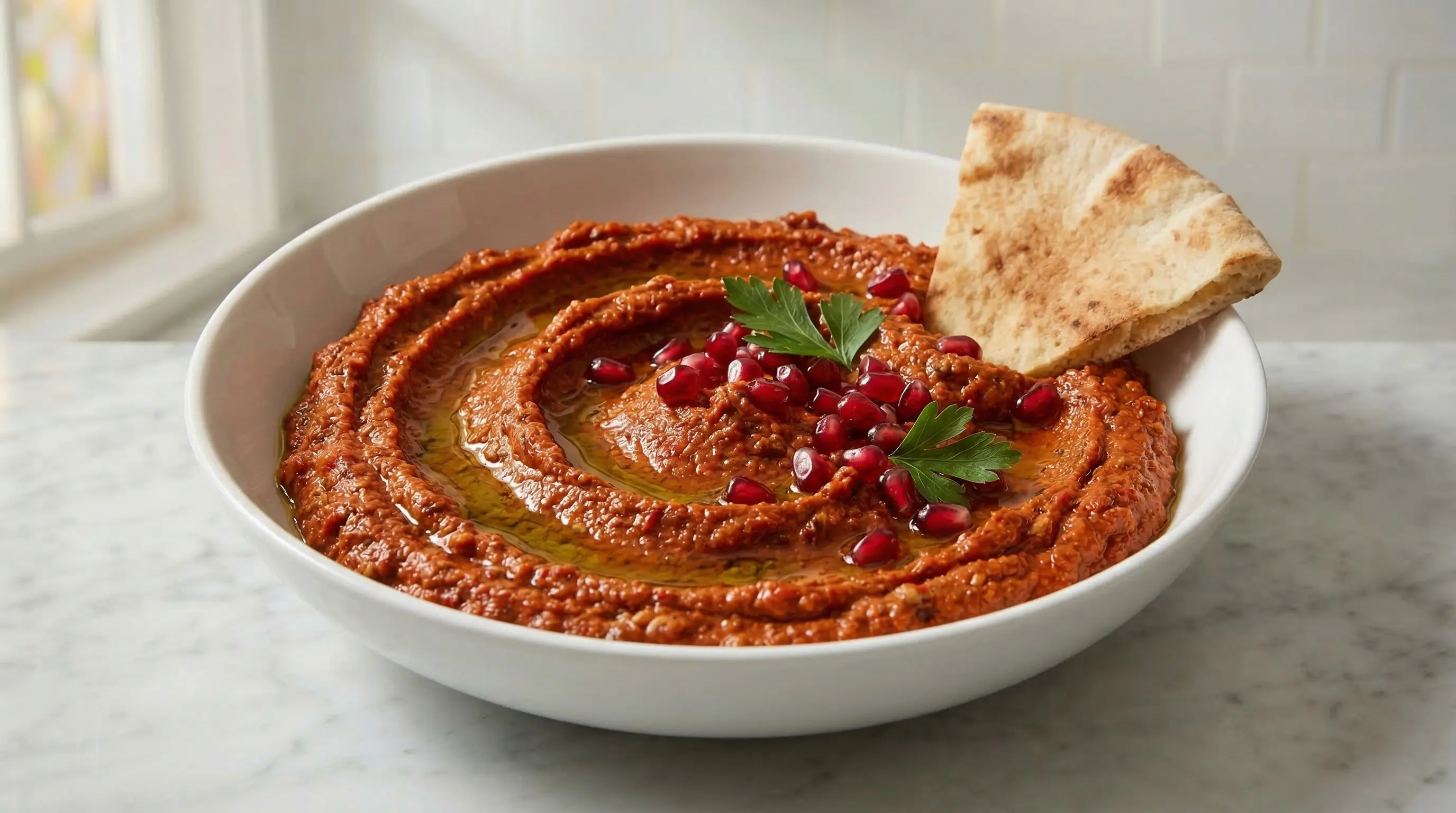
Muhammara
Learn how to make authentic muhammara, the stunning Syrian dip of roasted red peppers, walnuts, and pomegranate molasses. This smoky, sweet, and tangy mezze classic is irresistibly addictive!
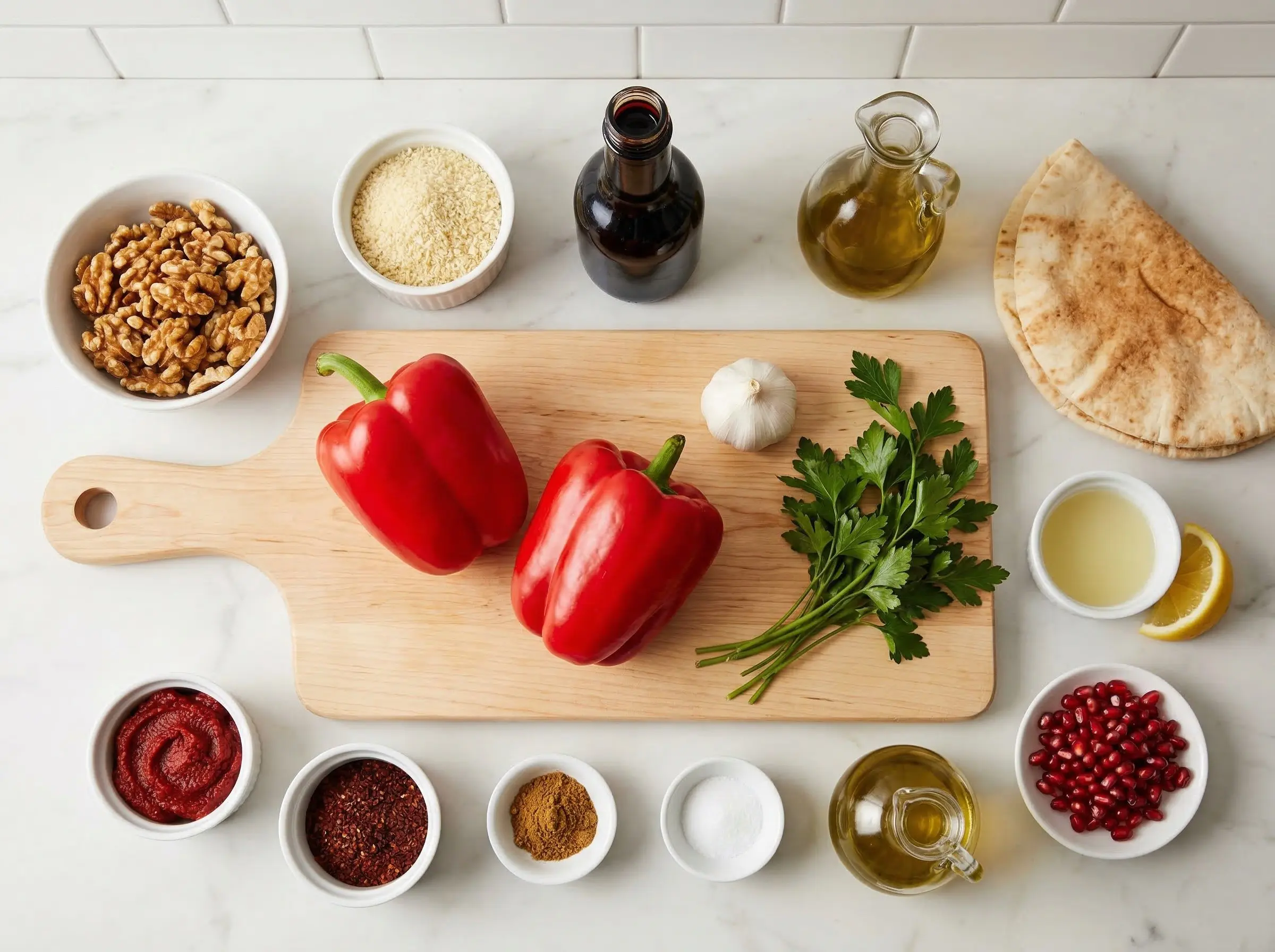
Ingredients
The Story
Muhammara is one of the great dips of the Levantine kitchen, a vibrant, rust-colored spread of roasted red peppers, walnuts, and pomegranate molasses that originated in Aleppo, Syria - once one of the most important culinary centers of the Middle East. The name "muhammara" derives from the Arabic word "ahmar," meaning red, describing the dish's striking color from the Aleppo peppers that are its traditional base. Aleppo, before the devastating civil war, was renowned for its sophisticated cuisine that blended Arab, Turkish, Armenian, and Persian influences over centuries, and muhammara stands as one of its most celebrated contributions to the world's table. The dish belongs to a broader family of walnut-based spreads found throughout the Eastern Mediterranean and Caucasus - Georgian pkhali, Turkish tarator, and various Armenian preparations all share ancestral roots. What distinguishes Aleppo's muhammara is the combination of Aleppo pepper, which has a moderate heat with fruity, almost raisin-like undertones, and pomegranate molasses, the concentrated essence of pomegranate juice that provides tangy sweetness. This balance of smoky, sweet, tart, and gently spicy is what makes muhammara unique. The dish spread throughout the Levant and Turkey, becoming a mezze staple from Beirut to Istanbul, though Syrians maintain that the best muhammara still comes from its birthplace. What makes muhammara so extraordinary is the harmony of flavors and textures that emerge from such simple ingredients. Roasted red peppers provide a sweet, smoky base. Walnuts contribute earthy richness and body, thickening the dip while adding protein and subtle bitterness. Pomegranate molasses brings tangy-sweet depth that brightens everything. Aleppo pepper or its substitutes add gentle warmth without overwhelming heat. A touch of cumin provides earthiness, breadcrumbs help bind the texture, and good olive oil rounds everything into silky cohesion. The finished muhammara should be spreadable but textured, not perfectly smooth - you want to taste distinct elements coming together. Served with warm pita bread as part of a mezze spread, drizzled with olive oil and scattered with pomegranate seeds, muhammara is a taste of Aleppo's culinary heritage that deserves to be preserved and celebrated.
Instructions
Step 1
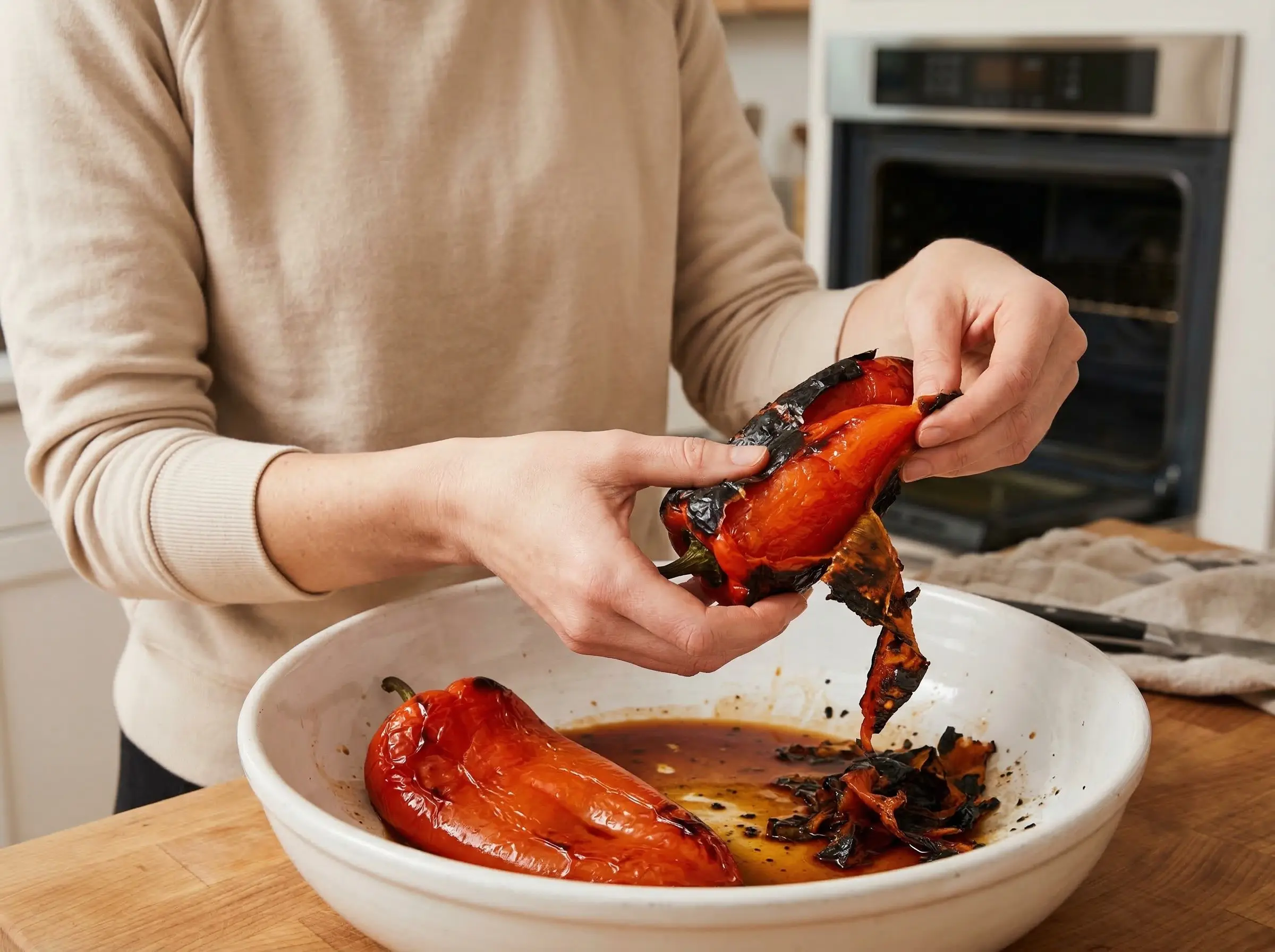
Roast the peppers if using fresh. Place whole red bell peppers directly over a gas flame, under a broiler, or on a very hot grill. Char completely, turning frequently with tongs, until the skin is blackened and blistered on all sides - about 10-15 minutes. Transfer to a bowl, cover tightly with plastic wrap or a plate, and let steam for 15 minutes. The steam loosens the skin. Peel off and discard the charred skin, then remove the stem and seeds. Do not rinse - you will lose flavorful juices. If using jarred roasted peppers, drain them well and pat dry.
Step 2
Toast the walnuts. Spread the walnuts in a single layer in a dry skillet over medium heat. Toast for 4-5 minutes, stirring frequently, until fragrant and slightly darkened. Watch carefully as they burn quickly. Alternatively, toast in a 350 degree F oven for 8-10 minutes. Toasting deepens the walnut flavor and removes any raw bitterness. Let cool slightly before processing.
Step 3
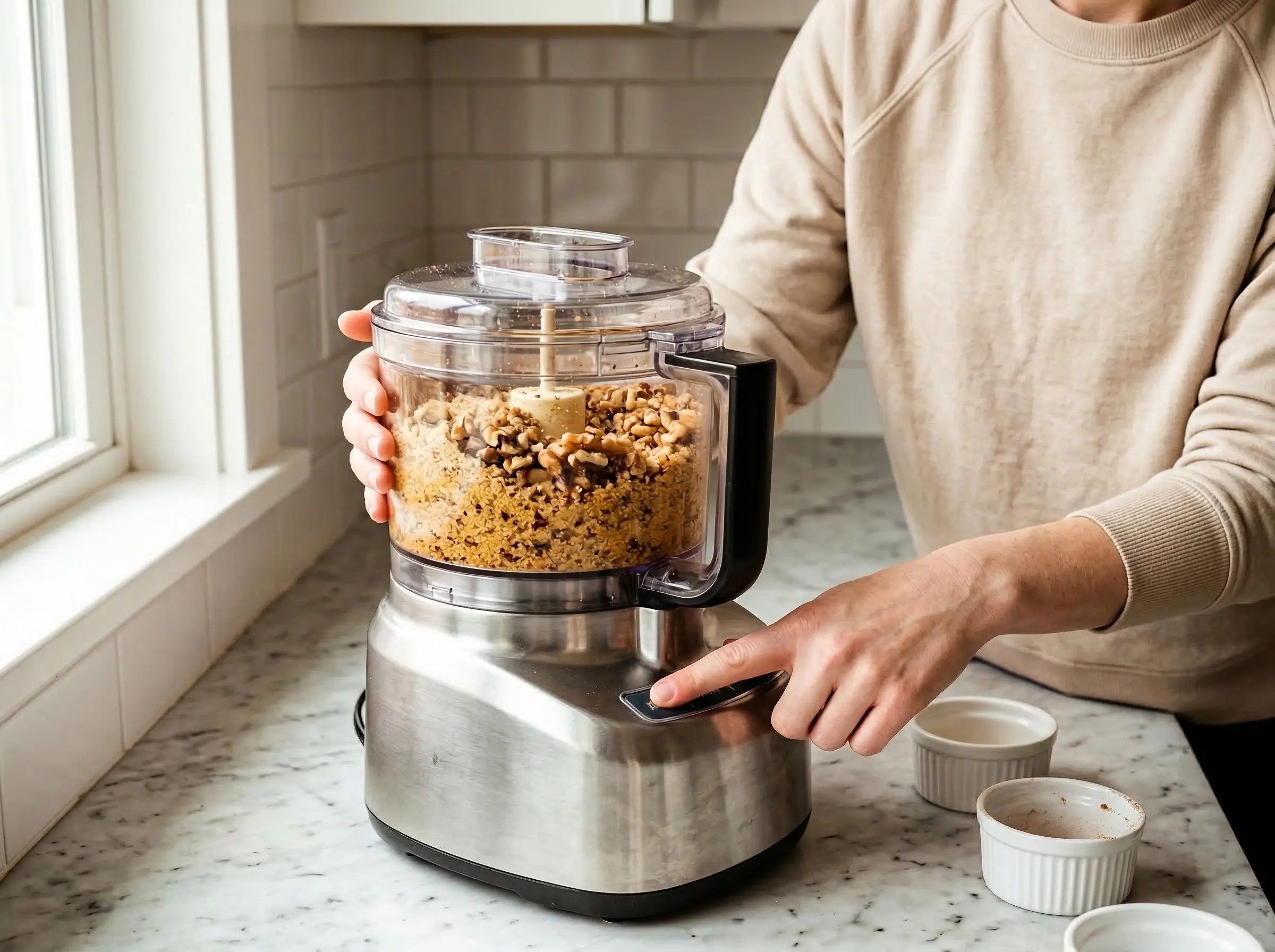
Process the base ingredients. In a food processor, combine the toasted walnuts, breadcrumbs, garlic, cumin, Aleppo pepper, and salt. Pulse until the walnuts are finely ground but still have some texture - do not process to a paste. The breadcrumbs help bind the dip and absorb excess moisture from the peppers.
Step 4
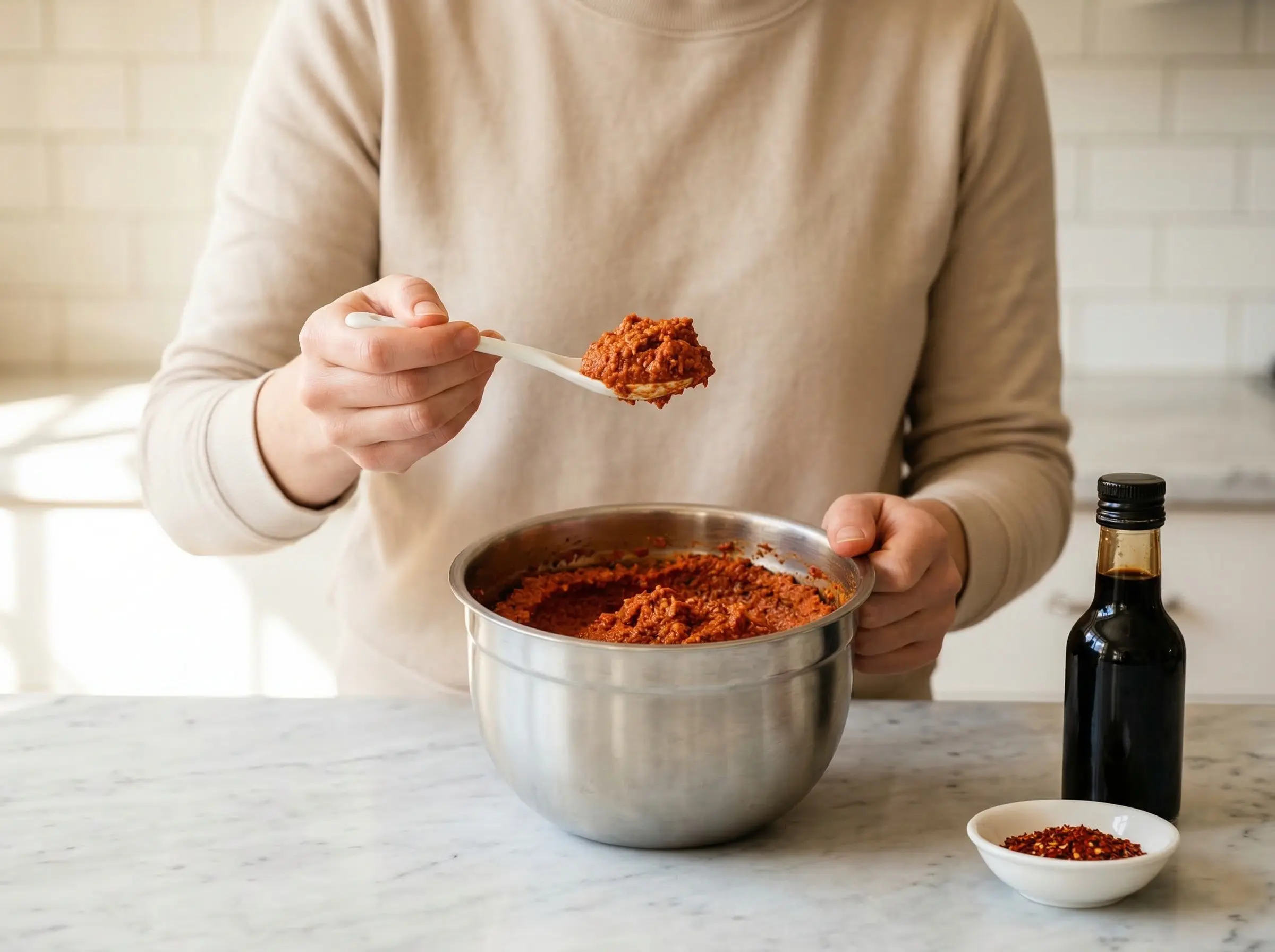
Add the peppers and wet ingredients. Add the roasted red peppers, pomegranate molasses, tomato paste, and lemon juice to the food processor. Process until combined but still slightly chunky - muhammara should have texture, not be completely smooth. With the processor running, drizzle in the olive oil until incorporated. The mixture should be spreadable but not runny.
Step 5
Taste and adjust. This step is essential. Taste the muhammara and adjust the balance - it should be sweet, tangy, smoky, and gently spicy in harmony. Add more pomegranate molasses for sweetness and tang, more Aleppo pepper for heat, more lemon for brightness, or more salt to amplify all flavors. The pomegranate molasses should be noticeable but not dominant. Let rest for at least 30 minutes for flavors to meld - muhammara improves with time.
Step 6
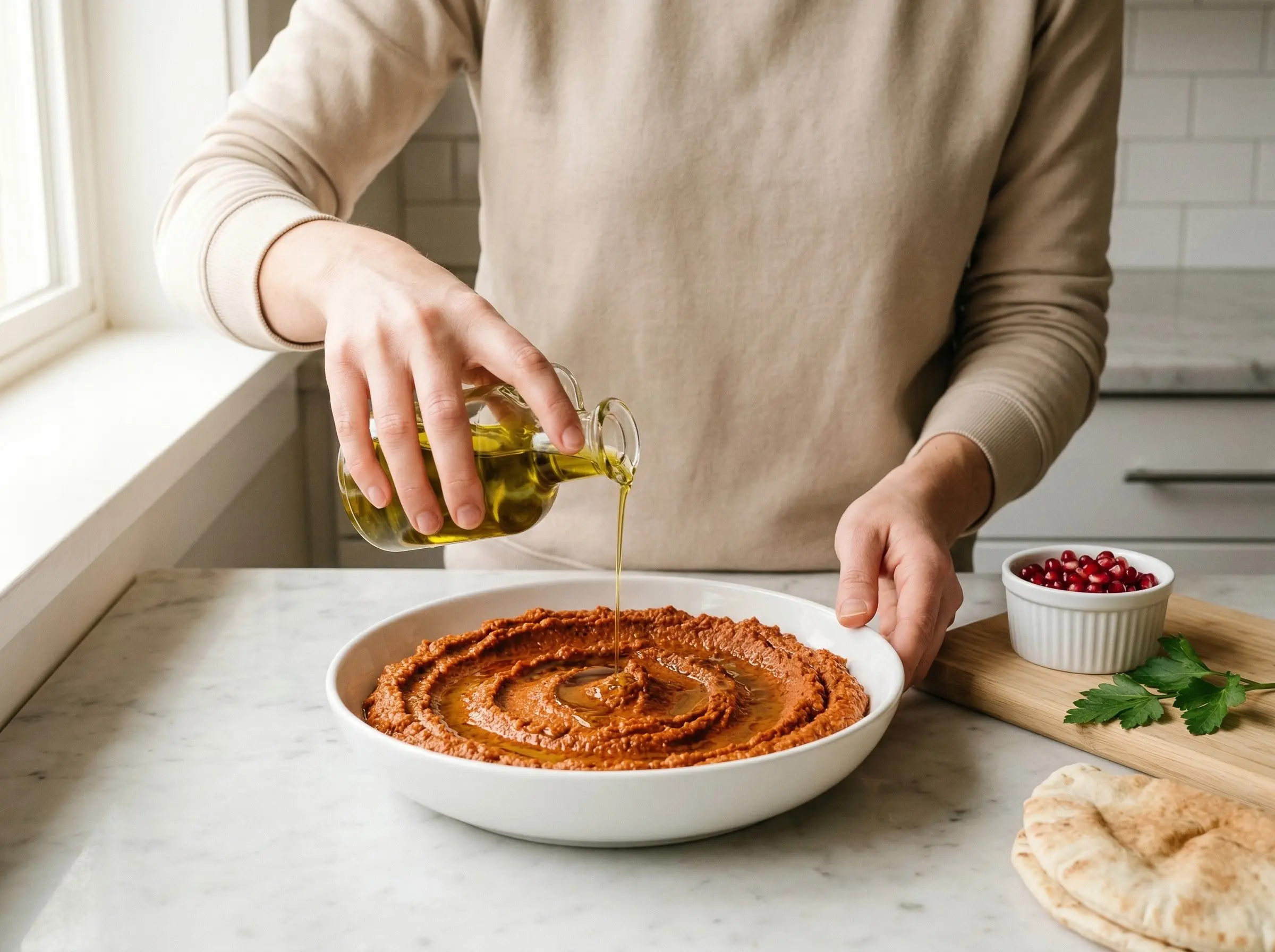
Serve. Transfer the muhammara to a shallow serving bowl or spread on a plate. Create swirls with the back of a spoon. Drizzle generously with extra virgin olive oil - this is traditional and essential, not optional. Sprinkle with pomegranate seeds if available for color and bursts of tart sweetness. Garnish with fresh parsley or mint leaves. Serve at room temperature with warm pita bread, crudités, or as part of a mezze spread alongside hummus, baba ganoush, and tabbouleh. Muhammara is also excellent as a sauce for grilled meats, spread on sandwiches, or stirred into pasta. Store refrigerated in an airtight container for up to one week. Bring to room temperature before serving - cold muhammara loses its aromatic complexity. The flavors continue to develop over the first day or two.
You Might Also Like
Master Your Kitchen with PantryAI
Love this recipe? Save it, shop for it, and cook it with ease. Download the PantryAI app to organize your pantry, track expirations, and discover recipes based on what you already have.

On a computer?Scan with your iPhone camera to download PantryAI.








Swipe to see more screenshots