
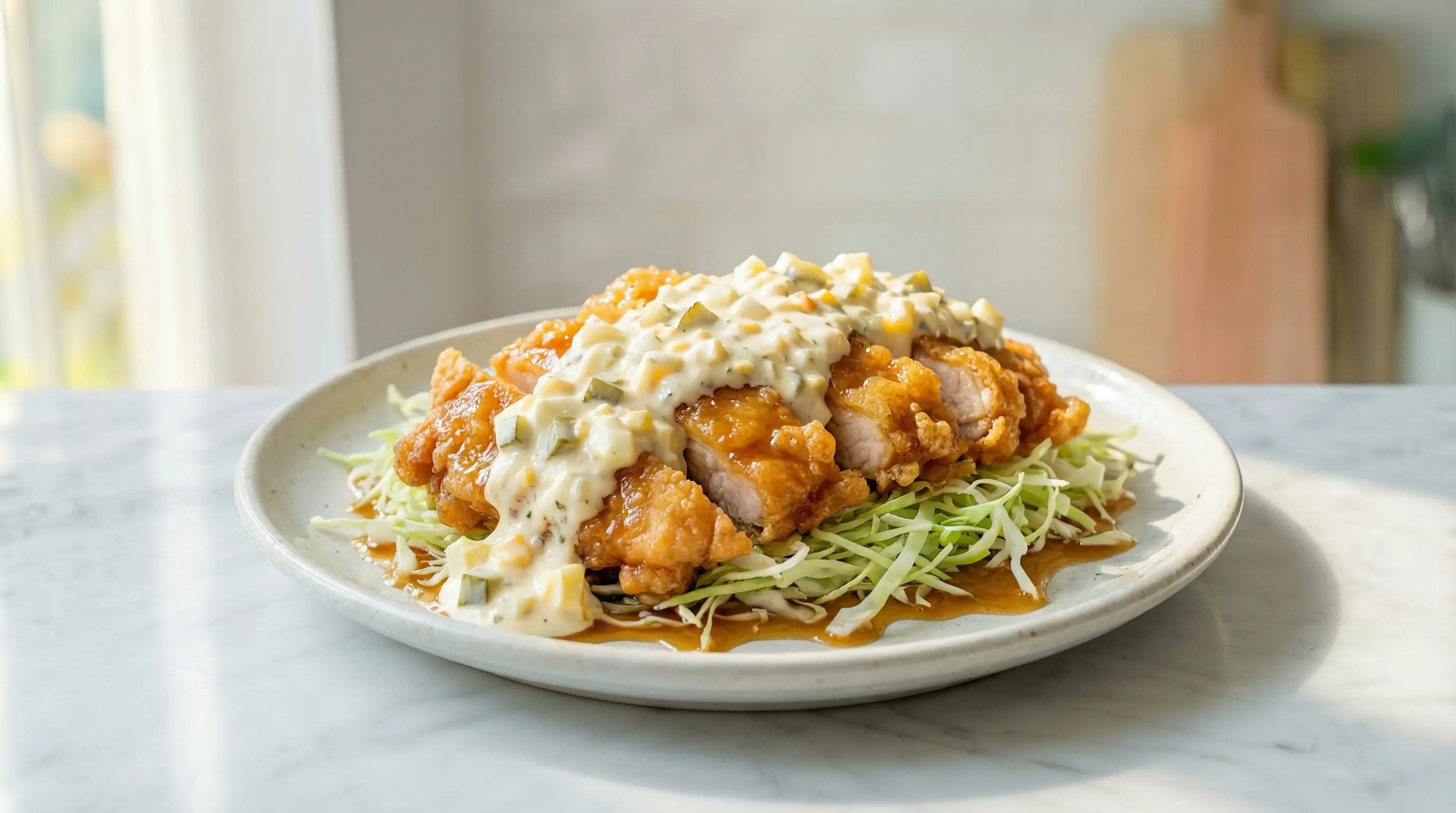
Chicken Nanban
Learn how to make chicken nanban, crispy Japanese fried chicken dipped in sweet vinegar sauce and topped with rich tartar sauce. This Miyazaki specialty is irresistibly delicious!
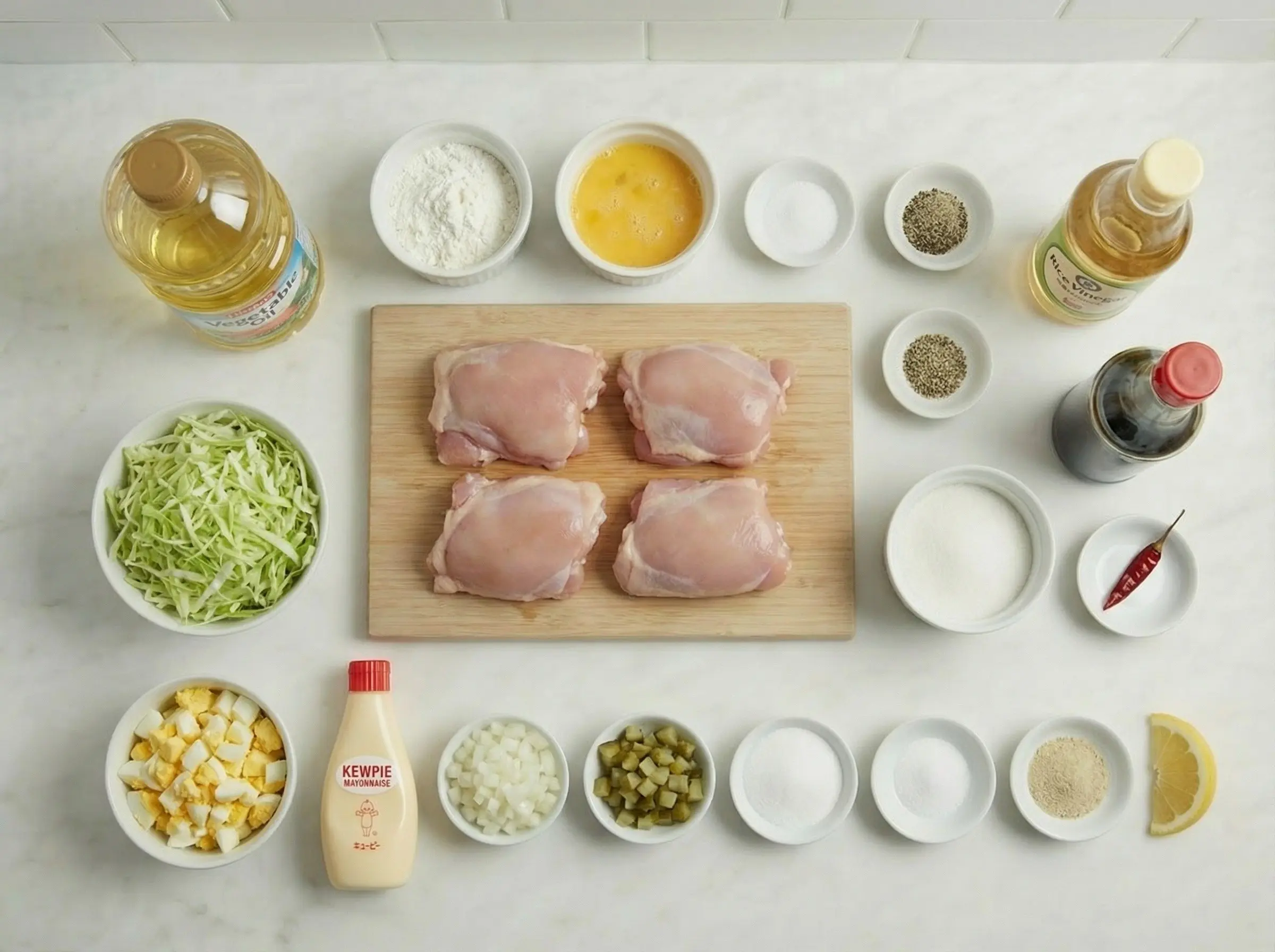
Ingredients
The Story
Chicken nanban is a beloved Japanese dish that originated in Miyazaki Prefecture on the southern island of Kyushu in the 1960s. The dish consists of crispy fried chicken that is dipped in a sweet and tangy vinegar sauce (nanban sauce), then generously topped with a rich, creamy tartar sauce. The name "nanban" has historical roots - it originally referred to the Portuguese and Spanish traders and missionaries who arrived in Japan during the 16th century through Nagasaki. "Nanban" cooking came to describe dishes that incorporated foreign influences, particularly those using vinegar in a Western or "Southern Barbarian" style. The modern chicken nanban was created in Nobeoka City, Miyazaki, at a Western-style restaurant called Naganoken (later called Grill Ogura) around 1965. The restaurant's chef adapted an existing nanban-style dish, originally made with fish, to use chicken instead and added the now-signature tartar sauce topping. The dish was an immediate hit and spread throughout Miyazaki Prefecture before gaining national popularity. Today, chicken nanban is considered one of Miyazaki's most famous regional specialties, with the city of Nobeoka celebrating it as their official local dish. Visitors to Miyazaki often seek out chicken nanban at local restaurants, each claiming to serve the most authentic version. What makes chicken nanban so addictive is the brilliant interplay of contrasting flavors and textures. The chicken, coated in a light egg-based batter and fried until golden and crispy, provides a satisfying crunch. The moment it emerges from the oil, it is dunked into the nanban sauce - a warm, sweet-tangy mixture of rice vinegar, soy sauce, and sugar - which penetrates the crust and adds a burst of bright acidity. Finally, the cool, creamy tartar sauce, studded with chopped eggs, pickles, and onions, crowns the dish, creating a rich counterpoint to the vinegar's sharpness. Every bite delivers crispy, tangy, creamy, sweet, and savory notes in perfect harmony. It is comfort food engineering at its finest - a dish that hits every pleasure center and keeps you reaching for more.
Instructions
Step 1
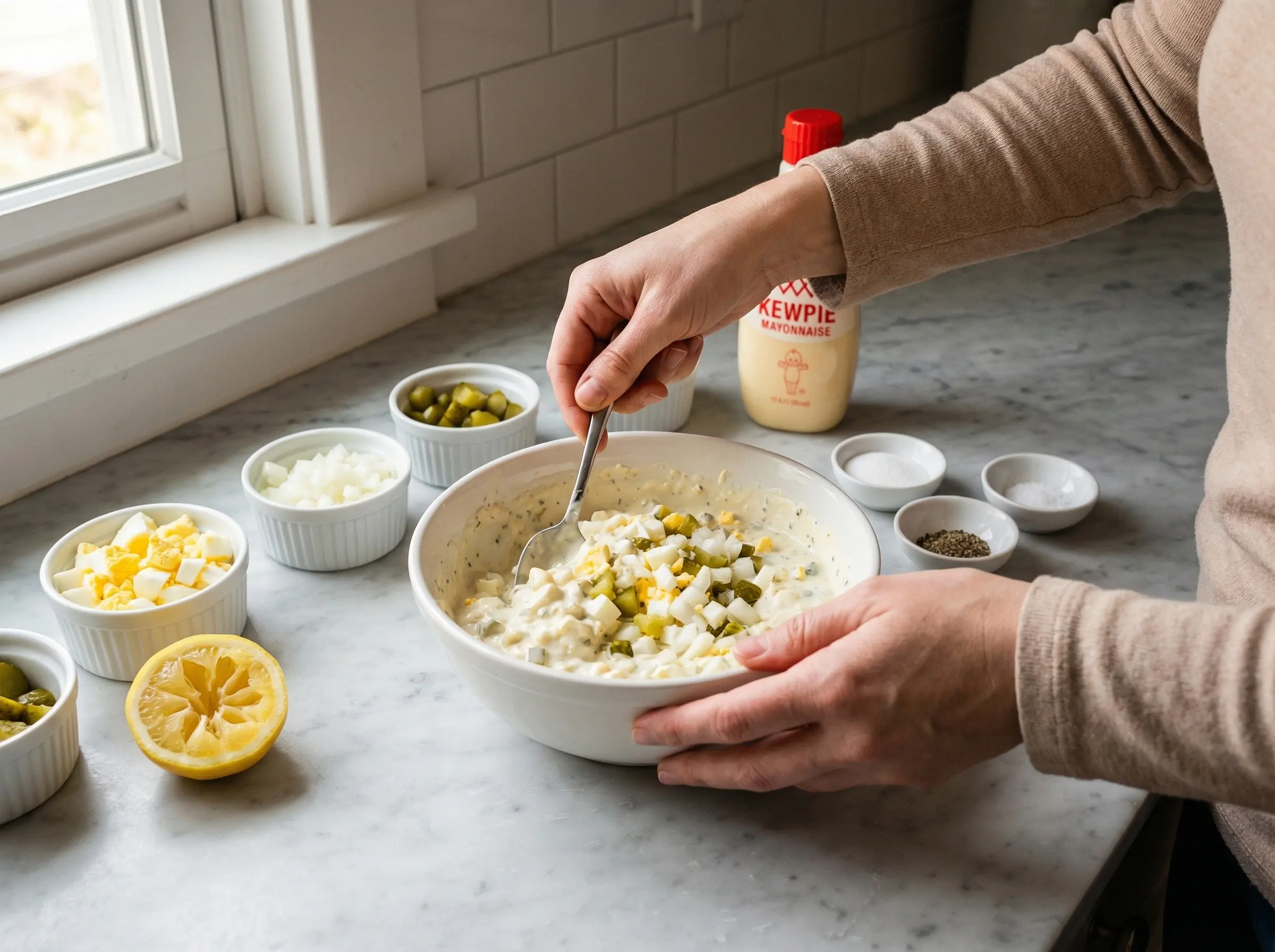
Make the tartar sauce first so the flavors have time to meld. Finely chop the hard-boiled eggs - they should be in small pieces but not mashed to a paste. Finely dice the onion and pickles (Japanese fukujinzuke pickles are traditional, but dill pickles or sweet relish work well). In a bowl, combine the Japanese mayonnaise, chopped eggs, diced onion, diced pickles, lemon juice, and sugar. Season with salt and white pepper to taste. Mix gently until combined. The tartar sauce should be chunky and creamy. Refrigerate until ready to serve - it tastes best when chilled. The sauce can be made up to 2 days ahead.
Step 2
Make the nanban sauce. In a small saucepan, combine the rice vinegar, soy sauce, and sugar. Add the dried red chili if using - it adds subtle heat that complements the tangy sauce. Heat over medium heat, stirring until the sugar dissolves completely. Bring to a brief simmer, then remove from heat. Keep the sauce warm - the chicken will be dipped into it hot from the fryer. The sauce should taste sweet, tangy, and savory in balance. Adjust to your preference: more sugar for sweetness, more vinegar for tanginess.
Step 3
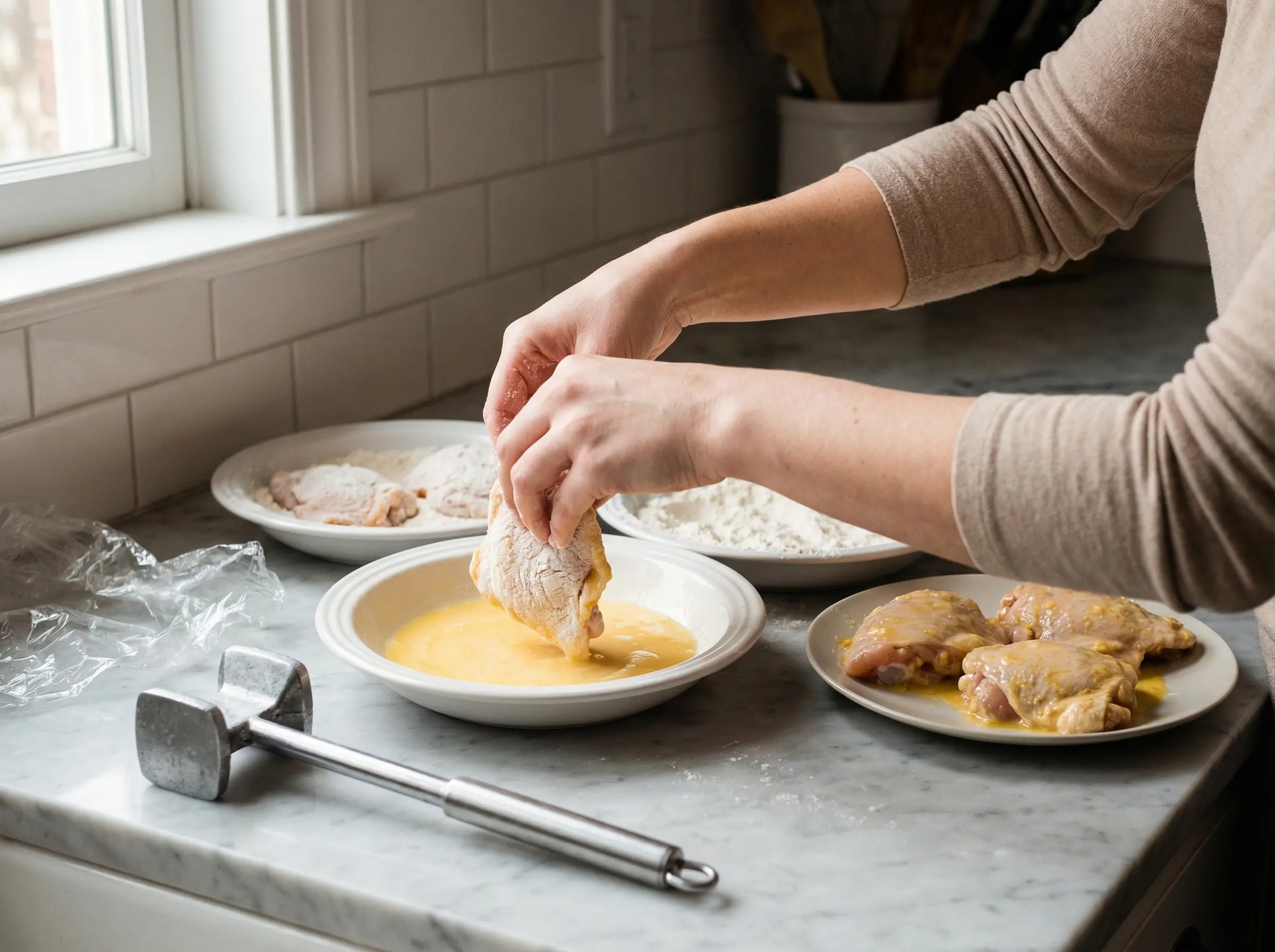
Prepare the chicken. Place the chicken thighs between sheets of plastic wrap and pound to an even thickness of about 1/2 inch - this ensures even cooking and creates more surface area for the coating. Season both sides generously with salt and pepper. Set up a breading station with two shallow dishes: flour in one and beaten eggs in the other. Unlike typical fried chicken that uses breadcrumbs, chicken nanban uses only egg as the final coating, creating a lighter, more delicate crust that absorbs the nanban sauce beautifully.
Step 4
Heat about 1 inch of vegetable oil in a deep skillet or frying pan to 340-350 degrees F. While the oil heats, coat the chicken: dredge each piece in flour, shaking off excess, then dip into the beaten eggs, coating completely. Let excess egg drip off. Carefully lower the chicken into the hot oil. Fry for 5-6 minutes per side until deep golden brown and cooked through (internal temperature of 165 degrees F). The egg coating should be golden and crispy with an almost lacy appearance. Work in batches if needed to avoid overcrowding. Transfer to a wire rack briefly - just for a few seconds, as the chicken needs to be hot when dipped.
Step 5
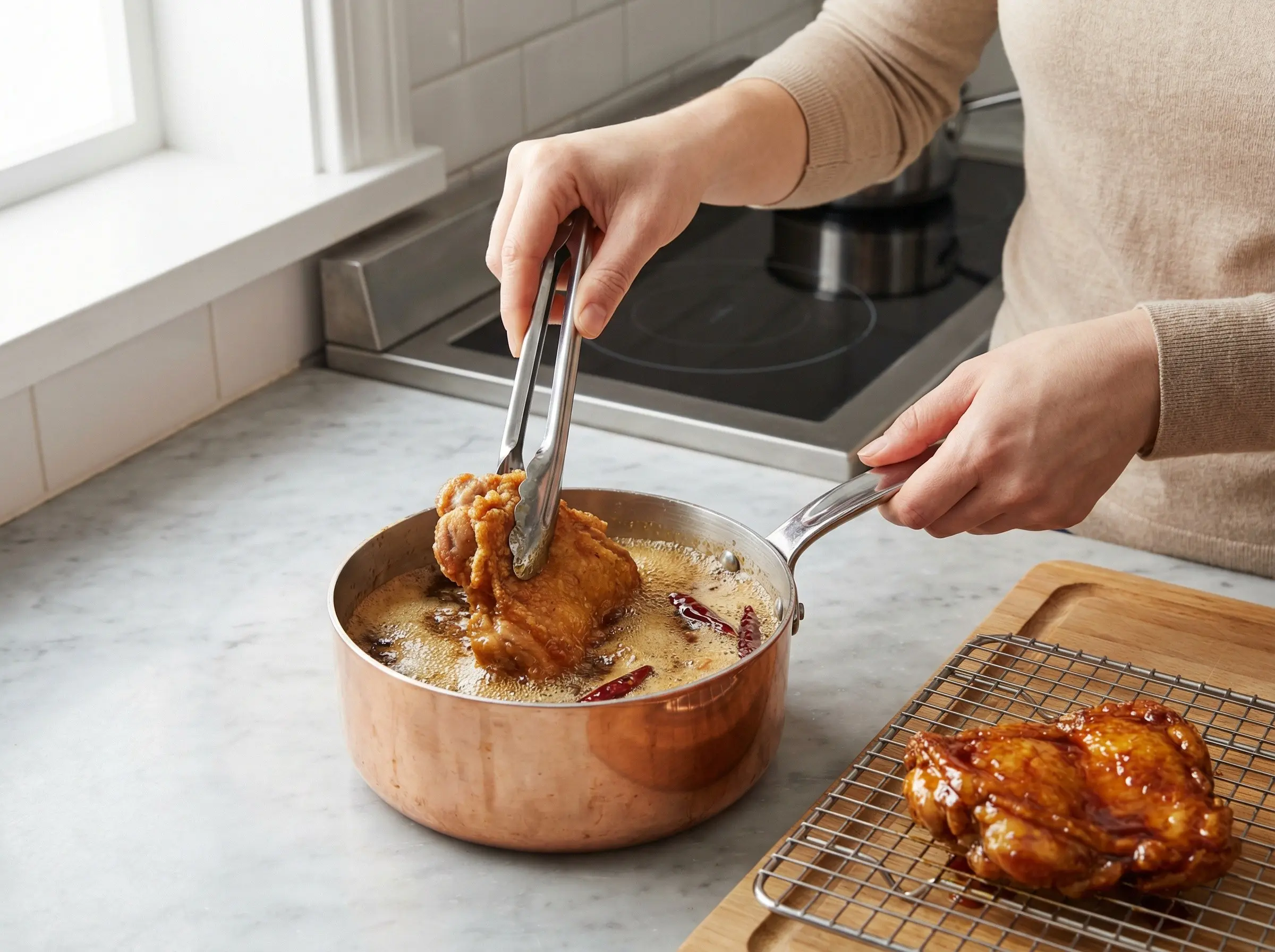
Immediately dip the hot fried chicken into the warm nanban sauce, turning to coat both sides thoroughly. Let it soak for about 10-15 seconds per side - the sauce should penetrate the crust slightly without making it soggy. The chicken should sizzle when it hits the sauce. Lift the chicken from the sauce, letting excess drip back into the pan. The coating should be glossy and deeply flavored from the sweet-tangy sauce. Place the sauced chicken on a cutting board.
Step 6
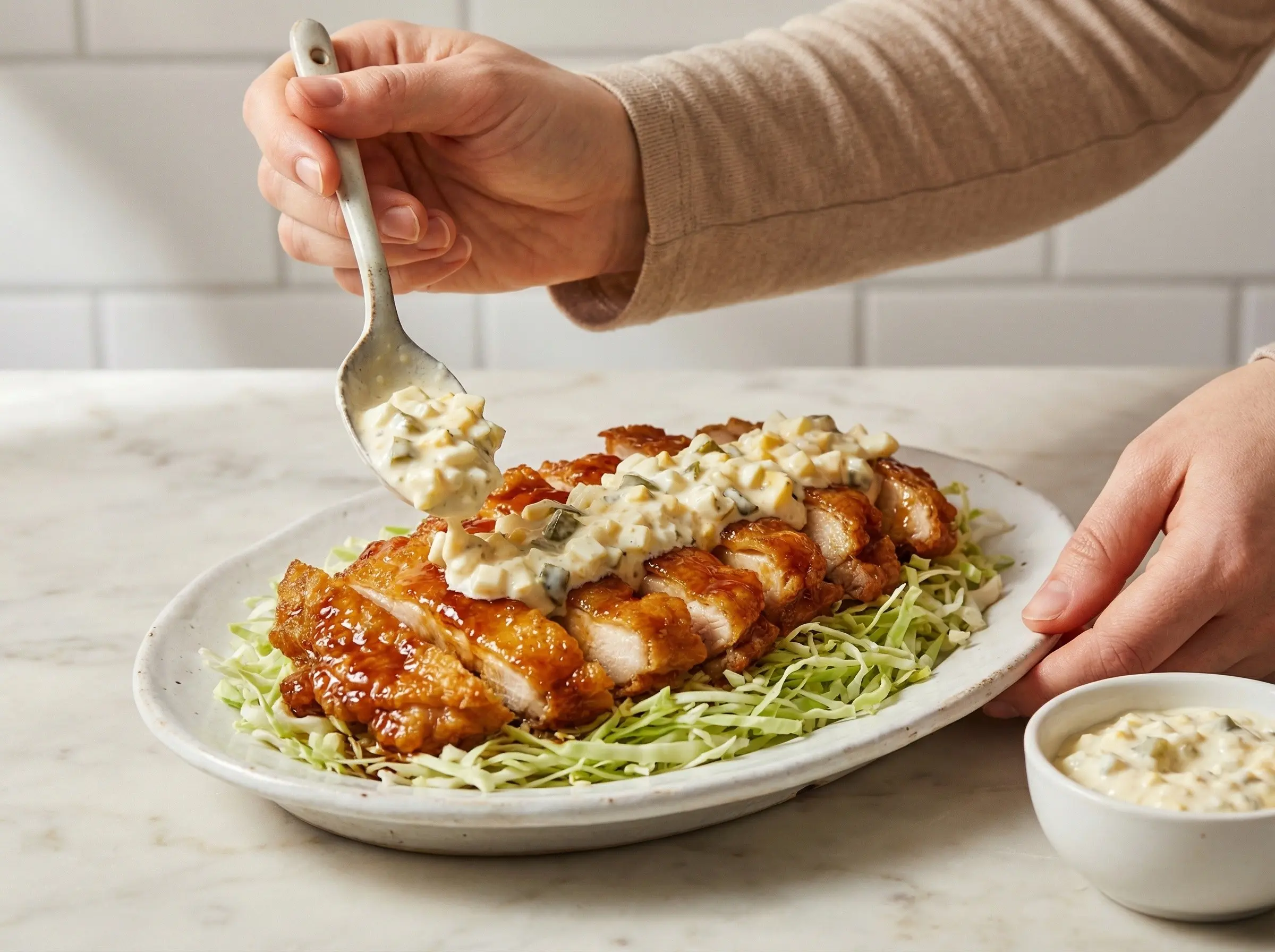
Slice each chicken thigh into strips about 3/4 inch wide - this creates more surface area for the tartar sauce and makes it easier to eat. Arrange a bed of finely shredded cabbage on serving plates - the cool, crisp cabbage is a traditional accompaniment that provides refreshing contrast to the rich chicken. Place the sliced chicken nanban on top of the cabbage. Spoon a generous amount of tartar sauce over the chicken - do not be shy, the tartar sauce is essential to the dish. Alternatively, serve the tartar sauce on the side for dipping. Drizzle any remaining nanban sauce around the plate or over the cabbage. Serve immediately while the chicken is still warm and crispy. Chicken nanban is best eaten right away, though leftovers can be refrigerated and the chicken reheated in an oven to re-crisp. The tartar sauce should always be served cold for temperature contrast.
You Might Also Like
Master Your Kitchen with PantryAI
Love this recipe? Save it, shop for it, and cook it with ease. Download the PantryAI app to organize your pantry, track expirations, and discover recipes based on what you already have.

On a computer?Scan with your iPhone camera to download PantryAI.








Swipe to see more screenshots