
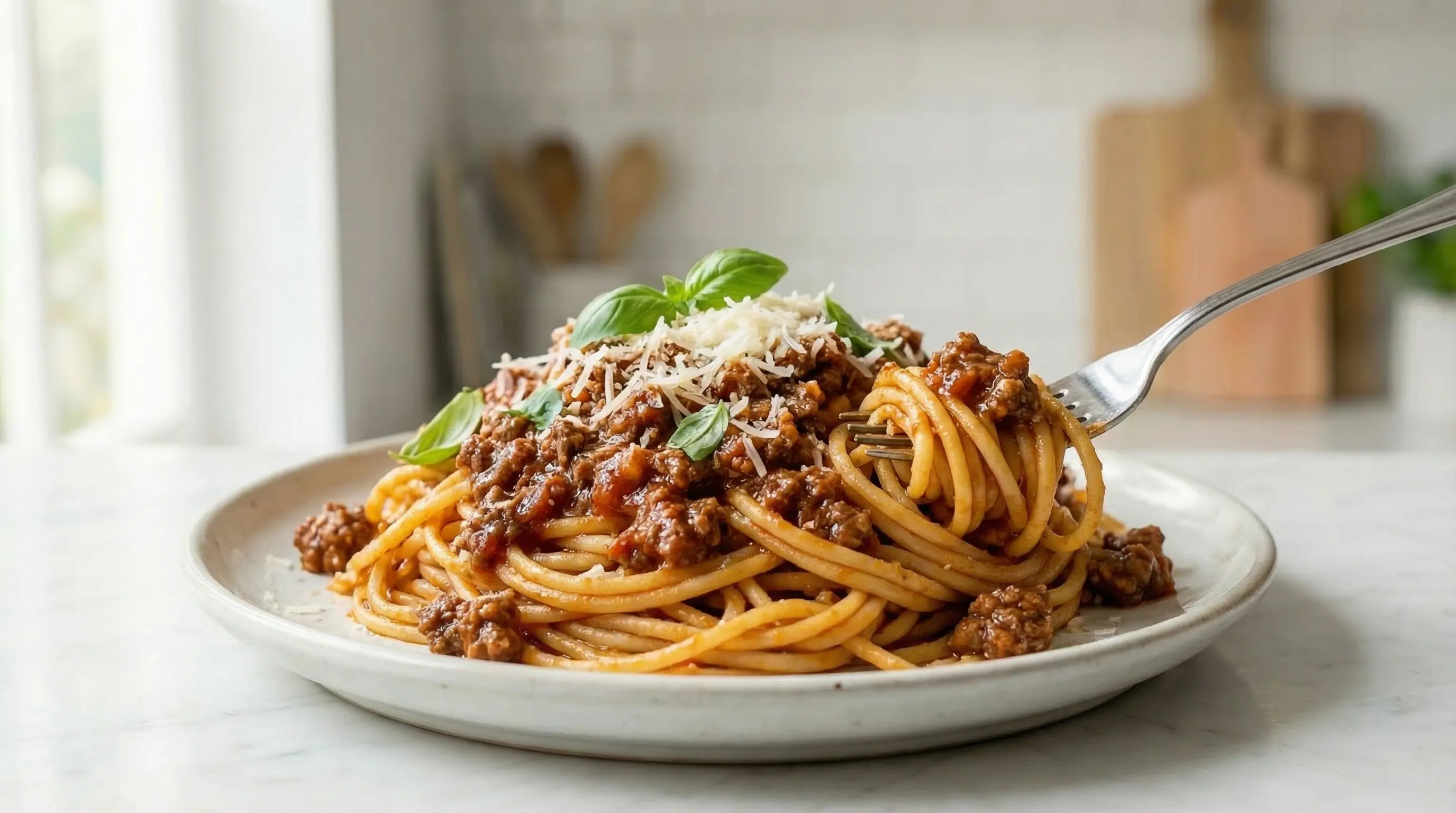
Classic Spaghetti Bolognese
Learn how to make authentic spaghetti bolognese with rich, slow-simmered meat sauce. This classic Italian recipe is hearty, flavorful, and perfect for family dinners!
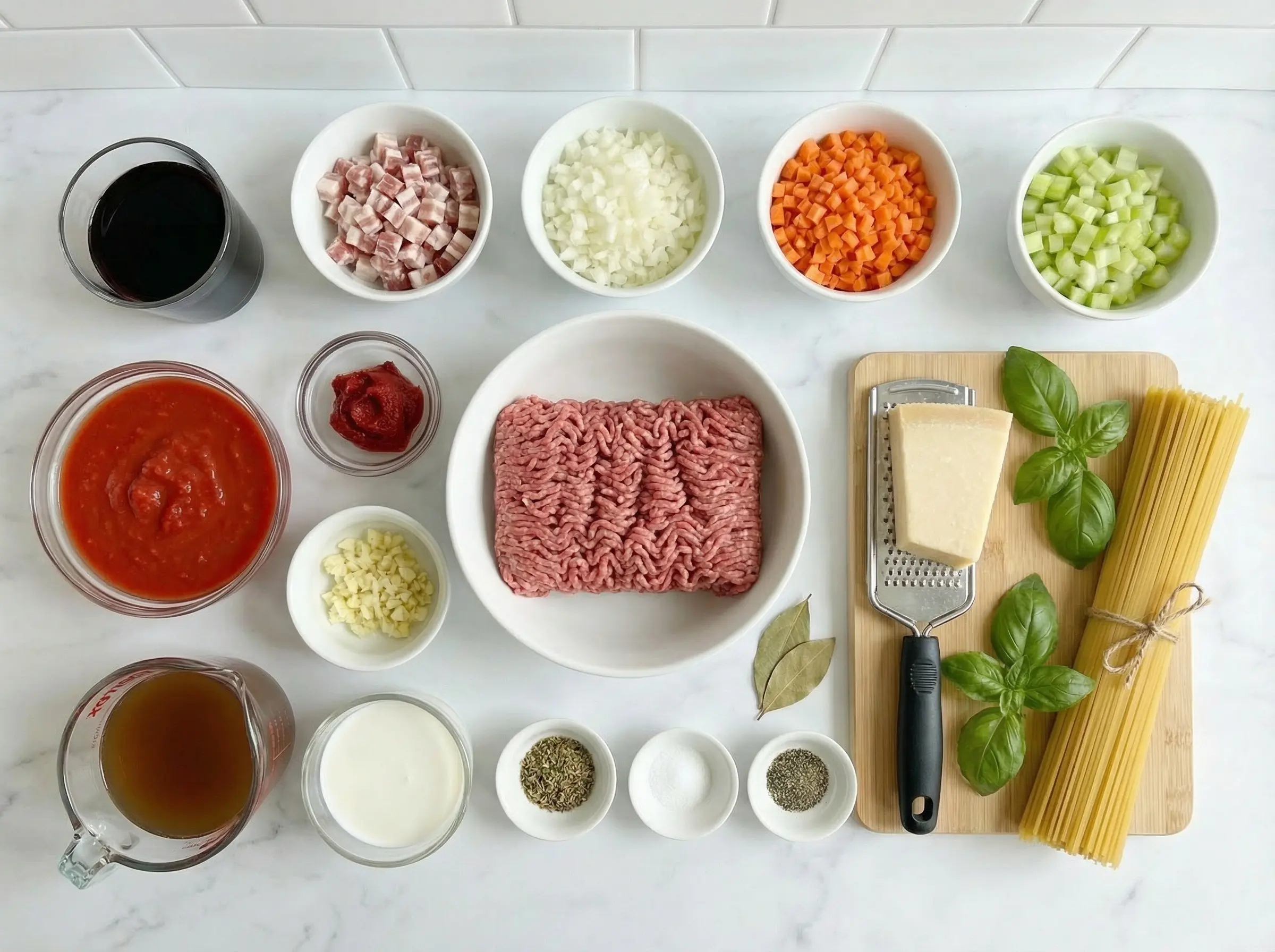
Ingredients
The Story
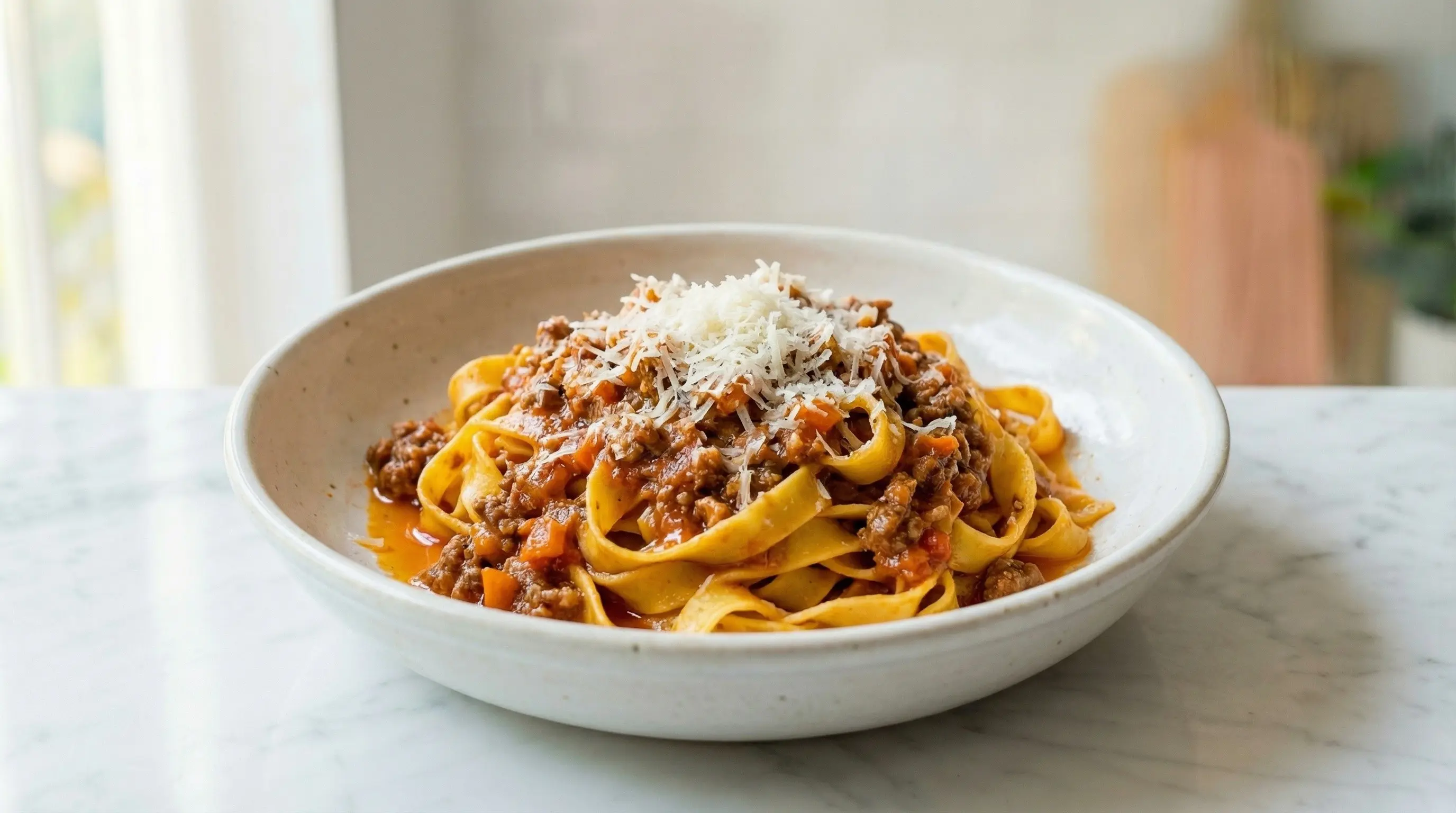
Spaghetti Bolognese, as it is known outside of Italy, is actually a fusion of two distinct Italian culinary traditions. The meat sauce, properly called ragù alla bolognese, originated in Bologna in the Emilia-Romagna region of northern Italy. The first documented recipe appeared in 1891 when Pellegrino Artusi published "Science in the Kitchen and the Art of Eating Well," which included a version of this rich, slow-cooked meat sauce. Traditional Bolognese ragù is a sophisticated sauce that simmers for hours, featuring finely chopped vegetables (soffritto), ground meat, wine, milk or cream, and tomatoes - though historically, tomatoes were used sparingly or not at all. The pairing of this sauce with spaghetti, however, is largely a creation of Italian immigrants and international adaptation. In Bologna, ragù is traditionally served with fresh egg pasta like tagliatelle, pappardelle, or lasagne - never with spaghetti, which is too thin and smooth to hold the chunky meat sauce properly. When Italian immigrants arrived in America, Britain, and Australia in the late 19th and early 20th centuries, they adapted their recipes to available ingredients and local tastes. Spaghetti was widely available dried, inexpensive, and easier to prepare than fresh pasta, so it became the default pairing. The dish "spaghetti bolognese" as we know it today is essentially an international creation that would be unrecognizable in Bologna itself. What makes spaghetti bolognese so beloved worldwide is its perfect comfort food formula - hearty meat sauce, tender pasta, and deeply savory flavors that develop through slow cooking. The soffritto of onions, carrots, and celery provides a sweet, aromatic base, while the combination of ground beef, tomatoes, and wine creates rich, complex layers of flavor. Whether or not it is authentically Italian, spaghetti bolognese has become a global staple, appearing on family dinner tables and restaurant menus from London to Sydney. It represents the beautiful evolution of cuisine through migration and cultural exchange, proving that sometimes the best dishes transcend their origins.
Instructions
Step 1
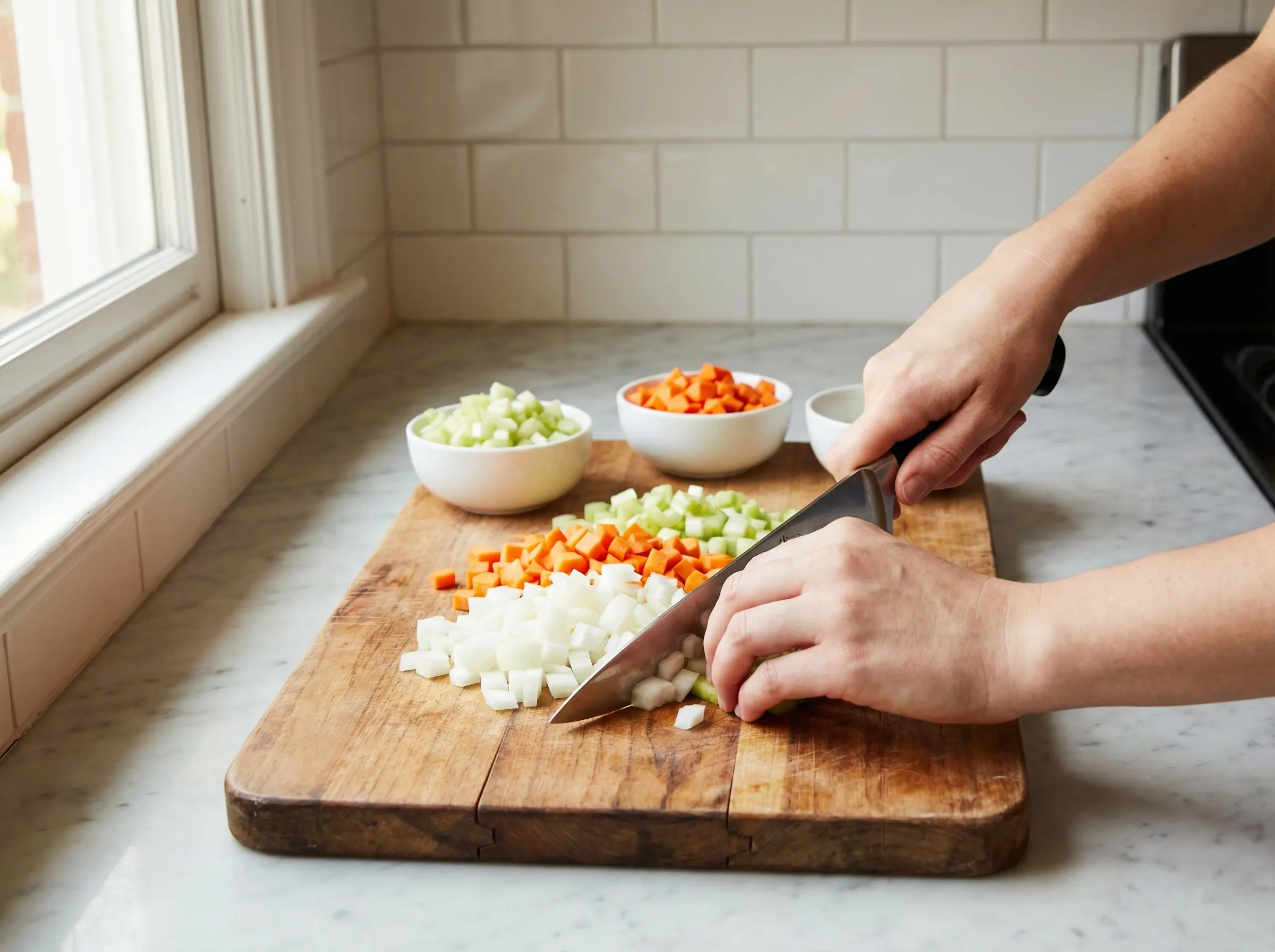
Begin by preparing your soffritto, the aromatic vegetable base that is essential to authentic Bolognese sauce. Finely dice the onion, carrots, and celery into very small, uniform pieces - about 1/4 inch or smaller. This is important because these vegetables will largely dissolve into the sauce during the long cooking time, creating body and sweetness rather than distinct vegetable chunks. The traditional ratio is equal parts of each vegetable, though some cooks use more onion for extra sweetness. Mince the garlic finely as well. Having all your vegetables prepped before you start cooking ensures a smooth process once the heat is on.
Step 2
Heat a large, heavy-bottomed pot or Dutch oven over medium heat. Add the diced pancetta or bacon and cook for 4-5 minutes until it renders its fat and becomes crispy. The rendered fat will be used to cook the vegetables, adding incredible depth of flavor to the sauce. If using bacon instead of pancetta, you may want to drain off some excess fat, leaving about 2 tablespoons in the pot. Add the diced onions, carrots, and celery to the pot with the pancetta. Cook for 8-10 minutes, stirring occasionally, until the vegetables are very soft and the onions are translucent and starting to turn golden. This slow cooking of the soffritto is crucial - do not rush it. The vegetables should be sweet and fragrant.
Step 3
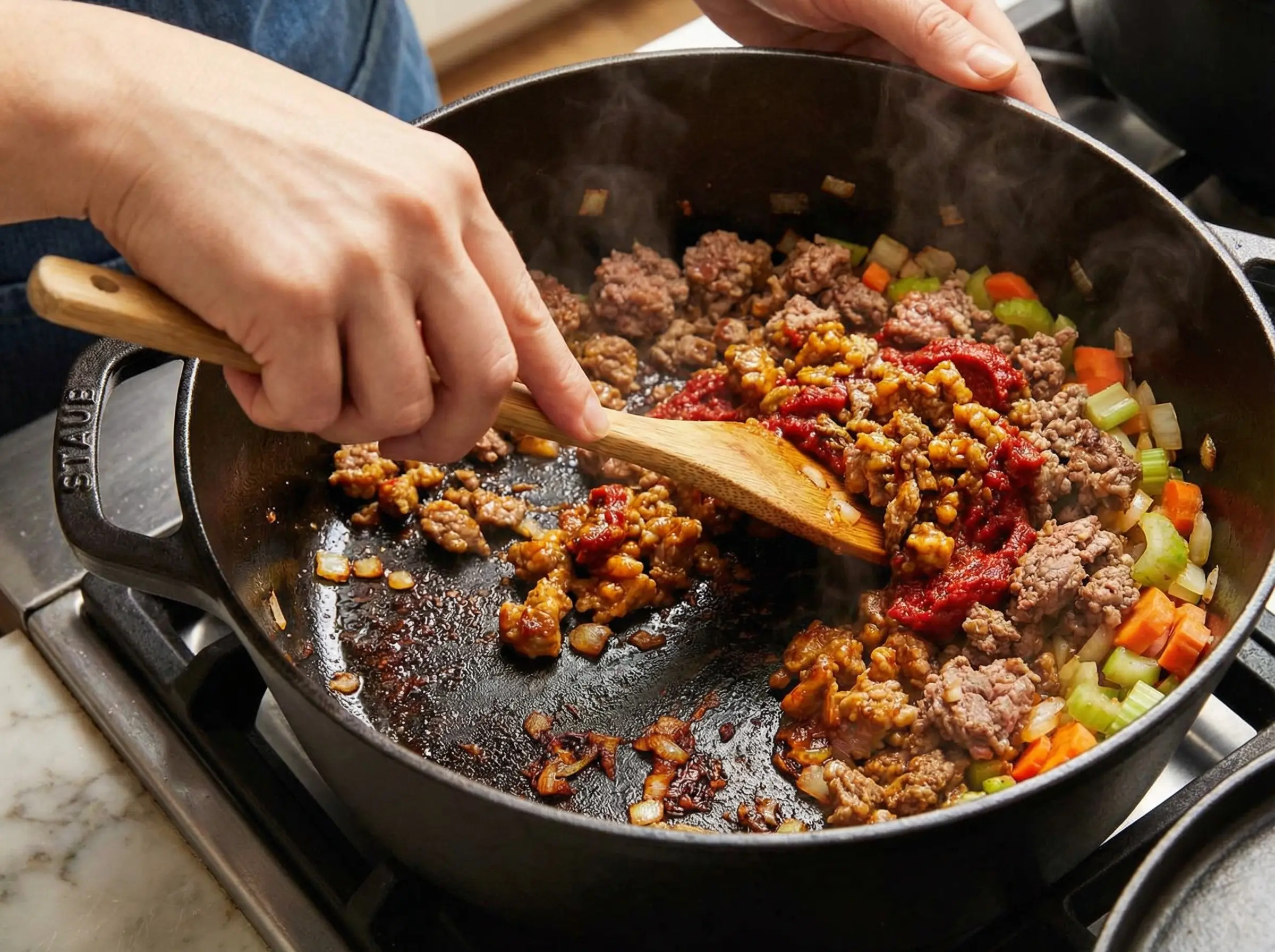
Add the minced garlic and cook for 1 minute until fragrant, then push the vegetables to the sides of the pot. Increase the heat to medium-high and add the ground beef to the center of the pot. Break it up with a wooden spoon and cook for 6-8 minutes until browned and no pink remains. You want the meat to develop some caramelization and brown bits on the bottom of the pot - these are flavor gold. Stir in the tomato paste and cook for 2 minutes, stirring constantly. The tomato paste will deepen in color and develop a rich, concentrated flavor as it caramelizes. This step is essential for building the complex, savory depth that makes Bolognese sauce so special.
Step 4
Pour in the red wine and stir, scraping up all the browned bits from the bottom of the pot with a wooden spoon. This process, called deglazing, captures all those flavorful caramelized bits and incorporates them into the sauce. Let the wine simmer for about 5 minutes until it has reduced by half and the alcohol has cooked off. You should be able to smell the wine becoming sweeter and less sharp. Add the crushed tomatoes, beef broth, milk, bay leaves, oregano, salt, and pepper. Stir everything together until well combined. The addition of milk is traditional in authentic Bolognese - it adds richness and helps tenderize the meat while mellowing the acidity of the tomatoes.
Step 5
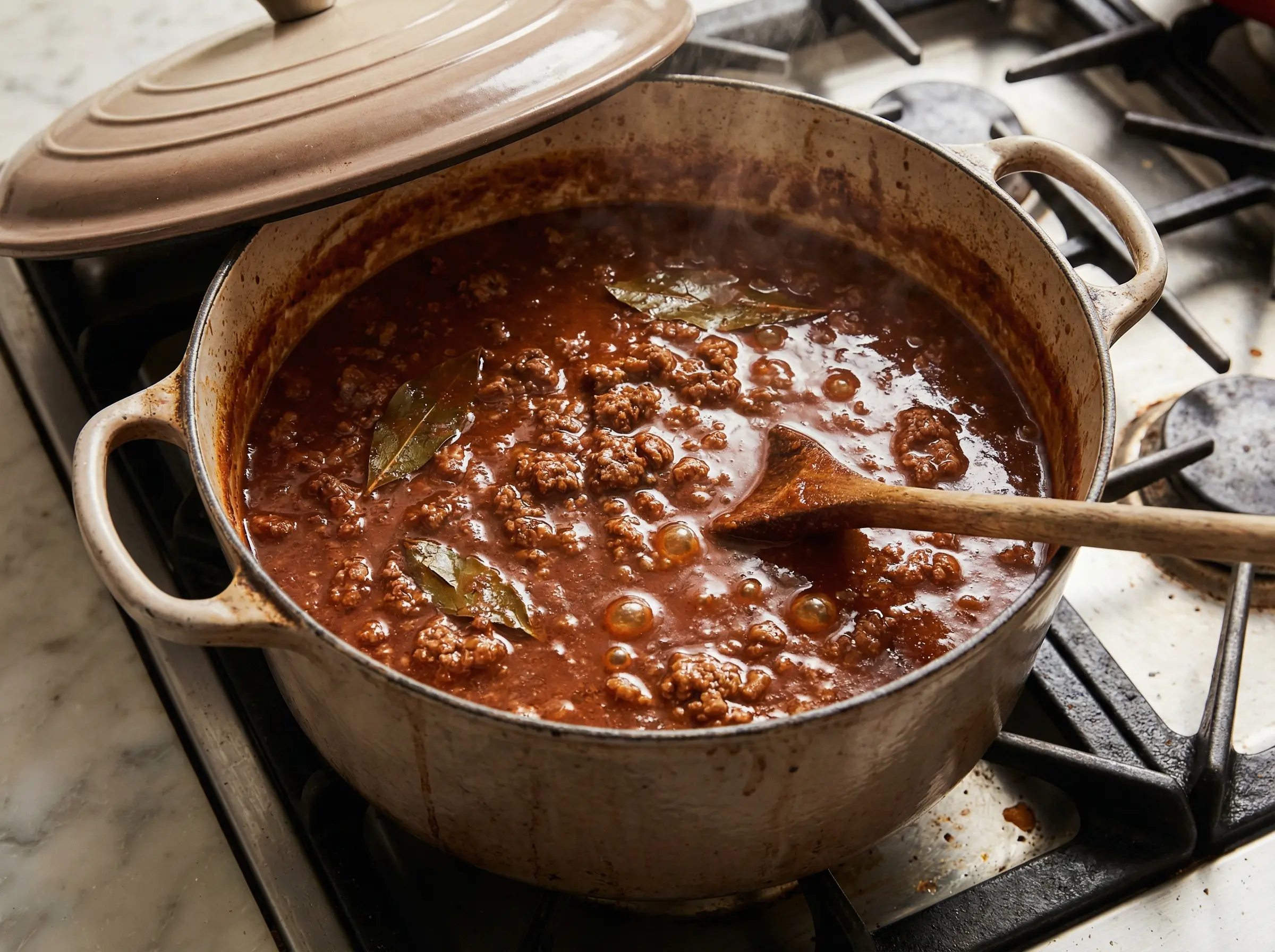
Bring the sauce to a gentle simmer, then reduce the heat to low. The sauce should barely bubble - you want a lazy, gentle simmer rather than a rolling boil. Partially cover the pot, leaving the lid slightly ajar to allow steam to escape. Let the sauce simmer for at least 1.5 to 2 hours, stirring every 20-30 minutes to prevent sticking. As it cooks, the sauce will thicken, darken, and develop incredibly deep, complex flavors. The vegetables will break down almost completely, the meat will become melt-in-your-mouth tender, and the fat will rise to the surface creating a glossy sheen. If the sauce becomes too thick, add a splash of broth or water. The longer you simmer it, the better it gets - some cooks simmer Bolognese for 3-4 hours. This slow cooking is what transforms simple ingredients into an extraordinary sauce.
Step 6
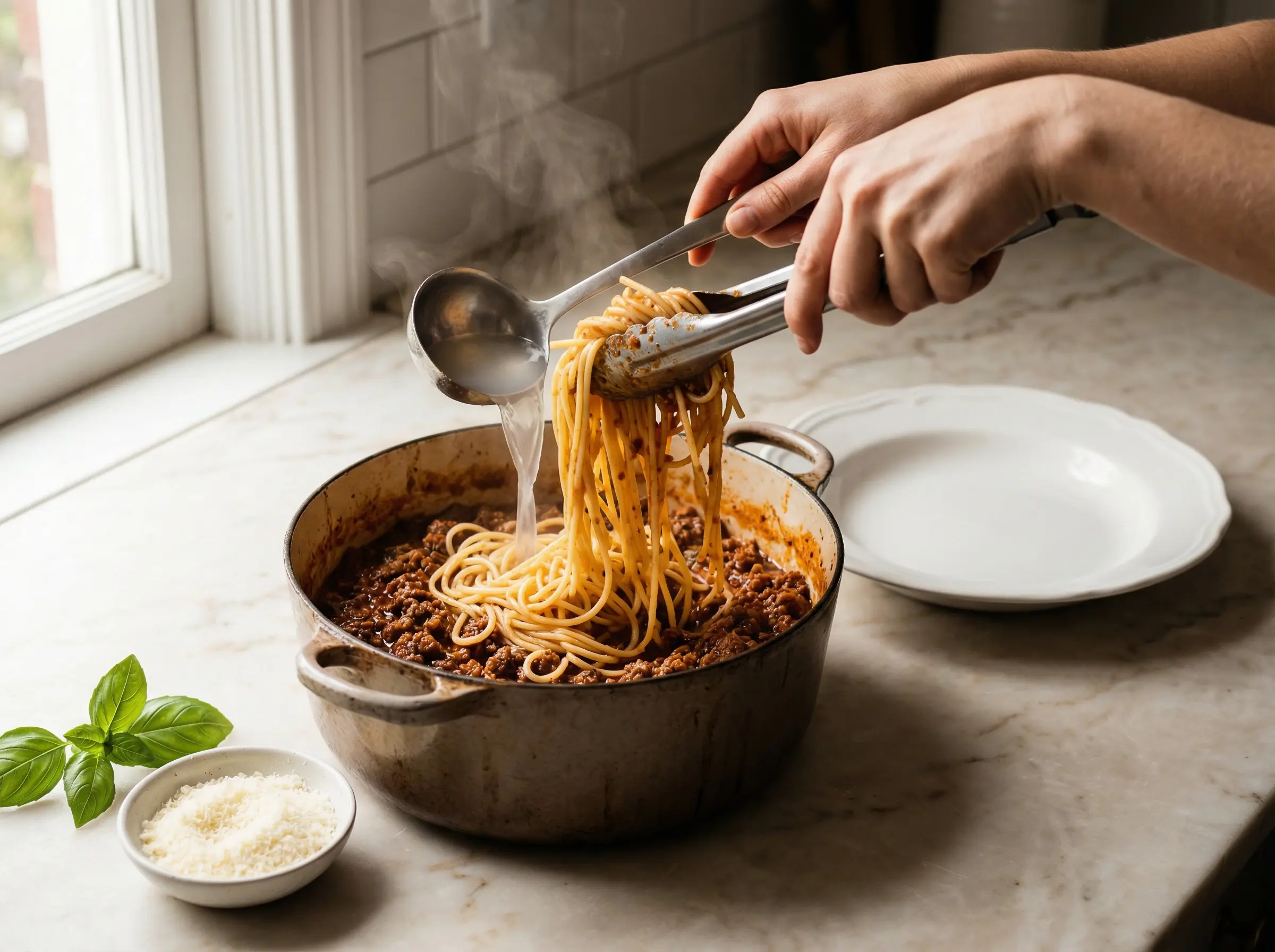
About 15 minutes before serving, cook the spaghetti according to package directions in a large pot of heavily salted boiling water until al dente - tender but still with a slight bite. Reserve 1 cup of the pasta cooking water before draining. Taste the Bolognese sauce and adjust seasoning with additional salt and pepper if needed. Remove the bay leaves. For the most authentic presentation, toss the drained spaghetti directly into the pot with the sauce, adding a splash of the reserved pasta water to help the sauce coat the pasta. The starch in the pasta water helps bind the sauce to the noodles. Alternatively, plate the spaghetti and top with generous spoonfuls of sauce. Serve immediately with freshly grated Parmesan cheese and torn fresh basil leaves. Bolognese sauce tastes even better the next day and freezes beautifully for up to 3 months, making it perfect for batch cooking.
You Might Also Like
Master Your Kitchen with PantryAI
Love this recipe? Save it, shop for it, and cook it with ease. Download the PantryAI app to organize your pantry, track expirations, and discover recipes based on what you already have.

On a computer?Scan with your iPhone camera to download PantryAI.








Swipe to see more screenshots