
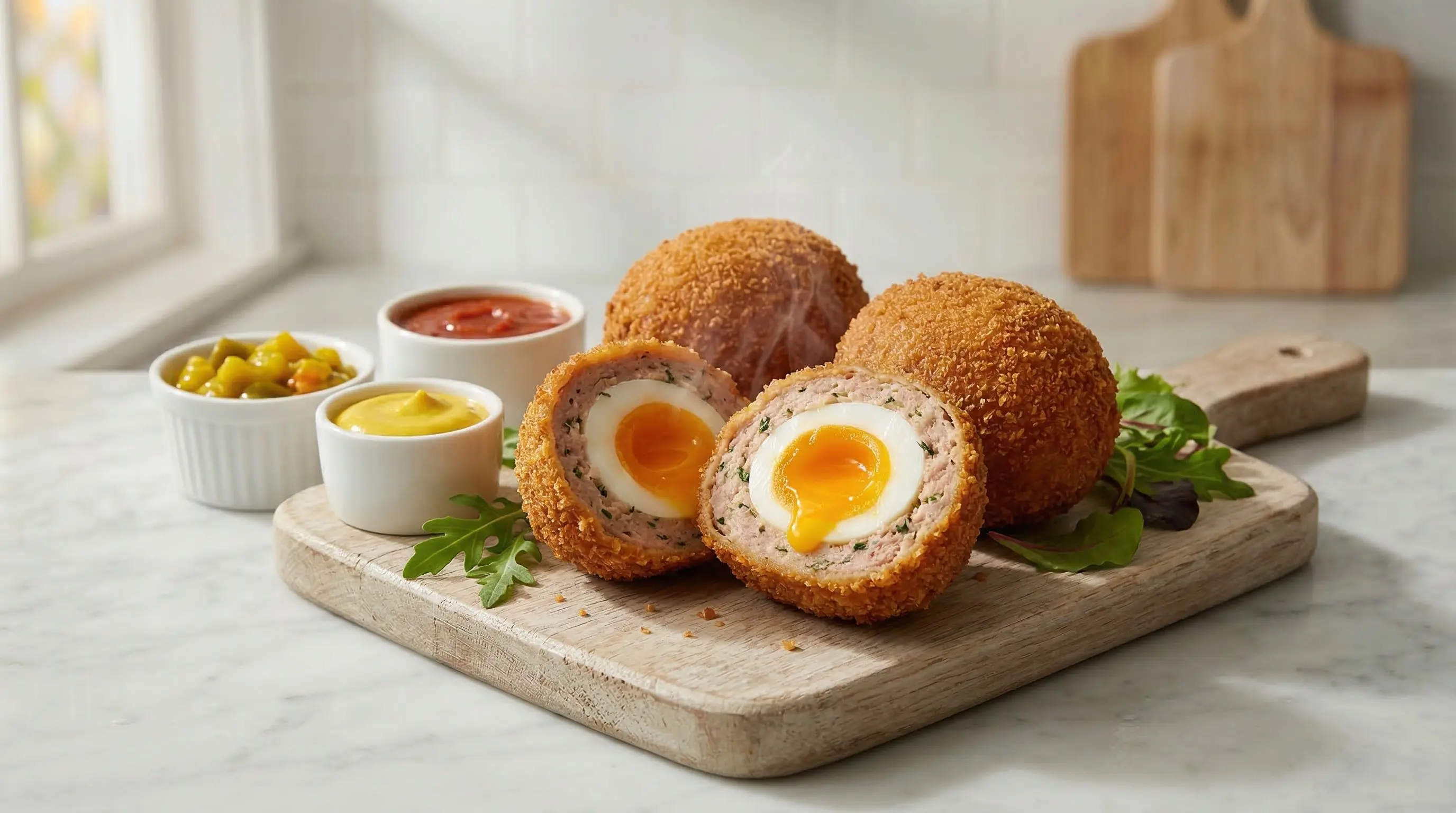
Scotch Eggs
Learn how to make authentic Scotch eggs, the classic British snack of soft-boiled eggs wrapped in seasoned sausage meat and fried until golden. These crispy, savory parcels are perfect for picnics, pubs, or hearty breakfasts!
Ingredients
The Story
Scotch eggs are a beloved British institution, hard- or soft-boiled eggs wrapped in seasoned sausage meat, coated in breadcrumbs, and deep-fried to golden perfection. Despite the name, Scotch eggs are not Scottish in origin - they were invented in London, most likely by the legendary department store Fortnum & Mason in 1738, where they were sold as a traveling snack for coach journeys. The name "Scotch" may derive from the term "scotched," meaning processed or cut, referring to the minced meat coating. Others suggest the name came from the dish's resemblance to "scotch collops," a traditional Scottish minced meat preparation. Scotch eggs became a staple of British pub culture and picnic baskets throughout the 19th and 20th centuries. They were the ultimate portable food - self-contained, sturdy, and satisfying, requiring no utensils or refrigeration for short periods. The Women's Institute made them a fixture of village fêtes and church bazaars. Pork pie shops sold them alongside their namesake products. By the mid-20th century, Scotch eggs had become somewhat associated with mass-produced convenience food, sold pre-packaged in supermarkets. But the gastropub revolution of the 1990s and 2000s brought Scotch eggs back to glory, with chefs elevating the humble snack by using premium sausage meat, free-range eggs with runny yolks, and creative flavor variations. What makes Scotch eggs so extraordinary is the layering of textures and the way each component complements the others. The outer coating shatters with a satisfying crunch, giving way to the savory, herbed sausage meat, which in turn reveals the creamy egg at the center. The modern preference is for a soft, jammy yolk that oozes golden when cut - a dramatic improvement over the chalky, fully-cooked yolks of mass-produced versions. The sausage meat, seasoned with sage, thyme, and a touch of mace, provides richness and herbs that elevate the simple egg. Served warm with English mustard or piccalilli, or at room temperature from a picnic hamper, Scotch eggs represent British ingenuity at its finest - transforming humble ingredients into something genuinely special.
Instructions
Step 1
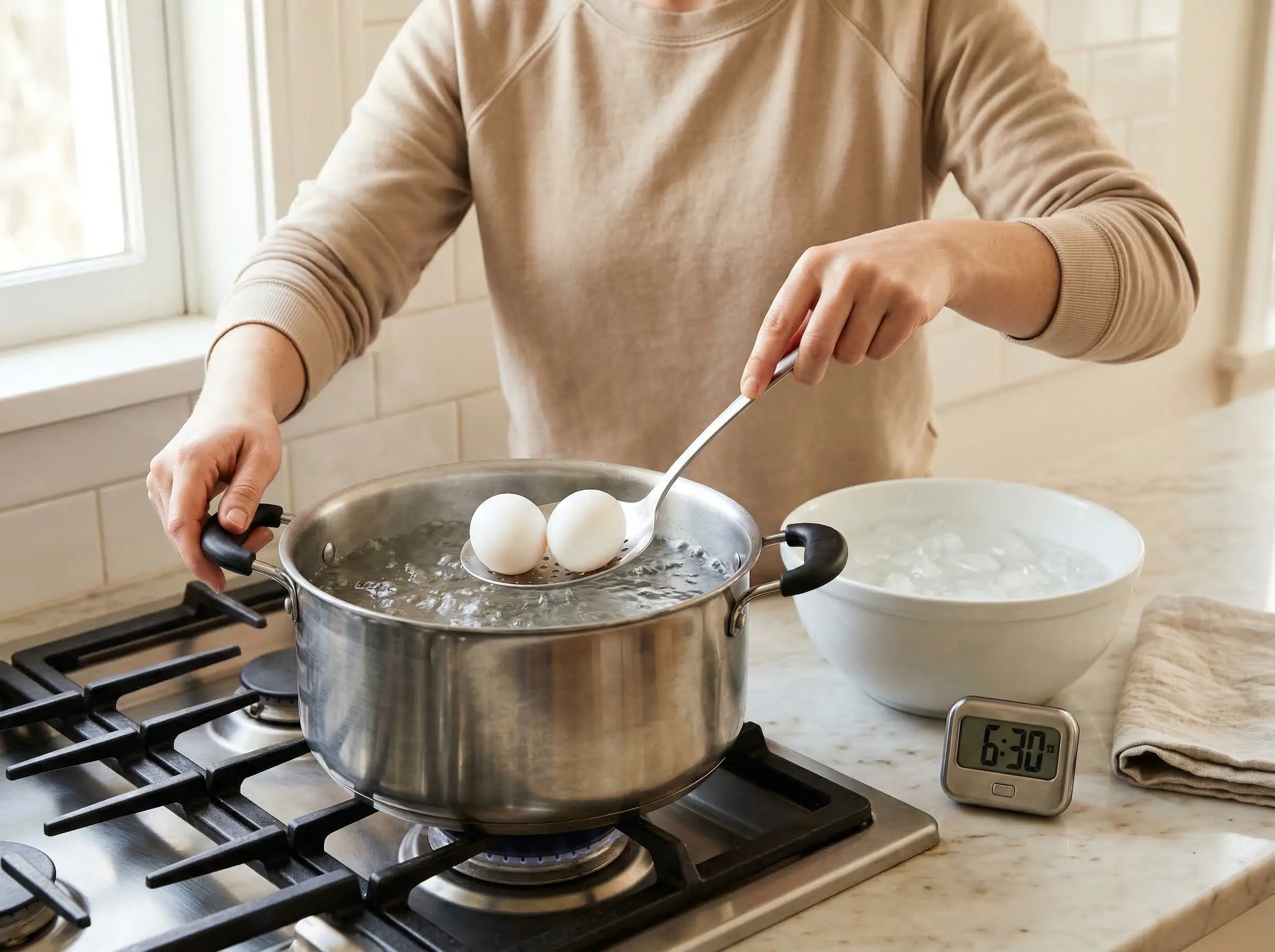
Soft-boil the eggs. Bring a pot of water to a rolling boil. Carefully lower 6 eggs into the water using a slotted spoon. For jammy yolks, boil for exactly 6 minutes 30 seconds. For slightly firmer but still soft yolks, boil for 7 minutes. For fully hard-boiled, cook for 10 minutes. Immediately transfer to a bowl of ice water and let cool completely for at least 10 minutes. The ice bath stops the cooking and makes peeling easier. Peel the eggs very carefully under cold running water - soft-boiled eggs are delicate. Pat completely dry with paper towels.
Step 2
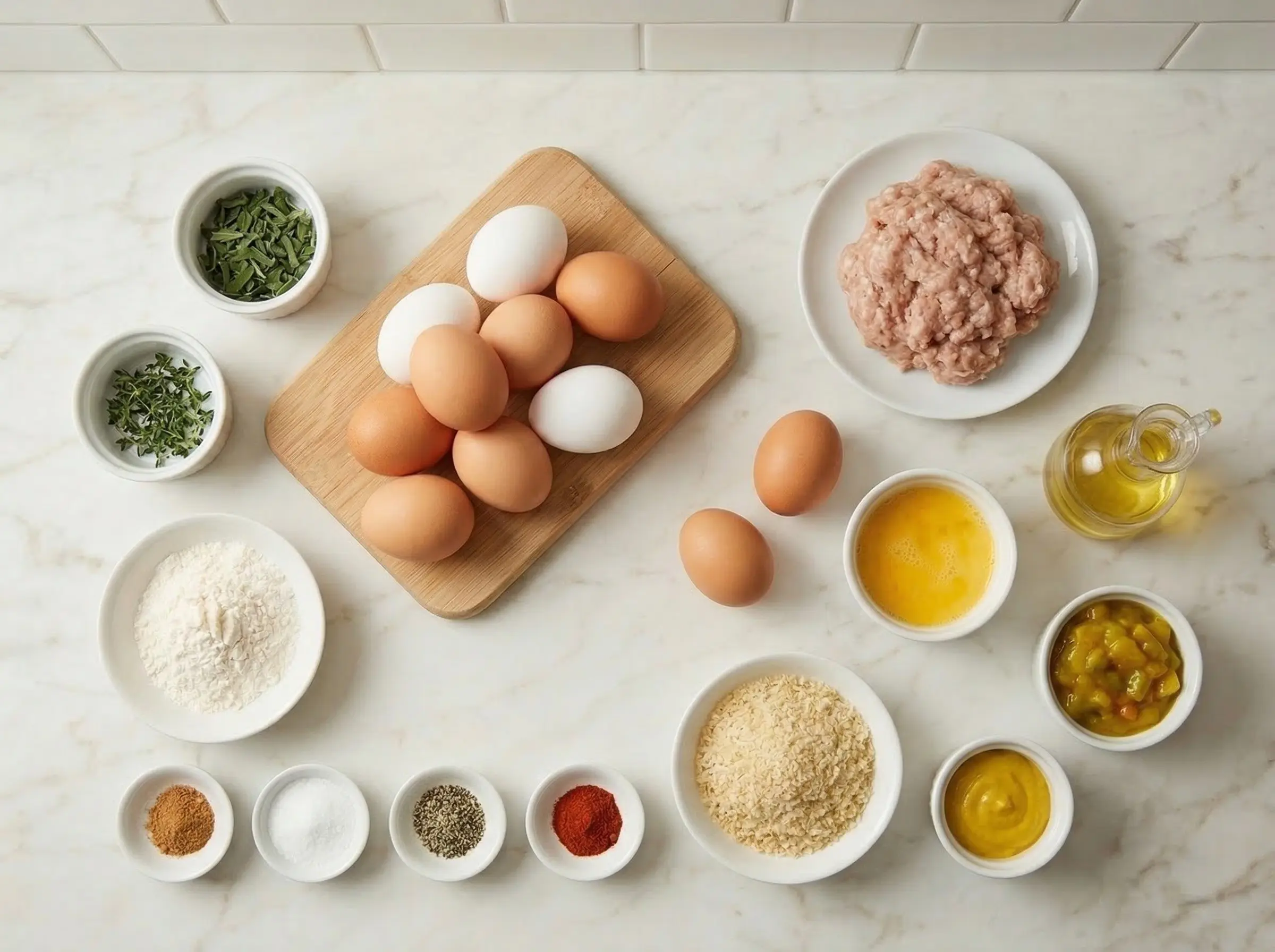
Season the sausage meat. If using sausages rather than bulk sausage meat, remove the casings. In a bowl, combine the sausage meat with the chopped sage, thyme, mace, salt, black pepper, and cayenne. Mix thoroughly with your hands until the herbs are evenly distributed. Do not overwork or the meat will become tough. Divide the mixture into 6 equal portions, about 2.5 oz each. Wet your hands to prevent sticking.
Step 3
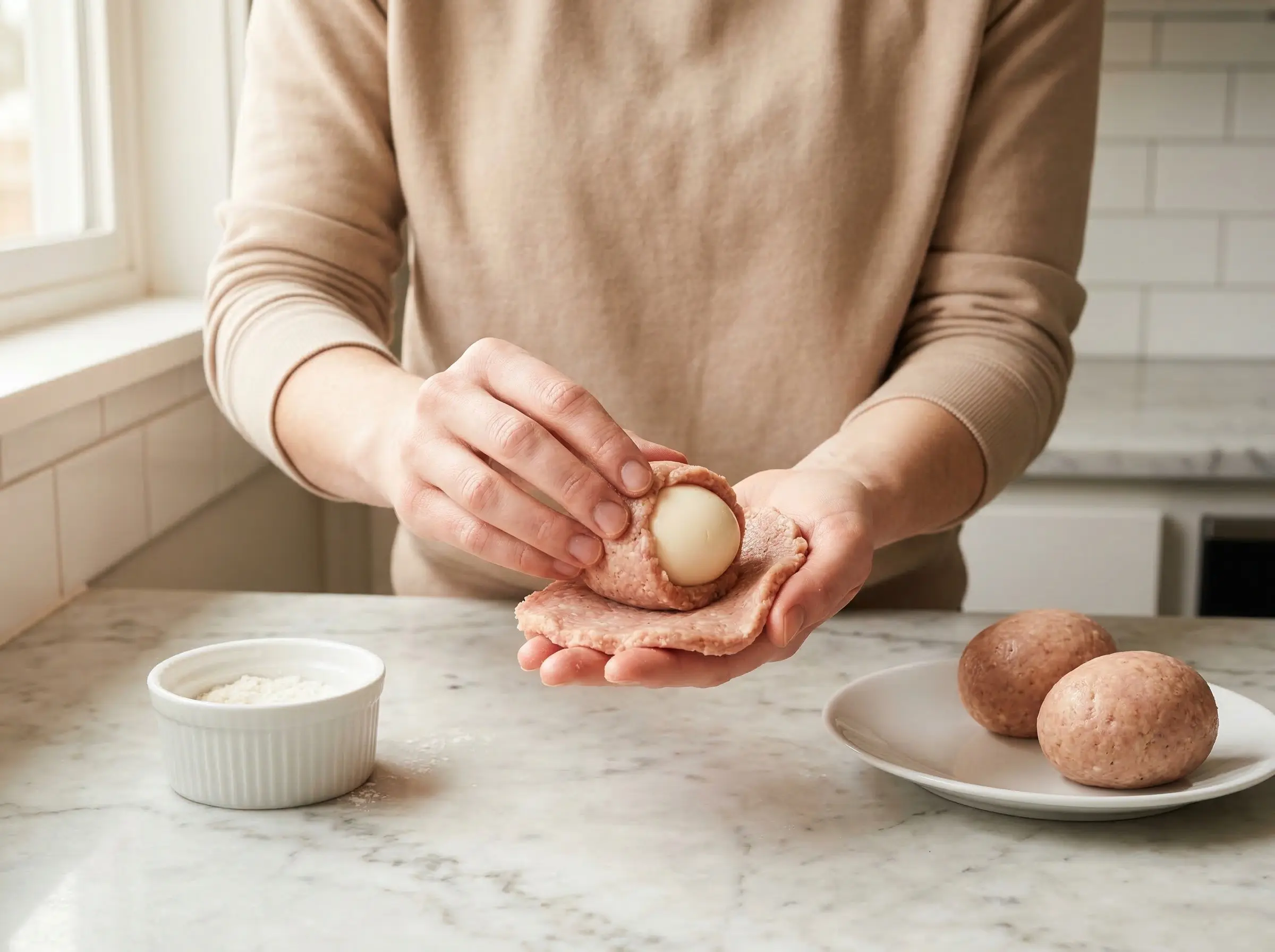
Wrap the eggs. Take one portion of sausage meat and flatten it into a thin, even patty in your palm, about 1/4 inch thick. It should be large enough to completely encase the egg. Dust the peeled egg lightly with flour - this helps the meat adhere. Place the egg in the center of the meat patty. Carefully wrap the meat around the egg, pressing the seams together and rolling gently between your palms to create a smooth, even coating with no gaps or thin spots. The meat should be the same thickness all around. Repeat with remaining eggs.
Step 4
Set up the breading station. Place the flour in one shallow bowl, beat the 2 remaining eggs in another, and place the panko breadcrumbs in a third. Season the flour with a pinch of salt. Roll each sausage-wrapped egg first in flour, shaking off excess. Then dip in beaten egg, coating completely. Finally, roll in panko, pressing gently to ensure full, even coverage. For extra crunch, double-bread by dipping again in egg and panko. Place breaded eggs on a plate and refrigerate for 15-20 minutes to set the coating.
Step 5
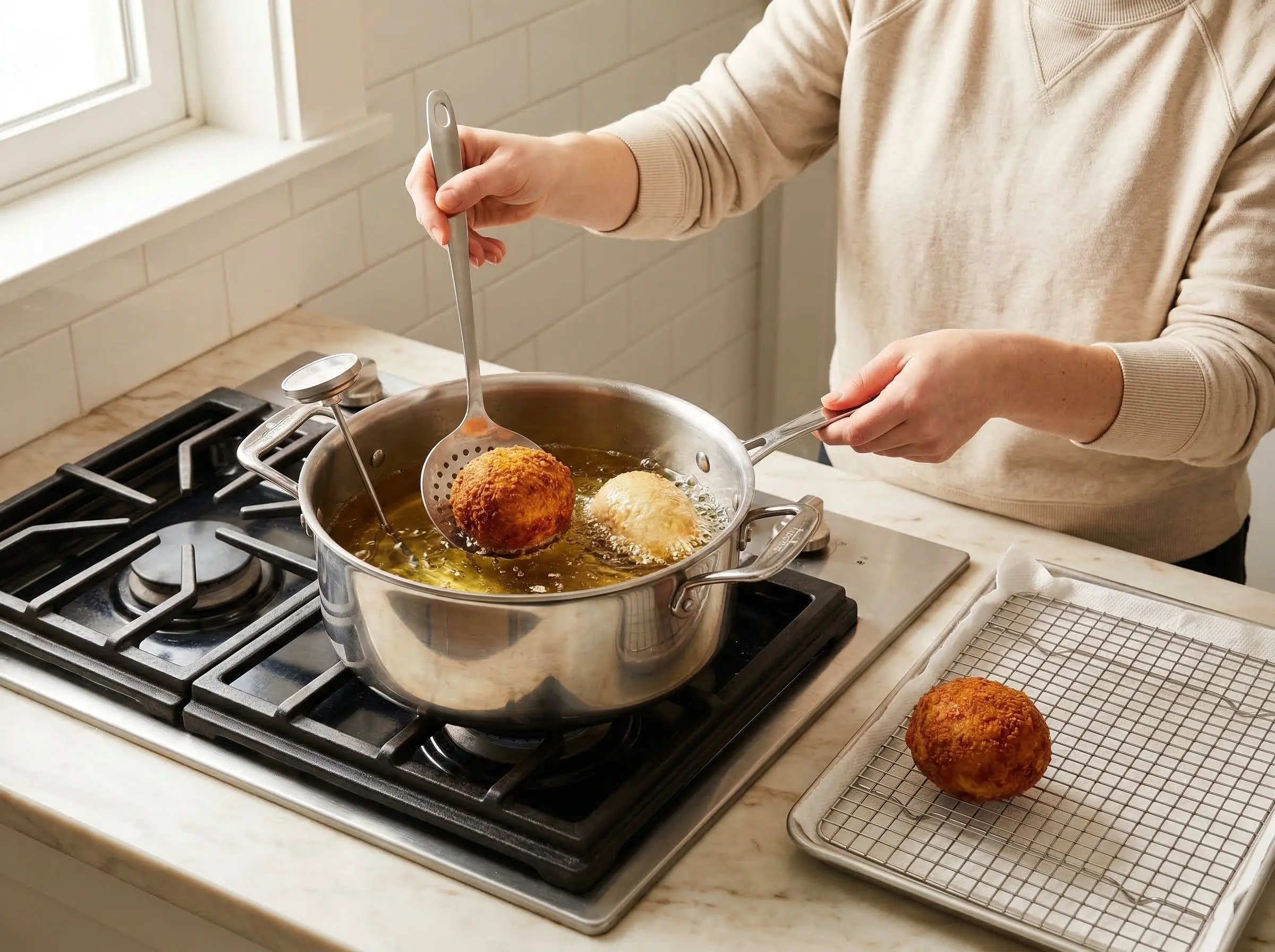
Fry the Scotch eggs. Pour vegetable oil into a deep pot or Dutch oven to a depth of 3-4 inches. Heat to 325 degrees F - this lower temperature is important as it allows the sausage meat to cook through without burning the exterior or overcooking the egg. Using a slotted spoon, carefully lower 2-3 eggs into the oil. Fry for 7-8 minutes, turning occasionally with a spoon to ensure even browning, until the coating is deeply golden brown and the sausage meat is cooked through. The internal temperature of the meat should reach 160 degrees F. Remove to a wire rack to drain.
Step 6
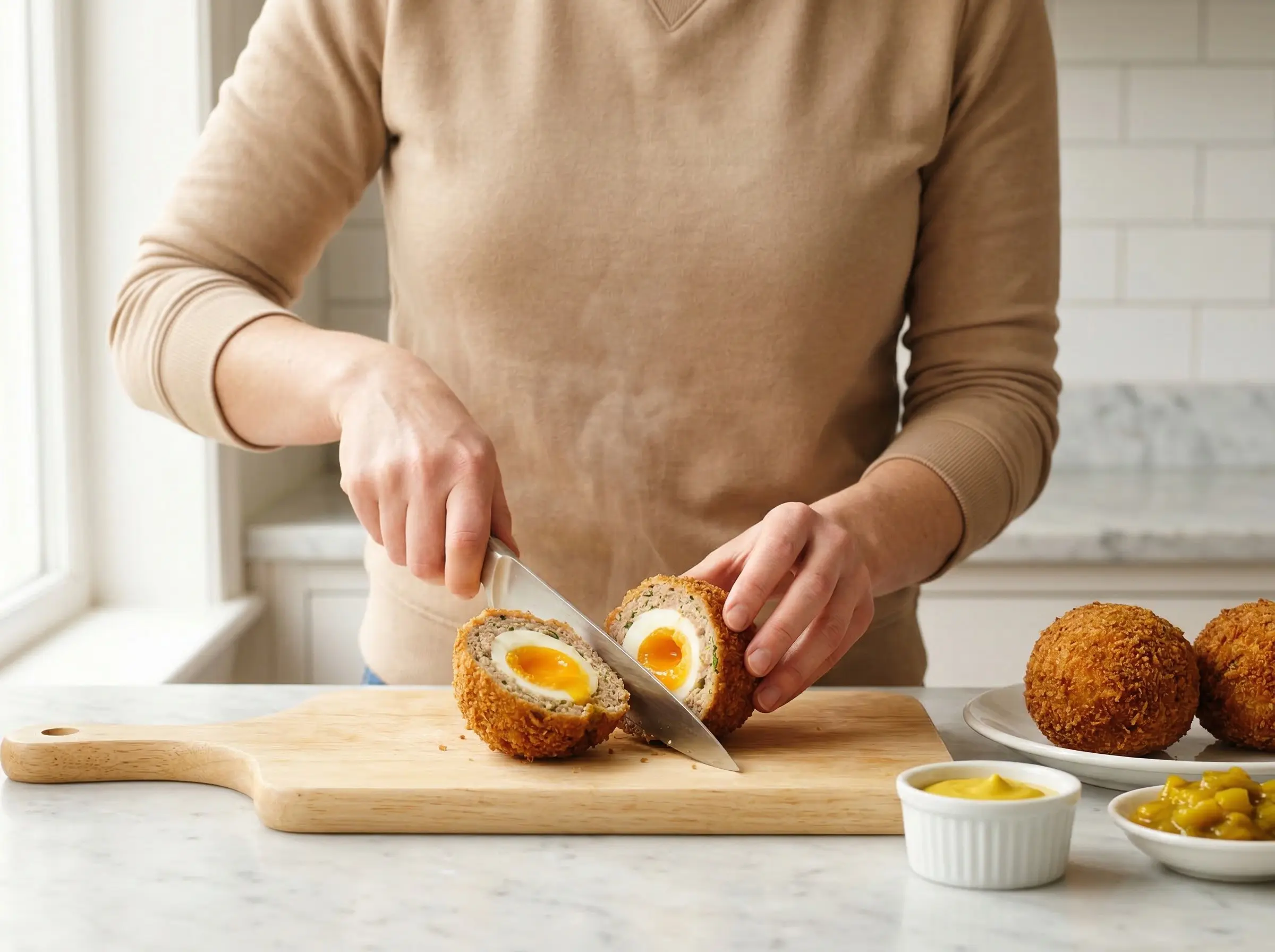
Rest and serve. Let the Scotch eggs rest for 3-5 minutes before serving - they will be extremely hot inside. Serve warm or at room temperature. Cut in half to reveal the beautiful layers: crispy golden crust, savory herb-flecked sausage meat, and the soft, jammy egg yolk at the center. Serve with English mustard, piccalilli, HP sauce, or a simple green salad. Scotch eggs are traditional picnic fare in Britain, packed in hampers alongside pork pies, cheese, and chutney. They keep well at room temperature for several hours, making them ideal for outdoor eating. Leftover Scotch eggs can be refrigerated for up to 3 days - reheat in a 375 degree F oven for 10-12 minutes to restore crispness, though the yolk will firm up when reheated.
You Might Also Like
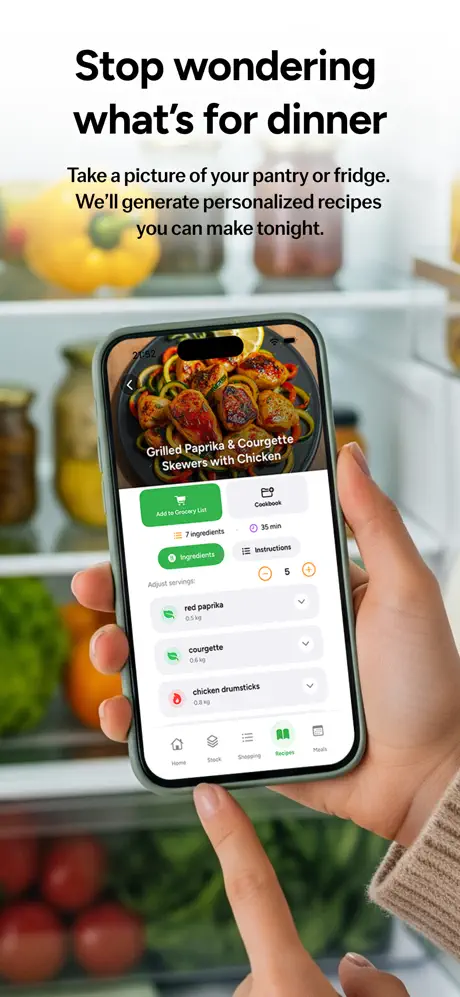
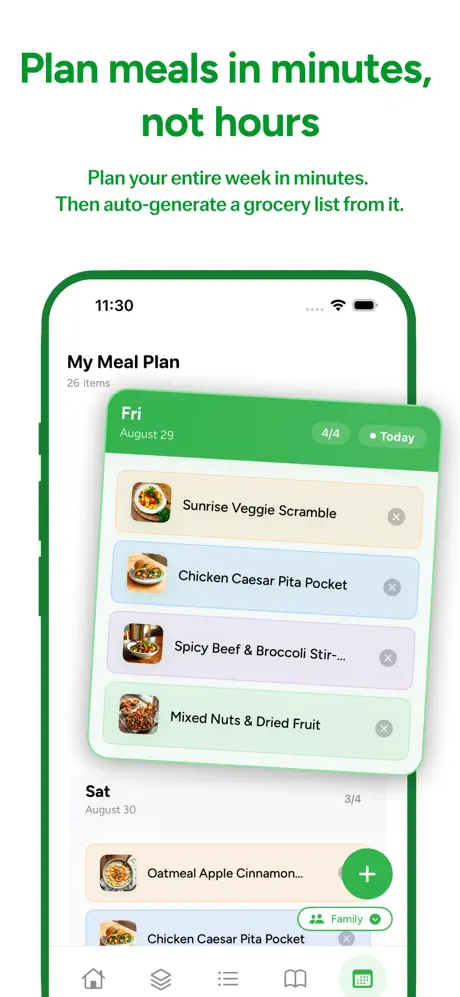
Master Your Kitchen with PantryAI
Love this recipe? Save it, shop for it, and cook it with ease. Download the PantryAI app to organize your pantry, track expirations, and discover recipes based on what you already have.

On a computer?Scan with your iPhone camera to download PantryAI.






Swipe to see more screenshots