
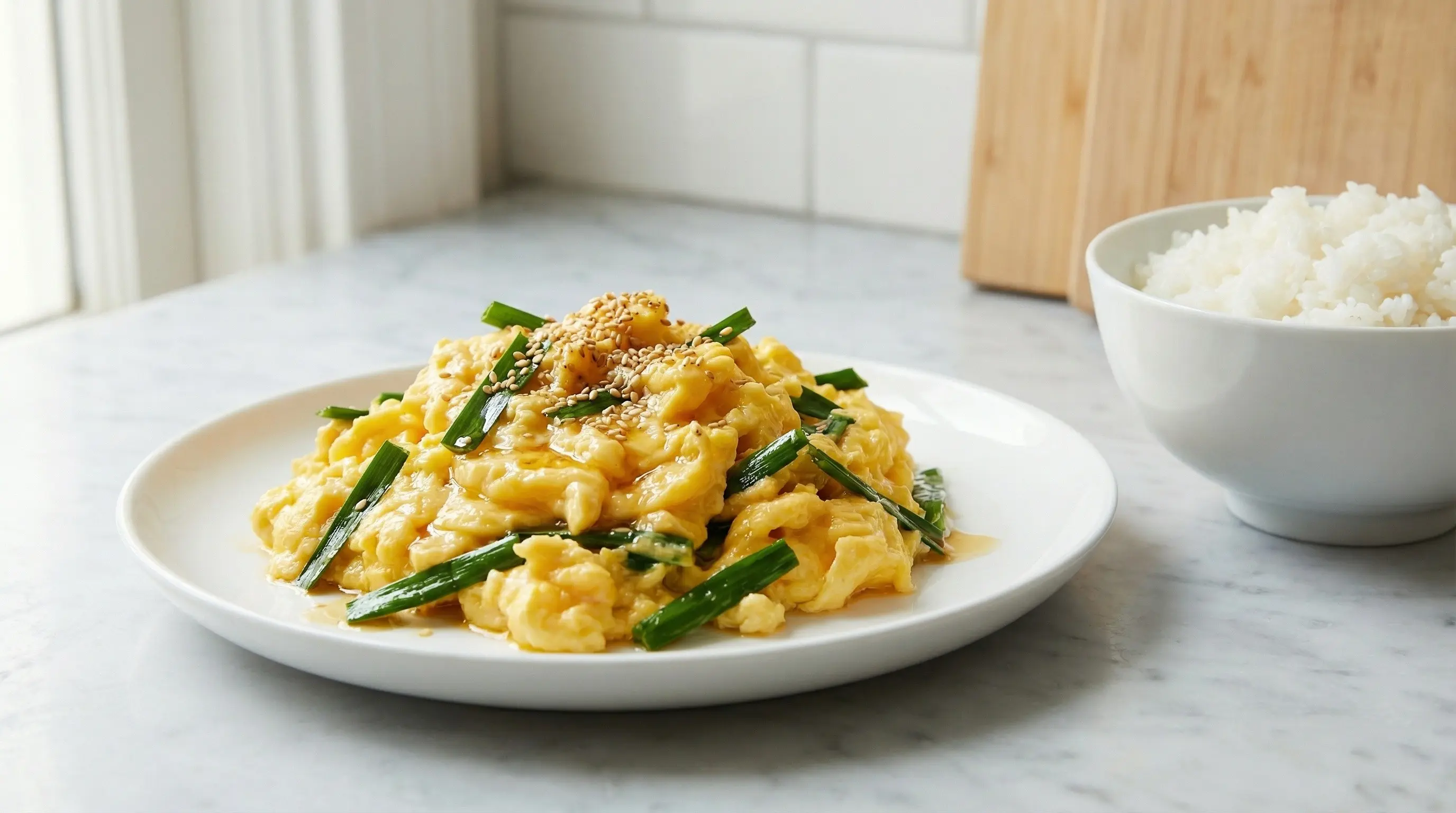
Niratama
Learn how to make niratama, a simple Japanese stir-fry of garlic chives and fluffy scrambled eggs. This quick, nutritious dish is ready in just 10 minutes and perfect over rice!
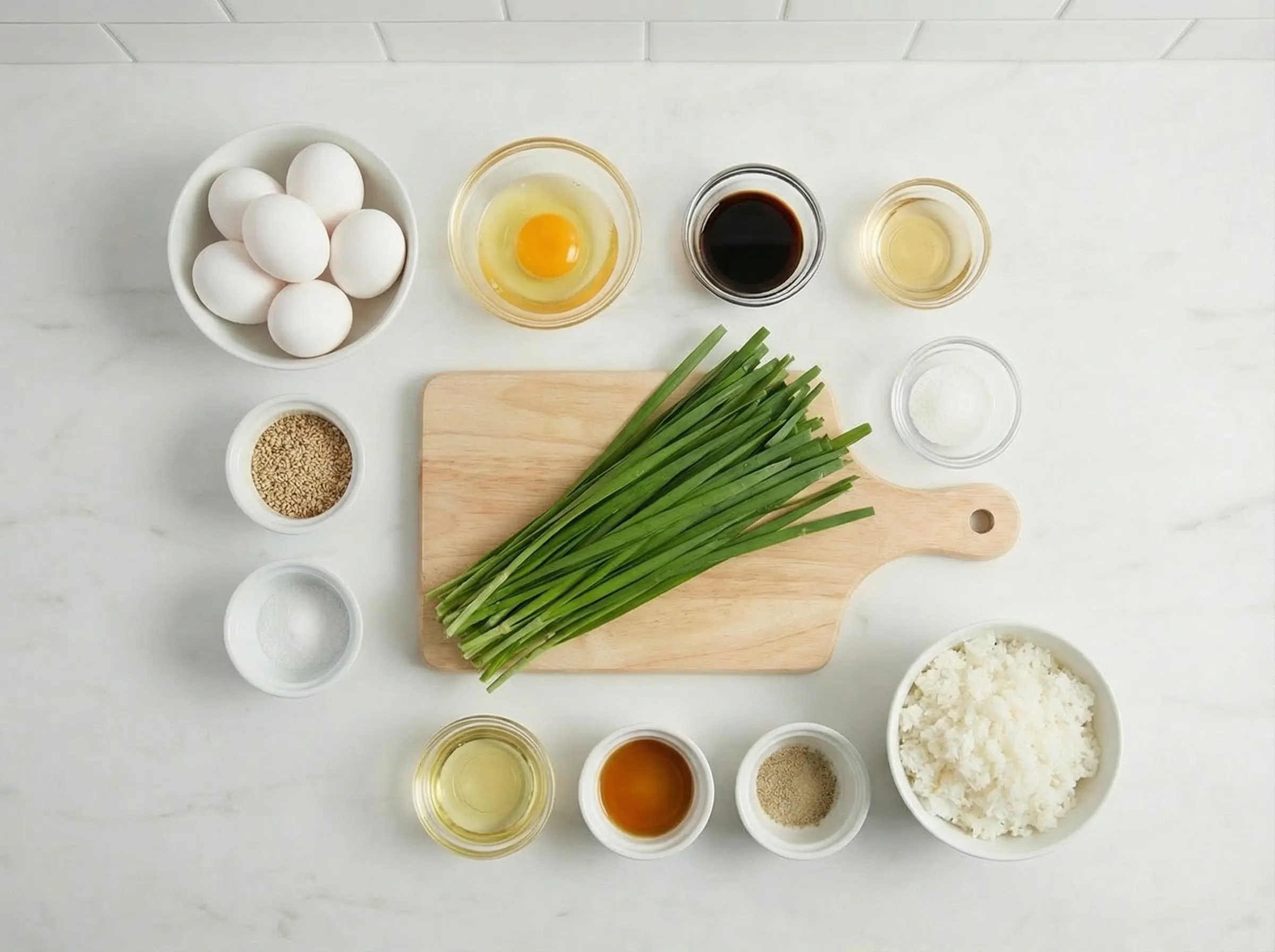
Ingredients
The Story
Niratama is one of Japan's most humble yet beloved home-cooked dishes, a simple stir-fry that combines just two main ingredients: nira (garlic chives) and tamago (eggs). The name is a straightforward portmanteau of these two components, reflecting the dish's no-nonsense character. Niratama belongs to the tradition of Japanese okazu - side dishes or accompaniments meant to be eaten with rice - though it is hearty enough to serve as a light main course. The dish showcases the Japanese talent for elevating simple ingredients through proper technique and restraint, creating something greater than the sum of its parts. Garlic chives, known as nira in Japanese, have been cultivated in East Asia for thousands of years and hold an important place in Japanese cuisine despite being less well-known internationally than other Japanese vegetables. Nira has a distinctive flavor - more pungent than regular chives but milder than garlic, with a subtle sweetness when cooked. In traditional Japanese medicine and folk wisdom, nira is believed to have warming properties that boost stamina and vitality, making niratama a popular dish during cold weather or when one needs an energy boost. The combination with eggs, a complete protein, creates a nutritionally balanced meal that Japanese home cooks have relied upon for generations. What makes niratama so special is the contrast between the soft, fluffy eggs and the slightly crisp, aromatic garlic chives. The technique requires high heat and quick cooking - the eggs should be added to the pan and stirred just enough to create large, soft curds while still slightly runny, then the nira is folded in at the last moment so it wilts but retains its vibrant green color and gentle crunch. The seasoning is minimalist: just a splash of soy sauce, perhaps a touch of mirin or sake, and maybe a drizzle of sesame oil. This simplicity allows the natural flavors of the fresh ingredients to shine. Served over steaming rice, niratama is the epitome of Japanese home cooking - quick, nourishing, affordable, and deeply satisfying.
Instructions
Step 1
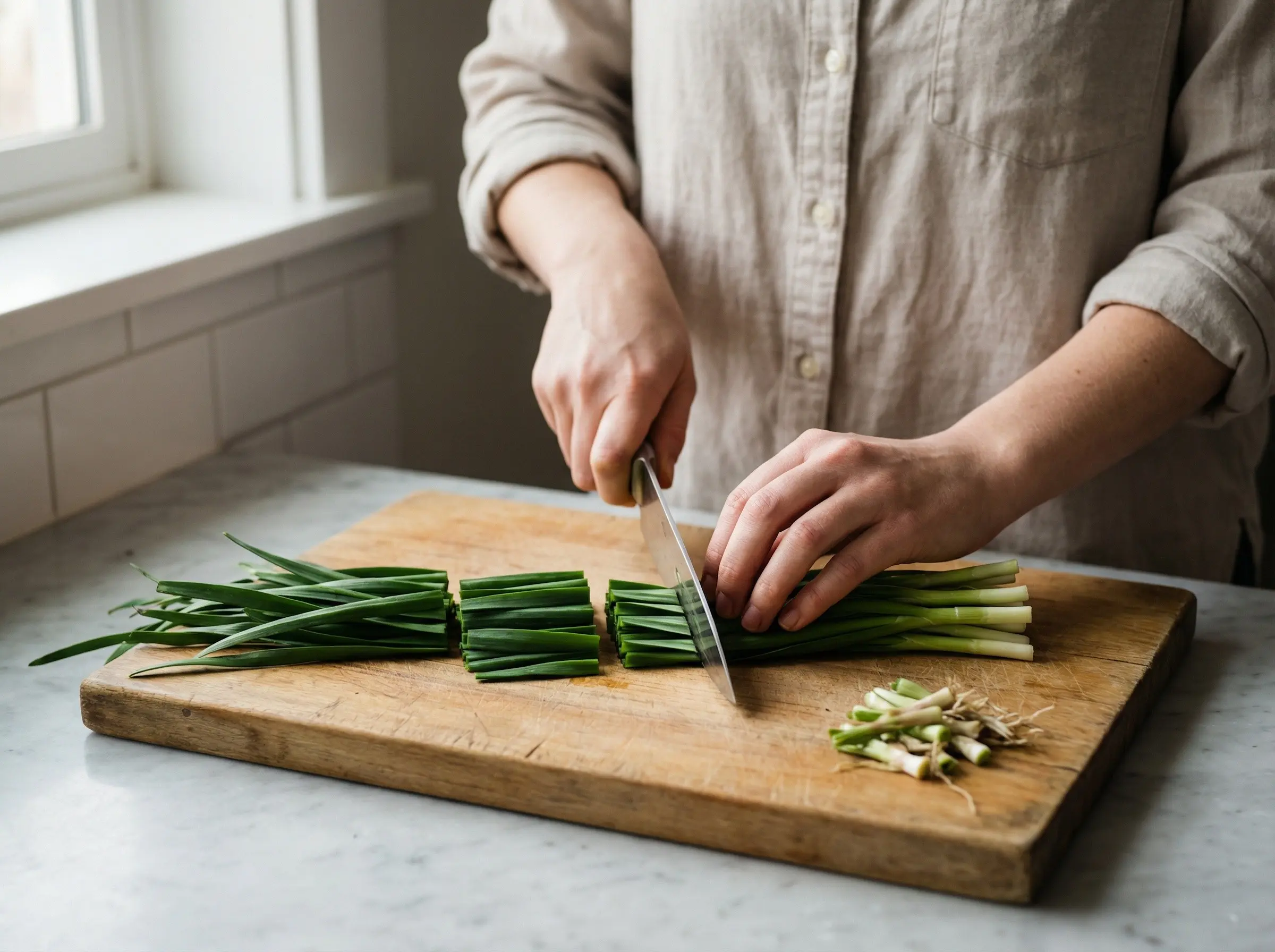
Prepare the garlic chives (nira). Wash them thoroughly and shake off excess water - wet nira will cause the oil to splatter and will steam rather than stir-fry. Trim off the root ends and any wilted tips. Cut the nira into 2-inch lengths, keeping the white and light green bottom parts separate from the darker green tops, as the bottoms take slightly longer to cook. You should have about 2 cups of cut nira. The chives should be fresh and vibrant green - avoid any that are yellowing or limp, as they will have lost their characteristic flavor and aroma.
Step 2
Prepare the eggs. Crack the eggs into a bowl and add the soy sauce, mirin, sugar, and salt. Beat the eggs lightly with chopsticks or a fork until just combined - you want some streaks of white and yolk still visible, as overbeating creates a uniform texture that is less interesting. The eggs should be loosely mixed, not homogeneous. The seasonings are added directly to the eggs so they are evenly distributed throughout the dish. Set the bowl near your cooking station along with all other ingredients - niratama cooks very quickly and you will not have time to measure once you start.
Step 3
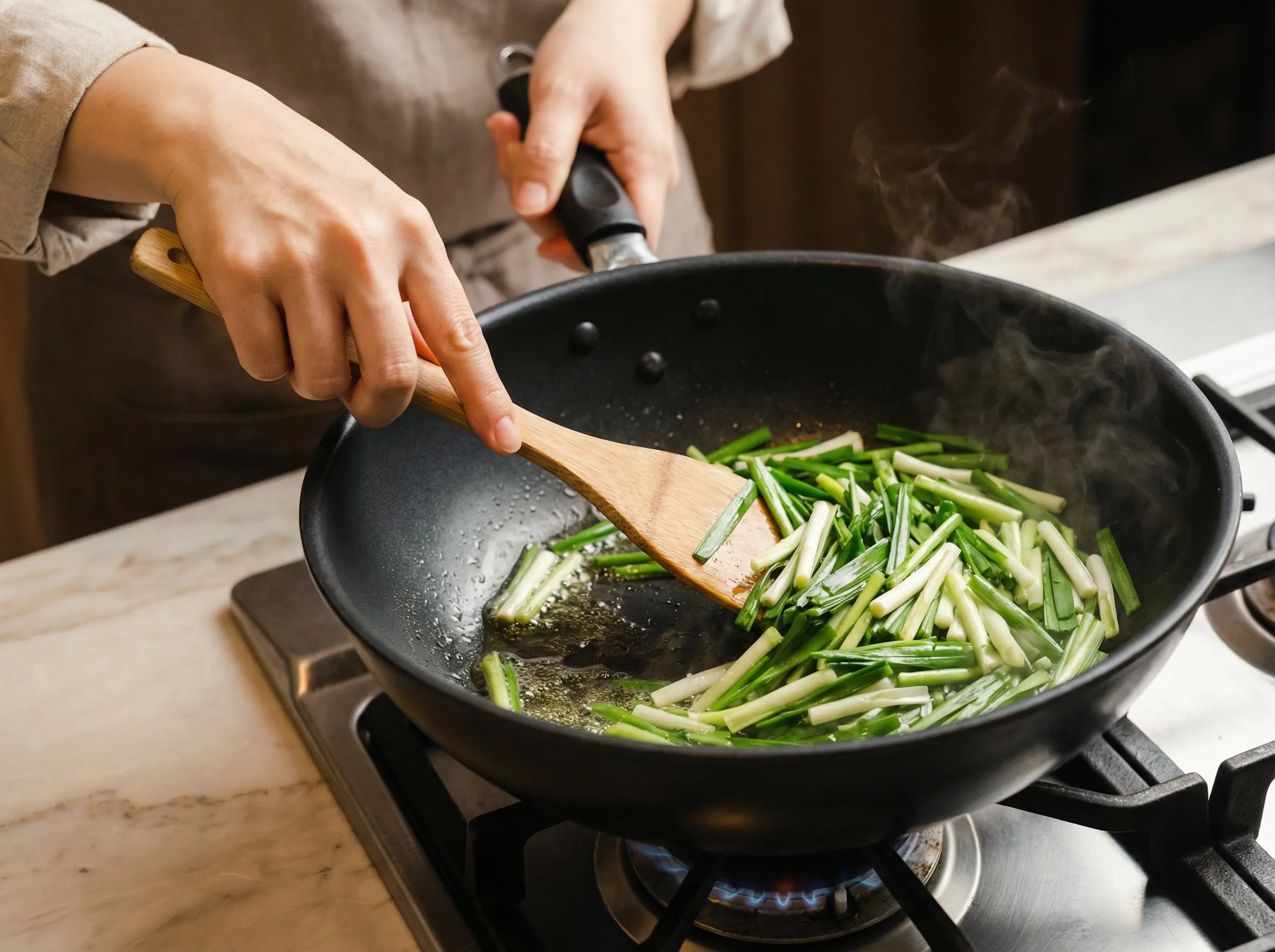
Heat a wok or large non-stick skillet over high heat until very hot. Add the vegetable oil and swirl to coat the surface. The pan must be hot enough that the eggs puff up immediately upon contact - this creates the light, fluffy texture that distinguishes good niratama. If you are unsure, test with a tiny drop of egg - it should sizzle and puff immediately. Add the white and light green parts of the nira first and stir-fry for about 30 seconds until they begin to soften and become fragrant.
Step 4
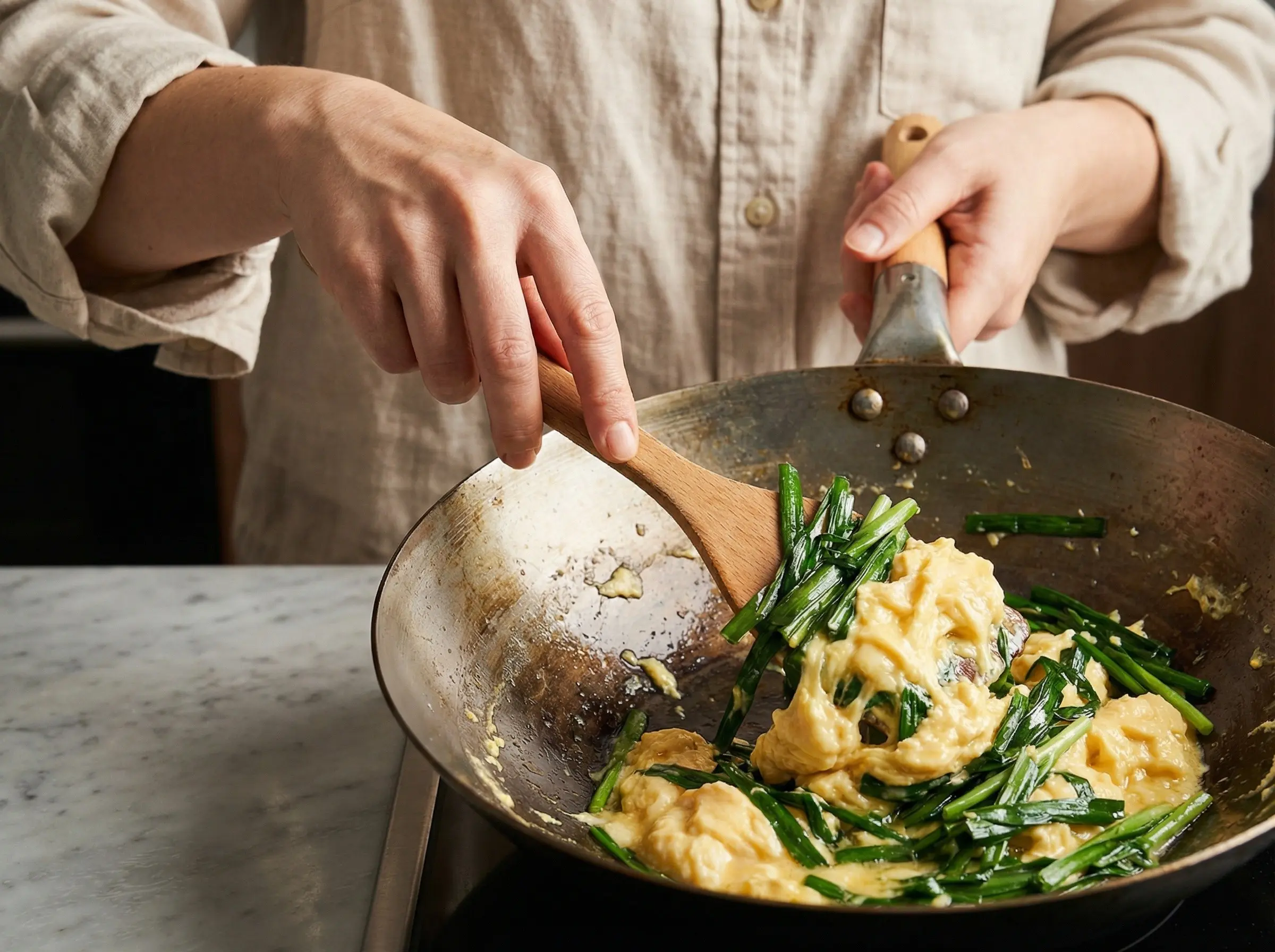
Pour the beaten egg mixture into the hot pan all at once. Let it sit undisturbed for about 5-10 seconds - the bottom will begin to set while the top remains liquid. Using a spatula or chopsticks, gently push the set edges toward the center while tilting the pan to let the uncooked egg flow to the edges. Repeat this motion 2-3 times, creating large, soft curds. The eggs should be about 70% cooked - still quite wet and glossy on top. Do not scramble vigorously or you will end up with small, dry curds instead of the desired large, fluffy ones.
Step 5
Add the dark green parts of the nira to the pan and fold them gently into the partially cooked eggs. Continue cooking for another 15-20 seconds, gently folding and turning the mixture. The nira should wilt slightly but retain its bright green color and a bit of crunch - overcooked nira becomes slimy and loses its fresh flavor. The eggs should still be soft, creamy, and slightly wet - they will continue cooking from residual heat. Remove the pan from heat just before the eggs look completely done.
Step 6
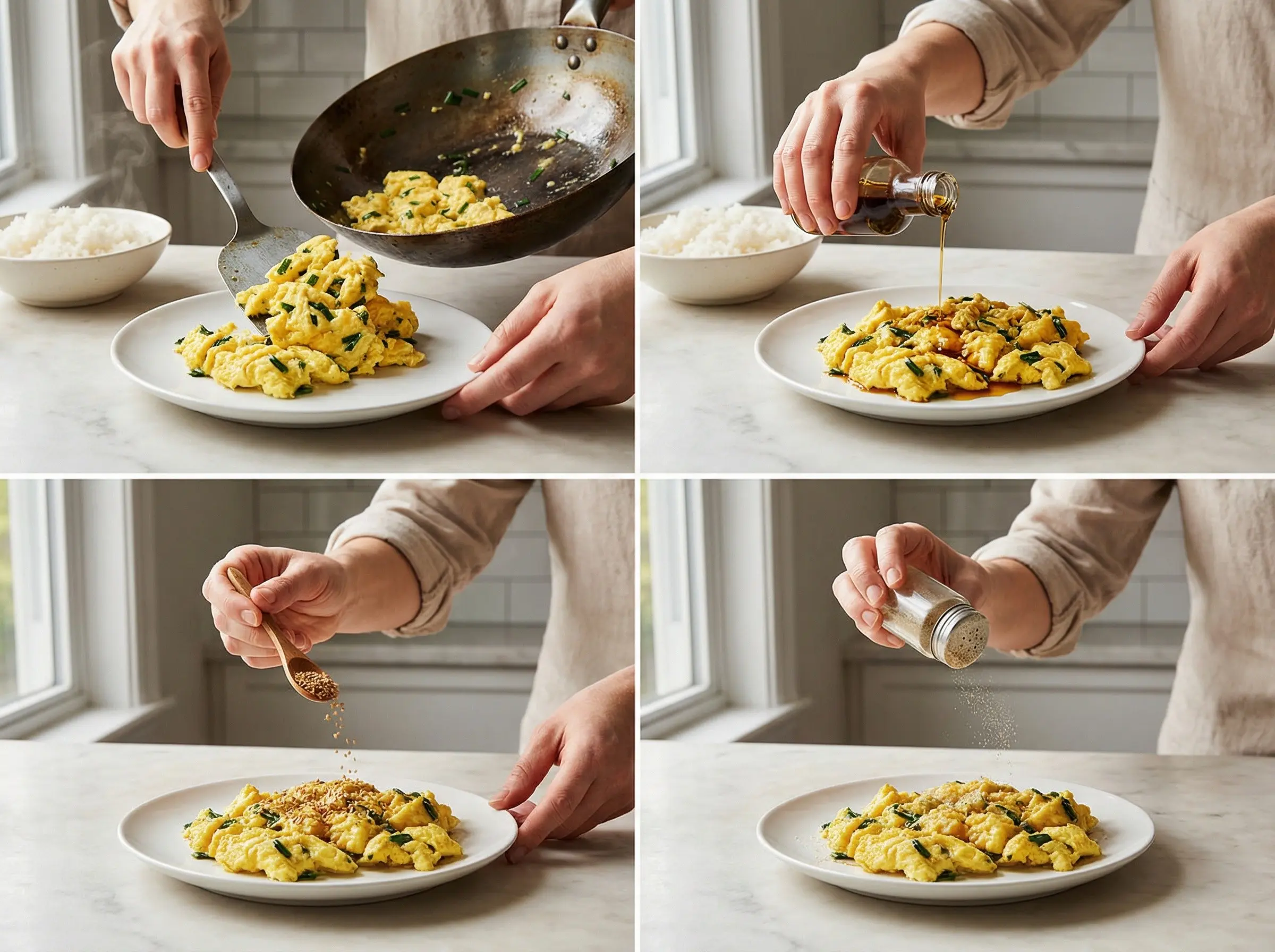
Drizzle the sesame oil over the niratama and give it one final gentle fold to incorporate. The sesame oil adds a nutty fragrance that complements the garlic chives beautifully. Season with white pepper to taste - white pepper is traditional and provides heat without black specks. Transfer immediately to serving plates or directly over bowls of hot steamed rice. Sprinkle with toasted sesame seeds for added texture and visual appeal. Serve right away while the eggs are still soft and creamy. Niratama is best eaten immediately - as it sits, the eggs continue to cook from residual heat and the nira releases moisture. Enjoy it as part of a traditional Japanese meal with rice, miso soup, and pickles, or simply on its own as a quick, satisfying meal. The combination of protein from the eggs and the vitamins from the nira make it a nutritionally complete dish that Japanese home cooks have relied upon for generations.
You Might Also Like
Master Your Kitchen with PantryAI
Love this recipe? Save it, shop for it, and cook it with ease. Download the PantryAI app to organize your pantry, track expirations, and discover recipes based on what you already have.

On a computer?Scan with your iPhone camera to download PantryAI.








Swipe to see more screenshots