
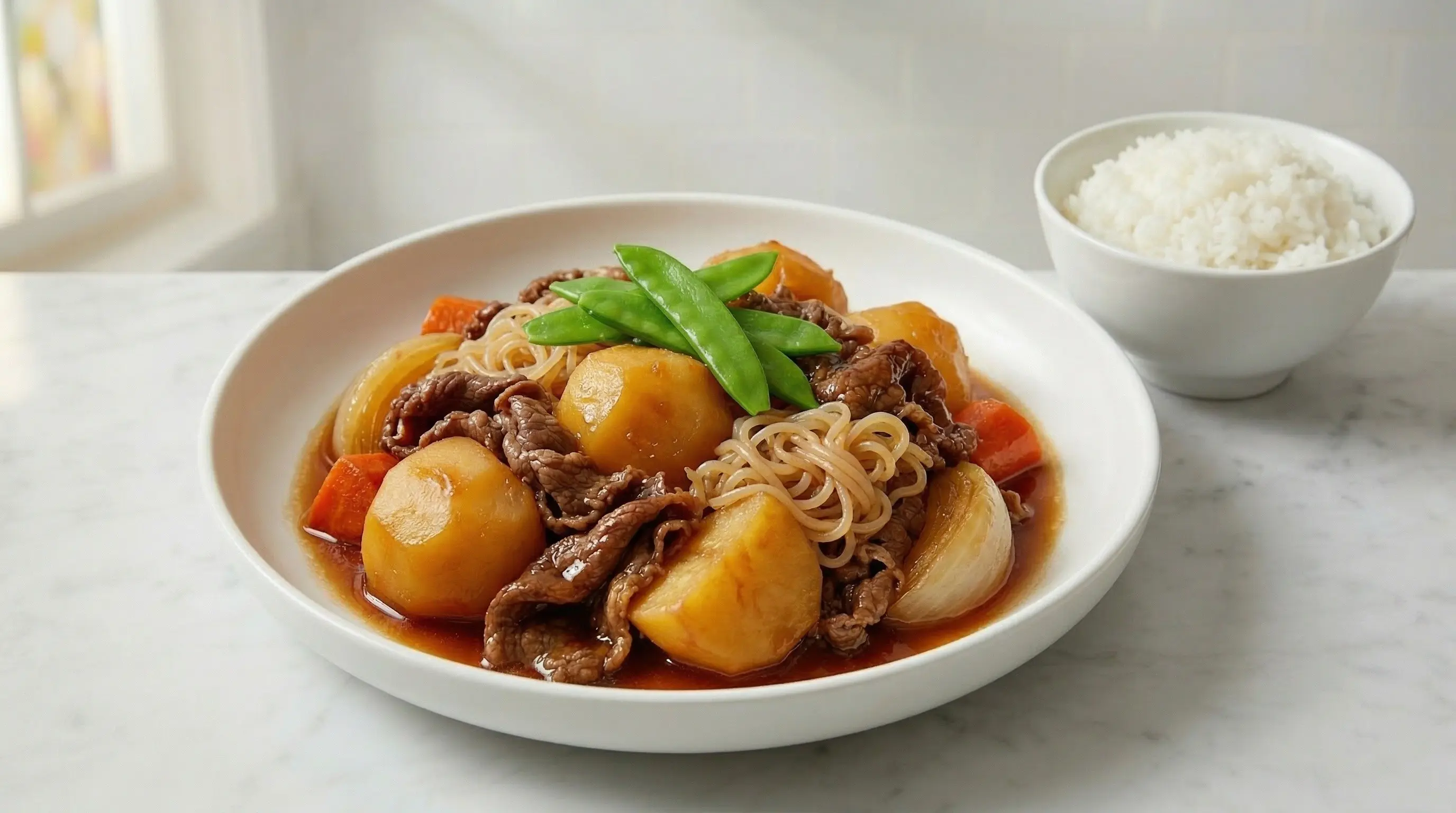
Nikujaga
Learn how to make authentic nikujaga, Japan's beloved home-cooked comfort food of tender beef and potatoes simmered in sweet soy broth. This classic yoshoku dish is the ultimate taste of Japanese maternal love!
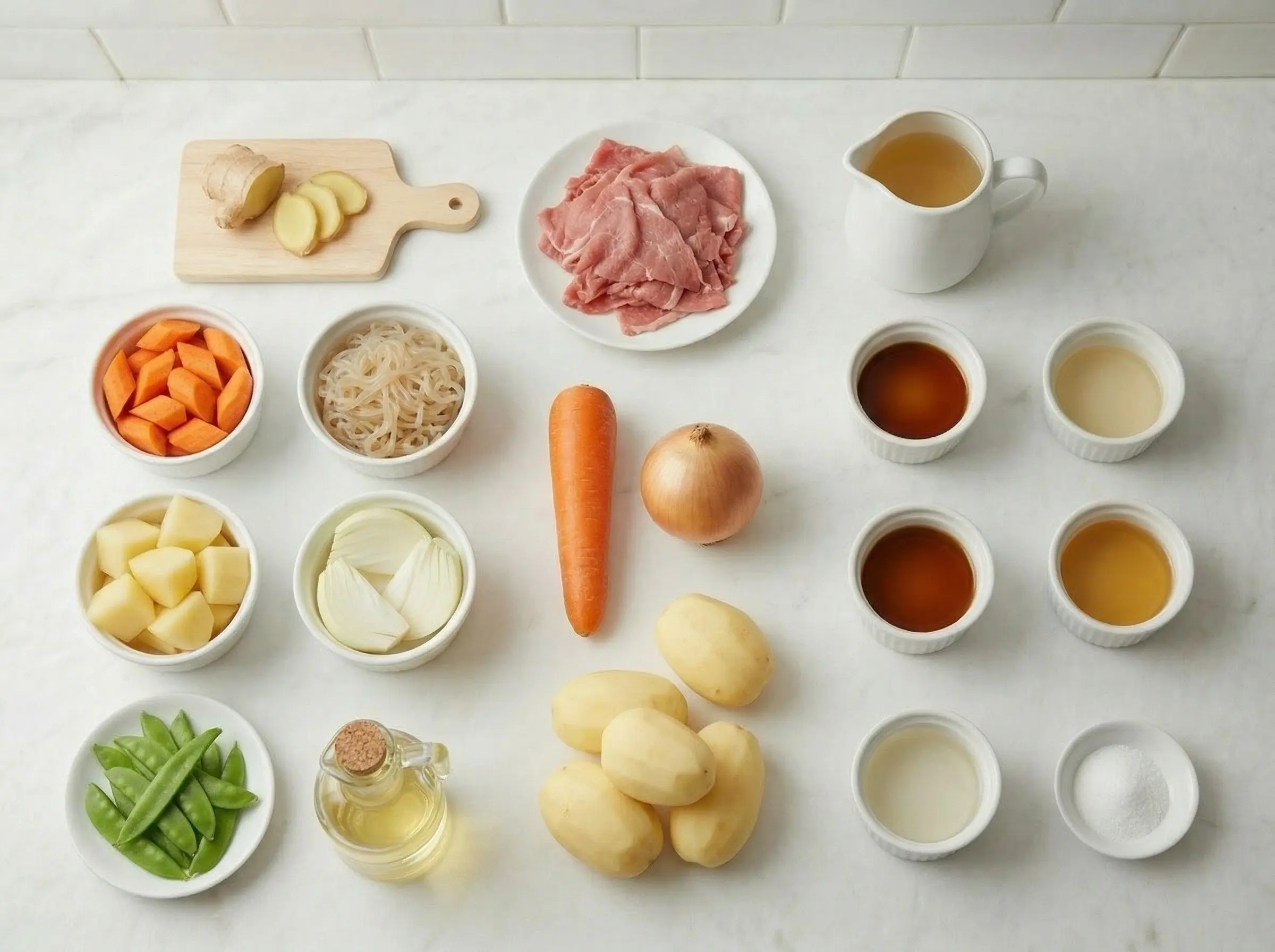
Ingredients
The Story
Nikujaga is Japan's quintessential comfort food, a homey stew of thinly sliced beef, potatoes, and onions simmered in a sweet-savory broth of soy sauce, mirin, and dashi. The name translates simply as "meat and potatoes" (niku = meat, jaga = potatoes, shortened from the Portuguese-derived "jagaimo"), and the dish holds a special place in Japanese hearts as the taste of home cooking and maternal love. When Japanese people are asked what dish reminds them of their mother, nikujaga is consistently among the top answers. It is the kind of food that warms from the inside out, nourishing both body and soul. The origins of nikujaga are surprisingly recent and surprisingly Western. The dish is said to have been created in the late 19th century by naval cooks attempting to recreate British beef stew for Togo Heihachiro, who would later become a famous admiral in the Imperial Japanese Navy. Having studied in Britain, Togo reportedly missed the beef stews he had enjoyed there. Without access to Western ingredients like wine, butter, and demi-glace, the navy cooks improvised with what they had - soy sauce, sake, mirin, and sugar - creating something entirely new. Both the cities of Maizuru and Kure claim to be the birthplace of nikujaga, and the friendly rivalry continues to this day, with each city promoting its own version. What makes nikujaga so extraordinary is how it embodies the Japanese principle of making simple ingredients shine through careful technique. The beef, sliced paper-thin as is traditional in Japan, cooks in moments while remaining tender. The potatoes absorb the sweet-savory braising liquid, becoming creamy and deeply flavored. The onions melt into sweetness. Shirataki noodles, if included, provide textural contrast. The broth itself, reduced to a glossy coating, balances sweetness and umami in the way that defines Japanese home cooking. Nikujaga is not restaurant food - it is too humble, too domestic for that. It is the dish that mothers make for their children, that wives prepare for their husbands, that anyone might cook when they need comfort. In Japan, it is said that a woman who makes good nikujaga will make a good wife - a somewhat dated sentiment, but one that speaks to how deeply this simple stew is woven into Japanese domestic life.
Instructions
Step 1
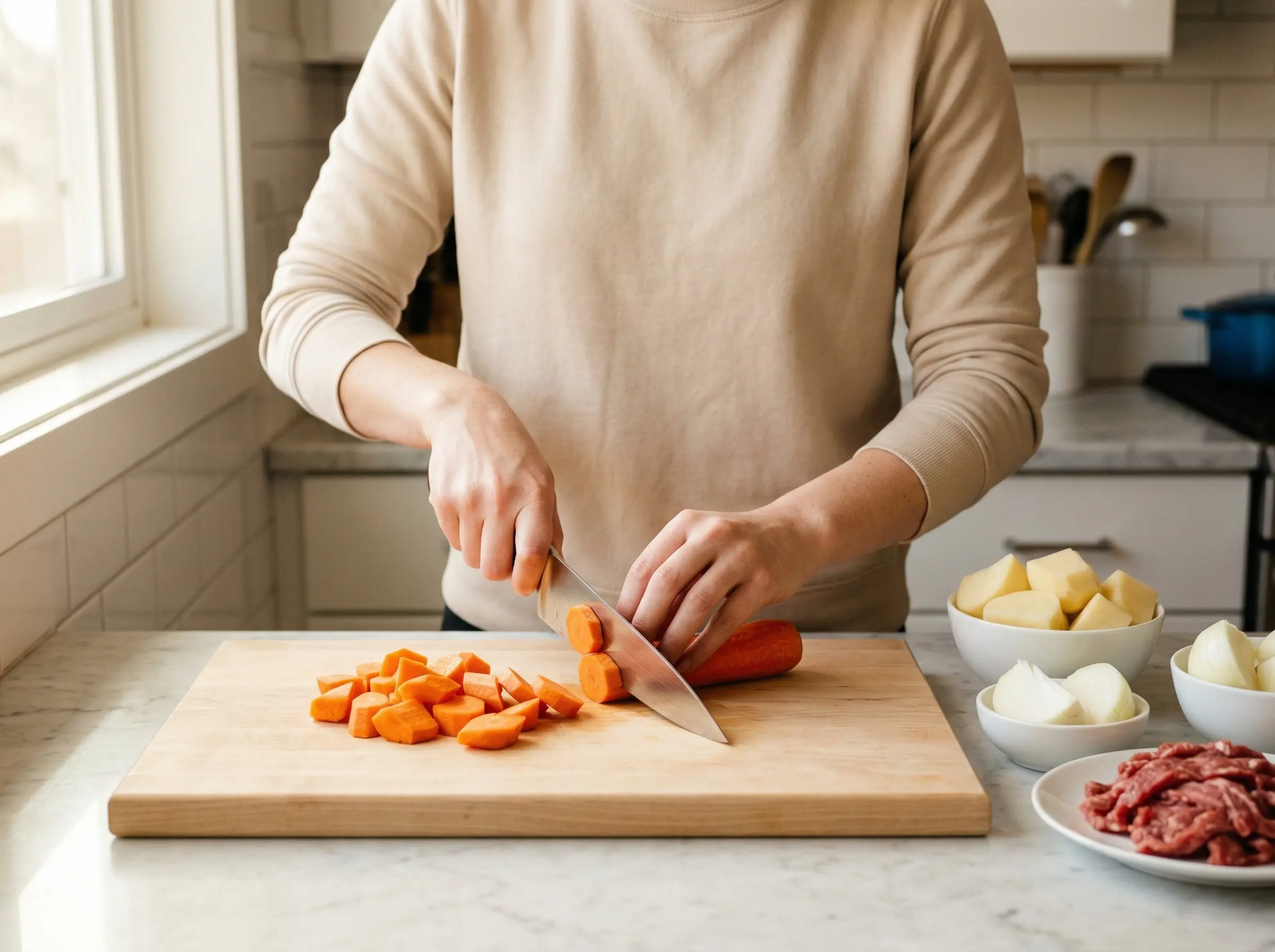
Prepare all ingredients. Cut the potatoes into large bite-sized chunks - they will shrink during cooking, so do not cut too small. Slice the onion into thick wedges. Cut the carrot into rolling chunks (rangiri style) by cutting diagonally and rotating the carrot a quarter turn between cuts - this creates irregular shapes with more surface area for absorbing flavor. If using shirataki noodles, drain, rinse well, and cut into shorter lengths. Slice the beef into bite-sized pieces if not already cut.
Step 2
Sauté the aromatics and beef. Heat the vegetable oil in a large pot or deep skillet over medium-high heat. Add the onion wedges and sauté for 2-3 minutes until they begin to soften and turn translucent. Add the sliced beef and cook, stirring to separate the pieces, for 2-3 minutes until the meat just loses its pink color. Do not fully brown - the beef should remain tender.
Step 3
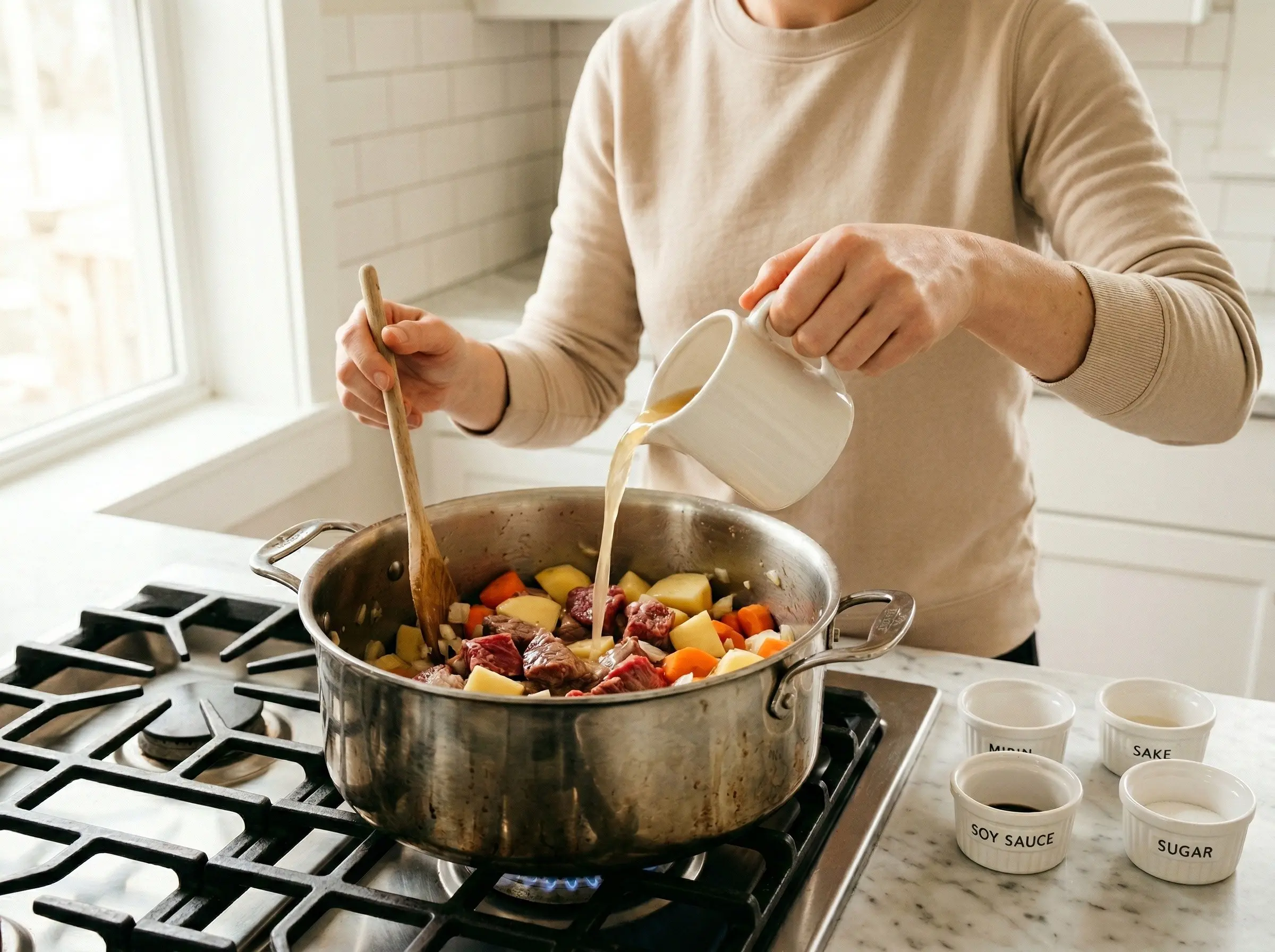
Add vegetables and braising liquid. Add the potato chunks and carrot pieces to the pot. Pour in the dashi stock, soy sauce, mirin, sake, and sugar. If using ginger, add the slices now. Stir gently to combine without breaking the potatoes. The liquid should come about halfway up the vegetables - do not fully submerge them, as they will steam as well as braise.
Step 4
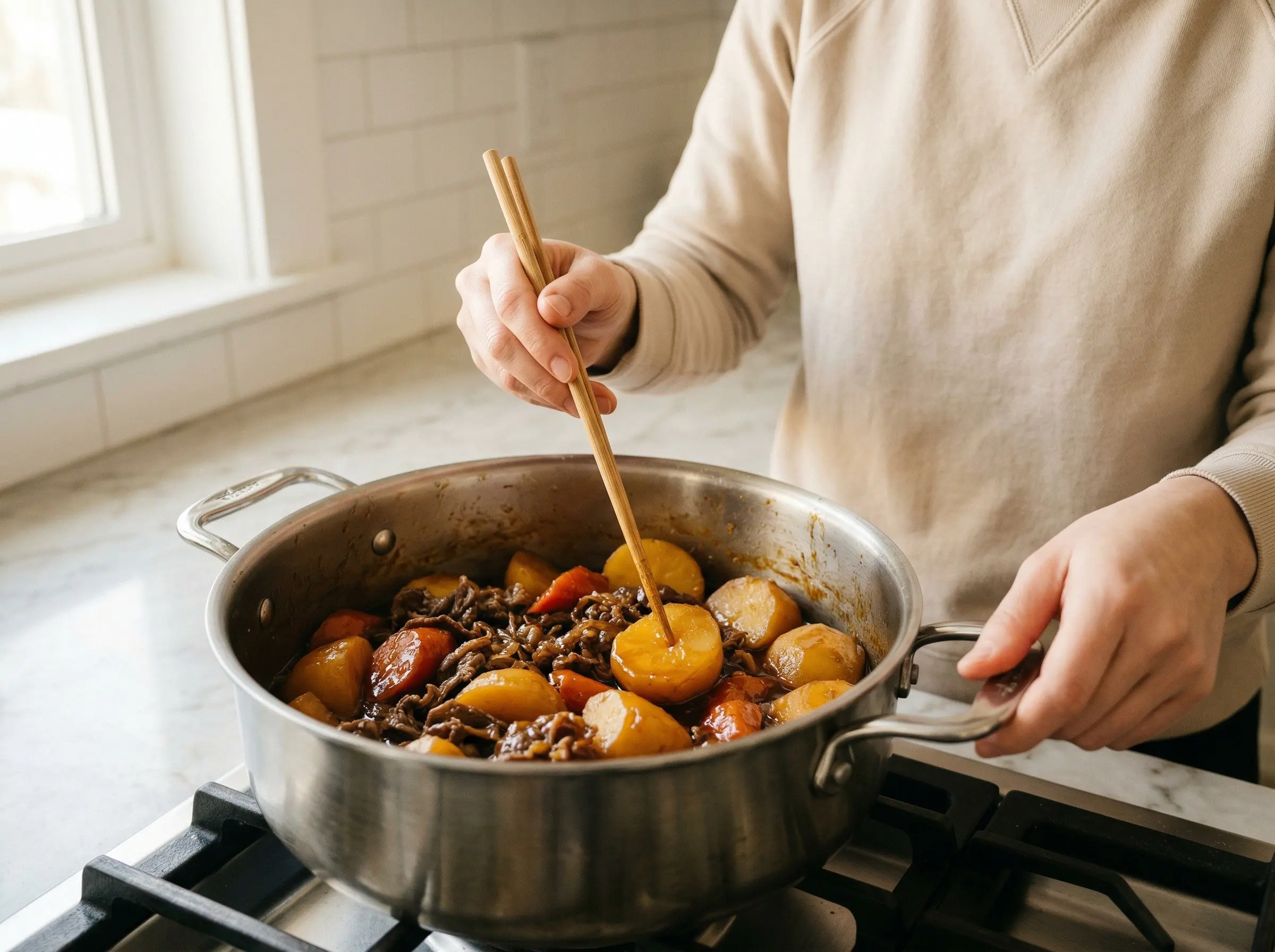
Simmer with a drop lid. Bring the liquid to a boil, then reduce heat to medium-low. Skim any foam that rises to the surface. Place an otoshibuta (drop lid) directly on the surface of the ingredients. If you do not have a drop lid, create one by cutting a circle of parchment paper or aluminum foil slightly smaller than the pot with a small hole in the center. This lid keeps the ingredients submerged in minimal liquid, concentrating flavors while cooking evenly. Simmer for 15-20 minutes.
Step 5
Finish cooking. After 15-20 minutes, check the potatoes - they should be nearly tender when pierced with a chopstick. If using shirataki noodles, add them now. Continue simmering for another 5-10 minutes until the potatoes are fully tender but not falling apart, and the braising liquid has reduced to a glossy, slightly syrupy consistency that coats the ingredients. The sauce should not be watery - if it is, remove the lid and increase heat briefly to reduce.
Step 6
Rest and serve. Remove from heat and let the nikujaga rest for 10-15 minutes if time allows. Like many braised dishes, nikujaga improves as it sits, with the ingredients absorbing more flavor as they cool slightly. Serve warm in shallow bowls, spooning the glossy braising liquid over the top. Garnish with blanched snow peas or green peas for color. Nikujaga is traditionally served as part of a Japanese home meal alongside steamed rice, miso soup, pickles, and other small dishes. It is also delicious reheated the next day - many Japanese cooks say nikujaga tastes even better after resting overnight in the refrigerator.
You Might Also Like
Master Your Kitchen with PantryAI
Love this recipe? Save it, shop for it, and cook it with ease. Download the PantryAI app to organize your pantry, track expirations, and discover recipes based on what you already have.

On a computer?Scan with your iPhone camera to download PantryAI.








Swipe to see more screenshots