
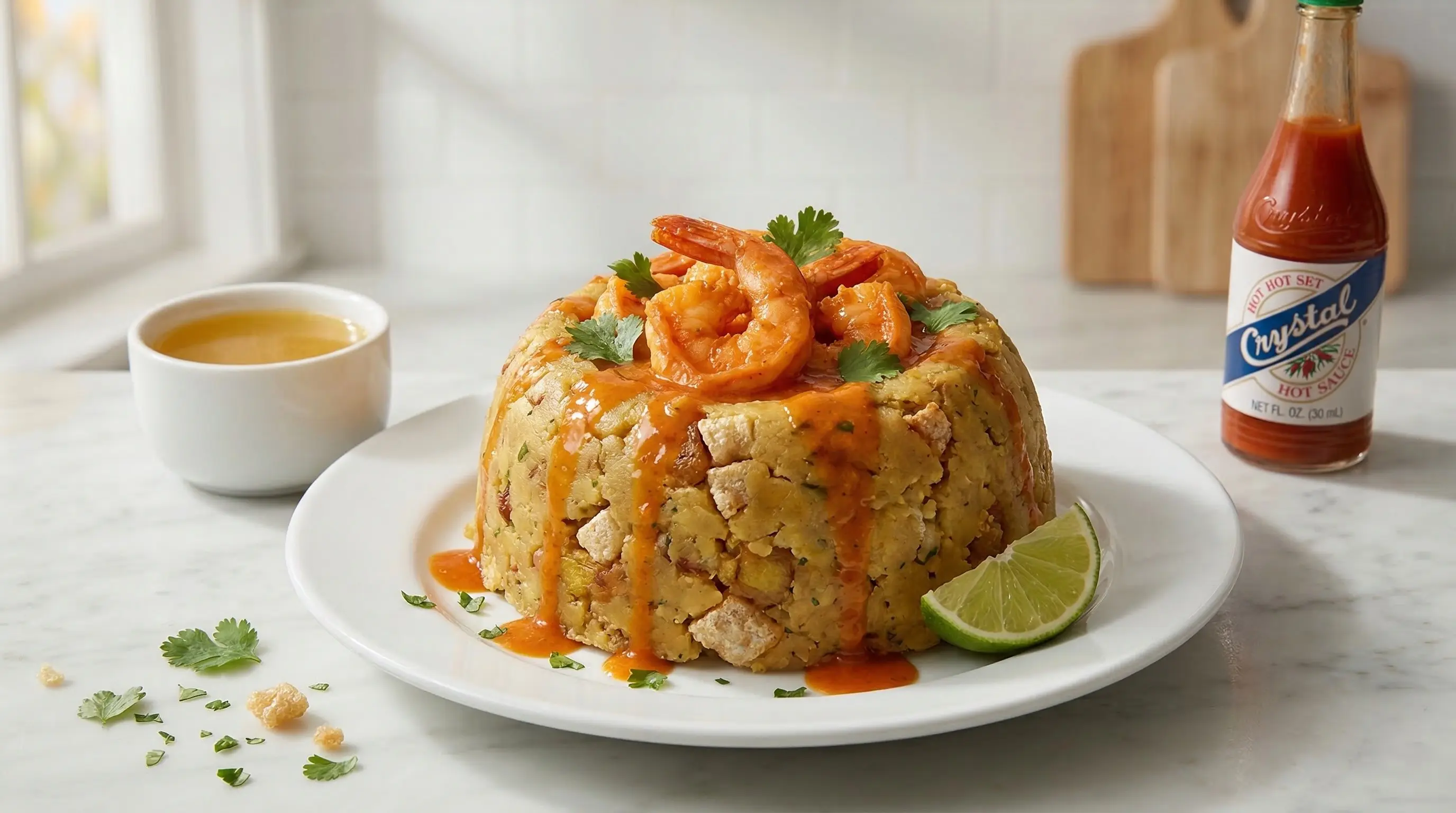
Mofongo
Learn how to make authentic mofongo, the beloved Puerto Rican dish of fried green plantains mashed with garlic and pork cracklings. This crispy, garlicky comfort food is the soul of Puerto Rican cuisine!
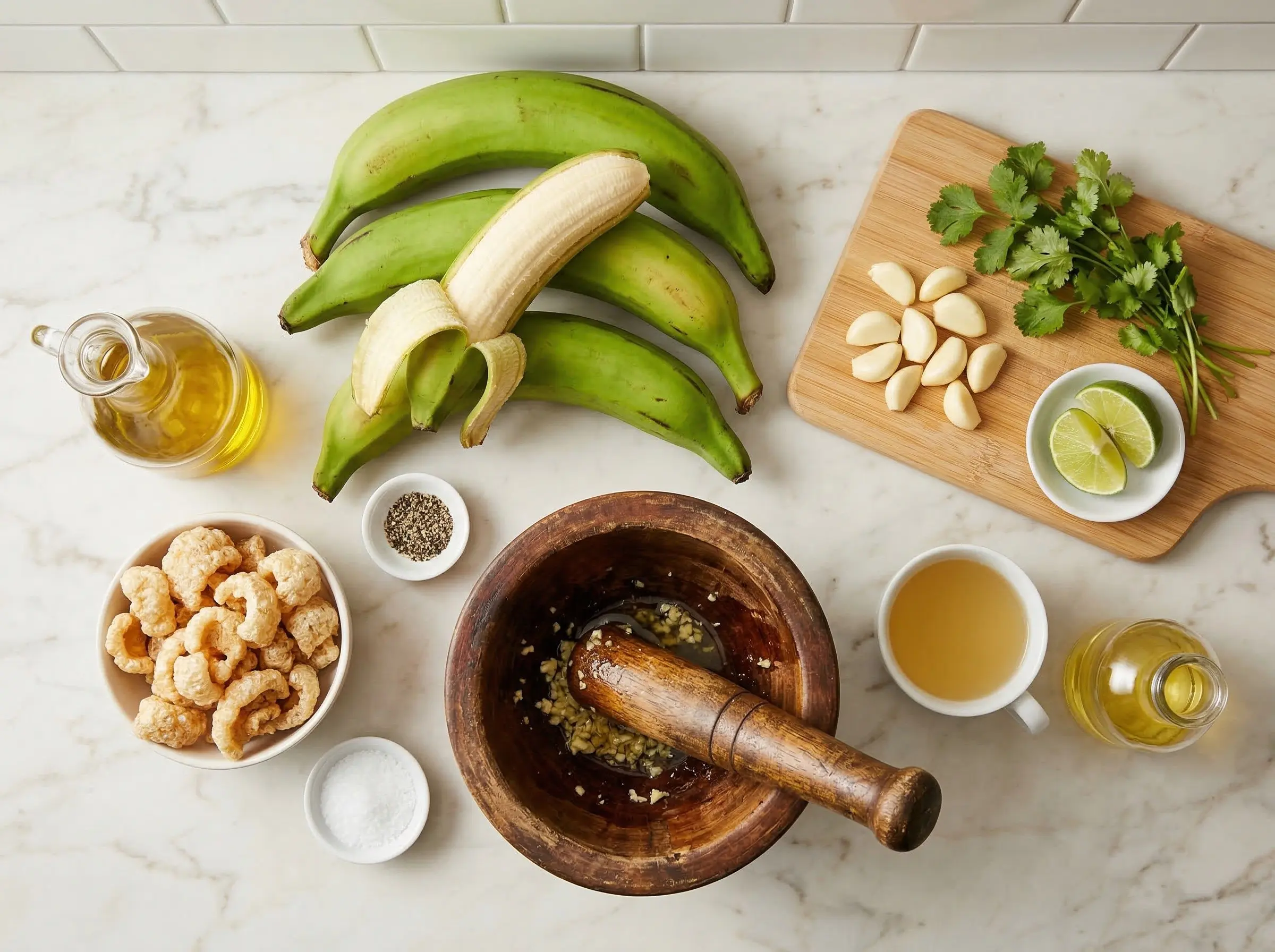
Ingredients
The Story
Mofongo is the crown jewel of Puerto Rican cuisine, a dish of fried green plantains mashed with garlic, olive oil, and chicharrones (pork cracklings) that embodies the island's African, Spanish, and Taíno heritage. The dish has its roots in fufu, a West African staple of mashed starchy vegetables brought to the Caribbean by enslaved Africans. In Puerto Rico, fufu evolved to incorporate local ingredients and Spanish influences, transforming into mofongo. The name itself may derive from the Angolan Kikongo term "mfwenge-mfwenge," meaning "a great amount of anything," reflecting the generous, substantial nature of the dish. Mofongo occupies a place of pride in Puerto Rican culinary identity that transcends mere sustenance. It is served in home kitchens and humble roadside kiosks, in upscale restaurants in San Juan's Condado district and at family gatherings in the diaspora from New York to Orlando. The dish appears in countless variations - mofongo relleno stuffed with shrimp, chicken, or beef in creole sauce; mofongo topped with caldo (broth); mofongo de yuca made with cassava; and even mofongo de tostones. In 2016, Puerto Rico dedicated an entire festival to the dish, the Festival del Mofongo in Hatillo. For Puerto Ricans living stateside, making mofongo is an act of cultural preservation, a delicious connection to the island. What makes mofongo so extraordinary is the interplay of textures and the intensity of garlic that defines every bite. Green plantains, starchy and firm unlike their sweet ripe counterparts, are sliced and twice-fried until golden and crispy. While still hot, they are pounded in a pilón (wooden mortar and pestle) with generous amounts of raw garlic, olive oil, and crispy chicharrones. The pounding is vigorous but not complete - the goal is a coarse, chunky texture with distinct pieces of plantain and crackling rather than a smooth puree. The finished mofongo is traditionally packed into the pilón or a bowl and unmolded onto the plate, creating a dome shape. Served with a rich broth or topped with stewed shrimp in creole sauce, mofongo is comfort food at its most primal - starchy, garlicky, porky, and utterly satisfying.
Instructions
Step 1
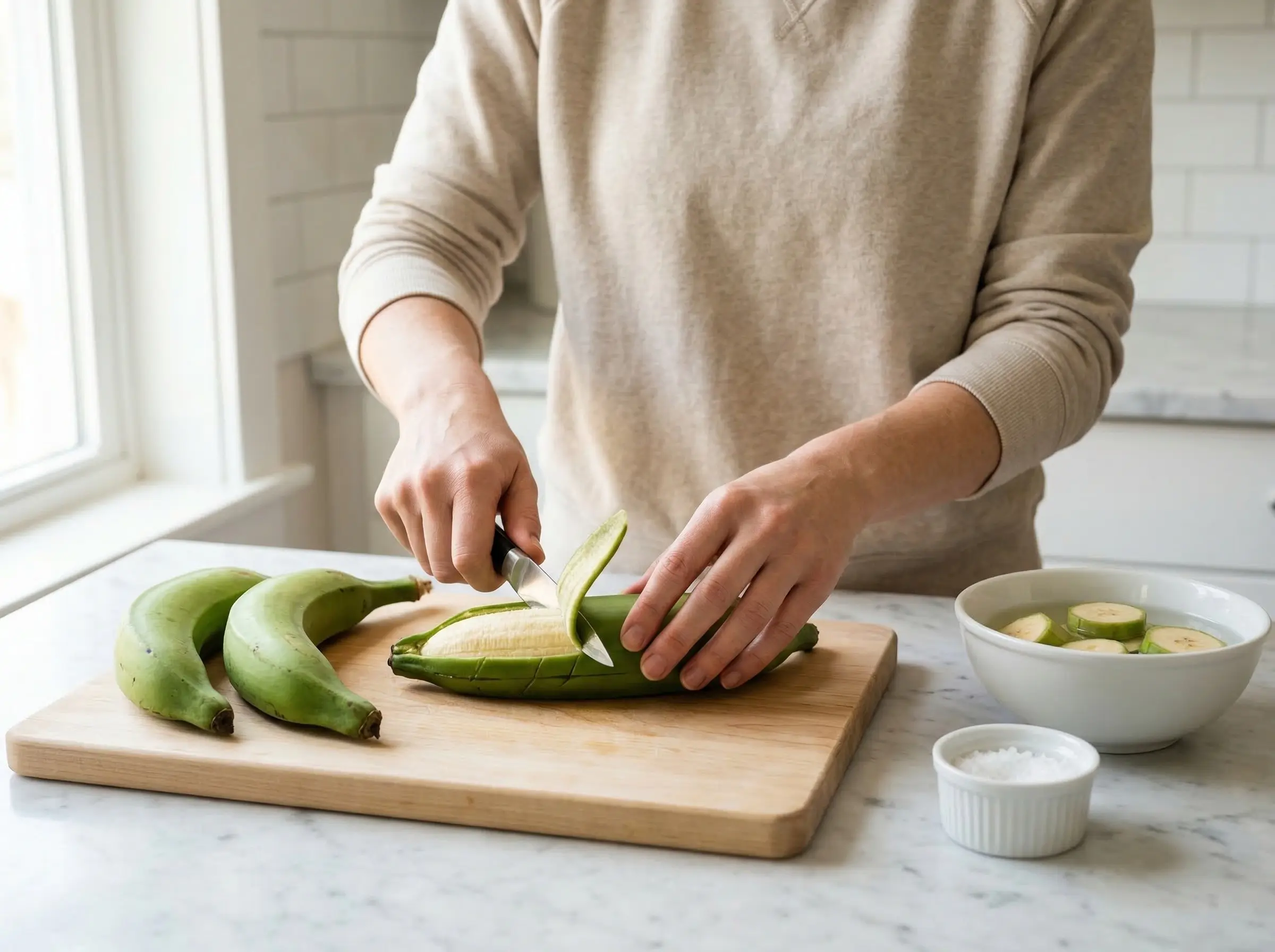
Prepare the plantains. Choose plantains that are completely green with no yellow or black spots - these are starchy and firm, essential for proper mofongo. Cut off both ends of each plantain. Score the skin lengthwise along the ridges, being careful not to cut into the flesh. Peel away the skin - green plantains can be stubborn, so you may need to slide a knife under the skin to help release it. Cut each plantain into 1-inch thick rounds. Soak the slices in salted water for 15-20 minutes - this helps remove some starch and seasons the plantain throughout.
Step 2
Make the garlic oil (mojo). In a small saucepan or skillet, heat the 1/2 cup olive oil over low heat. Add the garlic cloves and cook gently for 8-10 minutes until the garlic is soft and golden but not browned - browned garlic will taste bitter. The oil should be fragrant and infused with garlic flavor. Remove from heat. Using a fork or mortar, mash the softened garlic cloves into a paste, then stir back into the warm oil with the salt and pepper. This garlic mojo is the flavor base of your mofongo.
Step 3
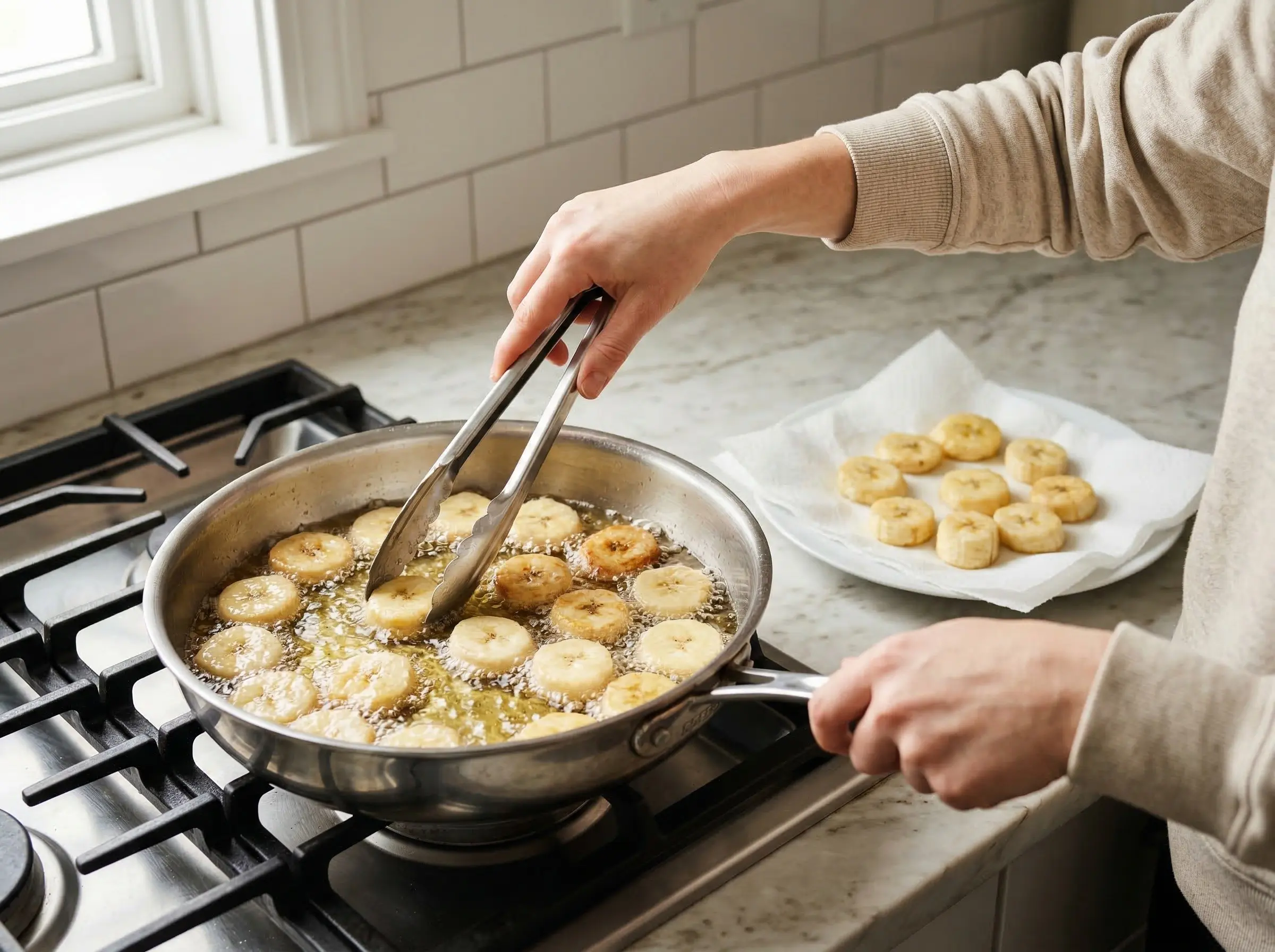
Fry the plantains. Drain the plantain slices and pat completely dry with paper towels - wet plantains will splatter dangerously in hot oil. Heat the vegetable oil in a deep skillet or Dutch oven to 325 degrees F. Fry the plantains in batches for 5-7 minutes, turning occasionally, until cooked through and light golden but not fully crispy - they should still be somewhat soft inside. Do not crowd the pan. Remove to a paper towel-lined plate. The plantains will be mashed while still hot, so work in batches you can handle quickly.
Step 4
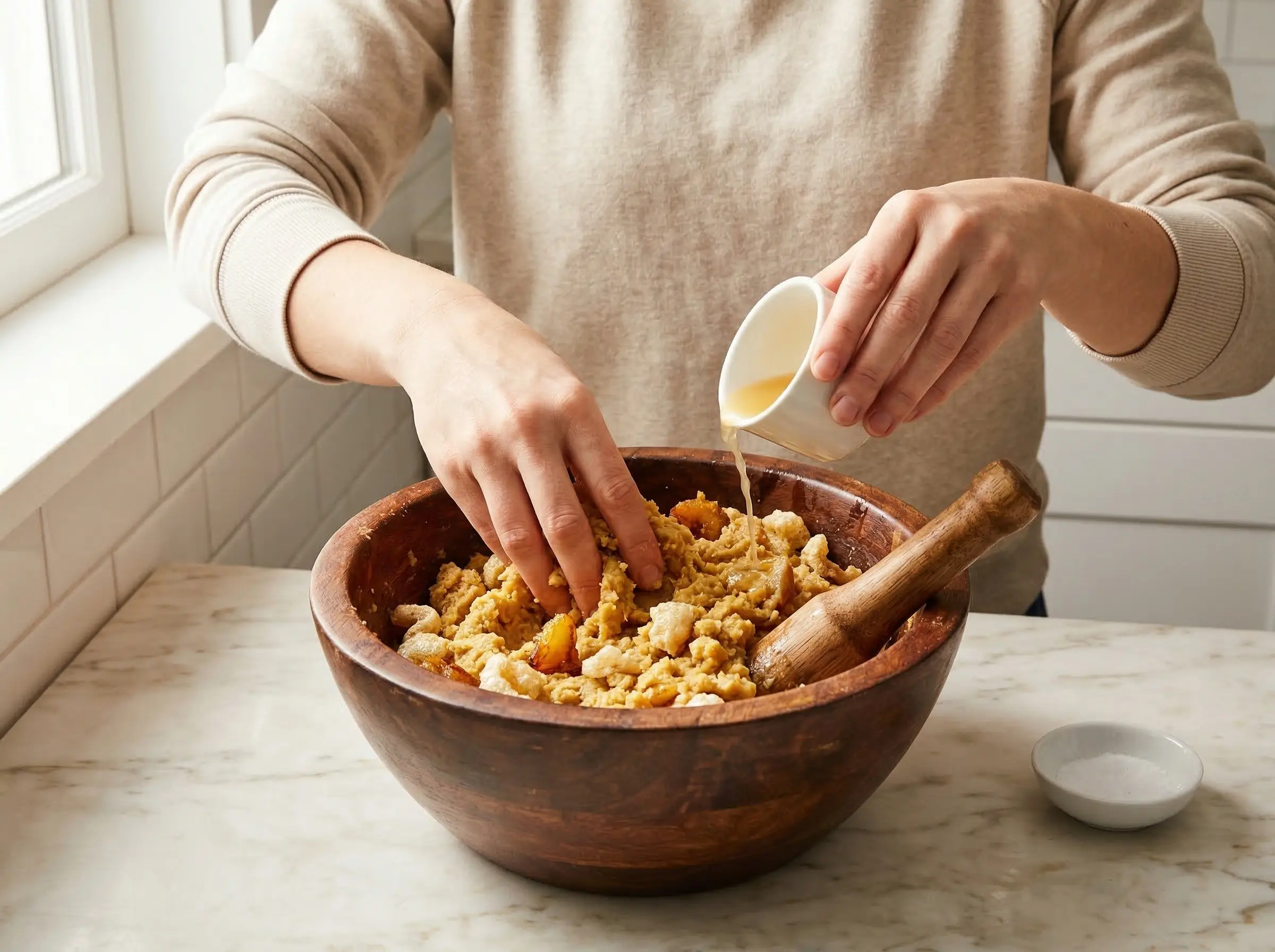
Pound the mofongo. This step requires working quickly while the plantains are still hot. Traditionally, mofongo is made in a pilón (wooden mortar and pestle), but a large mortar and pestle or even a sturdy bowl with a muddler or wooden spoon works. Add a batch of hot fried plantains to the pilón. Add a generous spoonful of the garlic mojo and a handful of crushed chicharrones. Pound vigorously, incorporating the oil and cracklings. The goal is a coarse, chunky texture - not a smooth puree. You should still see distinct pieces of plantain and crackling. Add a splash of warm chicken broth if the mixture seems dry.
Step 5
Shape and adjust seasoning. Continue adding fried plantains, garlic mojo, and chicharrones, pounding after each addition until all ingredients are incorporated. Taste and adjust seasoning - mofongo should be aggressively garlicky and well-salted. The texture should be chunky and slightly sticky, holding together when pressed but not pasty. If too dry, add more warm broth or olive oil. If too wet, add more crushed chicharrones.
Step 6
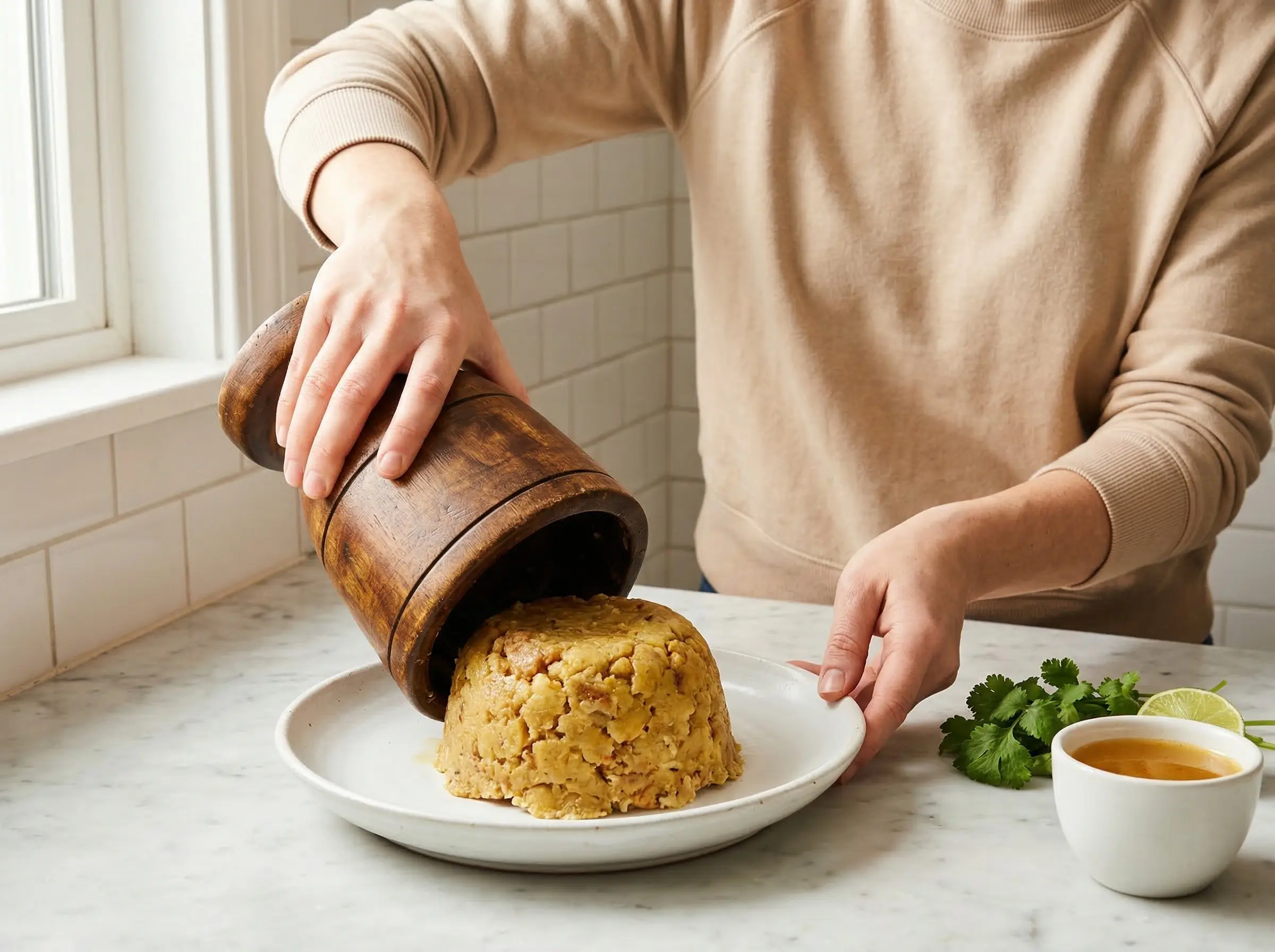
Mold and serve. To serve traditionally, pack the warm mofongo firmly into the pilón, a small bowl, or a ramekin. Invert onto a serving plate to create the classic dome shape. Alternatively, simply mound on plates. Garnish with fresh cilantro and serve with lime wedges. Mofongo is traditionally served with a side of warm chicken broth for dipping or pouring over the top. For mofongo relleno, make an indentation in the dome and fill with camarones al ajillo (garlic shrimp), carne guisada (stewed beef), pollo guisado (stewed chicken), or shrimp in creole sauce. Mofongo should be served immediately while hot - it becomes dense and heavy as it cools. Unlike many dishes, mofongo does not reheat well, so make only what you will eat. The combination of crispy-edged plantain, pungent garlic, and rich pork cracklings is best experienced fresh from the pilón.
You Might Also Like
Master Your Kitchen with PantryAI
Love this recipe? Save it, shop for it, and cook it with ease. Download the PantryAI app to organize your pantry, track expirations, and discover recipes based on what you already have.

On a computer?Scan with your iPhone camera to download PantryAI.





Swipe to see more screenshots