
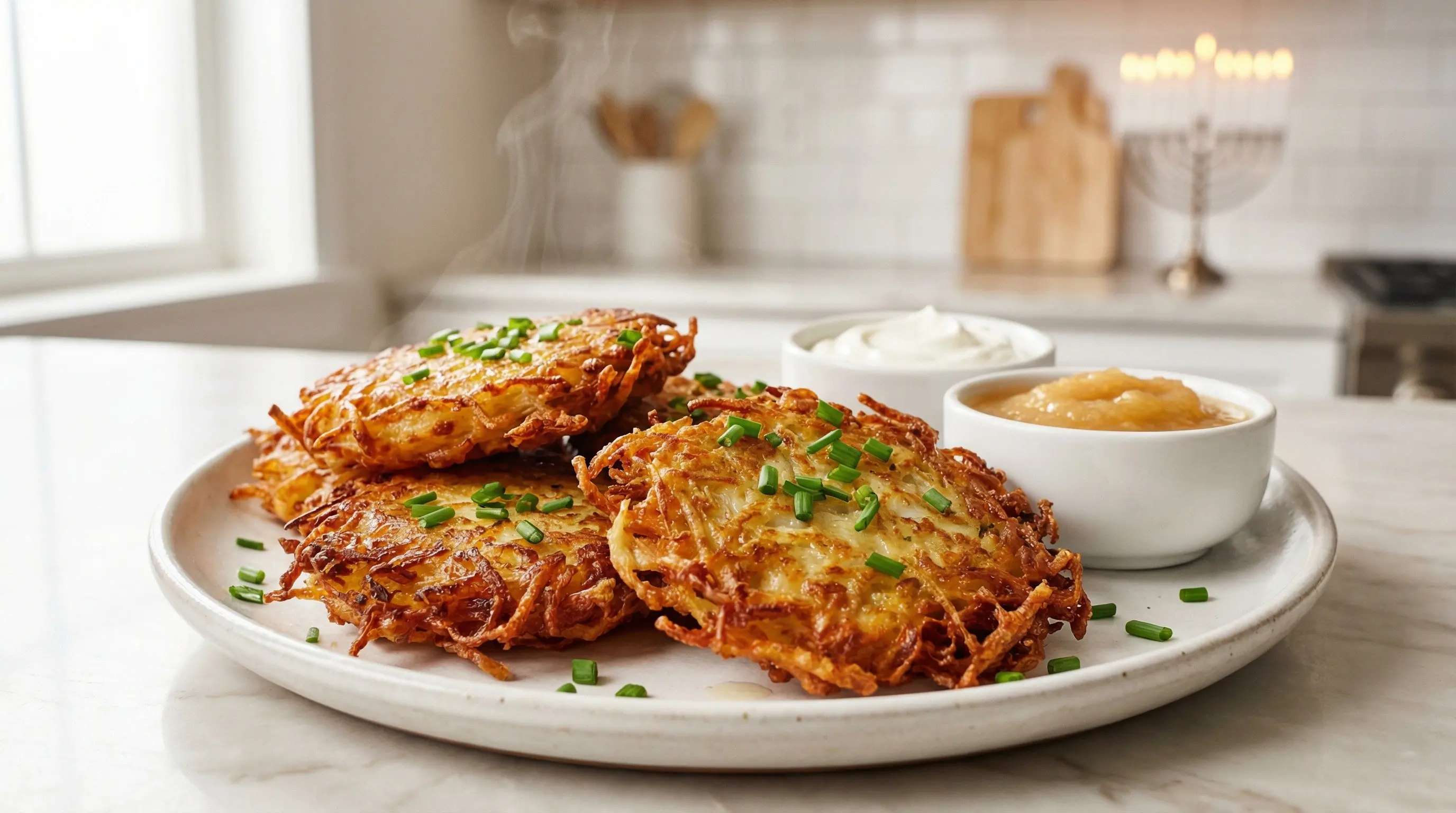
Latkes
Learn how to make perfect crispy latkes, the beloved Jewish potato pancakes traditionally served during Hanukkah. Golden, crunchy, and delicious with applesauce or sour cream!
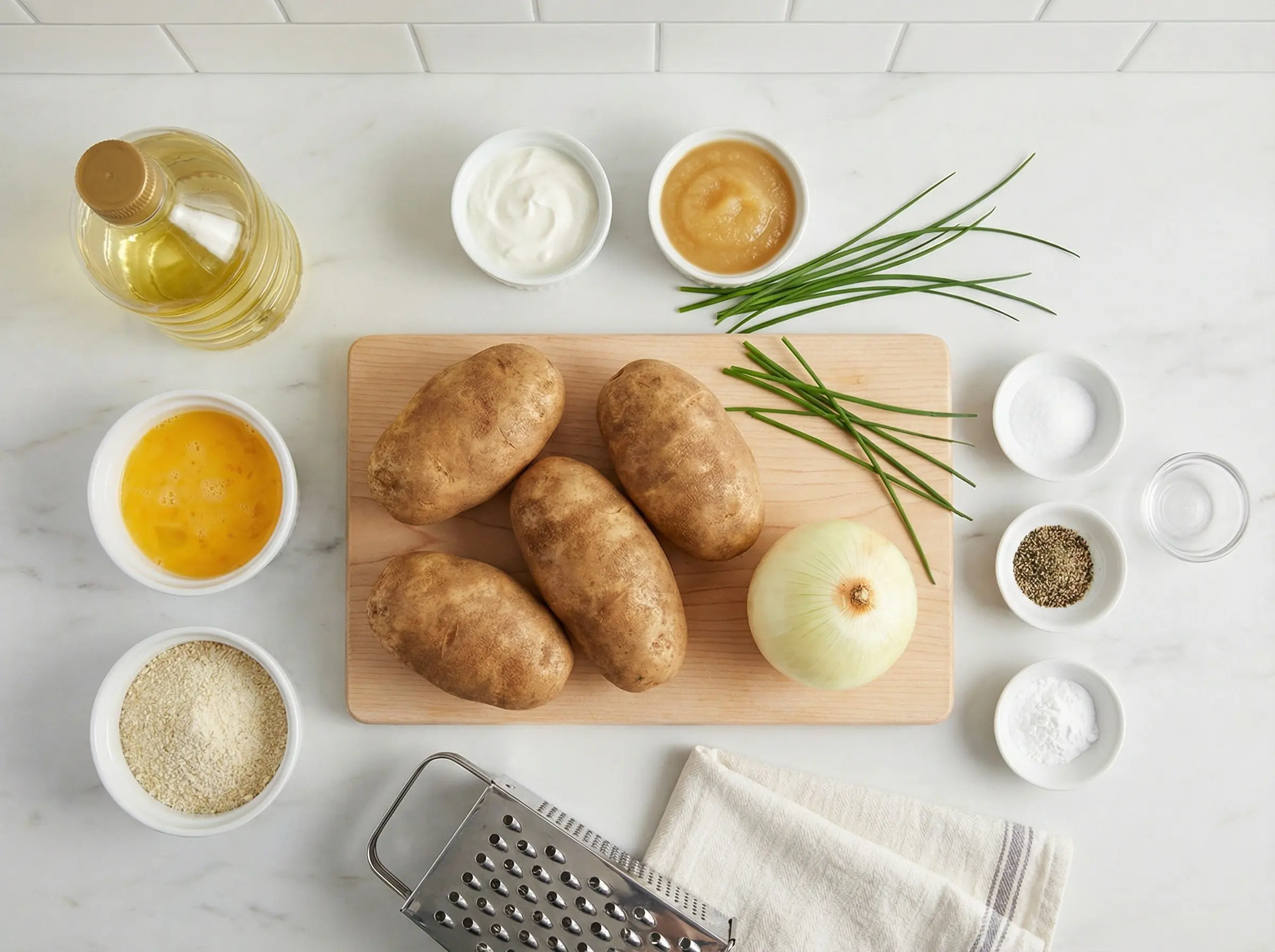
Ingredients
The Story
Latkes are the quintessential food of Hanukkah, the Jewish Festival of Lights, though their history stretches back centuries before they became associated with this holiday. The word "latke" comes from the Yiddish word meaning "little oily thing," which perfectly describes these crispy, golden potato pancakes fried in plenty of oil. The connection to Hanukkah is significant: the holiday commemorates the miracle of the oil in the ancient Temple in Jerusalem, where a single day's worth of oil miraculously burned for eight days. Eating foods fried in oil - latkes and sufganiyot (jelly doughnuts) - became a way to celebrate and remember this miracle. Interestingly, the original latkes were not made with potatoes at all. Before potatoes arrived in Europe from the Americas in the 16th century, Ashkenazi Jews made latkes from cheese, buckwheat, or other grains. The shift to potatoes occurred in Eastern Europe in the 19th century when potatoes became a cheap, abundant staple crop, particularly in Poland, Ukraine, and Russia where large Jewish communities lived. The potato latke proved so popular that it quickly became the dominant version, and today when people say "latke," they almost always mean the potato variety. The dish traveled with Jewish immigrants to America and Israel, where it remains the centerpiece of Hanukkah celebrations around the world. What makes the perfect latke is a matter of passionate debate in Jewish households everywhere. Should you grate the potatoes coarsely or finely? Use a food processor or hand-grate? Add onion or not? Use matzo meal, flour, or neither as a binder? Fry in vegetable oil or schmaltz (chicken fat)? Every family has their own cherished recipe passed down through generations, and each claims theirs is the authentic version. What everyone agrees on is that a proper latke must be crispy and golden on the outside, tender within, and served immediately while still hot from the pan. The traditional accompaniments - sour cream and applesauce - represent another friendly divide, with some insisting on one or the other, and the wise choosing both.
Instructions
Step 1
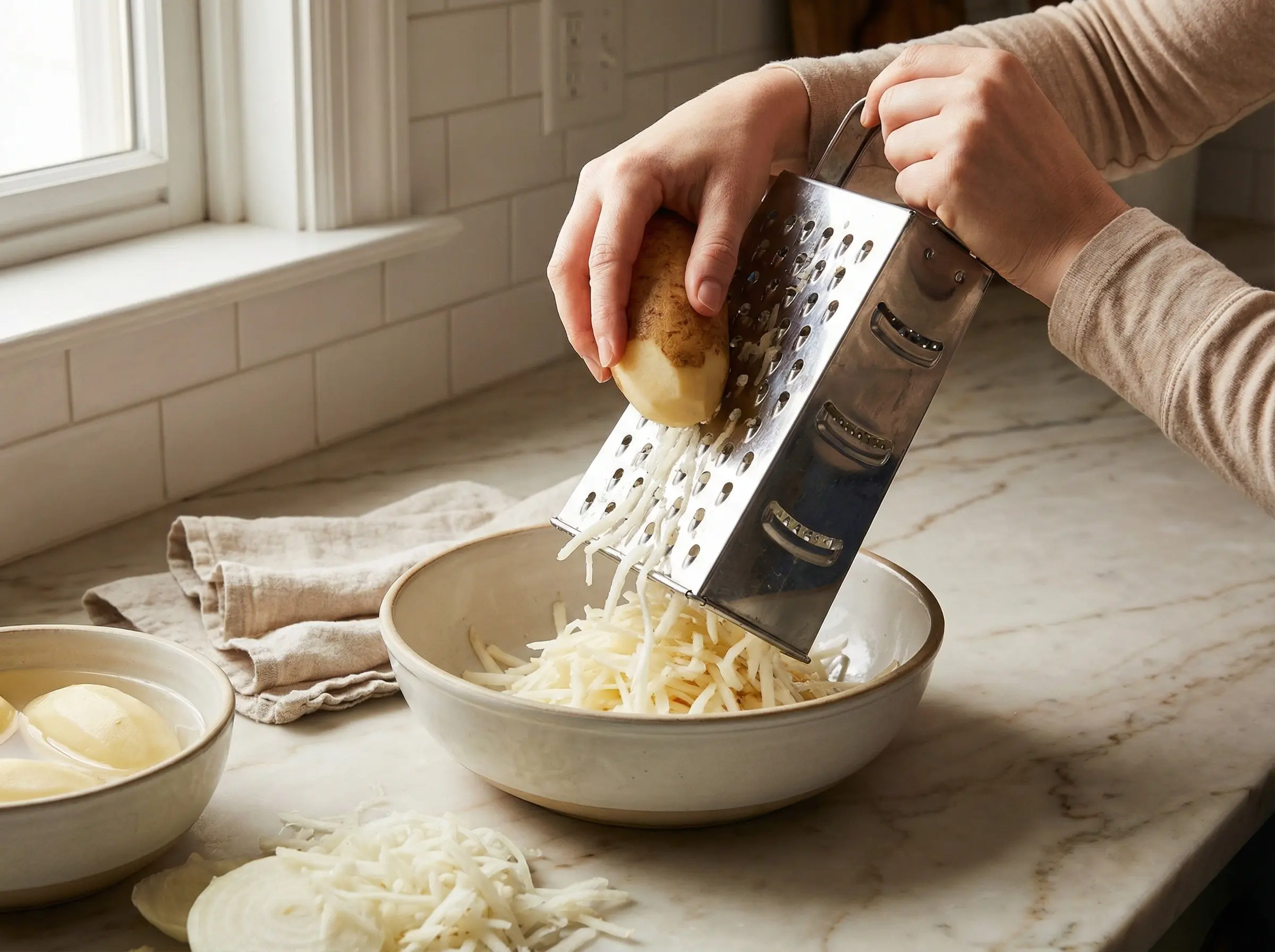
Prepare the potatoes and onion. Peel the potatoes and place them in a bowl of cold water to prevent browning. Grate the potatoes using the large holes of a box grater or the shredding disc of a food processor. For crispier latkes with more texture, use a hand grater; for more uniform latkes, use a food processor. Grate the onion the same way. The onion adds flavor and helps prevent the potatoes from oxidizing and turning gray. Place the grated potatoes and onion in a clean kitchen towel or cheesecloth.
Step 2
Remove excess moisture - this is the most important step for crispy latkes. Gather the towel into a bundle and squeeze firmly over the sink, wringing out as much liquid as possible. You will be amazed at how much water comes out. Continue squeezing until no more liquid drips out. Alternatively, place the grated mixture in a fine-mesh strainer and press down firmly with a spatula. The drier the potato mixture, the crispier your latkes will be. Wet potatoes create soggy, greasy latkes.
Step 3
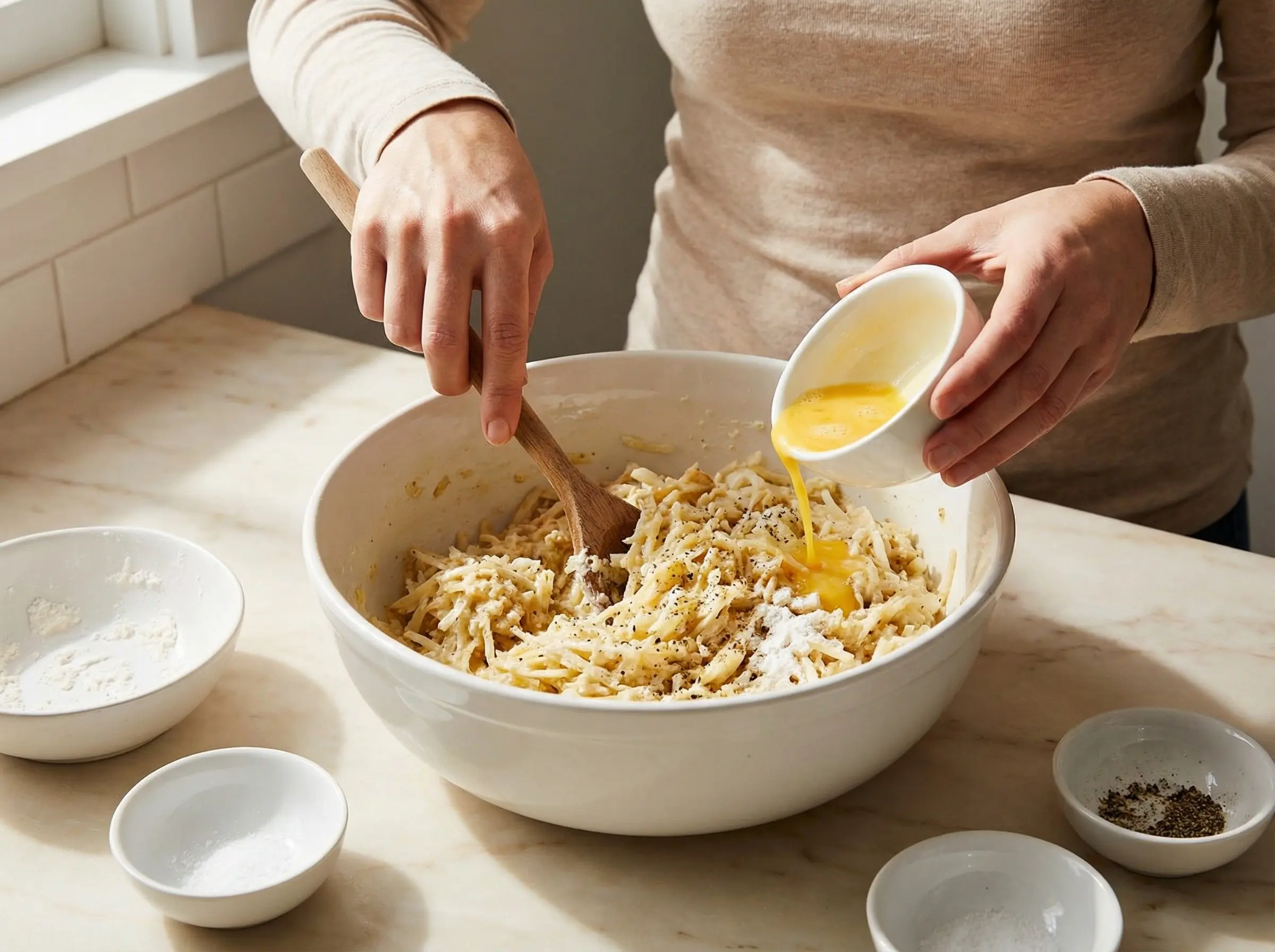
Let the squeezed liquid sit in a bowl for a few minutes. The potato starch will settle to the bottom as a white layer. Carefully pour off the water, leaving the starch behind - this starch will help bind your latkes and make them crispier. Add the grated potato-onion mixture to the bowl with the starch. Add the beaten eggs, matzo meal (or flour), salt, pepper, and baking powder if using. Mix well until everything is evenly combined. The mixture should hold together when pressed.
Step 4
Heat the oil. Pour about 1/4 inch of vegetable oil into a large, heavy skillet (cast iron is ideal) over medium-high heat. The oil is ready when a small piece of potato mixture sizzles immediately when dropped in - about 350-375 degrees F. Do not let the oil smoke. Having enough oil is crucial: too little and the latkes will stick and cook unevenly; too much and they become greasy. The latkes should fry, not deep-fry.
Step 5
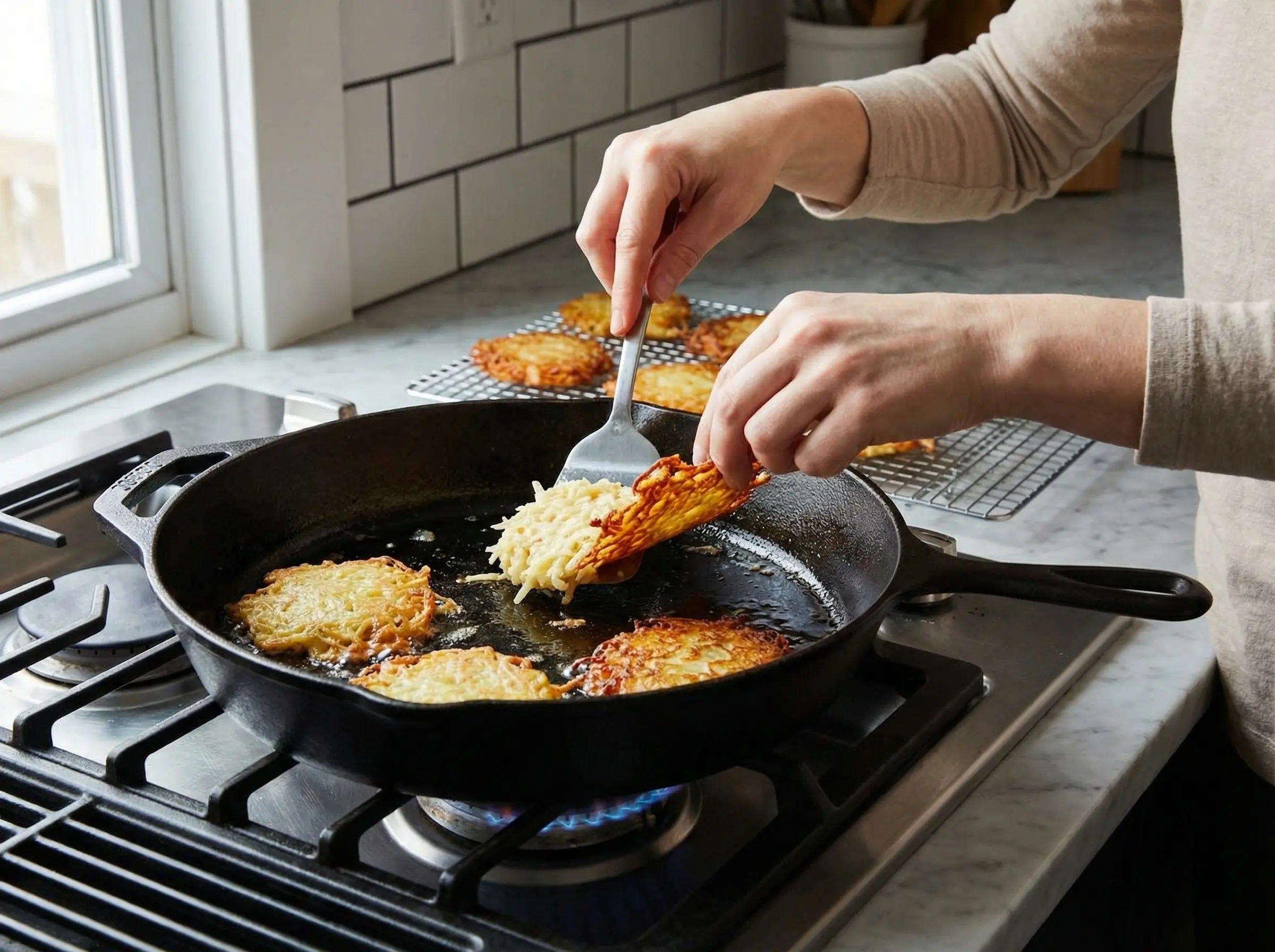
Fry the latkes in batches. For each latke, drop about 3 tablespoons of the potato mixture into the hot oil. Flatten immediately with the back of a spatula into a thin pancake about 3 inches across - thinner latkes are crispier. Do not overcrowd the pan; leave at least 1 inch between latkes. Fry for 3-4 minutes per side until deep golden brown and crispy. Adjust heat as needed to maintain steady sizzling without burning. The edges should be lacy and dark golden, the center cooked through.
Step 6
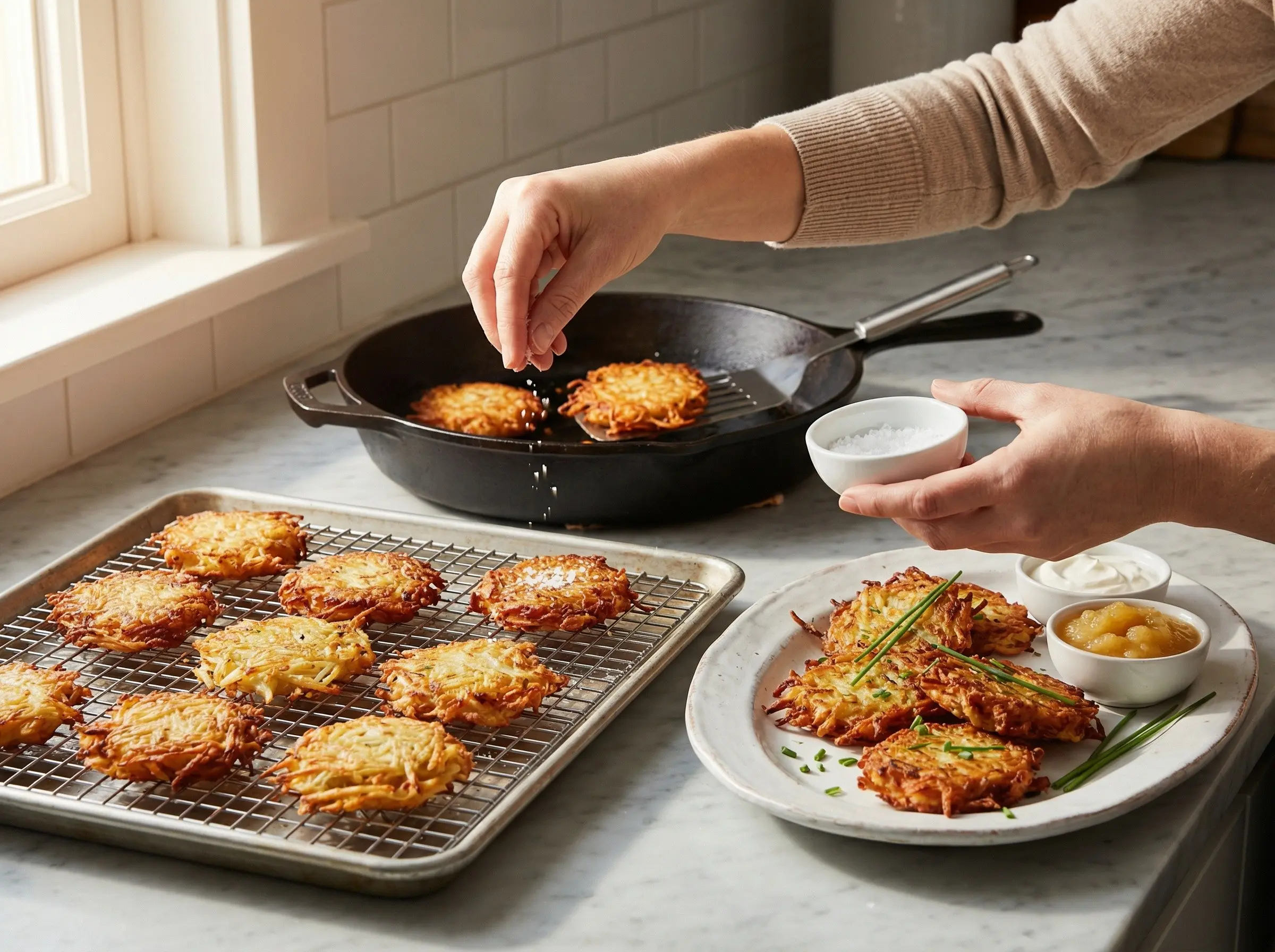
Drain and serve immediately. Transfer the fried latkes to a wire rack set over a baking sheet - this keeps them crispy better than paper towels, which can trap steam and make them soggy. Season with a sprinkle of salt while still hot. Keep finished latkes warm in a 200 degree F oven while frying the remaining batches. Serve hot with sour cream and applesauce on the side - offering both is traditional, allowing each person to choose their preference (or enjoy both). Garnish with fresh chives if desired. Latkes are best eaten immediately; they lose their crispness as they sit. For Hanukkah tradition, light the menorah candles first, then enjoy the latkes while they are still crackling.
You Might Also Like

Master Your Kitchen with PantryAI
Love this recipe? Save it, shop for it, and cook it with ease. Download the PantryAI app to organize your pantry, track expirations, and discover recipes based on what you already have.

On a computer?Scan with your iPhone camera to download PantryAI.








Swipe to see more screenshots