
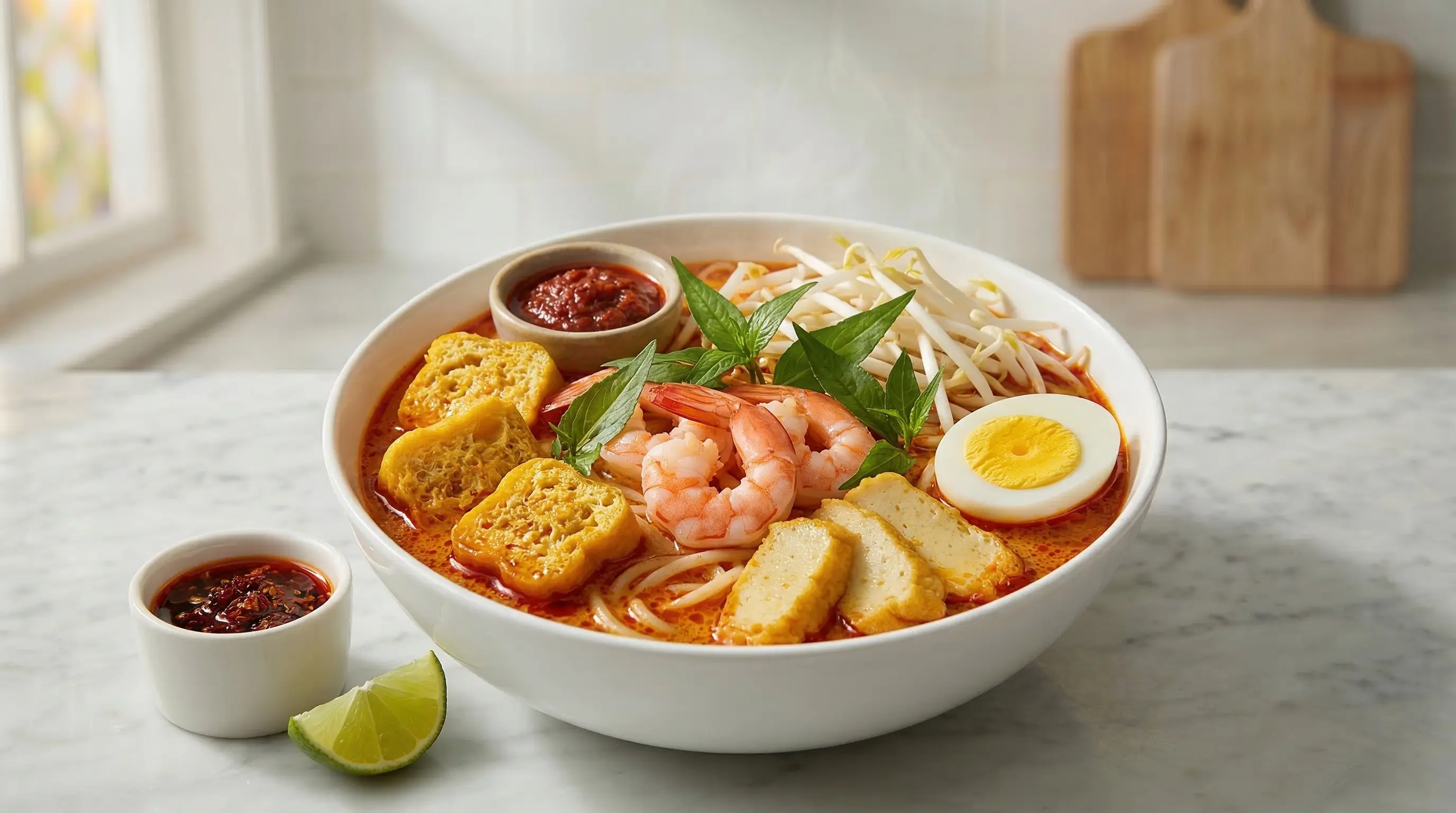
Laksa
Learn how to make authentic laksa, the iconic Malaysian coconut curry noodle soup with shrimp, tofu puffs, and a rich, spicy broth. This aromatic Peranakan classic is bold, creamy, and utterly addictive!
Ingredients
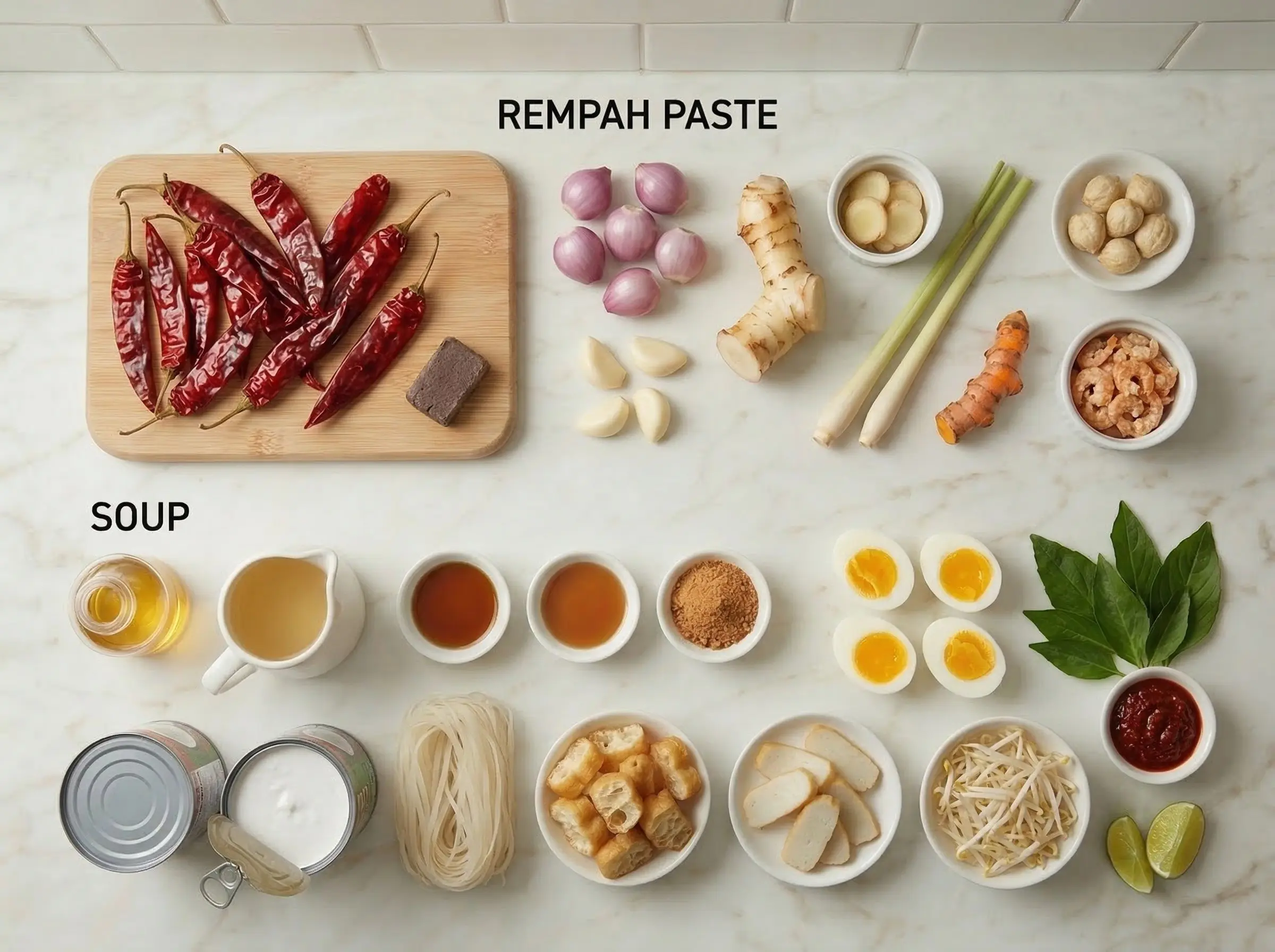
The Story
Laksa is one of Southeast Asia's most beloved noodle soups, a rich and aromatic bowl that represents the beautiful collision of Malay, Chinese, and Indian culinary traditions. The dish is most closely associated with the Peranakan (Straits Chinese) community - descendants of Chinese immigrants who settled in the Malay Peninsula and Singapore centuries ago and developed a unique hybrid culture. Peranakan cuisine, also called Nyonya cooking, blends Chinese techniques with Malay spices and ingredients, and laksa is its crown jewel. The name "laksa" may derive from the Sanskrit "laksha" meaning "many," referring to the countless noodles in the bowl, or from the Persian "lakhshah" for a type of noodle. Laksa exists in many regional variations across Malaysia, Singapore, and Indonesia, each with passionate devotees. Curry laksa (laksa lemak), the version featured here, is coconut milk-based with a rich, spicy curry broth - this is the most internationally recognized style, found everywhere from Kuala Lumpur to Penang. Asam laksa from Penang is entirely different - a sour, fish-based broth without coconut milk, flavored with tamarind and mackerel. Sarawak laksa from Borneo uses a sambal-based broth with prawns and chicken. Katong laksa from Singapore cuts the noodles short so they can be eaten with a spoon. Each version inspires fierce regional pride and heated debates about authenticity. What makes laksa so extraordinary is the complexity of its spice paste - the rempah - that forms the aromatic foundation of the dish. This paste blends chillies, galangal, lemongrass, candlenuts, shrimp paste, and a dozen other ingredients into something almost alchemically fragrant. When fried in oil until the paste "splits" and releases its oils, then simmered with coconut milk and stock, the rempah transforms into a broth that is simultaneously creamy and bright, rich and refreshing. Rice noodles or yellow egg noodles swim in this crimson-tinted soup, topped with shrimp, fish cake, tofu puffs, bean sprouts, and hard-boiled eggs. A spoonful of sambal and fresh laksa leaves (Vietnamese coriander) complete the bowl. Laksa is comfort food elevated to art - a dish that demands time and care but rewards the cook with something unforgettable.
Instructions
Step 1
Make the rempah paste. Soak the dried chillies in hot water for 20-30 minutes until softened; drain. Soak the dried shrimp in warm water for 15 minutes; drain. Combine all rempah ingredients in a food processor or blender: drained chillies, shallots, garlic, galangal, lemongrass, turmeric, candlenuts, drained dried shrimp, and belacan. Blend to a smooth paste, adding a few tablespoons of water as needed to help it process. The paste should be as smooth as possible - this is the soul of your laksa and worth the effort of thorough blending.
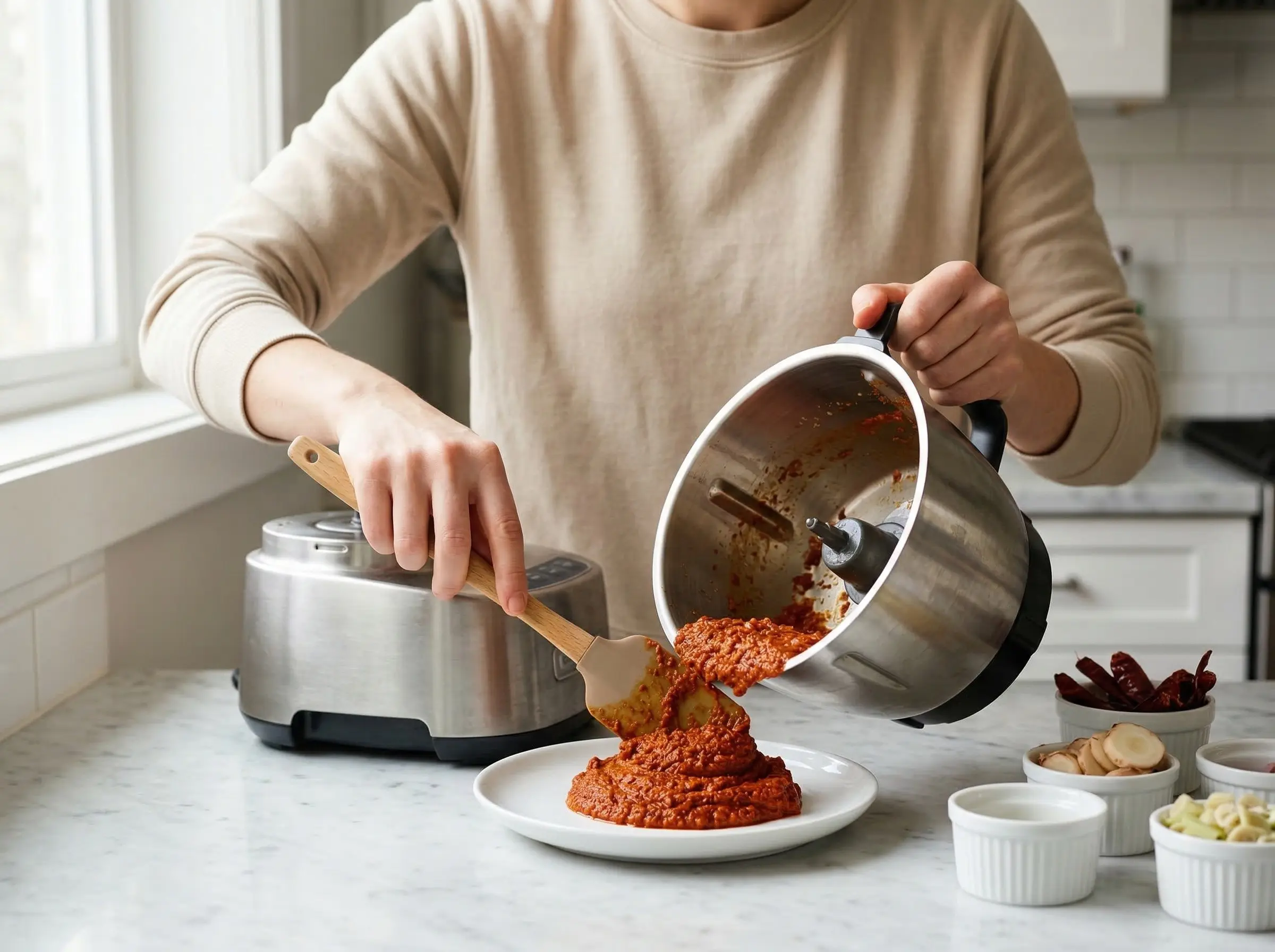
Step 2
Fry the rempah until fragrant. Heat the vegetable oil in a large pot or Dutch oven over medium heat. Add the rempah paste and fry, stirring constantly, for 10-15 minutes. This is crucial - the paste must cook until it darkens, becomes very fragrant, and the oil begins to separate and pool around the edges. This is called tumis or pecah minyak (the oil breaking). If the paste sticks, reduce heat and add a splash of water. Do not rush this step - proper frying develops the deep, complex flavors that define good laksa.
Step 3
Build the laksa broth. Pour in the chicken stock, stirring to incorporate the fried paste. Add the coconut milk, fish sauce, and palm sugar. Stir well and bring to a gentle simmer. Do not boil vigorously or the coconut milk may separate. Simmer for 15-20 minutes to allow the flavors to meld. Taste and adjust seasoning - the broth should be rich, creamy, and well-balanced between savory, sweet, and spicy. Add more fish sauce for saltiness, sugar for sweetness, or sambal for heat.
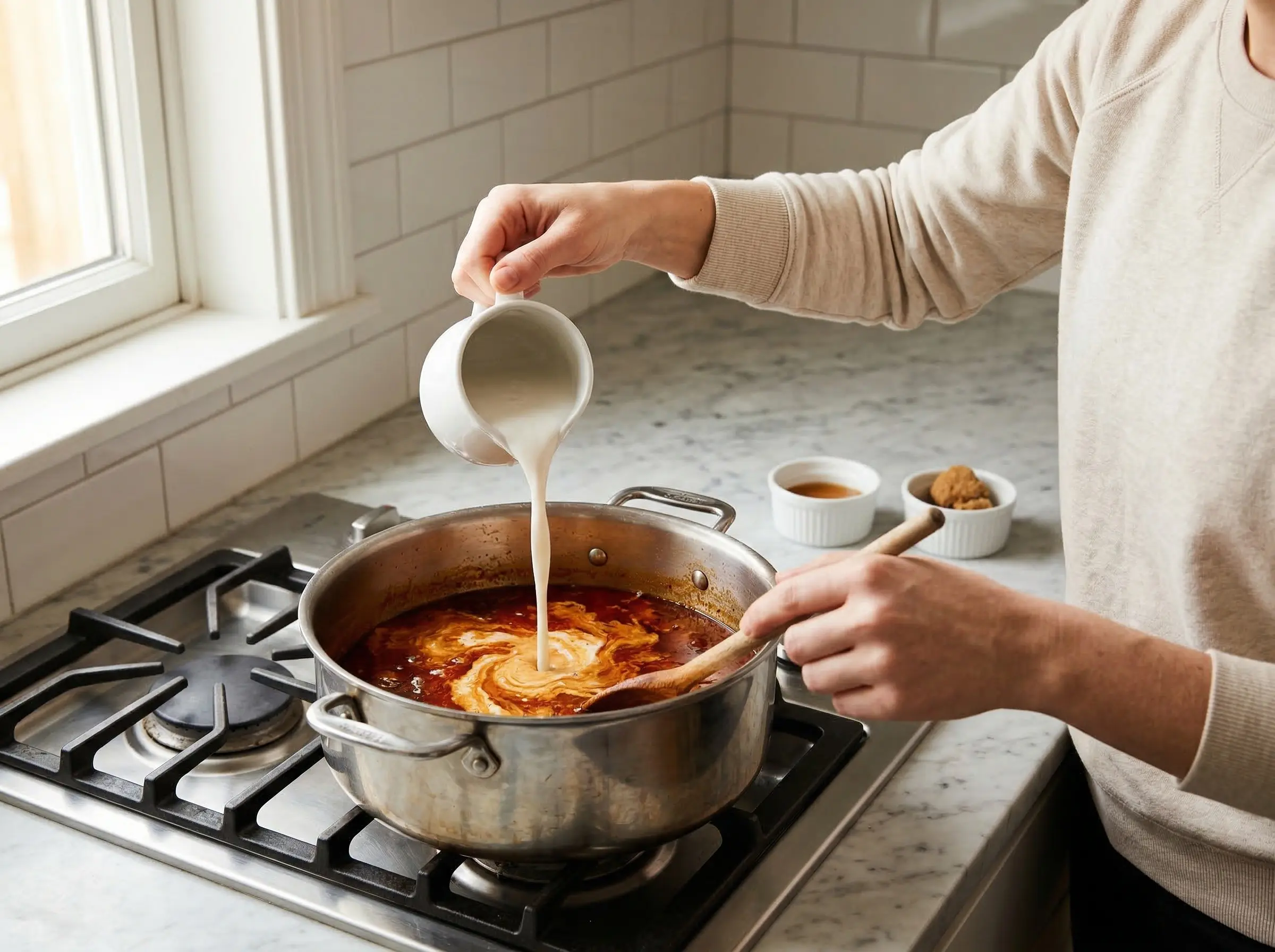
Step 4
Prepare the noodles and toppings. Cook the rice noodles or egg noodles according to package directions. Drain and rinse briefly with cold water to prevent sticking. Divide among serving bowls. If the noodles are cold, you can dip them briefly in boiling water to rewarm before serving. Hard-boil the eggs, peel, and halve. Have all toppings ready: tofu puffs, fish cake slices, bean sprouts, and herbs.
Step 5
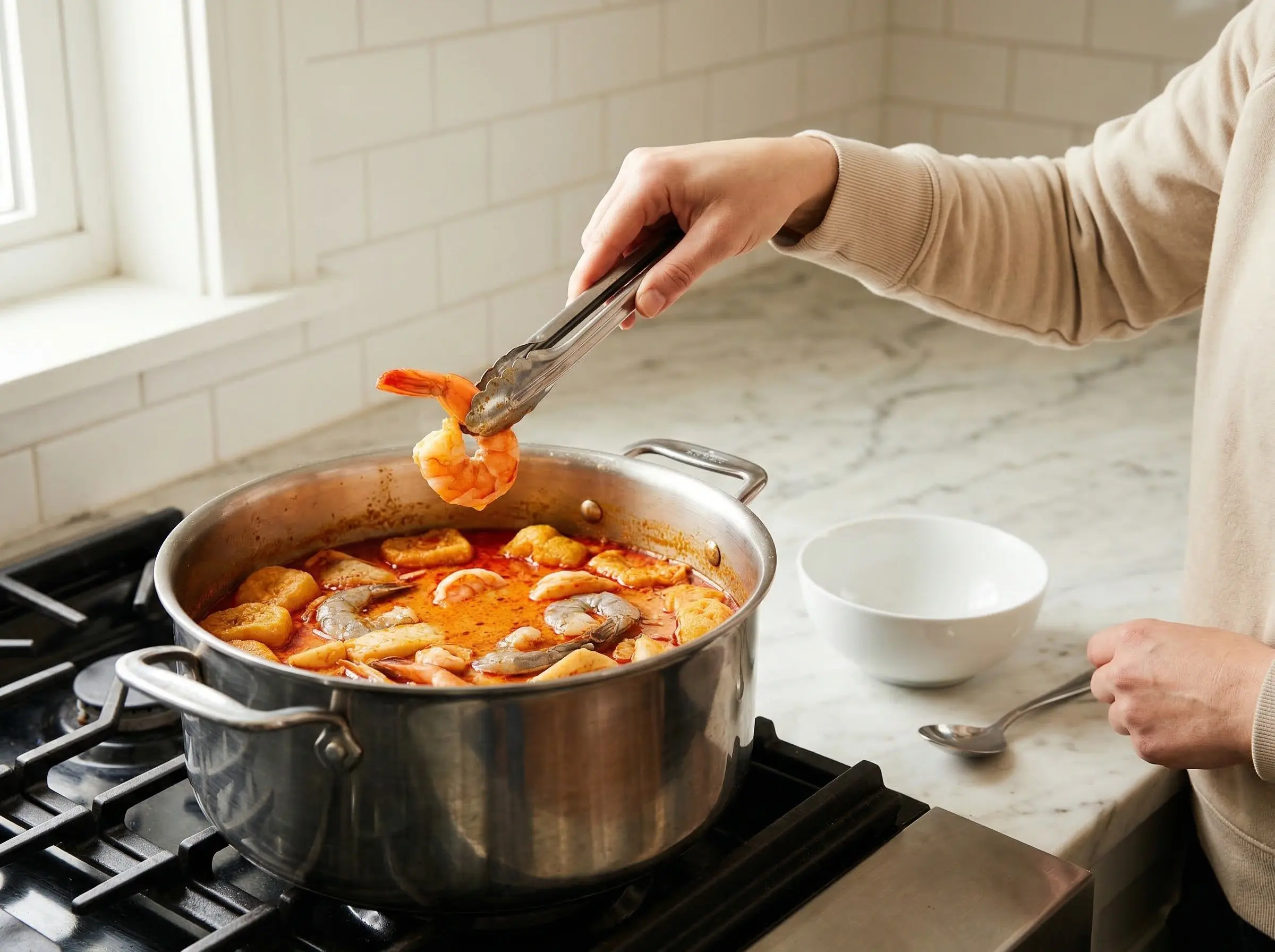
Cook the shrimp. Add the shrimp to the simmering broth and cook for 2-3 minutes until pink and just cooked through. Remove immediately to prevent overcooking. Add the tofu puffs and fish cake slices to the broth to warm through for 1-2 minutes.
Step 6
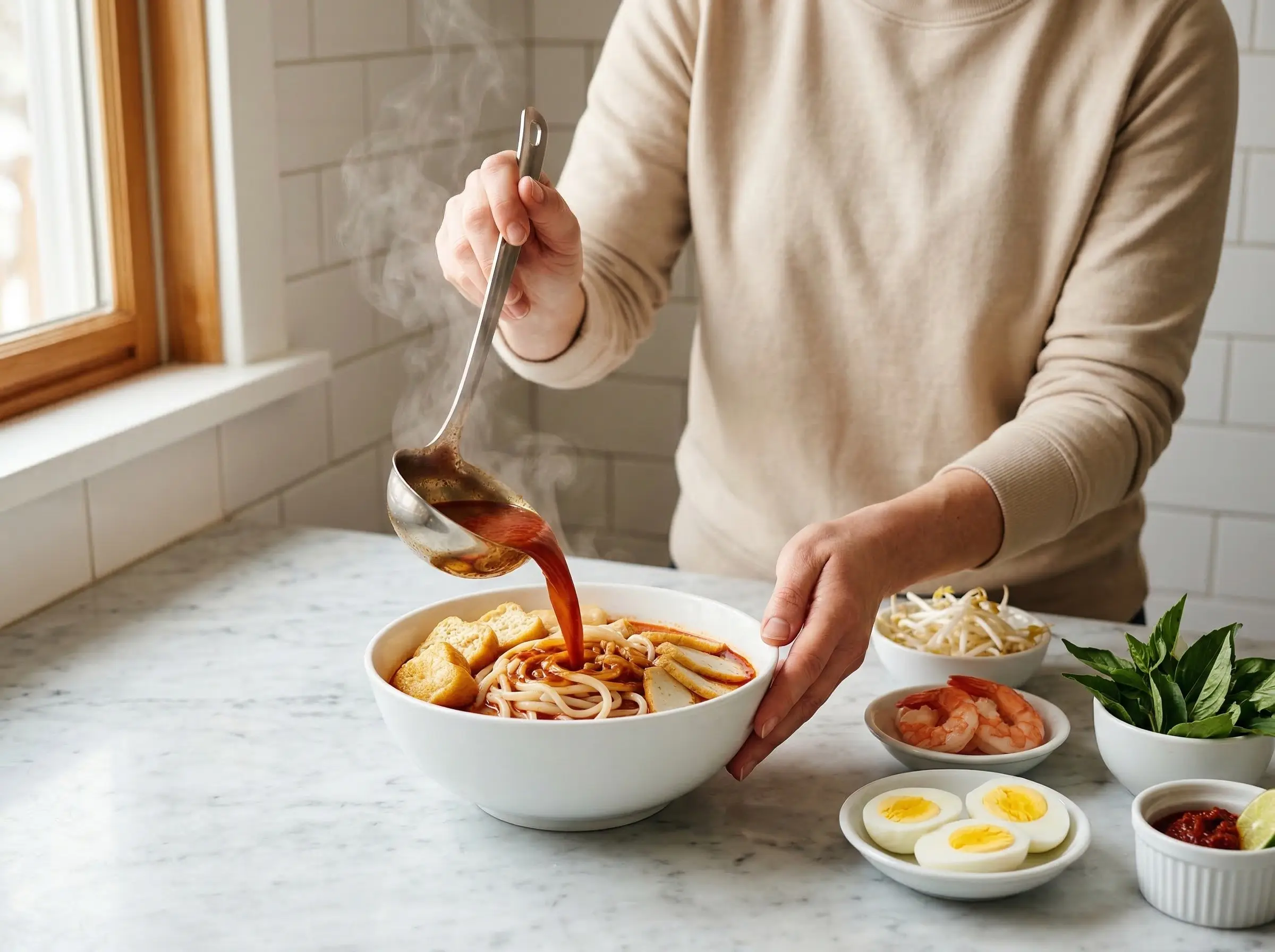
Assemble and serve. Place noodles in deep bowls. Ladle the hot laksa broth generously over the noodles, including pieces of tofu puffs and fish cake. Arrange the cooked shrimp, bean sprouts, and halved hard-boiled eggs on top. Garnish with fresh laksa leaves (daun kesum) or Vietnamese coriander - these herbs have a distinctive citrusy, peppery flavor that is traditional and irreplaceable. Serve immediately with sambal on the side for extra heat and lime wedges for squeezing. The proper way to eat laksa is to first take a sip of the broth, then gather noodles with chopsticks while using a spoon for the soup. Each bite should combine silky noodles, rich broth, and varied toppings. Laksa does not wait - serve and eat immediately while the broth is hot and the noodles are at their best.
You Might Also Like
Master Your Kitchen with PantryAI
Love this recipe? Save it, shop for it, and cook it with ease. Download the PantryAI app to organize your pantry, track expirations, and discover recipes based on what you already have.

On a computer?Scan with your iPhone camera to download PantryAI.








Swipe to see more screenshots