
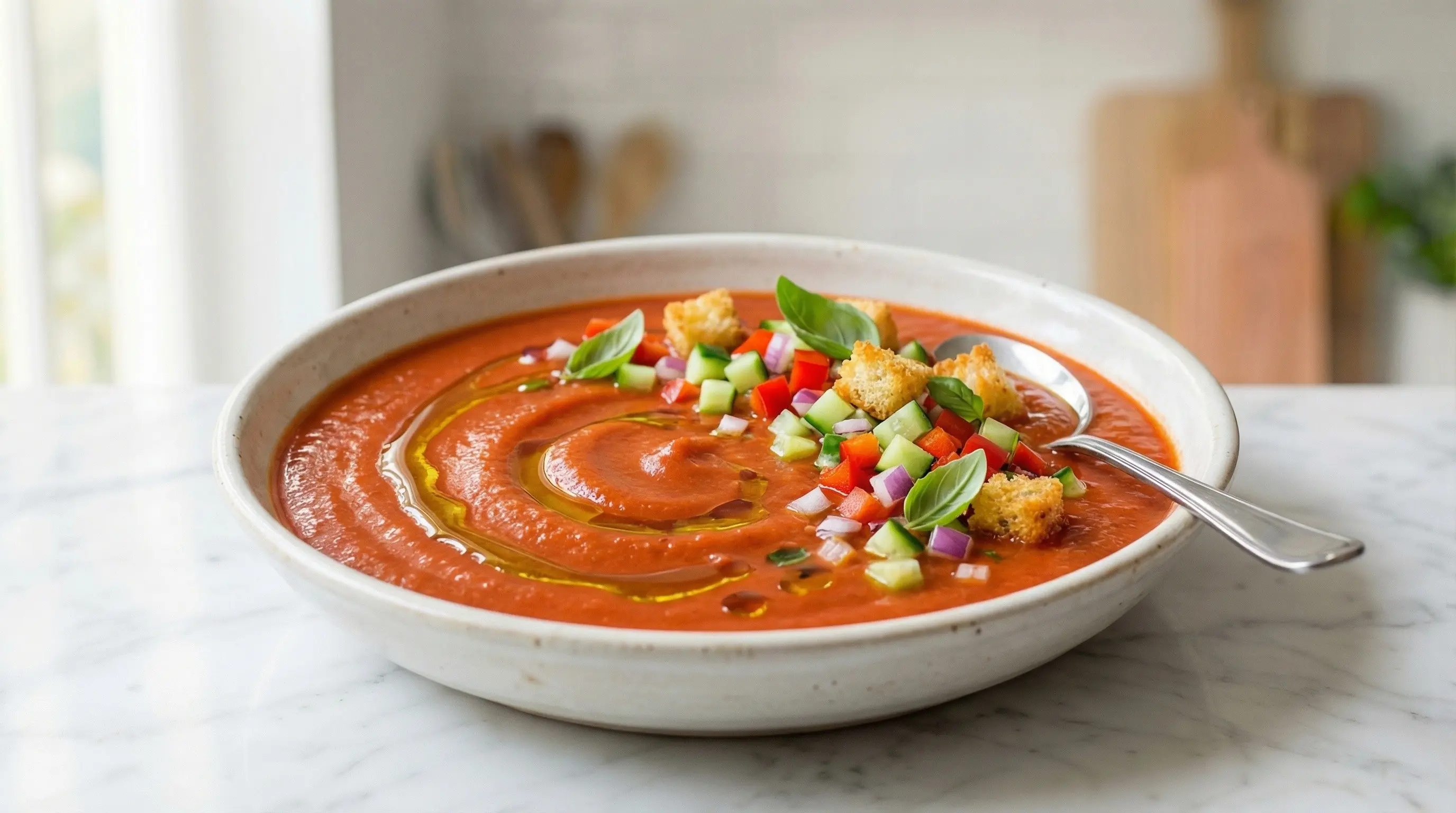
Authentic Gazpacho
Learn how to make refreshing Spanish gazpacho with ripe tomatoes, cucumber, and peppers. This chilled summer soup is healthy, vibrant, and ready with no cooking required!
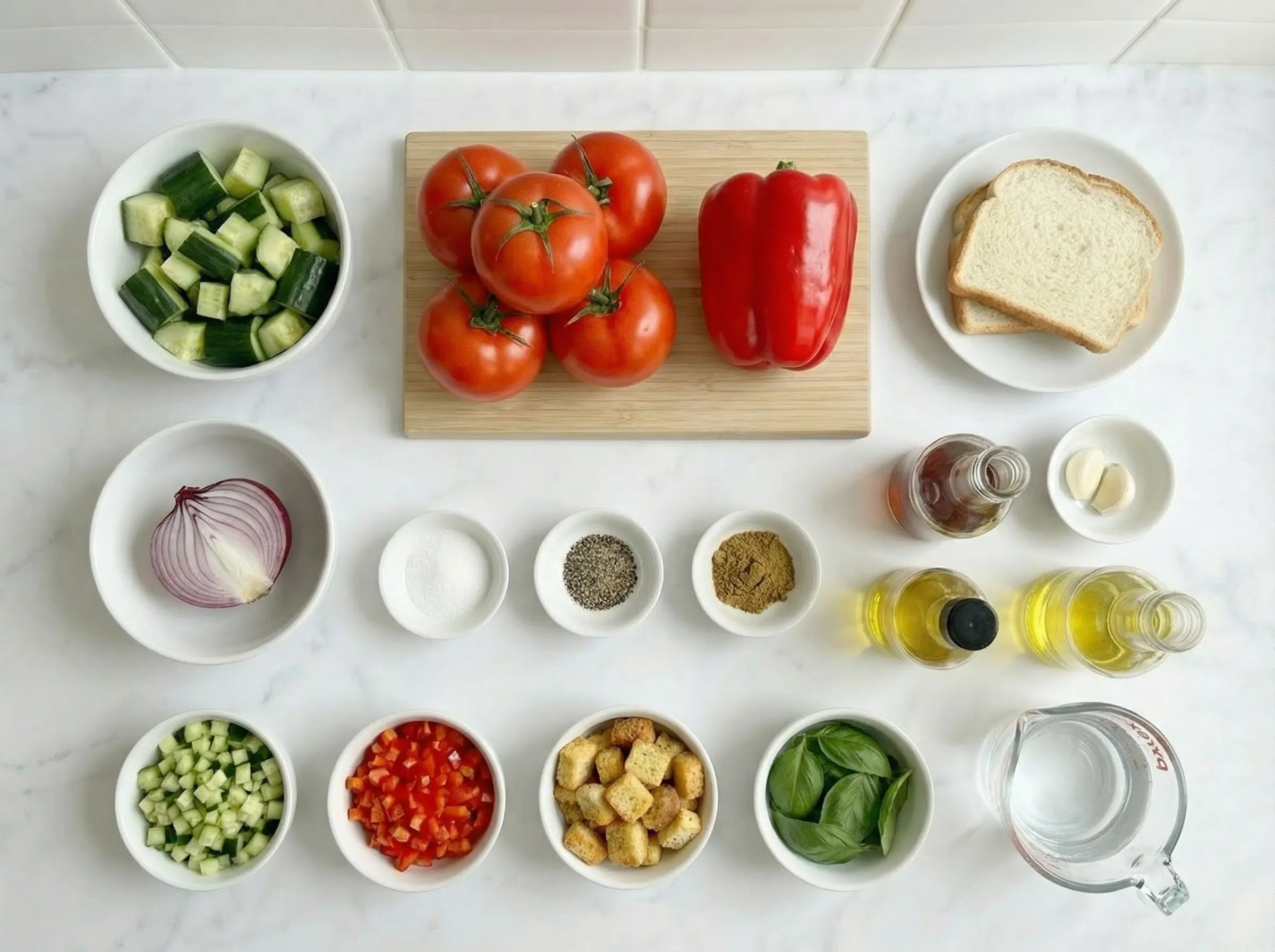
Ingredients
The Story
Gazpacho is one of Spain's most iconic culinary contributions to the world, a chilled soup that has been refreshing people in the Andalusian region for centuries. However, the original gazpacho bore little resemblance to the tomato-based version we know today. The earliest gazpachos, dating back to Roman times and possibly earlier, were white and made from stale bread, garlic, olive oil, vinegar, and water - ingredients that were readily available to laborers working under the brutal Andalusian sun. This ancient version, known today as "ajo blanco" or white gazpacho, was sustenance food for farmers and shepherds, providing hydration, energy, and nutrition during long days in the fields. The red gazpacho we recognize today only became possible after tomatoes arrived from the Americas in the 16th century. Even then, tomatoes were initially viewed with suspicion in Europe, considered poisonous by many. It was not until the 18th and 19th centuries that tomatoes became widely accepted in Spanish cuisine and were incorporated into gazpacho. The transformation of gazpacho from a humble peasant dish to an internationally celebrated soup happened gradually, with each generation of Andalusian cooks refining the recipe. By the mid-20th century, gazpacho had become a symbol of Spanish cuisine, particularly associated with the southern regions of Andalucía - Seville, Córdoba, and Granada each claim their own variations. What makes gazpacho so beloved is its perfect embodiment of summer in a bowl - refreshing, vibrant, and requiring no cooking whatsoever. The soup showcases the pure flavors of peak-season vegetables, particularly tomatoes, which must be ripe and flavorful for the best results. The bread, an essential traditional ingredient, provides body and helps emulsify the soup into a creamy consistency without any dairy. The sherry vinegar adds a distinctly Spanish tang, while good olive oil contributes richness and fruitiness. Traditionally served ice-cold in small glasses or bowls, gazpacho is both a soup and a beverage, perfect for hot summer days when the thought of cooking seems unbearable. It represents the genius of Spanish cuisine: transforming simple, humble ingredients into something extraordinary through balance and technique.
Instructions
Step 1
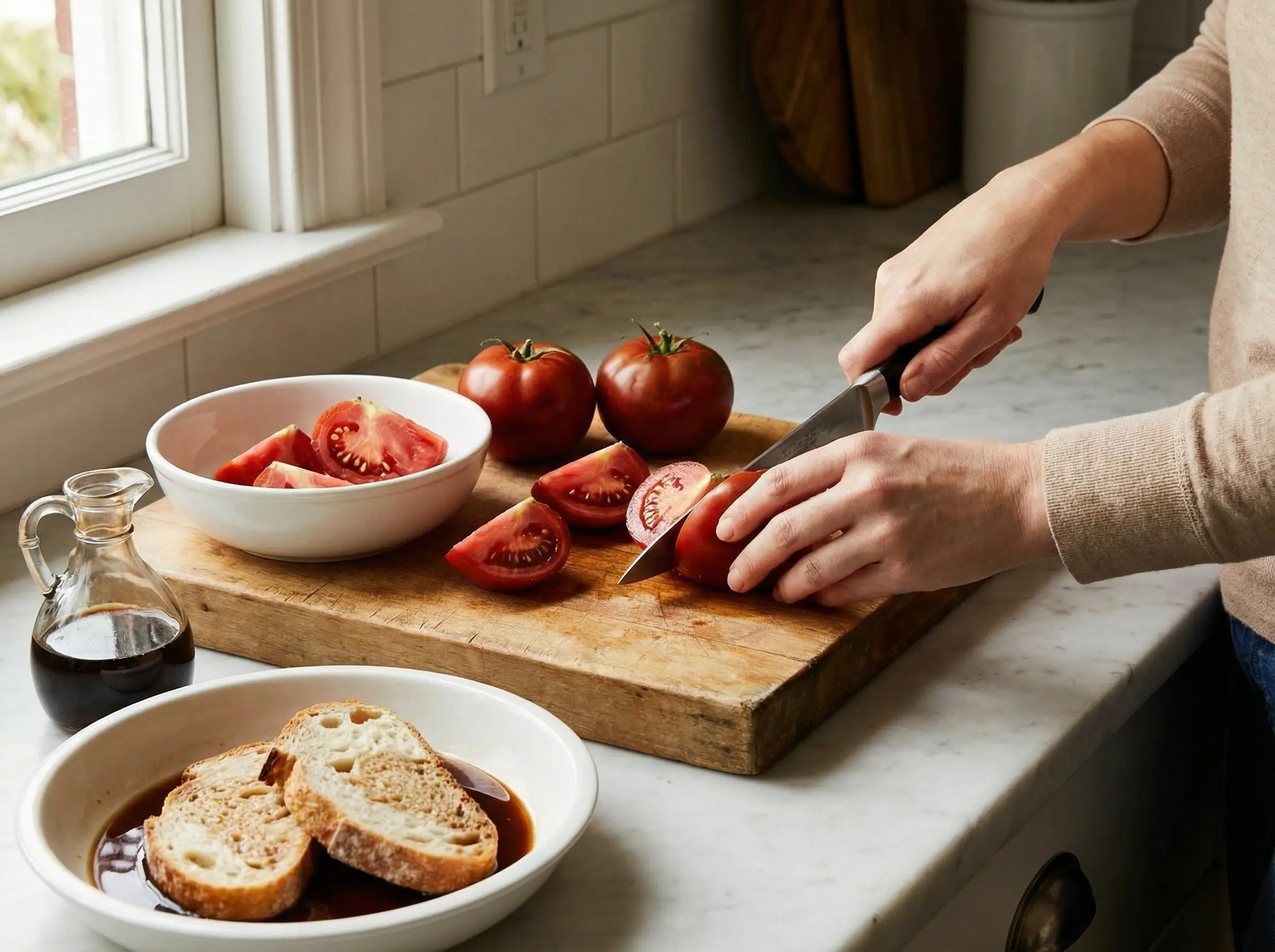
Start by selecting the best tomatoes you can find - this is crucial since gazpacho is all about showcasing the pure flavor of ripe tomatoes. Use the ripest, most flavorful tomatoes available, ideally in-season summer tomatoes. Roma tomatoes, vine-ripened tomatoes, or heirloom varieties all work beautifully. Avoid pale, mealy, out-of-season tomatoes as they will make bland gazpacho. Core the tomatoes and cut them into quarters. If your tomatoes have tough skins, you can blanch them briefly in boiling water for 30 seconds, then plunge into ice water and peel - though this step is optional if you have a powerful blender. Place the bread slices in a shallow bowl and pour the sherry vinegar over them. Let the bread soak for about 5-10 minutes until soft and saturated. This vinegar-soaked bread is traditional and helps give gazpacho its characteristic body and creamy texture.
Step 2
Prepare your remaining vegetables. Peel the cucumber and chop it into rough pieces - peeling is important as cucumber skin can add bitterness. Remove the stem, seeds, and white ribs from the red bell pepper and chop into pieces. Roughly chop the red onion and peel the garlic cloves. All the pieces can be rough and uneven since everything will be blended smooth. The vegetables do not need to be precisely cut, but smaller pieces will blend more easily. If you prefer a milder garlic flavor, you can use just one clove or soak the garlic in cold water for 10 minutes before using.
Step 3
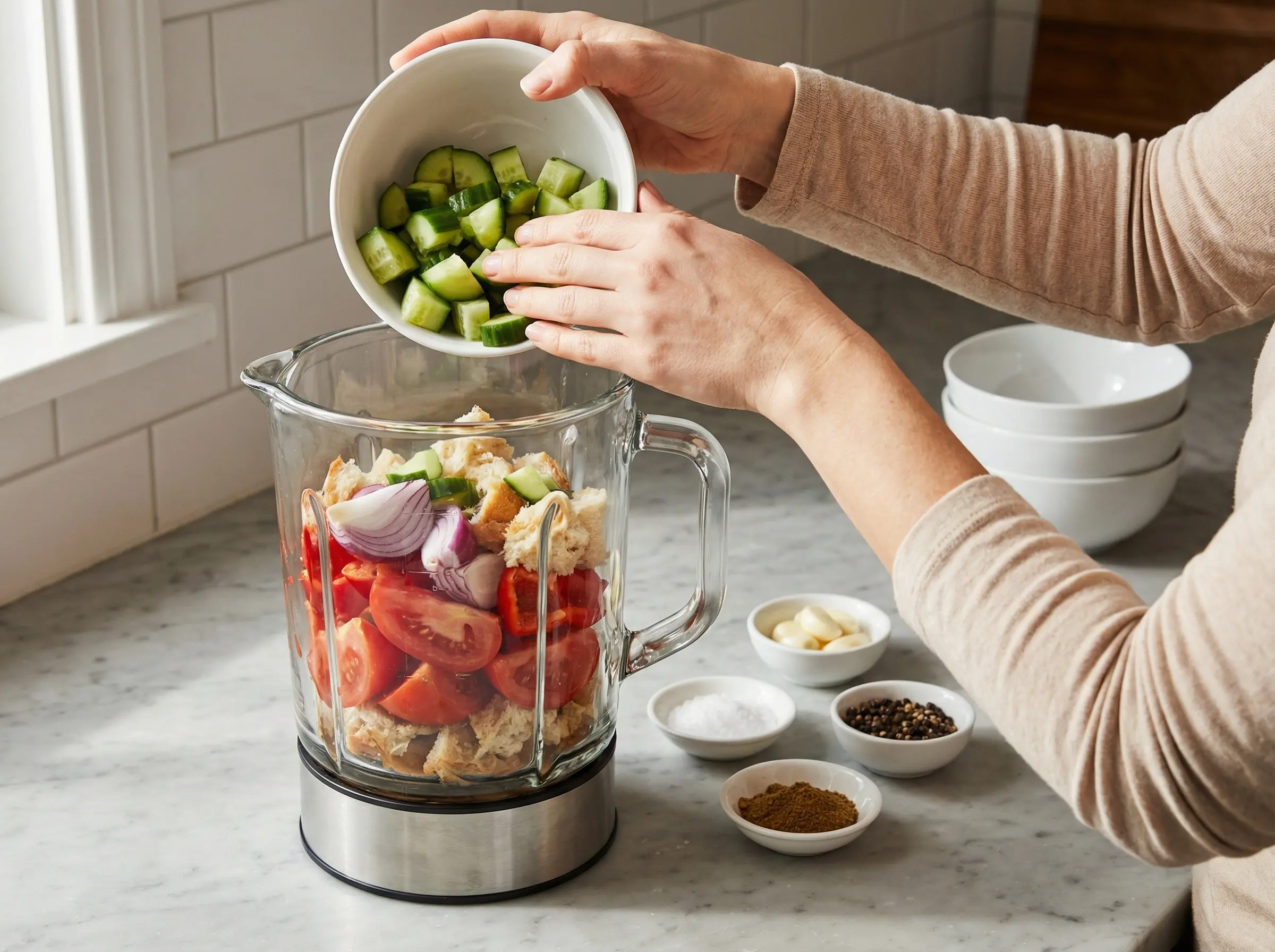
Add the quartered tomatoes, chopped cucumber, bell pepper, onion, and garlic to a large blender or food processor. Add the vinegar-soaked bread along with any vinegar remaining in the bowl. Add the salt, black pepper, and ground cumin if using. Blend on high speed until completely smooth - this may take 1-2 minutes depending on your blender. Scrape down the sides as needed to ensure everything is incorporated. The mixture should be completely pureed with no visible chunks. If your blender is small, work in batches. A high-powered blender will produce the smoothest results, though a regular blender or food processor works fine - you may just need to blend longer.
Step 4
With the blender running on medium speed, slowly drizzle in the extra virgin olive oil in a thin, steady stream. This gradual addition emulsifies the oil into the soup, creating a smooth, creamy texture and helping all the ingredients meld together. The gazpacho should become slightly thicker and more luxurious as the oil is incorporated. Continue blending for another 30 seconds after all the oil has been added. Add the cold water to thin the soup to your desired consistency - some prefer gazpacho thick and almost scoopable, while others like it thinner and more drinkable. Start with half the water, blend, and add more as needed. The consistency is a personal preference.
Step 5
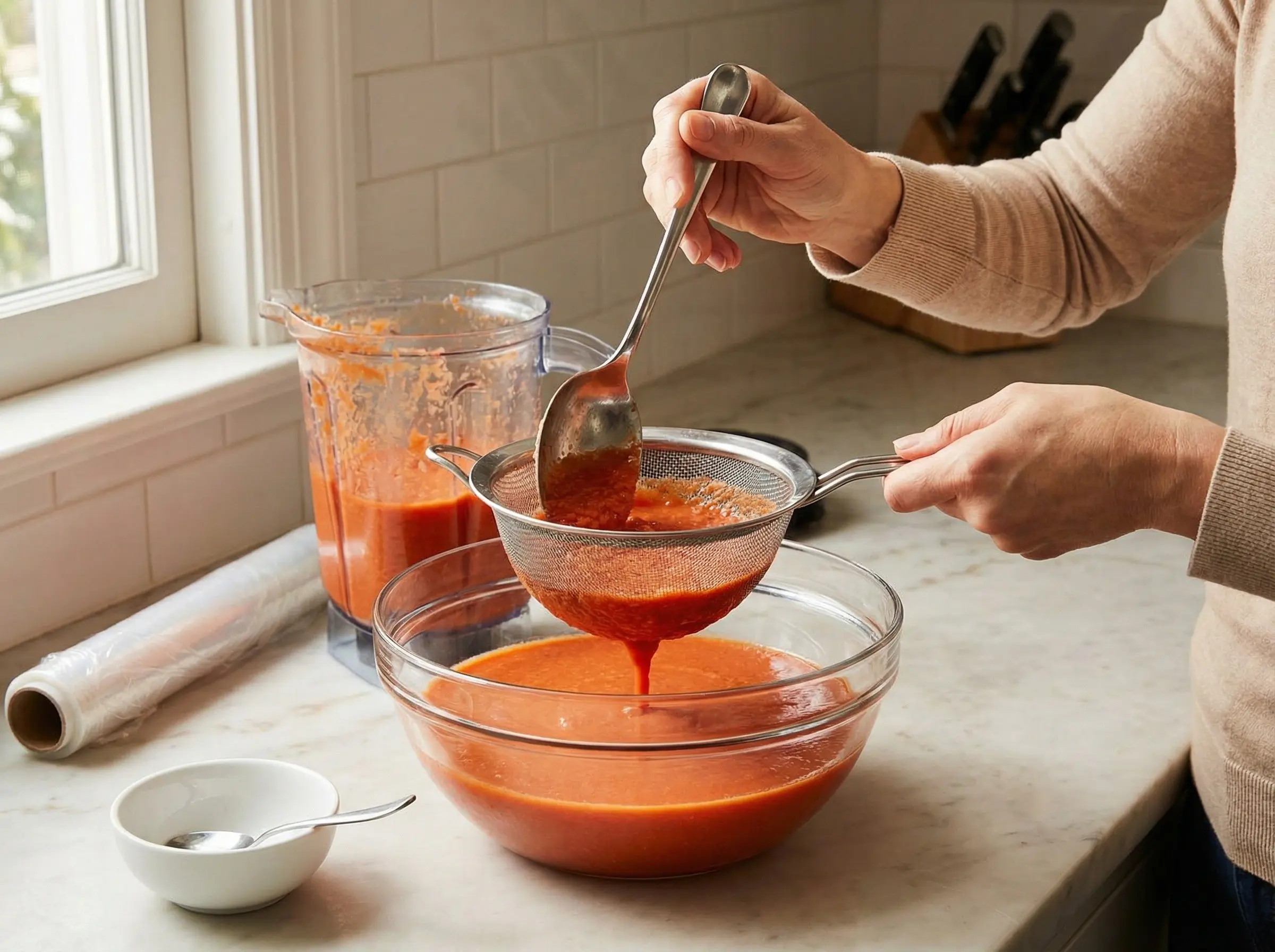
Taste the gazpacho and adjust the seasoning. This is important - gazpacho should be well-seasoned with a bright, balanced flavor. You may want more salt to bring out the tomato flavor, more vinegar for tanginess, more olive oil for richness, or a pinch of sugar if your tomatoes are acidic. The flavors should be vibrant and refreshing. For the smoothest texture, strain the gazpacho through a fine-mesh sieve, pressing on the solids to extract all the liquid. This step is optional but produces a more refined, restaurant-quality soup. Many home cooks skip straining and enjoy the slightly rustic texture. Transfer the gazpacho to a large bowl or pitcher, cover tightly with plastic wrap, and refrigerate for at least 2 hours or preferably overnight. Chilling is essential - gazpacho must be served very cold, and the flavors improve significantly as they meld in the refrigerator.
Step 6
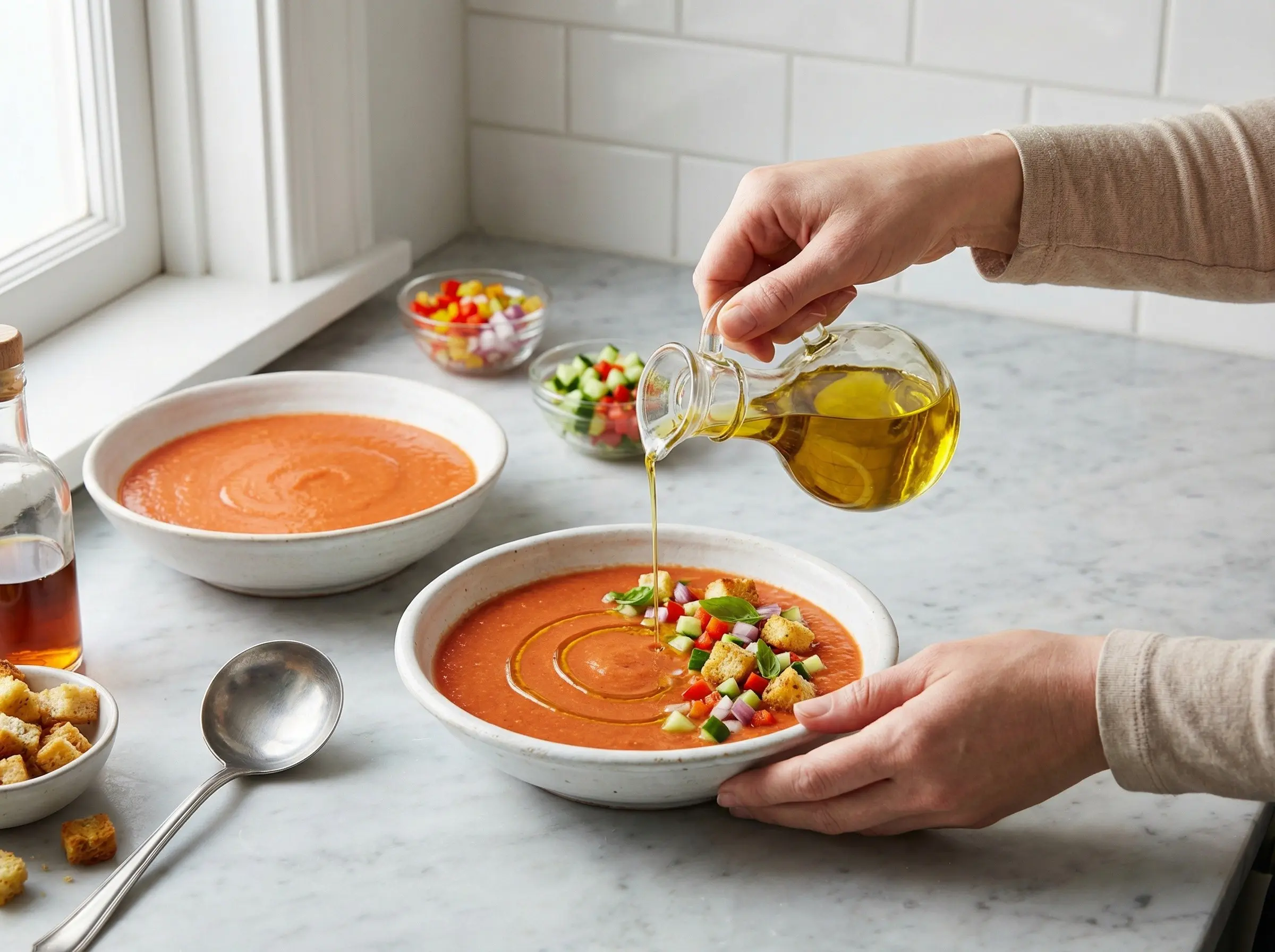
When ready to serve, taste the chilled gazpacho once more and adjust seasoning if needed - cold dulls flavors, so it may need a bit more salt or vinegar. Ladle the gazpacho into chilled bowls or glasses. In Spain, it is often served in small glasses as a refreshing drink on hot days. For an elegant presentation, garnish each serving with finely diced cucumber, bell pepper, and red onion. Add a small handful of croutons for crunch - you can make these by cubing bread, tossing with olive oil, and toasting in a 375 degree oven until golden. Drizzle each bowl with a generous swirl of high-quality extra virgin olive oil and add a few fresh basil or parsley leaves. A few drops of sherry vinegar on top can also brighten each serving. Serve immediately while ice cold. Gazpacho keeps well in the refrigerator for up to 4 days - the flavors actually improve over the first day or two. Stir or blend briefly before serving if it separates. Never serve gazpacho at room temperature - it should be thoroughly chilled for the most refreshing experience.
You Might Also Like
Master Your Kitchen with PantryAI
Love this recipe? Save it, shop for it, and cook it with ease. Download the PantryAI app to organize your pantry, track expirations, and discover recipes based on what you already have.

On a computer?Scan with your iPhone camera to download PantryAI.








Swipe to see more screenshots