
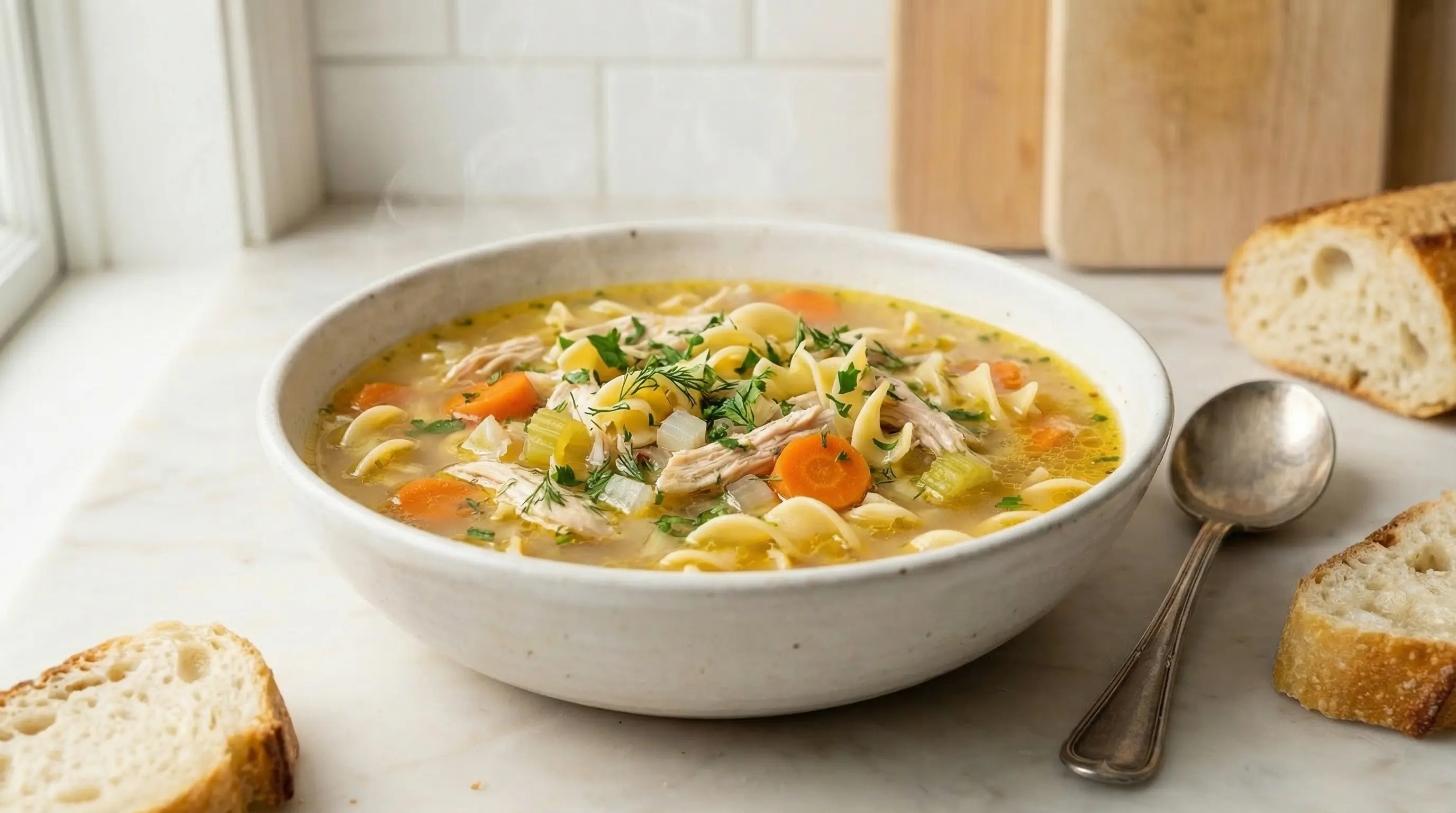
Chicken Noodle Soup
Learn how to make the best homemade chicken noodle soup with tender chicken, vegetables, and egg noodles in a rich golden broth. This comforting classic is perfect for cold days and healing the soul!
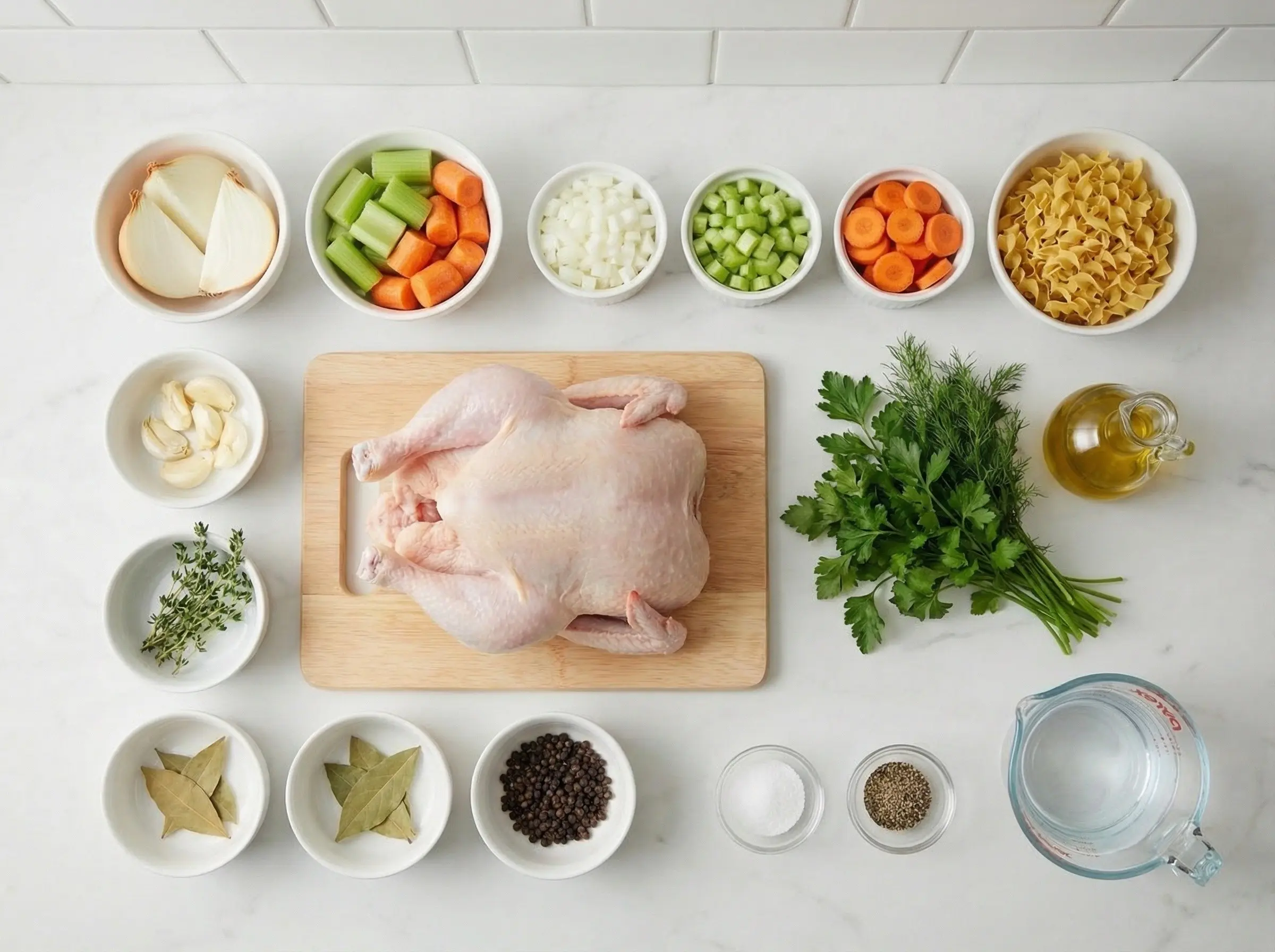
Ingredients
The Story
Chicken noodle soup is perhaps the most universally comforting food in existence, a dish that transcends cultures and generations in its ability to nourish both body and spirit. While variations of chicken soup exist in virtually every cuisine around the world - from Jewish penicillin to Chinese medicinal soups to Mexican caldo de pollo - the American version with egg noodles became iconic during the 20th century, particularly after Campbell's introduced canned chicken noodle soup in 1934. But the tradition of chicken soup as healing food stretches back millennia. The ancient Greek physician Hippocrates recommended chicken soup for respiratory ailments, and the 12th-century Jewish philosopher Maimonides prescribed it for colds and asthma. Science has since validated what grandmothers always knew: chicken soup genuinely has mild anti-inflammatory properties that can help relieve cold symptoms. The magic of chicken noodle soup lies in the slow extraction of flavor and nutrition from simple ingredients. When chicken bones, meat, and aromatics simmer together for an extended period, collagen from the bones dissolves into the broth, creating body and richness while releasing minerals like calcium and magnesium. The vegetables contribute their own flavors and nutrients. The resulting golden broth is simultaneously light and deeply satisfying - warming from within without being heavy. The addition of noodles, popularized in American versions, adds comforting carbohydrates that make the soup more substantial and help absorb the flavorful liquid. What makes homemade chicken noodle soup so superior to canned versions is the depth of flavor and the quality of ingredients. A properly made soup starts with building a rich broth - either by simmering a whole chicken or using good-quality stock enhanced with aromatics. The vegetables should be cut into pieces that are easy to eat but substantial enough to retain texture after cooking. The chicken should be tender and juicy, not the rubbery shreds found in commercial versions. And the noodles should be cooked just right - tender but not mushy. When all these elements come together, the result is a bowl of pure comfort: steaming, fragrant, and deeply satisfying. Whether you are fighting off a cold, warming up on a winter day, or simply seeking the edible equivalent of a warm hug, homemade chicken noodle soup delivers like nothing else can.
Instructions
Step 1
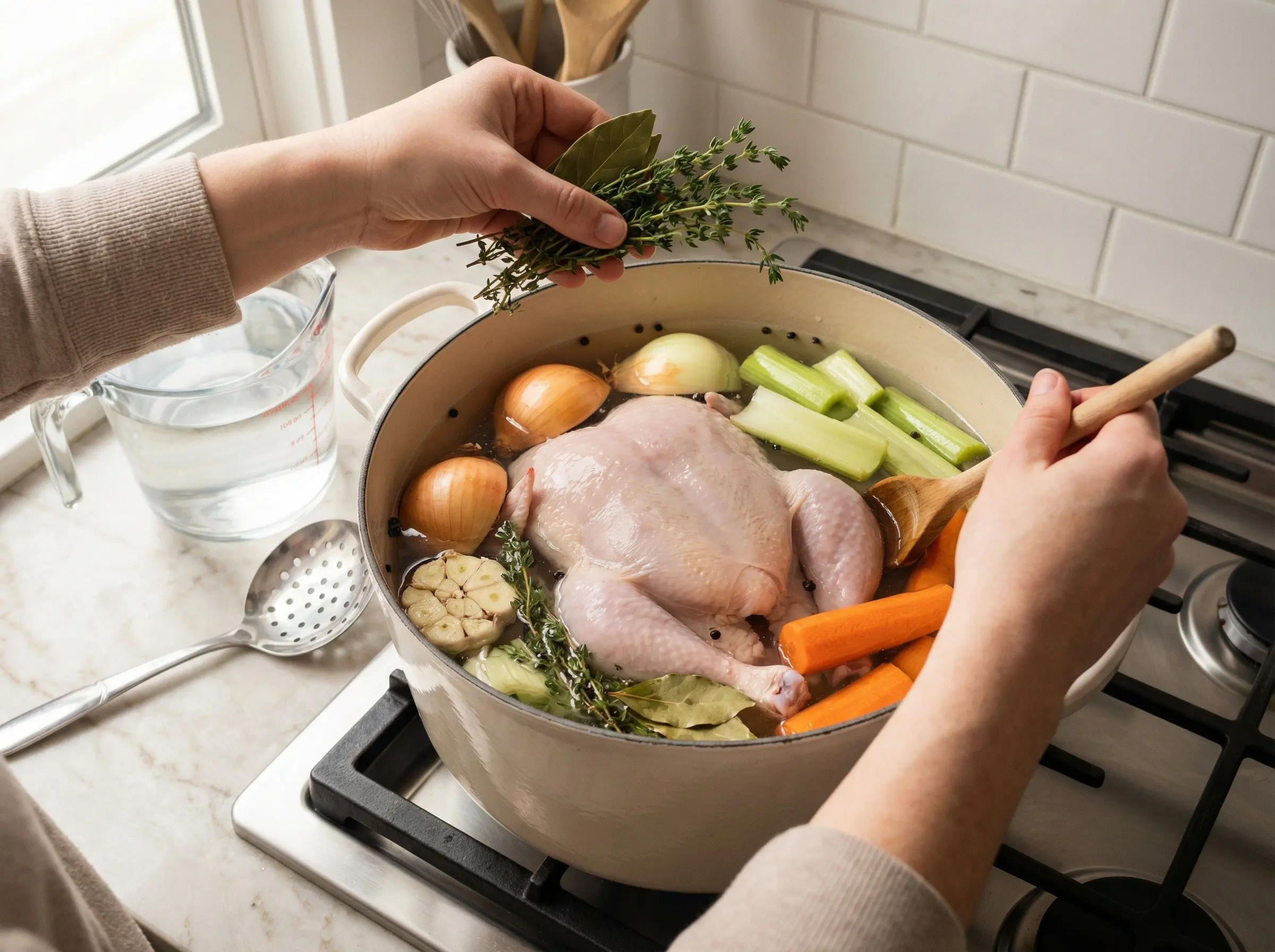
Make the broth. Place the whole chicken (or bone-in pieces) in a large stockpot or Dutch oven. Add the cold water - starting with cold water and bringing it slowly to a simmer extracts more flavor than adding chicken to boiling water. Add the quartered onion, 2 celery stalks cut into large chunks, 2 carrots cut into large chunks, smashed garlic cloves, thyme sprigs, bay leaves, peppercorns, and 1 teaspoon of salt. Bring to a boil over high heat, then immediately reduce to a gentle simmer. Skim off any foam or scum that rises to the surface during the first 15 minutes - this results in a cleaner, clearer broth.
Step 2
Simmer the broth gently, uncovered, for about 1 hour if using a whole chicken or 45 minutes for chicken pieces. The chicken is done when an instant-read thermometer inserted into the thickest part of the thigh reads 165 degrees F and the meat is tender enough to easily pull away from the bone. Do not boil vigorously - a gentle simmer produces clearer broth and more tender meat. Carefully remove the chicken from the pot and transfer to a cutting board or large bowl to cool. Leave the broth simmering while you work on the chicken.
Step 3
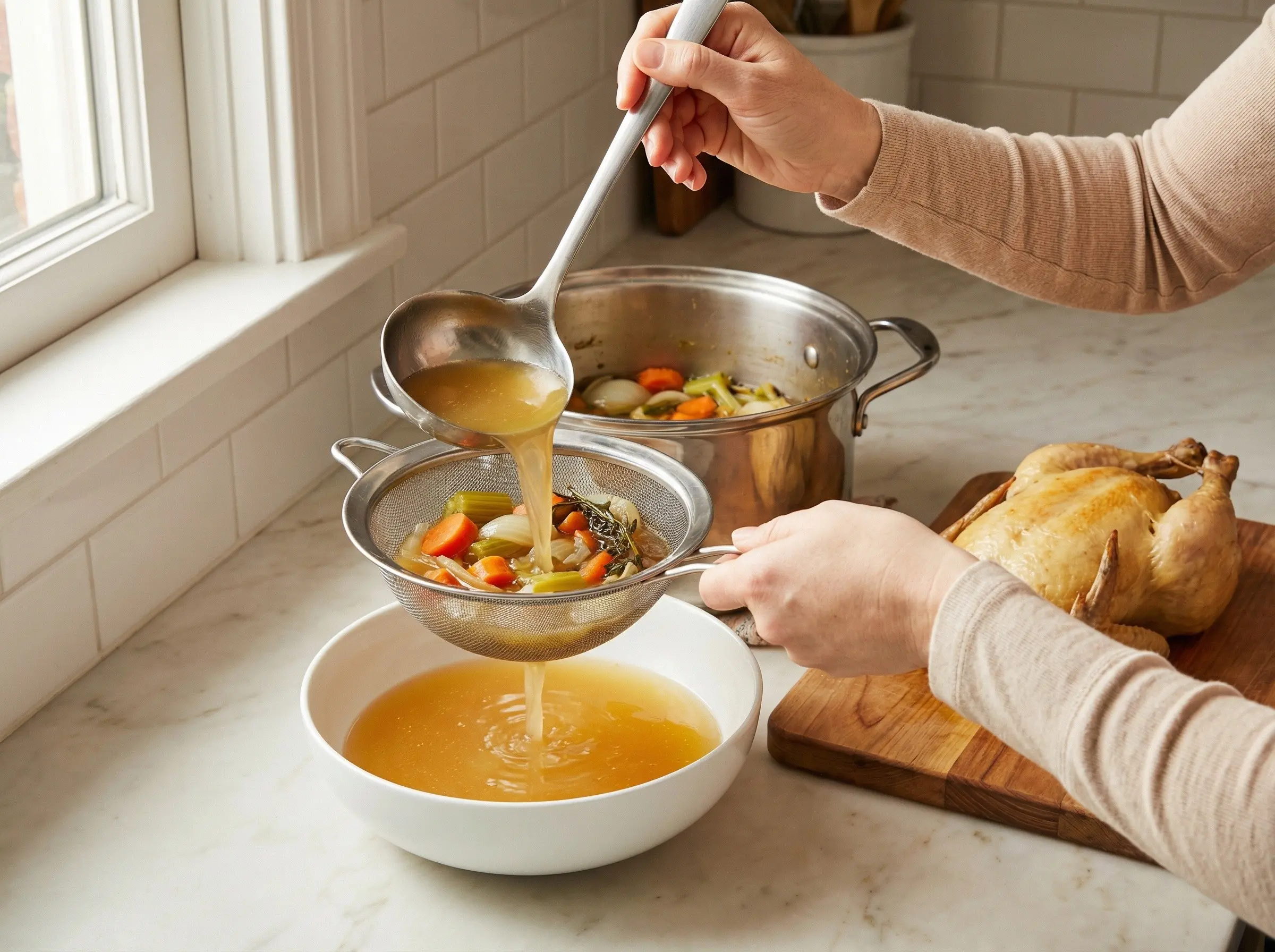
Strain the broth through a fine-mesh strainer into a clean pot or large bowl, discarding the spent vegetables, herbs, and aromatics - they have given their flavor to the broth and are no longer needed. You should have about 8 cups of rich, golden broth. Taste and season with salt as needed - homemade broth typically needs a fair amount of salt to bring out its full flavor. Skim any excess fat from the surface if desired, though some fat adds flavor and richness. Return the strained broth to the pot.
Step 4
While the broth simmers, shred the chicken. Once cool enough to handle, remove and discard the skin and bones. Shred or chop the meat into bite-sized pieces - you should have about 3-4 cups of meat. Set aside. Prepare the fresh vegetables for the soup: dice the remaining onion, dice the remaining celery stalks into 1/4-inch pieces, and slice the remaining carrots into 1/4-inch rounds or half-moons. These fresh vegetables will provide texture and flavor in the final soup.
Step 5
Cook the vegetables. Heat the olive oil in the pot with the strained broth over medium heat. Add the diced onion and cook for 3-4 minutes until softened. Add the diced celery and sliced carrots. Cook for another 3-4 minutes, stirring occasionally. Pour in the strained broth (if stored separately) and bring to a simmer. Cook the vegetables in the broth for 10-12 minutes until the carrots are just tender but still have some bite. Season with salt and pepper to taste.
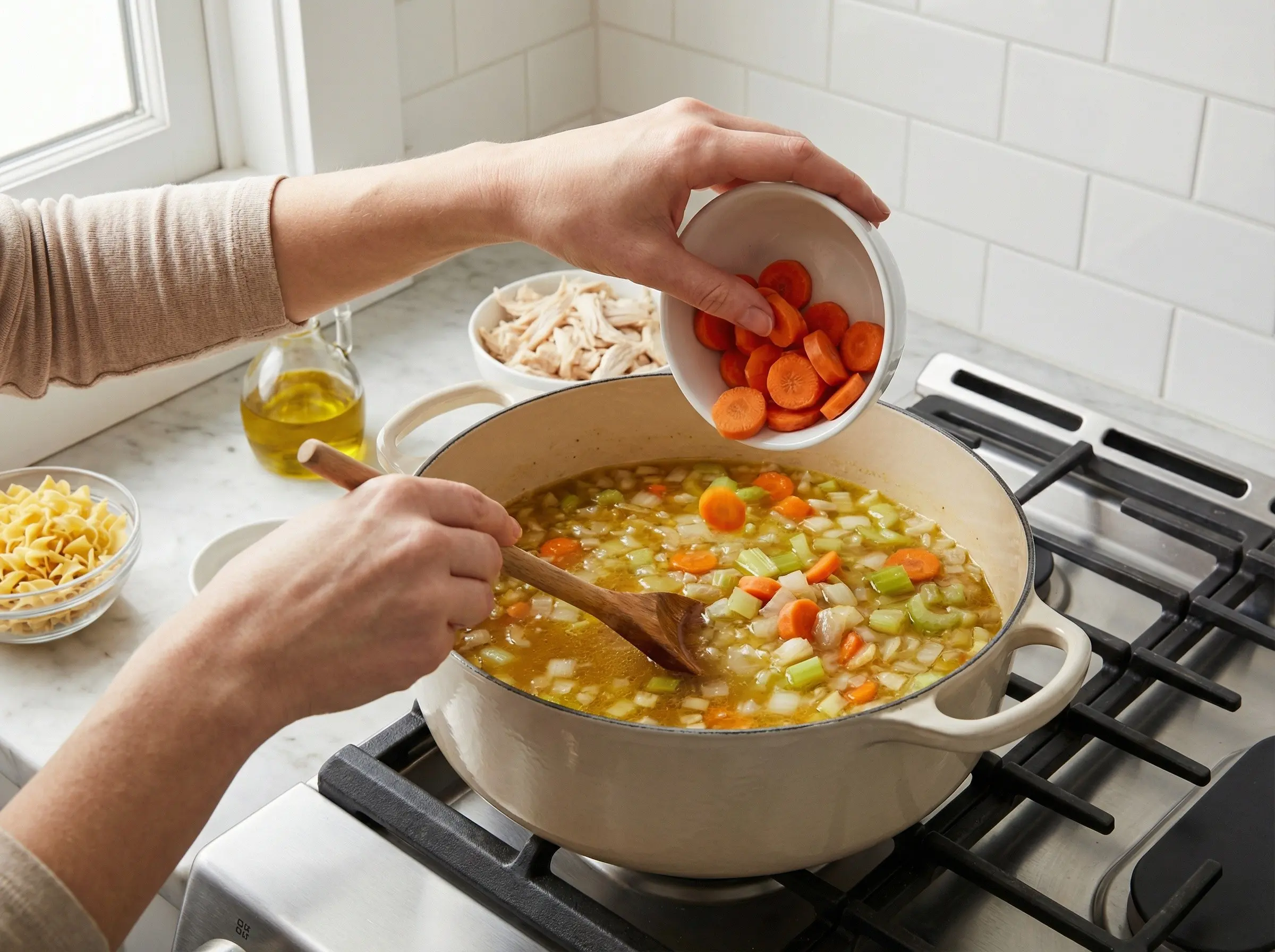
Step 6
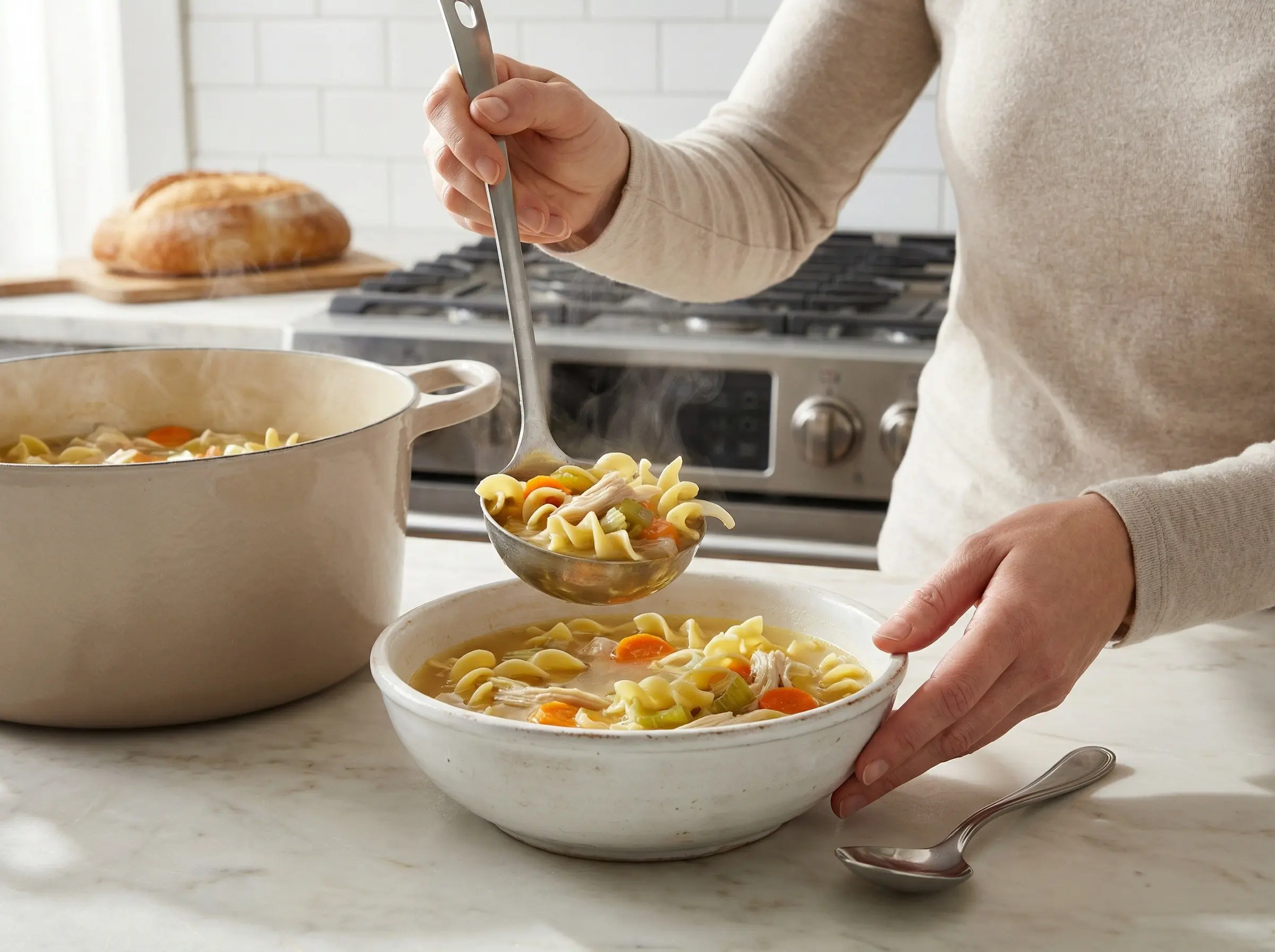
Add the noodles and finish the soup. Add the egg noodles to the simmering soup and cook according to package directions, usually 6-8 minutes, until tender. Add the shredded chicken during the last 2-3 minutes of cooking to warm through. Remove the pot from heat and stir in the fresh chopped parsley and dill if using. Taste and adjust seasoning - a squeeze of lemon juice at the end can brighten the flavors if desired. Ladle into warm bowls and serve immediately. The soup can be stored in the refrigerator for up to 5 days, but note that the noodles will continue to absorb liquid and soften. For meal prep, consider storing the broth with vegetables and chicken separately from the noodles, then cooking fresh noodles when ready to serve. Chicken noodle soup also freezes well for up to 3 months - again, freeze without noodles for best results. There is a reason this soup is the universal remedy for colds and hard days alike - each spoonful delivers warmth, nourishment, and comfort.
You Might Also Like
Master Your Kitchen with PantryAI
Love this recipe? Save it, shop for it, and cook it with ease. Download the PantryAI app to organize your pantry, track expirations, and discover recipes based on what you already have.

On a computer?Scan with your iPhone camera to download PantryAI.








Swipe to see more screenshots